Ultimate Ireland Packing List: 15 Aesthetic Outfit Ideas
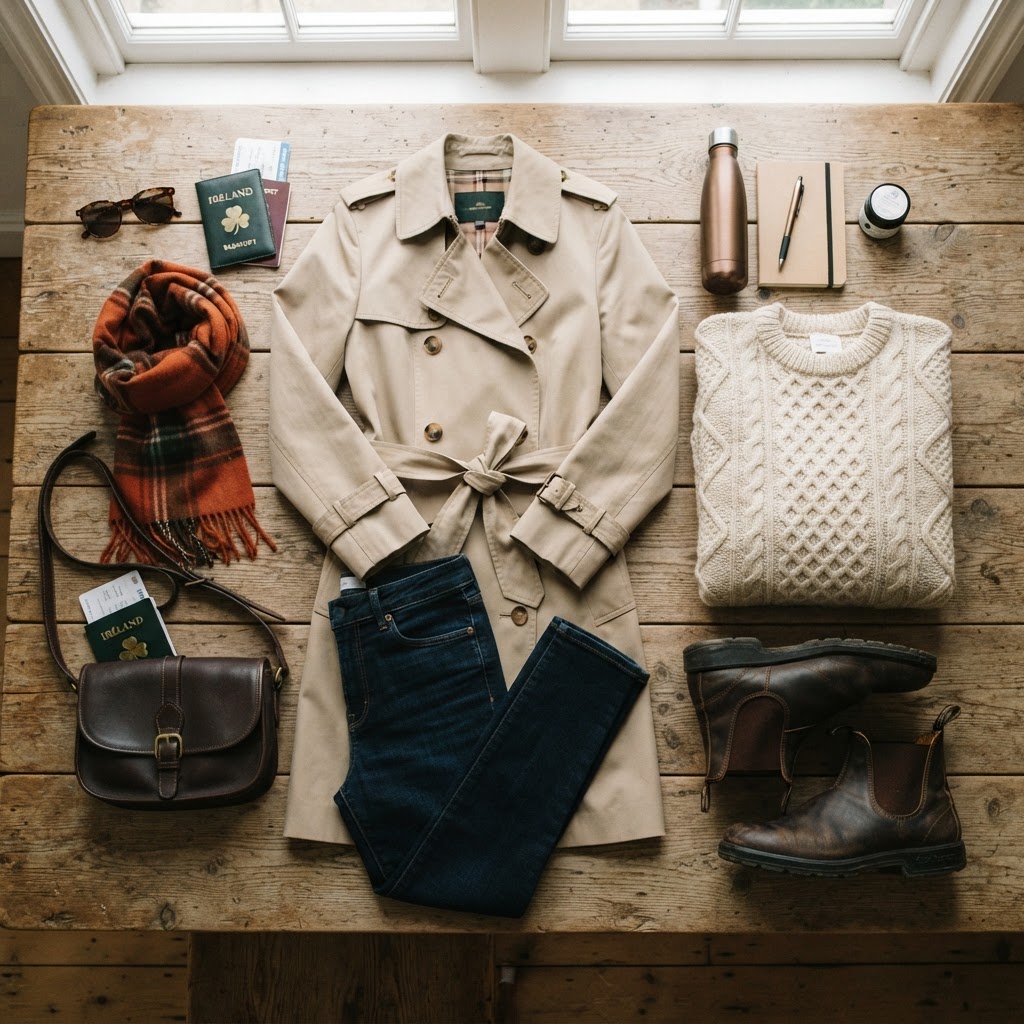
To dress for Ireland, pack a waterproof trench coat, merino wool layers, and sturdy leather Chelsea boots, as the key is preparing for four seasons in a single day. Prioritizing moisture-wicking fabrics and high-quality shells ensures you remain dry, comfortable, and photo-ready while exploring the rugged, damp landscapes of the Emerald Isle.
Understanding the Irish Climate
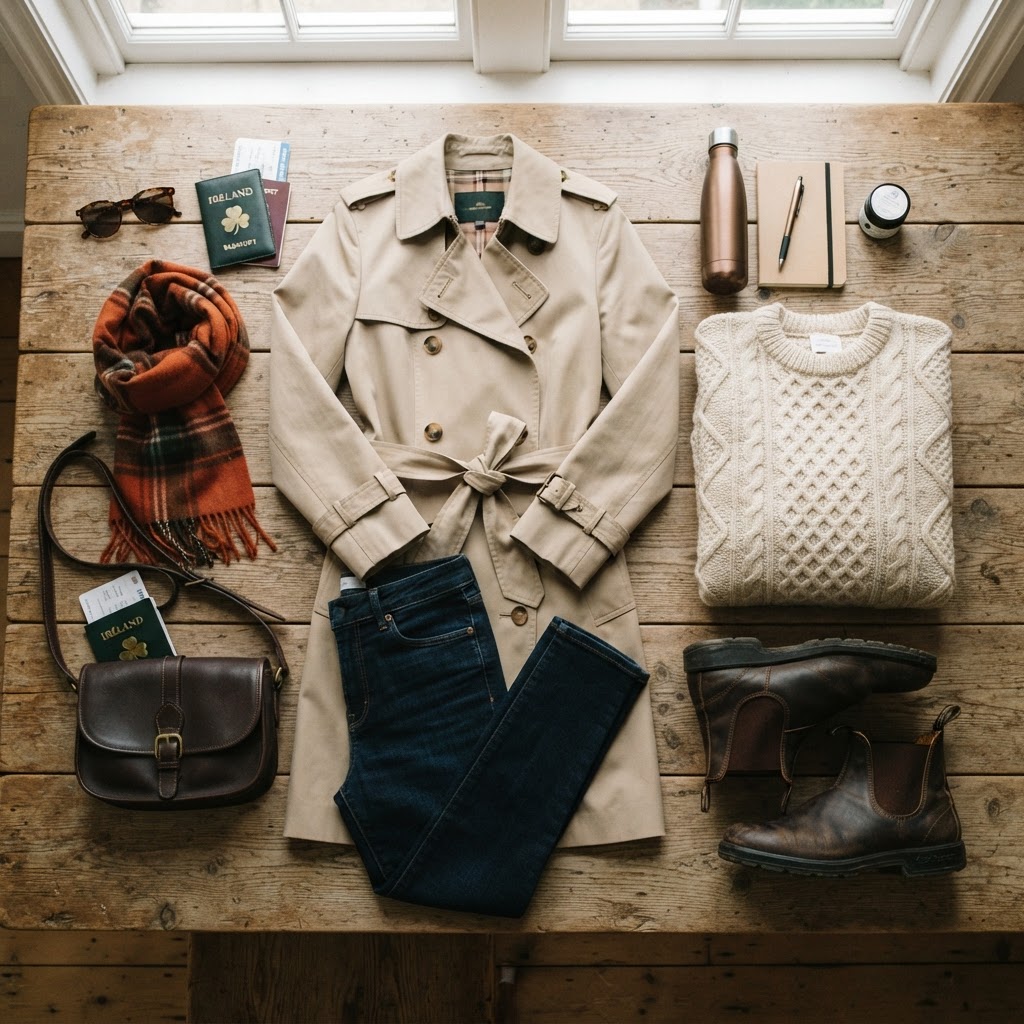
Understanding the mercurial nature of the Irish climate is the first step in curating a functional yet fashionable travel wardrobe. Ireland experiences frequent rainfall, with an average of 150 to 225 rainy days per year depending on the region, making moisture management critical. While temperatures are moderate—rarely dipping below 4°C in winter or exceeding 20°C in summer—the high humidity makes dampness feel more intense. Consequently, your wardrobe must rely on technical fabrics that breathe rather than heavy, absorbent cottons. Focusing on moisture-wicking base layers and a high-performance waterproof shell with a hydrostatic head rating of at least 10,000mm will protect you from even the fiercest Atlantic gusts.
The Golden Rule of Layering
The golden rule of dressing for Ireland is to always wear three distinct layers: a base layer for moisture management, a middle insulating layer for warmth, and an outer shell for weather protection. This system allows you to adapt instantly as you transition from a chilly outdoor walk to a warm, fire-lit pub. Aim for 100% merino wool or high-end synthetic thermal tops, followed by thick knitwear, and finished with a stylish but functional raincoat. This modular approach ensures you are never overdressed or caught unprepared during a sudden shift from sunny skies to heavy drizzle.
Essential Clothing Staples for Your Trip
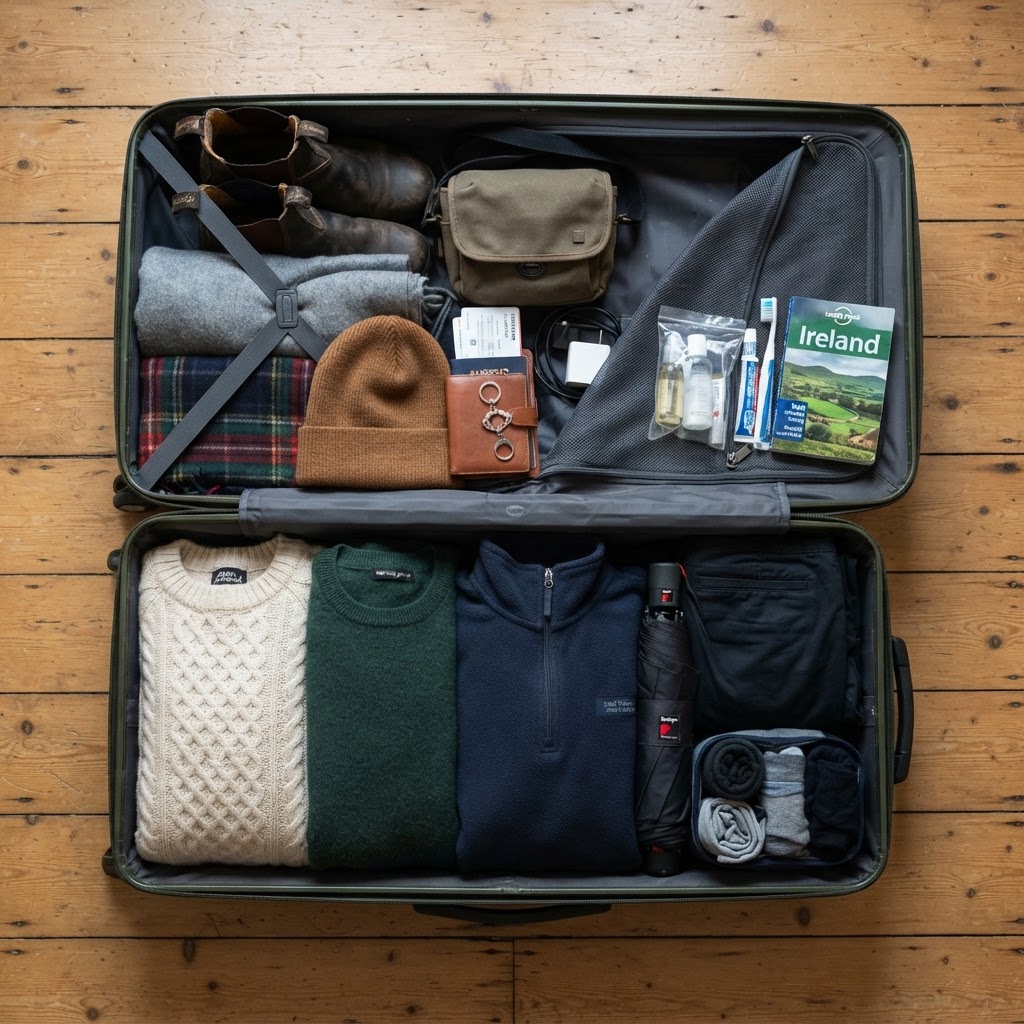
Building an effective wardrobe begins with selecting core pieces that can be mixed and matched throughout your entire vacation. Focus on a neutral color palette of earthy tones like sage green, slate grey, cream, and deep navy to ensure every item coordinates perfectly. These colors not only look timeless but also harmonize beautifully with the rugged, moody scenery of the Irish countryside. When packing, limit your footwear to three pairs maximum to save space for souvenirs, and opt for high-quality items that withstand repeated wear without looking frayed.
The Must-Haves
- Waterproof Trench Coat: A modern, breathable version of the classic trench is arguably your most important investment.
- Merino Wool Sweaters: Lightweight but incredibly warm, these won’t bulk up your suitcase.
- Sturdy Chelsea Boots: Choose waterproof leather options that provide ankle support for cobblestone streets.
- Dark Denim or Corduroy Trousers: These fabrics are durable and hide stains from mud or puddles much better than light-colored alternatives.
- A Compact Travel Umbrella: Ensure it is wind-resistant to survive gusts along the Wild Atlantic Way.
Aesthetic Outfit Ideas for Castle Tours
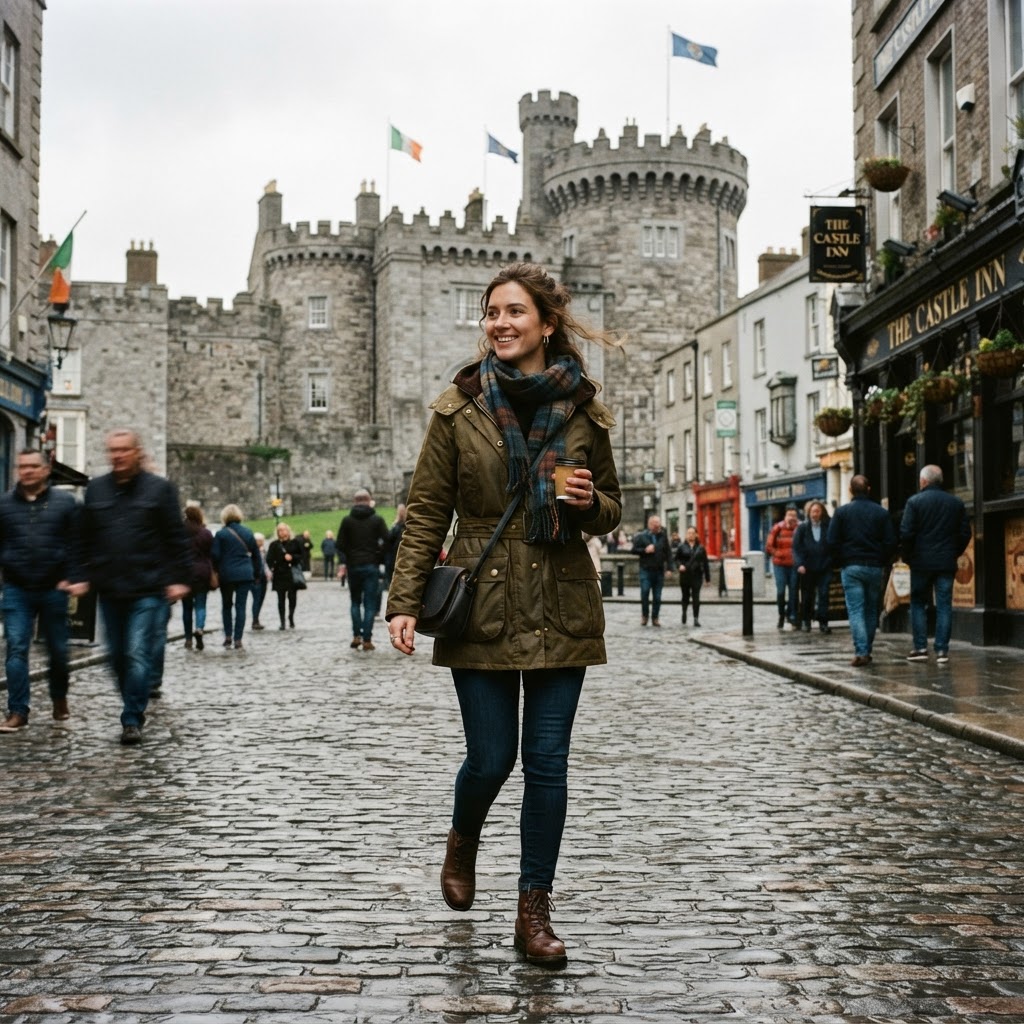
Exploring Ireland’s majestic fortresses calls for outfits that feel romantic and timeless while remaining rugged enough for uneven stone floors. Castle tours often involve significant walking and climbing narrow spiral staircases, so your footwear choice is just as critical as your overall aesthetic. Pair a long, sweeping wool coat with slim-fit trousers and leather boots for a look that feels plucked from a period drama but remains fully functional for modern travel. To elevate your look for photos, opt for monochromatic outfits which lengthen your silhouette against the grey stone backdrops of locations like Bunratty or Blarney Castle.
Styling for Rainy Day Pub Hopping
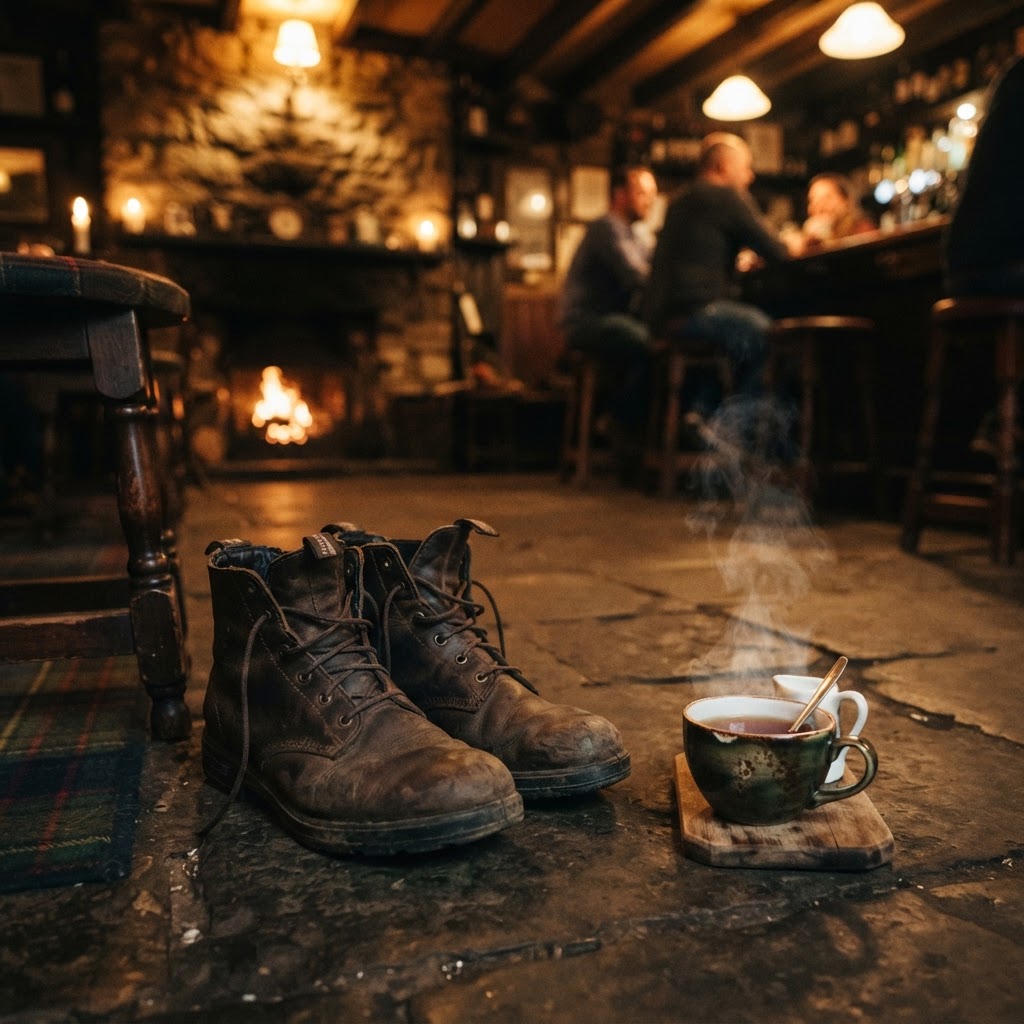
Rainy days in Ireland are best spent in cozy pubs, where you want to transition from a damp exterior to a comfortable, stylish interior effortlessly. For this vibe, prioritize soft, tactile textures like chunky knits and corduroy that feel inviting and warm. An oversized sweater tucked into a midi-skirt with tights is a classic look that keeps you comfortable during long sessions of live music and hearty stews. When choosing accessories, opt for leather over suede, as leather can be easily wiped clean after a walk through a wet village, whereas suede will absorb moisture and lose its texture almost immediately upon contact with Irish rain.
Footwear Strategies for Unpredictable Weather
Selecting the right footwear is perhaps the most challenging aspect of your Ireland packing list, as you need shoes that survive heavy rain yet still look aesthetic. Avoid suede at all costs, as the humidity and mud will ruin the material within a single day. Instead, invest in high-quality, treated leather or synthetic waterproof materials that offer excellent traction for wet, mossy surfaces. A shoe with a rubber lug sole is highly recommended, as it provides the necessary grip for the slick stone streets common in cities like Galway or Dublin, reducing the risk of slips during wet conditions.
The “One-Boot” Policy
If you want to save suitcase space, try to pack just one pair of versatile, waterproof walking boots that you can wear for both hiking trails and city dinners. If you feel you need a second pair, opt for a pair of sleek white leather sneakers that have been waterproofed with a protective spray for lighter days. Always break your shoes in at least two weeks before your trip to avoid painful blisters during long tours. Aim for a Chelsea boot style that pairs well with both trousers and dresses to maximize your outfit combinations.
The Role of Accessories in Irish Style
Accessories act as both functional tools and style statements, helping you elevate simple, practical outfits into something special. A high-quality woolen hat, a pair of leather gloves, and a durable crossbody bag are essential for keeping your hands free for taking photographs. Do not underestimate the power of a brightly colored scarf; it adds a pop of personality to neutral-heavy outfits while providing a vital barrier against the chill. Carrying a small, nylon backpack with a waterproof cover is also a tactical advantage for keeping your electronics safe during heavy downpours.
FAQ
Do I really need a heavy winter coat in the summer?
No, a heavy parka is unnecessary, but you absolutely need a lightweight, packable waterproof shell or a medium-weight trench coat. Even in July, Irish temperatures often hover around 15°C, and the wind-chill factor near the coast makes a wind-resistant outer layer vital for comfort.
Can I wear jeans in Ireland?
Yes, jeans are standard casual wear in Irish cities and pubs, but avoid them for long outdoor hikes. Denim takes hours to dry once saturated, which can lead to chafing and discomfort; opt for quick-drying synthetic hiking trousers instead if your itinerary involves nature trails.
What are the best shoes for walking on cobblestones?
Chelsea boots or sturdy leather loafers with rubber soles are the best choices for navigating uneven, historic streets. These provide the necessary ankle support and traction that thin-soled flats or high heels lack, keeping you safe on potentially slippery, moss-covered surfaces.
How should I dress for a formal dinner?
Ireland’s dining scene is primarily smart-casual, so there is no need for formal evening gowns or tuxedos. A simple, elegant dress or tailored trousers paired with a high-quality knit or silk blouse is perfect for even the most upscale restaurants in Dublin or Cork.
Do I need a specialized rain suit?
A full rain suit is unnecessary unless you are planning multi-day mountain trekking in remote national parks. For standard sightseeing and city exploration, a high-quality, water-resistant trench coat or a dedicated rain jacket with a hood is more than sufficient to keep you dry.
Common Mistakes to Avoid
Most tourists ruin their experience by overpacking cotton clothing. Cotton traps water, stays heavy, and takes days to dry once it gets wet. You will spend your trip feeling soggy and miserable if you pack denim jeans or thick cotton hoodies. Instead, prioritize synthetic blends or wool that retains heat even when damp.
Another frequent error is bringing brand-new shoes. Ireland requires extensive walking on uneven cobblestones, slick grass, and steep cliffs. Break in your boots for at least two weeks before departure to avoid painful blisters. Finally, do not rely solely on umbrellas. The fierce Atlantic wind in places like the Cliffs of Moher will turn an umbrella inside out in seconds.
How to Plan Your Outfit Strategy
Start by visualizing your daily itinerary. If you are spending three days in Dublin, focus on smart-casual layers that transition from museums to upscale pubs. If you are heading to the Wild Atlantic Way, move toward technical outdoor gear that keeps you warm during long coastal hikes.
The Modular Packing Walkthrough
- Lay out your clothing in a grid based on base, middle, and outer layers.
- Eliminate any item that does not match at least three other pieces in your suitcase.
- Pack a small, high-quality dry bag inside your backpack for your camera and phone.
- Use compression packing cubes to reduce the volume of your chunky knit sweaters.
Seasonality and What to Expect
Shoulder season, specifically May and September, offers the best balance of manageable weather and thinner crowds. You will find that spring brings unpredictable winds, while autumn offers more consistent, albeit cooler, temperatures. Avoid July and August if you prefer calm sidewalks and shorter queues for popular sites like the Guinness Storehouse.
Winter in Ireland is dark and wet, but it is also the most atmospheric time for indoor pub culture. If you travel between November and February, upgrade your outer shell to a heavy, insulated waterproof parka. You will also need a high-quality beanie and wool-lined gloves to handle the coastal chill.
Essential Packing Checklist
- Outerwear: One waterproof shell with a hood, one light windbreaker, and one packable down jacket.
- Clothing: Three merino wool base layers, two pairs of quick-dry trousers, and two mid-weight wool sweaters.
- Footwear: One pair of waterproof Chelsea boots, one pair of comfortable walking trainers with good grip.
- Accessories: One thin scarf, one wool hat, two pairs of thermal socks, and a small, foldable waterproof backpack cover.
Frequently Asked Questions
Do I really need expensive hiking gear for city sightseeing?
No, you do not need full mountaineering gear for city exploration. However, you do need functional, water-resistant footwear and a quality rain jacket. Dublin streets can be slick, and the wind chill is real, so prioritizing protection over pure fashion keeps you outdoors longer.
Can I buy clothes if I forget something important?
Yes, Ireland has excellent high-street shops like Penneys (Primark) for affordable basics and local woolen mills for high-quality knitwear. Do not panic if you forget an item, as shops in major towns cater well to unprepared tourists. Use this as an excuse to buy an authentic Irish wool sweater to take home as a souvenir.
Leave a Reply