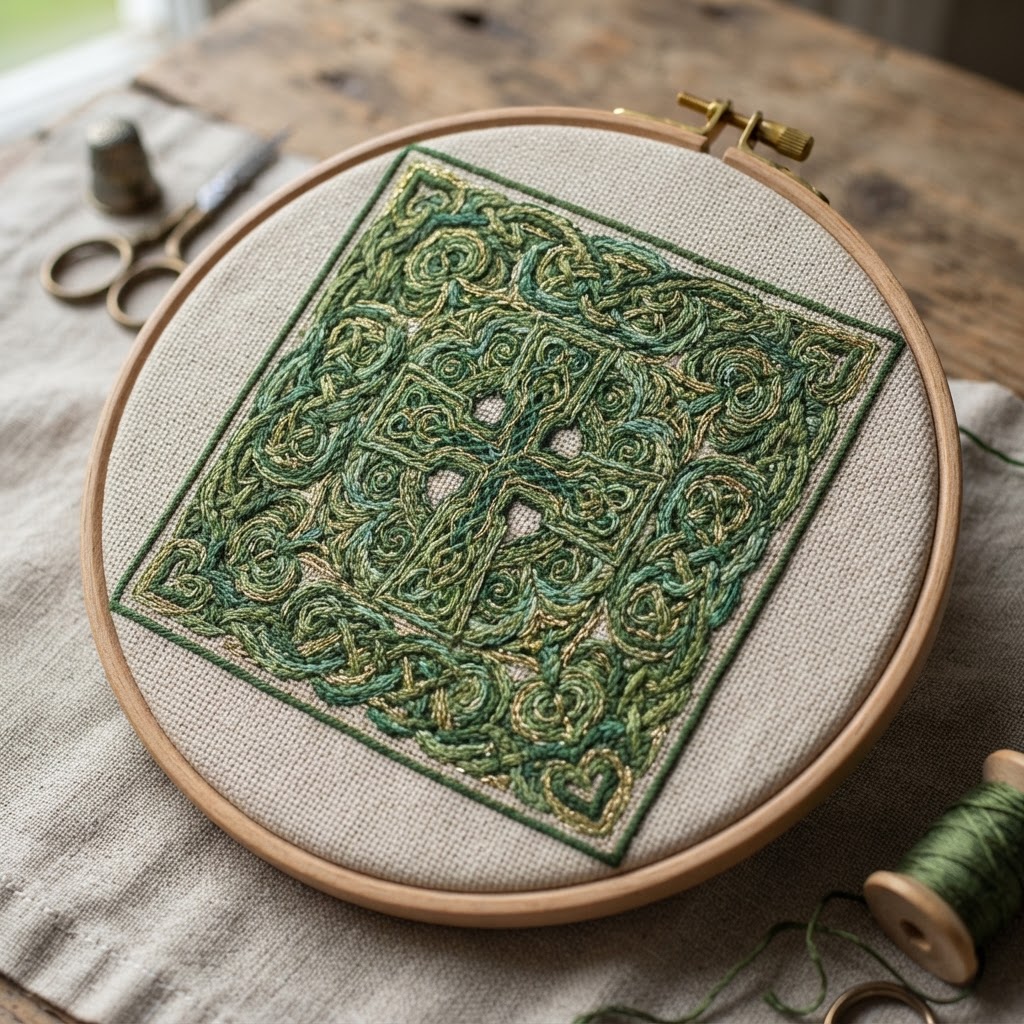
Celtic needlepoint brings the rich, interwoven history of ancient Ireland to life through traditional textiles and intricate geometric designs. By mastering specific Celtic needlepoint techniques, you can create stunning heirlooms that feature legendary knotwork, spirals, and zoomorphic patterns, blending historical authenticity with modern craftsmanship for any home decor project or personalized gift.
The History of Celtic Art in Needlework
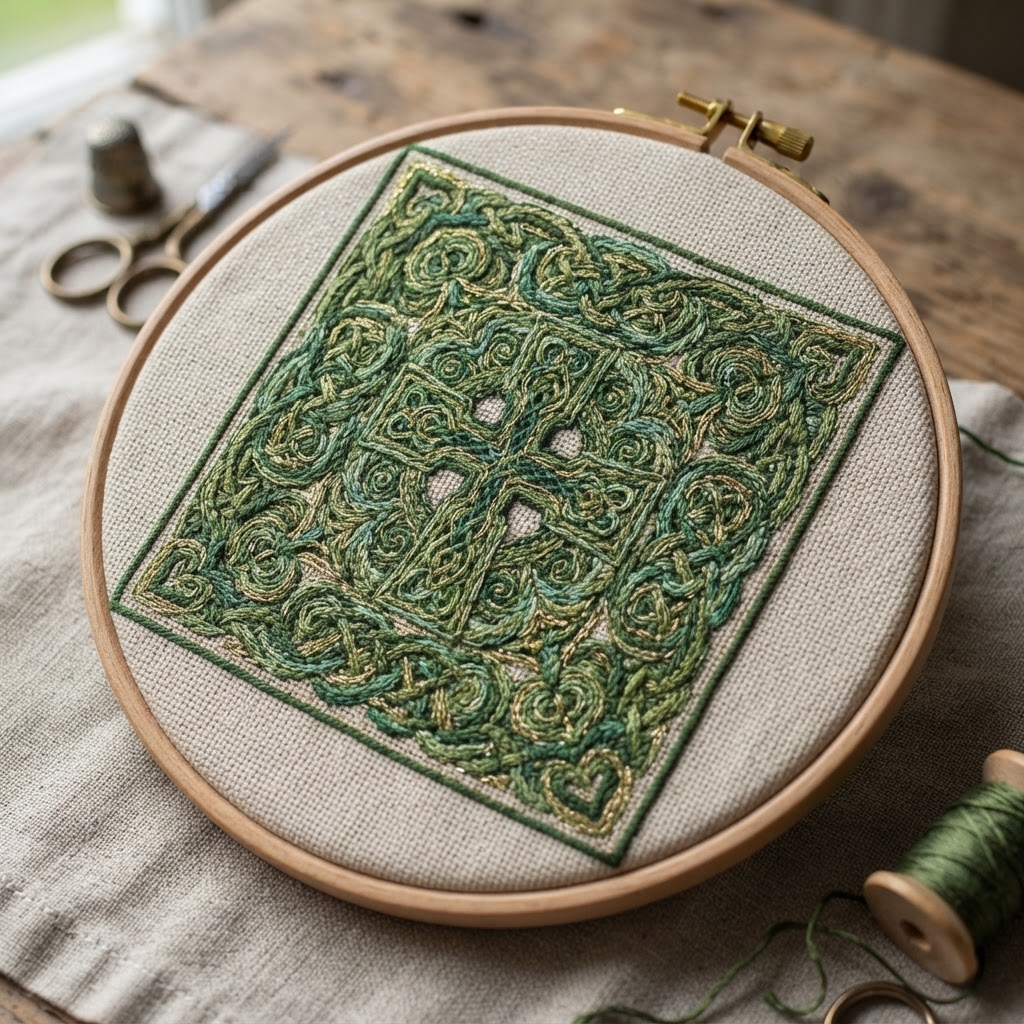
Celtic needlepoint finds its roots in the manuscript illumination and stone carvings of the Early Middle Ages, specifically the intricate designs found in the Book of Kells. These patterns rely heavily on the principle of the ‘endless line,’ representing eternity and the interconnectedness of all life. For modern stitchers, translating these stone-carved motifs into needlepoint requires an understanding of symmetry and tension control. Unlike standard cross-stitch, Irish needlepoint projects often utilize wool or silk threads on mono-canvas to allow for the complex color layering needed to represent the depth found in historical manuscripts. The discipline required to execute these designs is rewarding, as every stitch contributes to the visual flow of the knotwork, ensuring that no line appears broken or disjointed in the final piece.
Essential Materials for Irish Needlepoint Projects
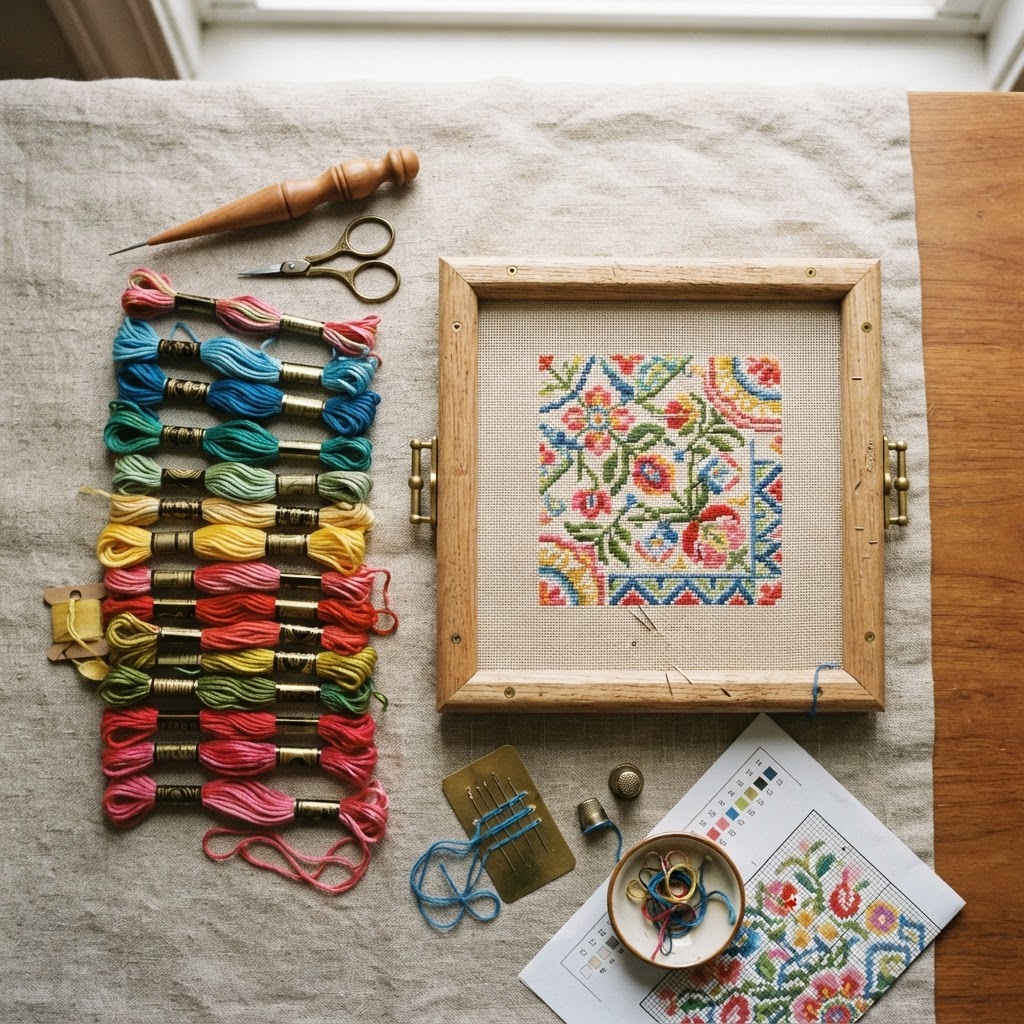
Selecting the right supplies is the foundational step for any successful Celtic needlepoint project, as the precision of these patterns demands high-quality materials. You should begin with a high-count mono-canvas, typically 14 or 18 count, which provides enough resolution to render intricate knots without the canvas looking cluttered or pixelated. When choosing fibers, look for Persian wool for a traditional matte finish or silk blends if you prefer a subtle sheen that reflects the light similarly to illuminated manuscripts. It is essential to use a laying tool, such as a needlepoint trolley needle, to ensure your strands lie flat and even; this prevents the threads from twisting, which would otherwise obscure the delicate geometry of your Celtic knot needlepoint patterns. Always work with a sturdy frame or floor stand to keep your tension consistent across the entire canvas.
Mastering Celtic Knot Needlepoint Patterns
Translating complex Celtic knots into needlepoint is an art form that balances mathematical precision with fluid design execution. Start by practicing the basic ‘plait’ or ‘braid’ stitch, which serves as the backbone for most traditional needlepoint designs. When working on a knot, it is best to stitch the outlines first using a continental stitch or basketweave stitch, then fill in the centers with contrasting colors to create the ‘under-and-over’ visual effect. This layering is what gives the design its iconic three-dimensional appearance. If you are a beginner, look for chart-based patterns that clearly indicate path intersections, as these are the most common places to make counting errors. Take your time at each crossing, as the integrity of the pattern depends entirely on the accuracy of your grid spacing and the consistent color transitions at each junction.
Comparing Irish Needlepoint Techniques
To help you choose the right approach for your project, consider this comparison of common techniques used in Celtic needlepoint:
Advanced Stitching Celtic Embroidery Tips
Once you have mastered the basic layouts, you can advance your stitching Celtic embroidery skills by incorporating textured stitches like the French knot or bullion stitch to highlight the intersections of your patterns. Introducing metallic threads can mimic the gold leaf found in historical Irish art, provided you use them sparingly to avoid overwhelming the structural geometry of the knotwork. Another expert tip is to utilize shading techniques, often referred to as ‘thread painting,’ to create a gradient effect within the segments of the knot. By using three shades of the same color family, you can make the knots appear as if they are weaving in and out of shadows, significantly enhancing the professional quality of your work. Remember to keep your tension consistent even when switching between different types of thread, as varied weights can cause the canvas to pull.
Incorporating Irish Craft Inspiration into Modern Decor
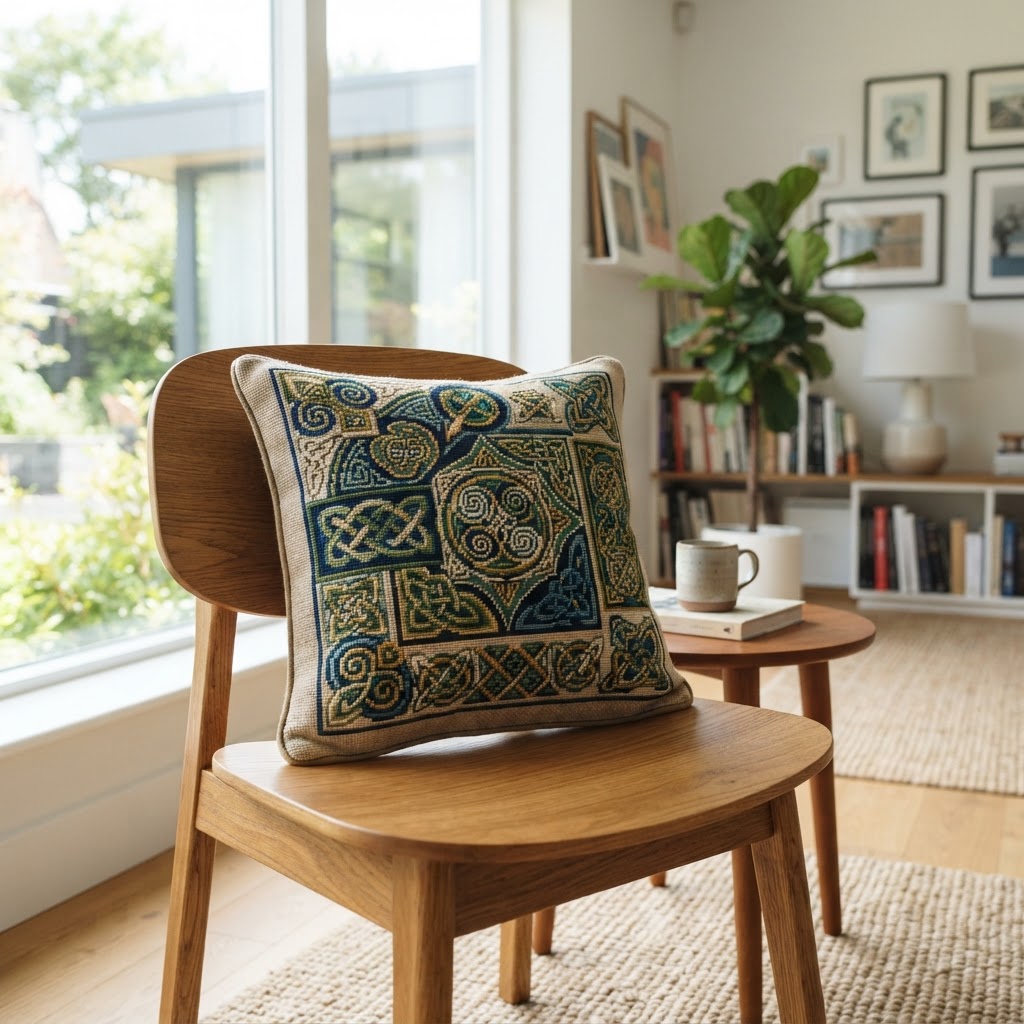
Irish needlepoint projects do not have to be limited to framed art; they can serve as functional and decorative elements in a modern home. Consider designing custom Celtic needlepoint coasters, decorative pillows for a living room, or even inserts for heirloom-quality wooden trays. The key to integrating these traditional designs into a contemporary space is color theory; swap the traditional deep greens and golds for a monochromatic palette of greys, blues, or even earth tones to suit a minimalist aesthetic. By scaling your patterns to fit smaller items, you make these elaborate designs more approachable and functional. For instance, a small, intricate Celtic circle can serve as a stunning focal point for a pincushion or a small decorative box topper, allowing you to enjoy the process of stitching without the long-term commitment of a large wall hanging.
FAQ
What is the best fabric for Celtic needlepoint?
Mono-canvas is widely considered the best choice because it maintains shape and allows for the precise counting required for intricate knotwork designs.
Can beginners start with complex knot patterns?
It is better for beginners to start with a small, single-knot pattern before attempting large-scale, multi-interlocking designs to learn basic tension control.
How do I prevent canvas distortion?
Using a professional scroll frame or floor stand, rather than a hoop, will keep your canvas tension even and prevent warping during the stitching process.
Are there specific threads recommended for Irish designs?
Yes, Persian wool is often preferred for a traditional look, while silk or blended fibers offer a modern, lustrous finish that highlights the geometric details.
Conclusion
Celtic needlepoint is more than just a hobby; it is a meaningful way to engage with Irish heritage while developing sophisticated needlework skills. By following the guidance provided on material selection, pattern execution, and modern application, you can create breathtaking, timeless pieces. Whether you are stitching a complex knot or a simple decorative border, the patience you invest will pay off in the beauty and longevity of your finished work. Start your journey today and let these ancient patterns guide your needle through a rewarding creative process.
Leave a Reply