
There is a specific cadence to a morning in Paris that feels entirely detached from the modern world. It begins with the scent of roasted beans and the clinking of porcelain against marble tabletops, unfolding on a bustling sidewalk. For the Parisian, the café is not merely a place to consume caffeine; it is a vital public living room. The Paris café culture remains one of the most enduring symbols of the city, defined largely by the sprawling outdoor terraces that invite locals and visitors alike to slow down and embrace the art of doing nothing.
The Evolution of the Parisian Terrace
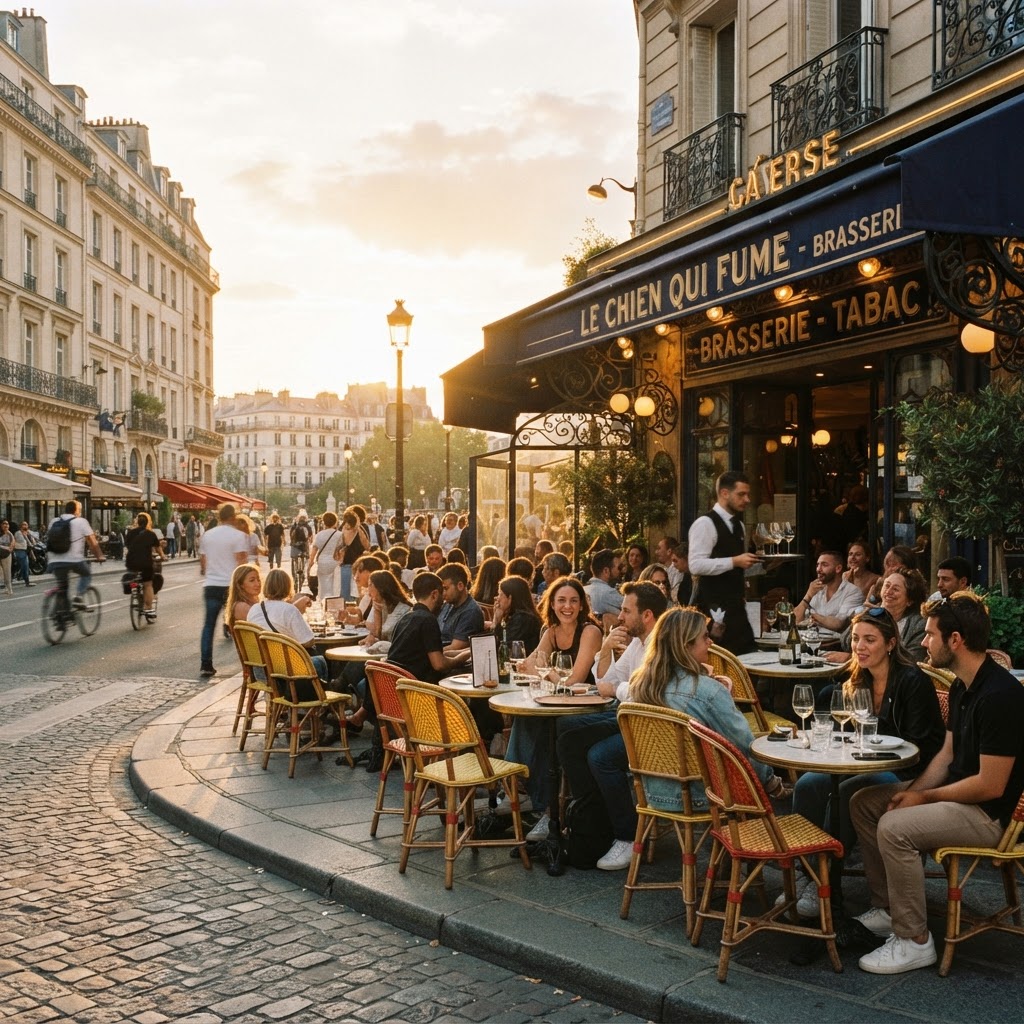
To understand why outdoor seating is so fundamental, one must look at the history of the city itself. In the mid-19th century, Baron Haussmann redesigned Paris with wide boulevards and expansive sidewalks, creating the perfect environment for café owners to spill out onto the pavement. This transformation effectively turned the sidewalk into a stage, where the café became a front-row seat to the daily theater of urban life.
Architecture of a Classic Café
Most iconic Parisian cafés share a set of design principles that maximize comfort and connectivity. The signature rattan chairs are almost universally turned to face the street rather than the table, a subtle architectural cue that signals the primary activity of the establishment: observation. These chairs are lightweight and stackable, allowing servers to rearrange the space dynamically based on the flow of the crowd and the movement of the sun.
The Seasonal Shift
Terrace culture in Paris is remarkably resilient. Even as temperatures drop, these outdoor spaces remain active. Many cafés feature retractable glass enclosures and powerful overhead heaters, ensuring that the ritual of sitting outside persists through autumn and winter. The true Parisian spirit is found in the willingness to brave a crisp breeze for the sake of the perfect spot on the boulevard.
The Fine Art of People-Watching
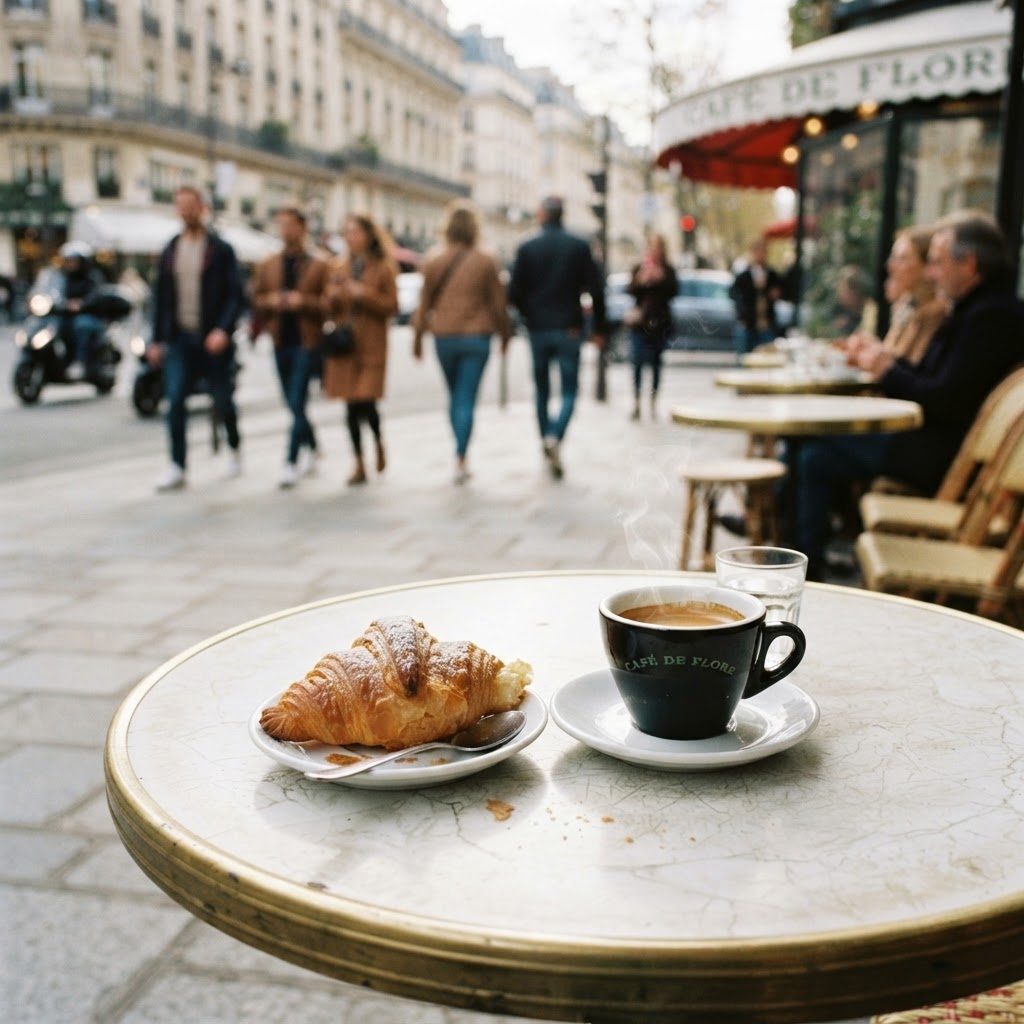
People-watching in Paris is not an act of voyeurism; it is a disciplined practice of mindfulness. When you sit at a small, round table with an espresso or a glass of wine, you are essentially engaging in a silent dialogue with the city. You are observing the fashion, the relationships, and the transient moments that make Paris the capital of culture.
How to Observe Like a Local
The key to effective people-watching is blending in rather than standing out. Choose a table that offers a panoramic view of a busy intersection or a major landmark, but avoid the most tourist-heavy trap streets if you want a more authentic experience. Avoid staring directly at people for too long; instead, treat the passing crowd as a cinematic backdrop. You are there to feel the pulse of the neighborhood, not to scrutinize individual commuters.
Notable Spots for Observation
If you are searching for the best vantage points, focus on areas like Saint-Germain-des-Prés or Le Marais. In Saint-Germain, the historic cafés like Les Deux Magots offer a sense of literary nostalgia, where you can easily imagine Hemingway or Sartre jotting down notes in the same chair you currently occupy. In the 11th arrondissement, smaller, modern cafés offer a younger, more eclectic crowd that is just as fascinating to observe.
Understanding French Café Etiquette
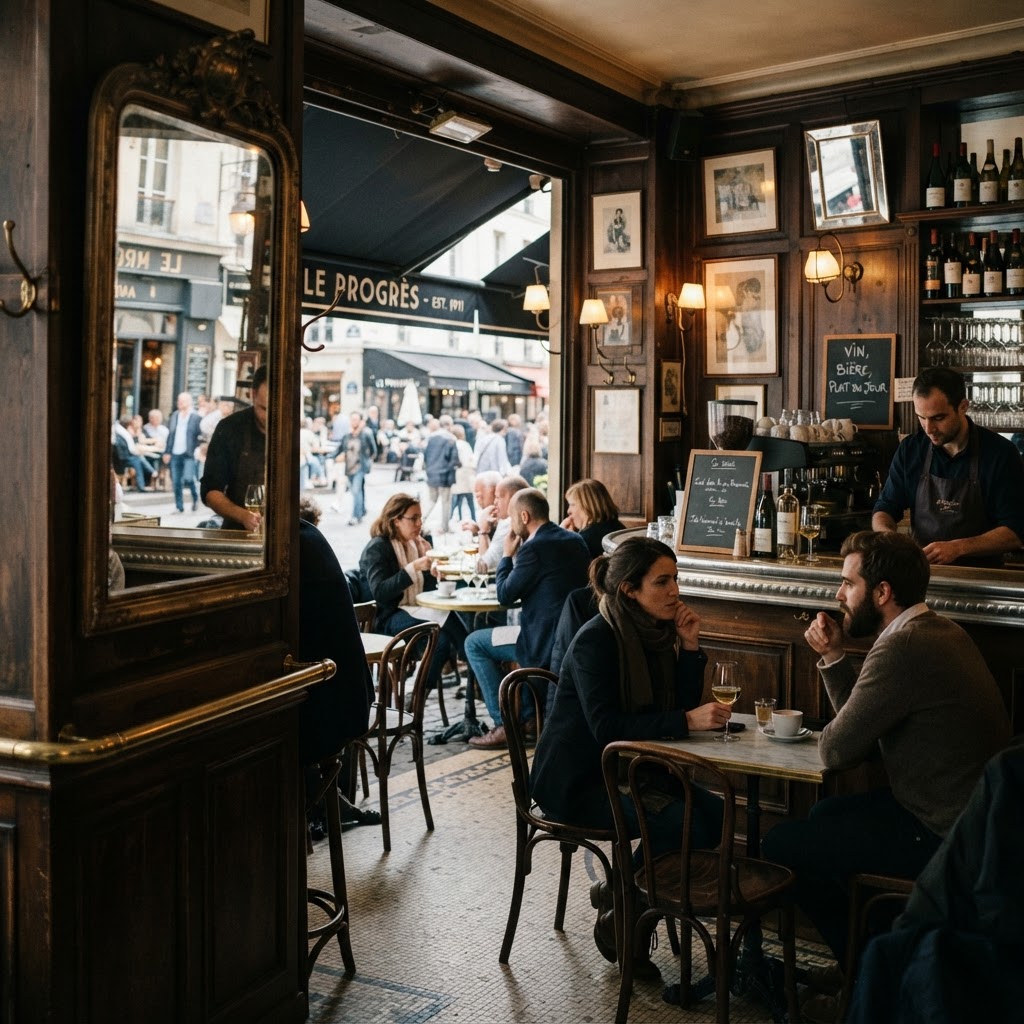
Navigating the social codes of a Parisian café can be intimidating for a newcomer, but the rules are actually quite simple once you learn them. The most important lesson is to respect the staff and the pace of the establishment. The waiter is not your servant; they are a professional in a high-pressure environment. If you want to order, catch their eye, give a polite nod, and say, “Bonjour.” Avoid snapping your fingers or waving aggressively, which is considered exceptionally rude.
The Unwritten Rules of Seating
Once you have claimed your seat, you essentially own that table for as long as you have a drink in front of you. You are not expected to vacate your spot after an hour; in fact, the staff will rarely bring you a check until you specifically ask for it. This is a crucial element of the Paris café culture—the freedom to occupy space without the pressure of a quick turnover. If you find yourself needing to work on a laptop, try to choose a café that is known for its coworking-friendly atmosphere, as many traditional spots prefer a tech-free vibe.
Ordering Like a Parisian
While menus can be extensive, ordering is usually straightforward. A “café” is a small, strong espresso. If you want milk, order a “café crème.” During the transition hours of the afternoon, switching to a “vin rouge” or an “apéro” (an early evening drink) is the perfect way to transition from the day to the night. When you are ready to pay, a simple “l’addition, s’il vous plaît” is the standard approach.
The Sensory Experience of the Sidewalk
What makes the terrace experience so addictive? It is the intersection of all five senses. You have the sound of the city: the low hum of conversation, the occasional siren, and the rhythmic sound of bicycle tires on cobblestones. You have the smell of fresh baguettes from a nearby boulangerie mixing with the aroma of high-quality coffee. These elements combine to create a sensory landscape that is uniquely Parisian.
The Importance of the Tabletop
Look closely at the table in front of you. Often, it is made of zinc or marble, cool to the touch and worn smooth by decades of use. These tables are designed to hold exactly what is necessary: a cup, a saucer, and perhaps a small plate of snacks. The simplicity of the tabletop encourages you to put your phone away and focus on the physical world. This is perhaps the greatest benefit of the café culture: the forced digital detox in favor of tactile reality.
Choosing Your Ideal Café
Not every café is right for every mood. You might choose a bustling corner café if you are looking for energy and inspiration, or a quieter, tucked-away spot in a residential street if you are looking to read a book in peace. To find the right fit, consider the “vibe” of the neighborhood. The Rive Gauche (Left Bank) often feels more classic and intellectually charged, while the Rive Droite (Right Bank) can feel more modern, artistic, and spontaneous.
Top Tips for Selection
- Check the local crowd: If the terrace is full of locals, it is a good sign.
- Observe the coffee machine: A professional, well-maintained machine often indicates a commitment to quality.
- Look for the menu: If the menu is displayed in four different languages with pictures of the food, it is likely designed for tourists, which might be fine, but may lack the authentic “local” experience.
The Cultural Legacy of the Café
Paris café culture is more than just a pastime; it is a repository of history. These establishments were the meeting grounds for the French Resistance, the breeding ground for existentialist philosophy, and the birthplaces of countless artistic movements. Every time you sit down at an outdoor terrace in Paris, you are participating in a tradition that spans centuries. You are effectively walking in the footsteps of poets, painters, and revolutionaries who shaped the world from the comfort of a bistro chair.
Conclusion
Whether you are visiting for the first time or returning to your favorite neighborhood, the terraces of Paris offer a perspective that you simply cannot get from a museum or a guidebook. By taking the time to sit, observe, and engage with the environment, you transcend the role of a tourist and become a temporary inhabitant of this magical city. The next time you find yourself in Paris, resist the urge to rush. Find a terrace with a good view, order a café, and let the world come to you. Have you found a favorite spot to people-watch in Paris? Share your experiences in the comments below and let us know your favorite corner of the city!
Leave a Reply