
The best photo spots in Seville include the iconic Plaza de España, the historic Real Alcazar, the winding alleys of Barrio Santa Cruz, and the panoramic Las Setas (Metropol Parasol). These locations offer the perfect combination of Moorish architecture, vibrant Andalusian light, and deep cultural history for both professional and amateur photographers.
The Grandeur of Plaza de España
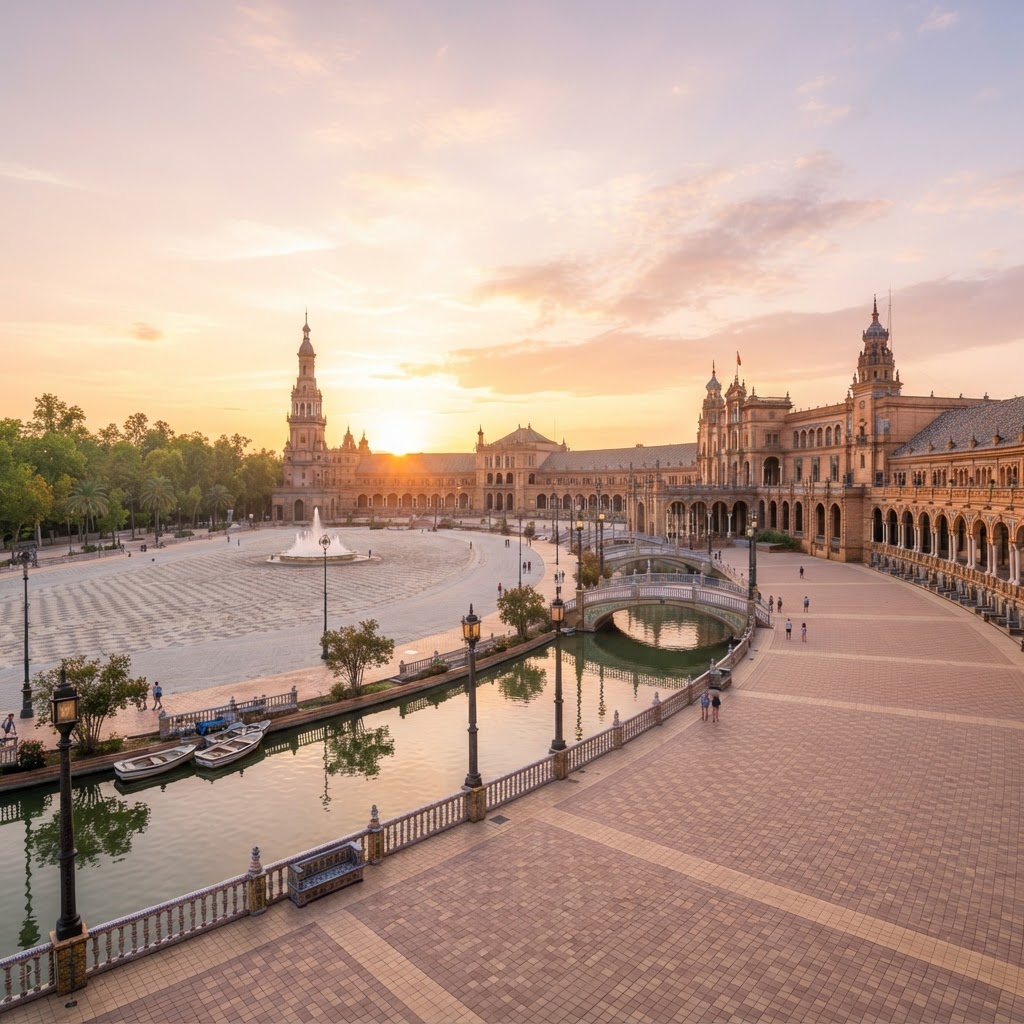
Plaza de España serves as the architectural centerpiece of Seville, offering a grand semi-circular backdrop featuring intricate ceramic tile work representing each of Spain’s 50 provinces. Designed by Aníbal González for the 1929 Ibero-American Exposition, the plaza is best captured during the ‘golden hour’—the first hour after sunrise—when the soft, warm light illuminates the terracotta facade without the obstruction of tourist crowds.
Capturing the Reflection
For the most striking results, head to the central canal. Position your camera as low as possible near the water surface to capture the crisp reflection of the two flanking towers against the bright blue Sevillian sky. To ensure a professional-grade architectural shot, avoid visiting between 12:00 PM and 4:00 PM when the harsh overhead sun creates deep, unattractive shadows on the ornate bridge railings. If you are serious about photography, bring a polarizing filter to enhance the deep blues of the sky and the saturation of the iconic ceramic tiles.
The Intricate Beauty of Real Alcazar
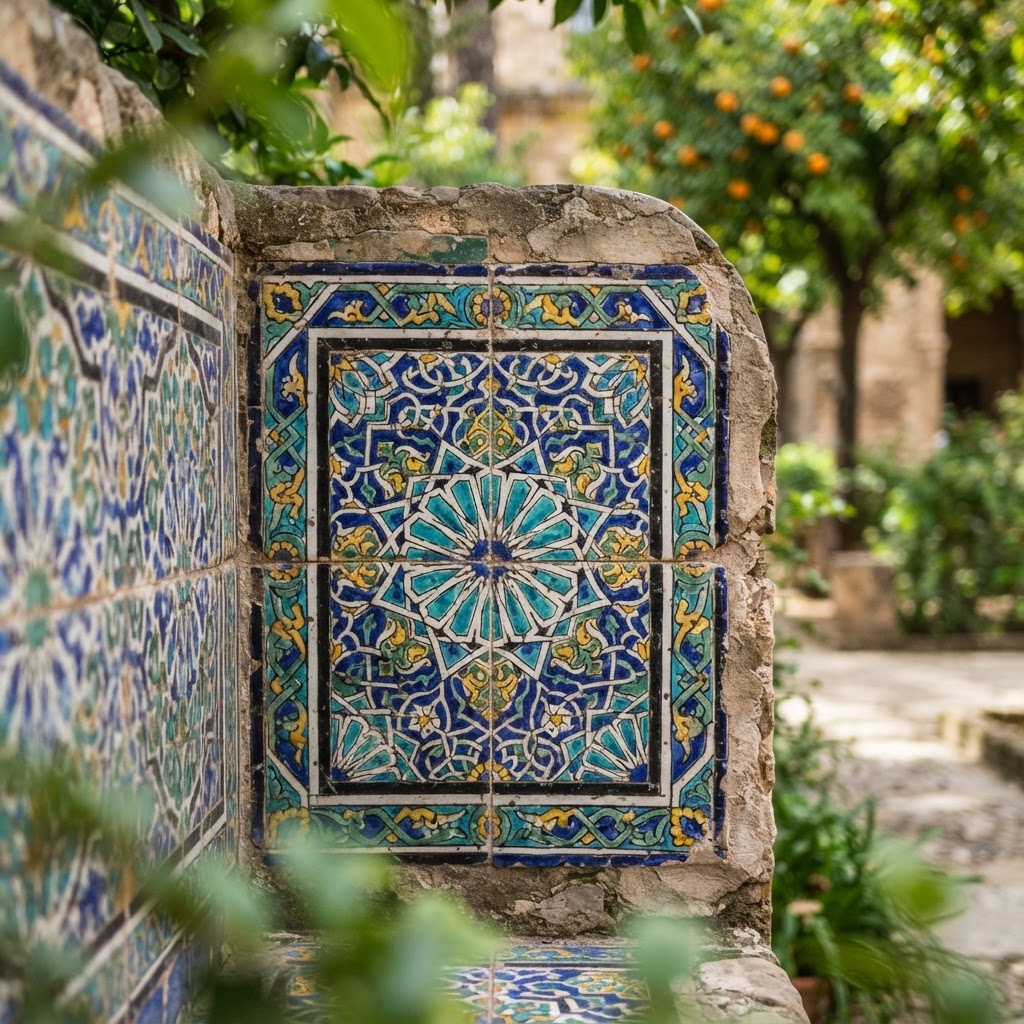
Stepping inside the Real Alcazar feels like walking into a living history book, where Mudéjar architecture, lush gardens, and tranquil reflecting pools create a masterclass in visual symmetry. When planning your Real Alcazar photo session, prioritize the ‘Patio de las Doncellas’ for its grand reflecting pool, which creates a perfect mirror image of the palace walls. The palace is an active royal residence, so check for specific restricted areas, but the general grounds offer endless textures and geometries.
Focus your lens on the intricate stucco carvings and the vibrant, geometric tile work (azulejos) found in the Ambassador’s Hall. For a unique perspective, move away from the main hallways into the sprawling gardens where the juxtaposition of exotic palm trees against medieval walls creates a lush, green aesthetic. Use a fast aperture lens (f/2.8 or lower) to create a soft bokeh effect on the ornate arches, effectively isolating the historical details from the background noise of other visitors. Remember that entry prices start around €14.50, and arriving at the 9:30 AM opening time is essential for clear shots of the popular courtyard.
Exploring Barrio Santa Cruz
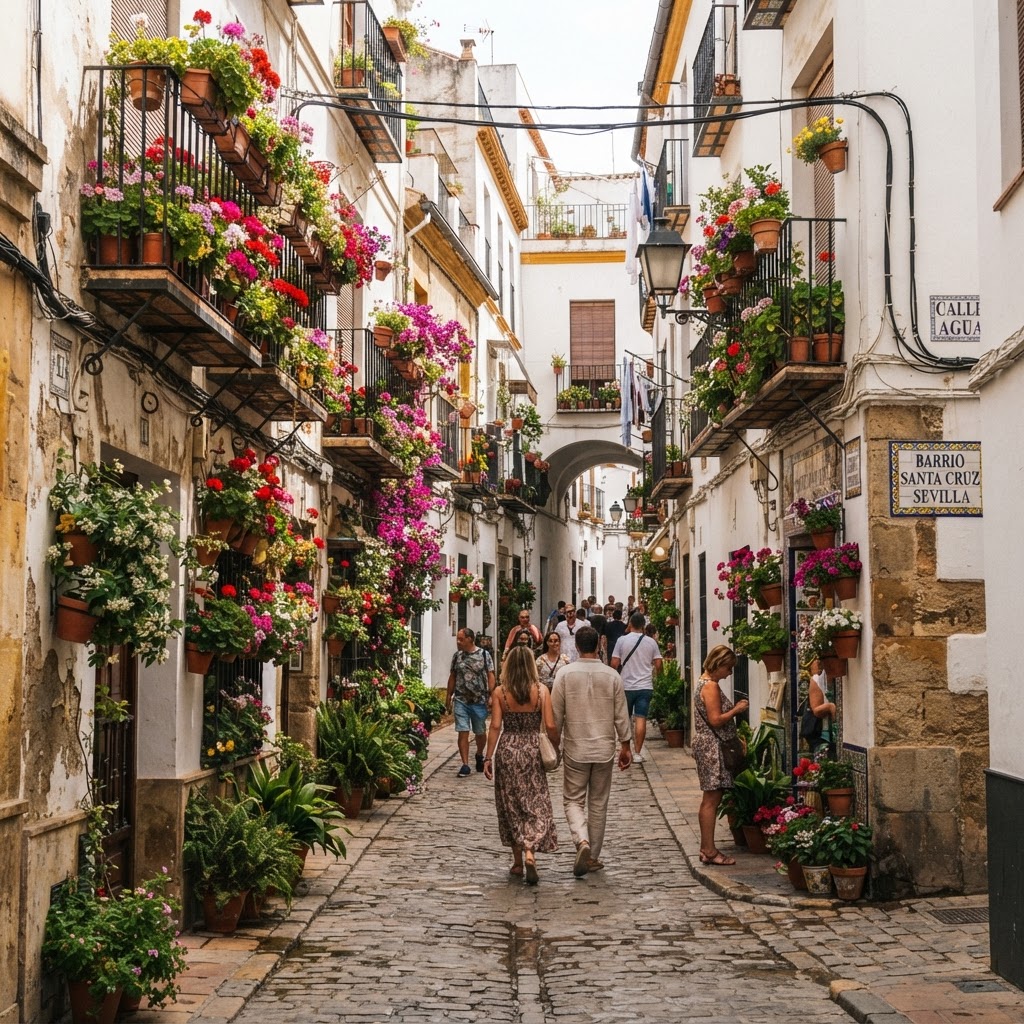
Barrio Santa Cruz, the former Jewish quarter, is arguably the most atmospheric and Instagrammable neighborhood in Seville, characterized by narrow, whitewashed alleys and vibrant hanging flower pots. This area requires a slow, wandering approach to capture the ‘hidden gems’ of Seville, such as the small, nameless plazas and hidden archways that define the authentic Andalusian urban experience. If you are a fan of elevated architectural photography, you might also be interested in exploring the stunning balcony views in Santorini for similar golden hour inspiration.
To capture the essence of this district, focus on the contrast between the stark white walls and the colorful bougainvillea petals. Narrow alleys often result in low-light conditions, so consider a prime lens with a wide aperture to manage the shadows without relying on high ISO settings. Early mornings are best, as the local residents hang fresh laundry and prepare the streets, offering a candid glimpse into daily life. Look specifically for the intersection of Calle Agua, where you can capture the massive stone walls of the Alcazar bordering the floral balconies of the neighborhood.
Sunset Views and Golden Hour
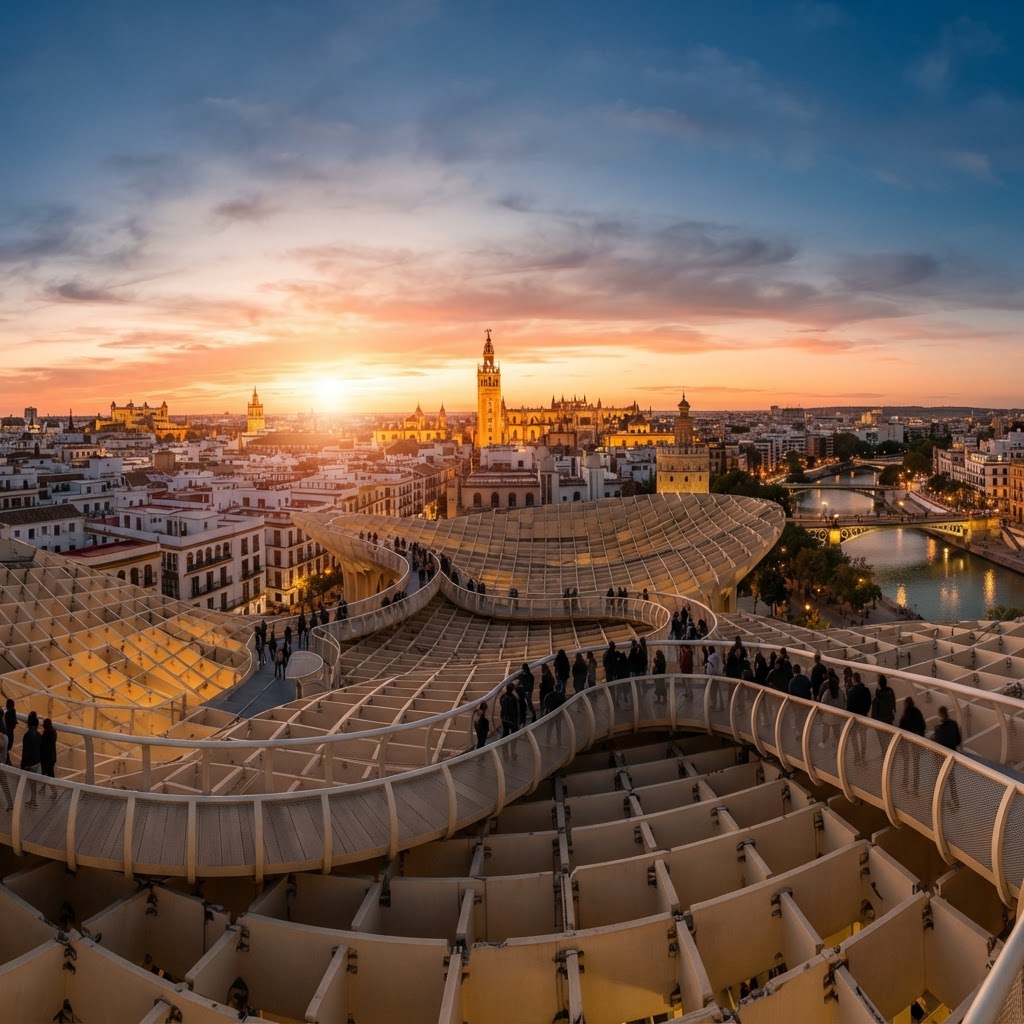
For those seeking the best sunset views in Seville, the Metropol Parasol, locally known as Las Setas, is a must-visit. This massive wooden structure provides a futuristic contrast to the ancient city skyline, with its undulating walkways offering 360-degree views of the Giralda tower and the city’s terracotta roofscape.
- Capture the panoramic view from the rooftop walkway just as the city lights flicker on.
- Use a wide-angle lens (14mm-24mm) to include the massive scale of the waffle-like wooden structure.
- Wait for the ‘blue hour’ to balance the artificial lighting of the structure with the deep indigo of the twilight sky.
Beyond just the main platform, the ground level offers fascinating geometric shadows cast by the wooden ‘mushrooms,’ which are ideal for high-contrast black and white photography. The entrance fee is approximately €10, which includes a drink at the top, making it both a photography location and a prime viewing platform for the city’s transition from day to night.
Hidden Courtyards and Architectural Details
Beyond the major landmarks, Seville is famous for its private courtyards, known as patios, which embody the traditional Andalusian lifestyle. While many residences remain private, several institutional buildings like the Casa de Pilatos or the Palacio de las Dueñas allow public access and offer superior photographic opportunities compared to street-level architecture.
These sites provide an intimate look at the Andalusian way of life, characterized by three distinct elements:
- Ornate wrought-iron gates that frame deep views into the interior.
- Cascading bougainvillea and jasmine plants that provide vibrant color bursts.
- Traditional ceramic fountain centerpieces that serve as the focal point for long-exposure water shots.
When photographing these patios, aim to capture the interplay of light and shade through the wooden shutters (celosías). These architectural features were designed to regulate heat, but they create beautiful, rhythmic patterns on the floor tiles that add immense depth to architectural compositions.
Essential Photography Gear for Seville
To make the most of your Andalusia travel photography, pack a versatile zoom lens (like a 24-70mm) to bridge the gap between wide-angle landscape architecture and tight, detail-oriented shots of tiles. Always carry a lightweight carbon-fiber tripod for twilight long exposures at Las Setas, as security may restrict bulky gear during peak hours.
Ensure you have at least two spare batteries, as the high-contrast light of Southern Spain forces many cameras to work harder in auto-exposure modes, draining power faster than anticipated.
FAQ
What is the best time of year for photography in Seville?
Spring (April to May) is ideal because the weather is mild, and the city’s many orange trees are in bloom. This provides extra color for your photos and avoids the extreme 40°C+ heat of the summer months that can cause heat haze in your images.
Do I need a permit to take professional photos in Seville?
Generally, no permits are required for personal photography, but commercial shoots in sites like the Real Alcazar or Plaza de España require advance written permission. Always check local signs or municipal websites if you are using tripods or lighting equipment in public areas.
Are drones allowed for photography in Seville?
No, drone photography is strictly prohibited throughout the city center due to the proximity of the airport and the protection of historic monuments. Fines for unauthorized drone usage in Seville can be substantial, so stick to ground-based camera equipment to avoid legal issues.
What should I wear for photos in Seville?
Wear comfortable, breathable clothing in neutral or complementary colors like cream, white, or light blue to contrast with the warm terracotta tones of the city. Comfortable walking shoes are a must, as you will likely cover several miles of cobblestone streets each day during your shoot.
Mastering the Sevillian Light: Essential Tips
Seville is not just a city; it is a giant reflector. The white-washed walls of the city center act as natural bounce cards for your portrait photography. Avoid shooting at midday, as the light bounces off the pavement and creates unflattering shadows under the eyes. Always seek shade in narrow streets like those in Santa Cruz, where the walls provide soft, directional light perfect for skin tones.
Pack a lightweight tripod for your blue-hour shots at Las Setas. The wooden structures vibrate slightly with the movement of crowds, so a steady base is vital for long-exposure images. If you use a mirrorless camera, bring two extra batteries. The extreme heat during summer months drains lithium-ion batteries significantly faster than usual.
A Photographer’s Step-by-Step Planning Guide
Most travelers make the mistake of trying to cover too much ground in a single day. Instead, focus on one quadrant of the city to save time and energy. Use this logic to structure your route:
- 08:00 – 10:00: Hit the major landmarks like Plaza de España or the Alcazar. The light is soft and the queues are manageable.
- 10:00 – 13:00: Get lost in the side streets of Santa Cruz or the Macarena district to photograph architecture without the crowds.
- 13:00 – 17:00: Retreat to a shaded cafe or your hotel. The light is too harsh for high-quality architectural photography anyway.
- 18:00 – 21:00: Return to open spaces like the riverfront or Las Setas as the sun dips below the horizon.
Common Mistakes to Avoid
Do not underestimate the walking distance between spots. While the city looks compact on a map, the cobblestone streets will tire your feet quickly. Wear broken-in walking shoes rather than stylish boots if you plan to shoot for more than four hours. Additionally, check the local event calendar before you book. Seville hosts numerous religious processions, and while they are visually stunning, they can make access to iconic spots impossible due to massive street closures.
Budgeting for Your Shoot
Most exterior photography in Seville is free. However, if you want high-quality images of interiors, set aside a daily budget. Tickets to the Real Alcazar cost approximately €14.50, and the Seville Cathedral entry is roughly €12. Consider the ‘Seville City Pass’ if you plan on entering more than three paid venues, as it often includes fast-track entry which saves you precious hours of golden-hour light.
Frequently Asked Questions
Do I need a permit for professional photography in public spaces?
Generally, no. As long as you are using a handheld camera and not obstructing public thoroughfares or commerce, you do not need a permit. However, if you are planning a large-scale commercial shoot with lighting rigs and reflectors, you must apply for a municipal permit weeks in advance through the Seville City Council.
What is the absolute best month for photography?
April and May offer the perfect balance of mild temperatures and lush greenery. The orange blossoms fill the air, and the light is consistently clear. Avoid July and August if you value your gear; the 40°C heat can cause camera sensors to overheat during long sessions.
The Quick Photography Checklist
- Filters: Bring a Circular Polarizer to cut glare on the river and fountain water.
- Lenses: A 35mm lens is your best friend for street scenes; a 16-35mm is essential for the vast scale of the Plaza de España.
- Apps: Use PhotoPills to track exactly where the sun will set behind the Giralda tower.
- Etiquette: Always ask permission before photographing locals, especially in the more traditional neighborhoods.
Leave a Reply