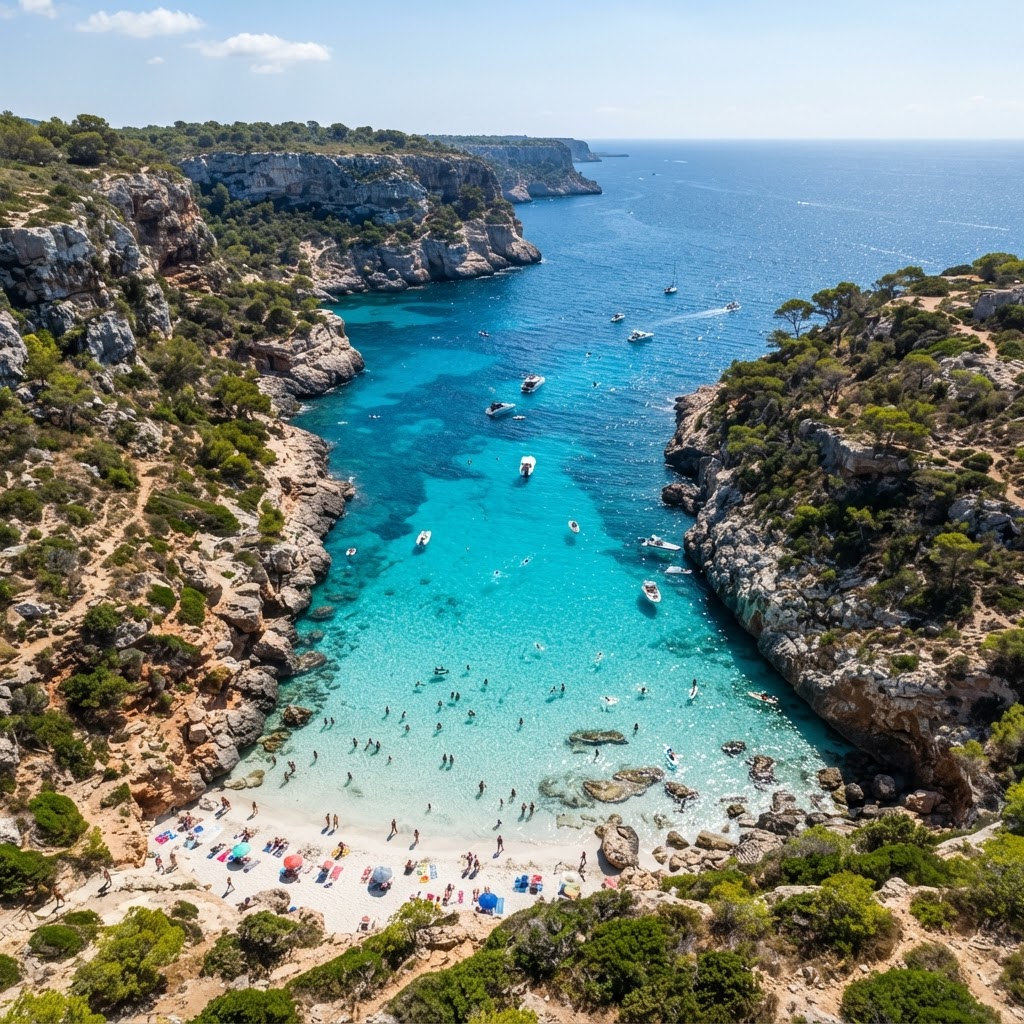
Mallorca Aesthetic Views: Beautiful Places & Sunsets
Mallorca is famous for its aesthetic beauty, characterized by dramatic limestone cliffs, turquoise Mediterranean coves like Calo des Moro, and historic mountain villages such as Soller. The island offers a diverse landscape where rugged mountain terrain meets serene coastal beauty, making it one of the most visually stunning destinations in Spain.
The Magic of Calo des Moro and Coastal Coves
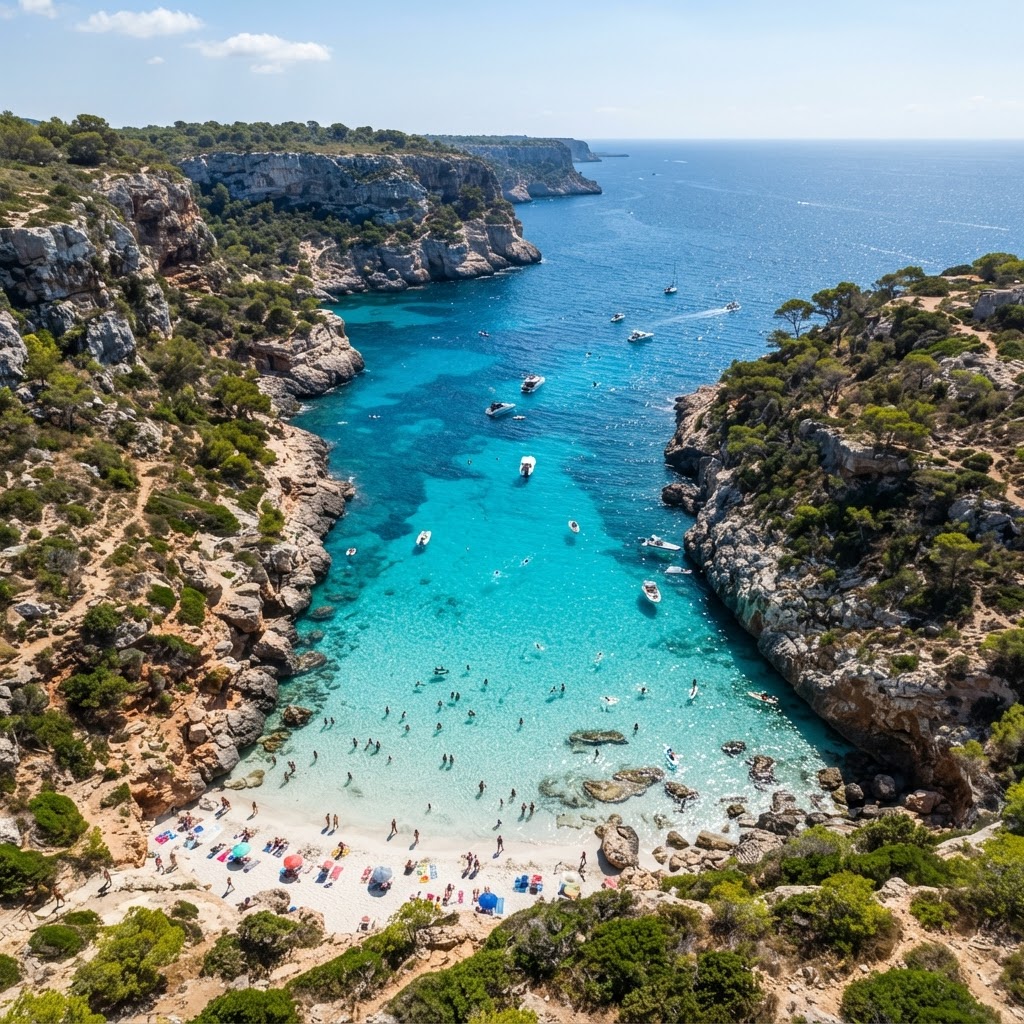
Calo des Moro remains the most iconic coastal aesthetic in Mallorca, defined by its impossibly clear, multi-hued water that transitions from bright turquoise to deep sapphire. Nestled between towering, jagged limestone cliffs, this beach functions as a natural sanctuary that provides a dramatic backdrop for photography and swimming. While the beach is relatively small, measuring roughly 30 meters in length, its visual impact is significant, drawing thousands of visitors who seek the quintessential Balearic experience.
Accessing the cove requires a steep 10-minute hike from the nearest parking area, which helps thin out the crowds slightly. To capture the best aesthetic, visitors should arrive before 9:00 AM. During these early hours, the sun hits the water at an angle that enhances the clarity, and the relative stillness provides a serene environment before peak visitor numbers arrive by midday. The surrounding rocky terrain is fragile, so staying on marked paths is essential to preserving the area’s natural beauty.
Exploring the Charm of Soller
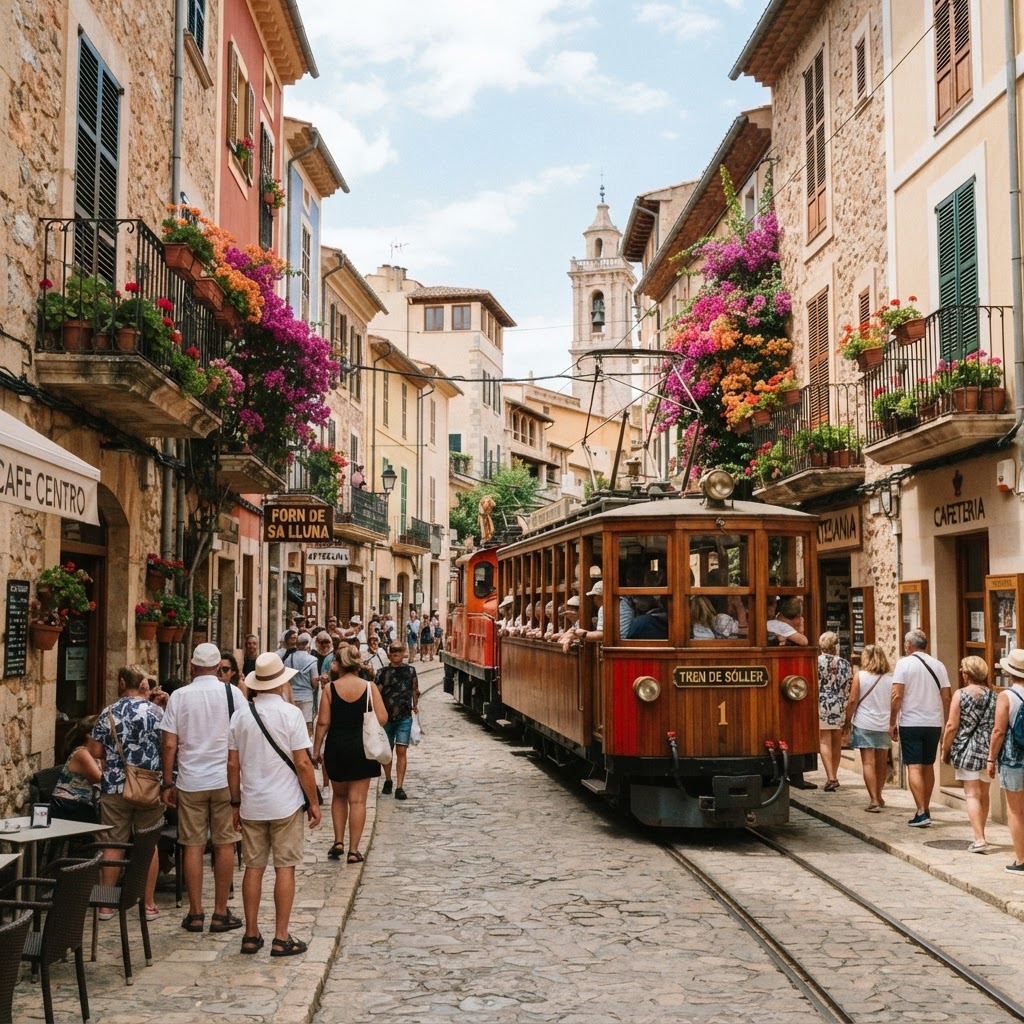
Soller serves as the aesthetic heart of the Tramuntana mountains, offering a unique blend of lush vegetation and neoclassical architecture. The valley is known for its extensive citrus groves—specifically orange and lemon trees—which provide a vibrant contrast to the surrounding grey limestone peaks. The most popular way to reach this town is via the Ferrocarril de Sóller, a historic wooden train established in 1912 that travels from Palma through 13 tunnels and over multiple viaducts, providing a nostalgic aesthetic experience.
The Old Town Atmosphere
The old town is a labyrinthine collection of cobblestone streets, hidden courtyards, and ornate facades that reflect the town’s period of prosperity during the early 20th century. Unlike the coastal resorts, Soller maintains a slower, more deliberate pace of life. Travelers will notice a clear focus on local artisanal craft, with street-side cafes and galleries tucked into narrow alleyways. The town square, Plaza de la Constitución, features the stunning Sant Bartomeu church, which provides the perfect anchor for architectural photography against the backdrop of the rugged Tramuntana mountain range.
Understanding the Vibe of Majorca
Majorca presents a “beautiful paradox,” balancing high-energy luxury beach clubs with secluded, traditional mountain villages that have remained largely unchanged for decades. Travelers often struggle to define the island’s vibe because it caters to two distinct demographics: those seeking nightlife and those seeking quiet, cultural immersion. While some southern coastal areas focus on tourism-driven entertainment, the northern and western regions are characterized by a sophisticated, slow-living culture that emphasizes local gastronomy and historical architecture.
Despite misconceptions that the island is “chavvy,” Mallorca is overwhelmingly sophisticated. Outside of small pockets of mass-market resorts, the island is defined by its deep-rooted Mediterranean traditions, preserved heritage sites, and a focus on high-quality, authentic experiences that prioritize nature over noise.
What Are the Best Viewpoints in Mallorca?
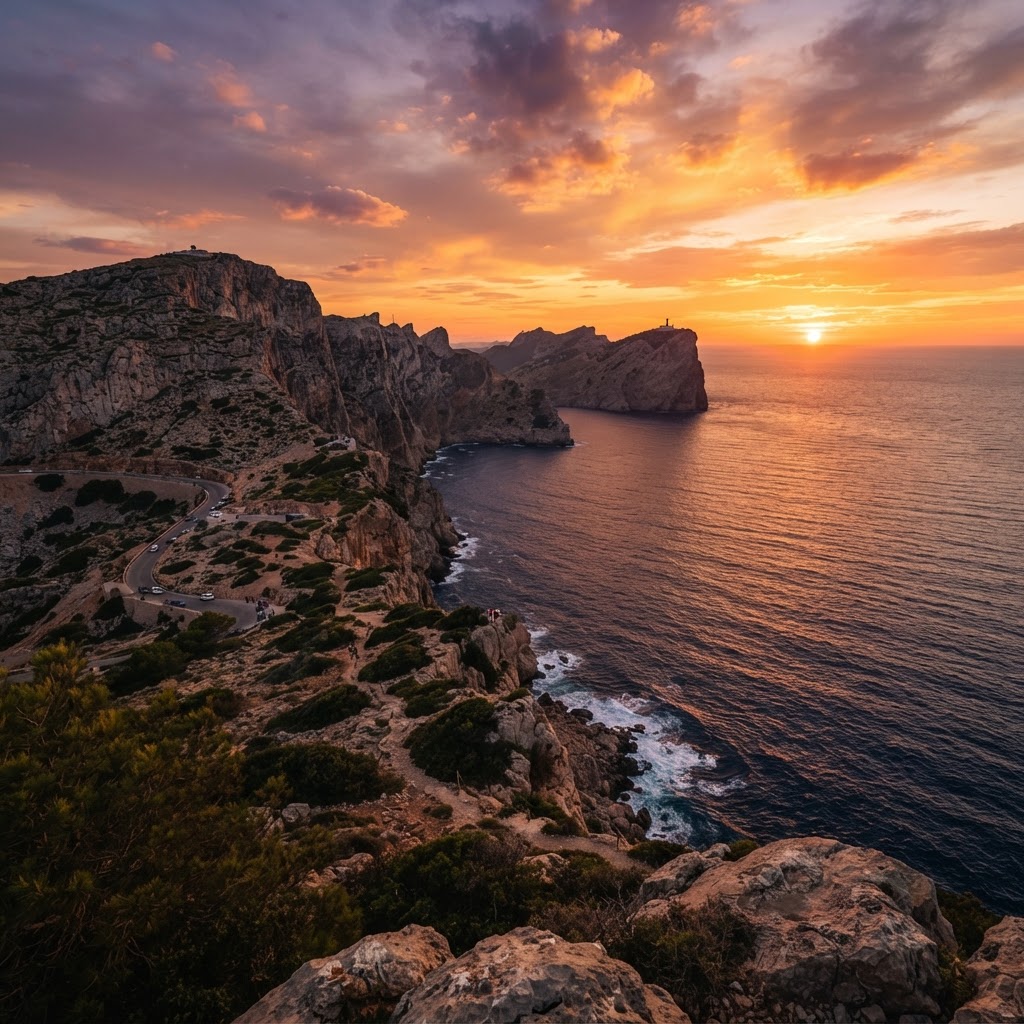
Capturing the island’s essence requires visiting the high-altitude viewpoints where the Mediterranean sea meets vertical drops. Cap de Formentor stands as the premier viewpoint on the island; it is the northernmost point of Mallorca, where the lighthouse sits at an elevation of over 200 meters above the sea. During sunset, the limestone cliffs take on a sharp, orange-golden glow, providing arguably the best sunset vantage point in the entire Balearic archipelago.
Another essential stop is Sa Calobra, accessible via the famous “Nudo de Corbata” (Tie Knot) road, which includes a 360-degree curve. The road descends from the mountains directly into a rocky canyon mouth, ending at the Torrent de Pareis. This location is unique because it provides a narrow, dramatic gap between two massive cliff faces that open directly into the sea, offering a perspective that feels almost prehistoric and highly photogenic.
Celebrity Ties and Famous Stops
Majorca has become a preferred destination for A-list celebrities like Kylie Jenner, who frequent the island for its extreme privacy and high-end infrastructure. These celebrity visits typically occur in the northern reaches of the island, near towns like Deià or Pollença, where luxury villas offer seclusion behind dense olive groves and gated driveways. These areas provide high-end, discreet amenities, such as private boat charters and exclusive beach clubs that cater to high-net-worth individuals.
While the average traveler may not access these private villas, the aesthetic appeal of the areas remains the same for everyone. The beauty of the northern coast is public, and by visiting the same landscapes that attract global celebrities—such as the quiet coves of the Tramuntana coastline—regular travelers can enjoy the same breathtaking sea views and refined atmosphere that define the island’s luxury sector.
Capturing the Golden Hour
The “golden hour” on the island occurs roughly 60 minutes before sunset, during which the low sun angle illuminates the limestone mountains with a distinct, warm, honey-hued light. This light is particularly effective in towns like Valldemossa and Andratx, where the stone buildings absorb the warmth, creating an ethereal glow perfect for photography. During this time, the shadows are long and soft, which minimizes harsh contrasts in landscape images.
For the best results, photographers should position themselves on the western coast to maximize the duration of the sunset. Since the sun sets over the Mediterranean sea, the sky often transforms into deep shades of violet, burnt orange, and pink. Unlike sunrise, which can be obscured by coastal morning mist, the western sunset is typically clearer and more vibrant, providing an excellent environment for capturing the island’s natural beauty in its best light.
FAQ
Q: What is the best time of year to visit Mallorca for the best views?
May, June, and September are the best months to visit. These months offer clear, sunny skies and moderate temperatures between 20°C and 28°C, which are ideal for hiking and sightseeing without the intense heat and heavy crowds typical of July and August.
Q: Is it expensive to see the popular viewpoints in Mallorca?
Most of the famous viewpoints, such as Cap de Formentor and Sa Calobra, are free to access. However, you will need a rental car to reach them, and during peak summer months, parking at popular spots like Cap de Formentor may be restricted or require a shuttle bus.
Q: Do I need a professional camera to get good aesthetic photos in Mallorca?
No, modern smartphones are sufficient for high-quality content due to the island’s exceptional natural lighting. The key to “aesthetic” shots is timing your arrival for the golden hour, which provides a natural, flattering light that makes even basic photography look professional.
Q: Which part of the island is best for a quiet, aesthetic trip?
The Serra de Tramuntana region, including villages like Deià, Valldemossa, and Soller, is the best area for a quiet, aesthetic experience. This UNESCO World Heritage site is defined by its preserved architecture, mountain views, and slow-paced lifestyle, offering a stark contrast to the busy southern beach resorts.
Golden Hour Strategy: Chasing Sunsets
Finding the perfect sunset in Mallorca requires planning beyond just pointing a camera at the horizon. The best light happens during the ‘blue hour’ just after the sun dips below the Serra de Tramuntana. Avoid the crowded coastal bars for your primary shots. Instead, head to the Cap de Formentor lighthouse if you want dramatic silhouettes against the sheer cliff faces.
For a softer, more romantic aesthetic, visit the town of Deià during the late afternoon. The golden light hits the terraced hillsides, making the stone houses glow with an orange hue. Park your car at the top of the village and walk down to Cala Deià. The contrast between the rugged mountain backdrop and the gentle waves creates a balanced, high-end look for your travel portfolio.
Practical Logistics for Island Hopping
Do not attempt to explore the island using public buses if you want to visit hidden coves. The bus network is efficient for major towns but fails you when you need to reach remote trailheads by sunrise. Rent a small, manual-transmission car to navigate the tight, winding roads of the interior. Larger SUVs will struggle on the narrow streets of villages like Valldemossa or Fornalutx.
The Seasonal Trade-off
- April to May: The island is lush, green, and quiet. Prices are 30% lower than in summer, but the sea is still too cold for long swims.
- June and September: These are the goldilocks months. You get warm water, stable weather, and fewer crowds than the peak of July and August.
- July and August: Prepare for intense heat and heavy congestion. Parking at popular sites like Calo des Moro can be impossible after 8:30 AM.
Common Mistakes to Avoid
Many visitors waste their time trying to hit three major sights in one day. The roads in the Tramuntana mountains are narrow, winding, and prone to traffic during peak season. You will spend more time sitting in your car than actually enjoying the view. Choose one region—either the north, the west, or the south—and focus on exploring that area deeply.
Another frequent error is underestimating the hiking difficulty. Accessing remote beaches like Cala Varques requires walking over uneven limestone terrain. Do not wear flip-flops. Wear sturdy trainers or hiking sandals to prevent twisted ankles. Always bring at least two liters of water, as there are no services or shade once you descend toward the water.
Your Essential Mallorca Checklist
- Carry coins for parking meters; many remote spots do not take cards.
- Download offline maps since mobile signal disappears in the deep mountain valleys.
- Bring a waterproof phone pouch for boat trips or swimming into sea caves.
- Pack a lightweight tripod for long-exposure photography of the coast during twilight.
- Book your train tickets for the Ferrocarril de Sóller online three days in advance during summer.
Frequently Asked Questions
Is it worth visiting Mallorca for just a long weekend?
Yes, but keep your itinerary focused on one region to avoid travel fatigue. Base yourself in either Palma for city culture or a village in the Tramuntana for landscape photography. Trying to see the entire island in three days will leave you frustrated in traffic.
Do I need to speak Spanish to get around?
English is spoken in almost every hotel, restaurant, and shop across the island. You will find that most menus and signs are provided in Catalan, Spanish, and English. Learning a few basic phrases like ‘bon dia’ is polite, but you will have no issues navigating the island using English alone.
Are there any hidden costs I should watch for?
Factor in the ‘Ecotax,’ a mandatory tourist tax levied on all overnight stays. It typically ranges from 1 to 4 euros per person per night depending on your accommodation level. Most rental agencies will also hold a significant deposit for the car, so ensure you have sufficient credit limits on your travel card.
Leave a Reply