
The Spanish Steps are arguably one of the most recognizable landmarks in Rome, drawing millions of visitors each year to the base of the Trinità dei Monti church. Stretching elegantly from the Piazza di Spagna to the elevated piazza above, these sweeping marble stairs are more than just a thoroughfare; they are a stage for Roman life, history, and romance. Whether you are an art historian or a casual traveler, climbing these steps is a quintessential Italian moment that defines a trip to the Eternal City.
The Fascinating History of the Spanish Steps
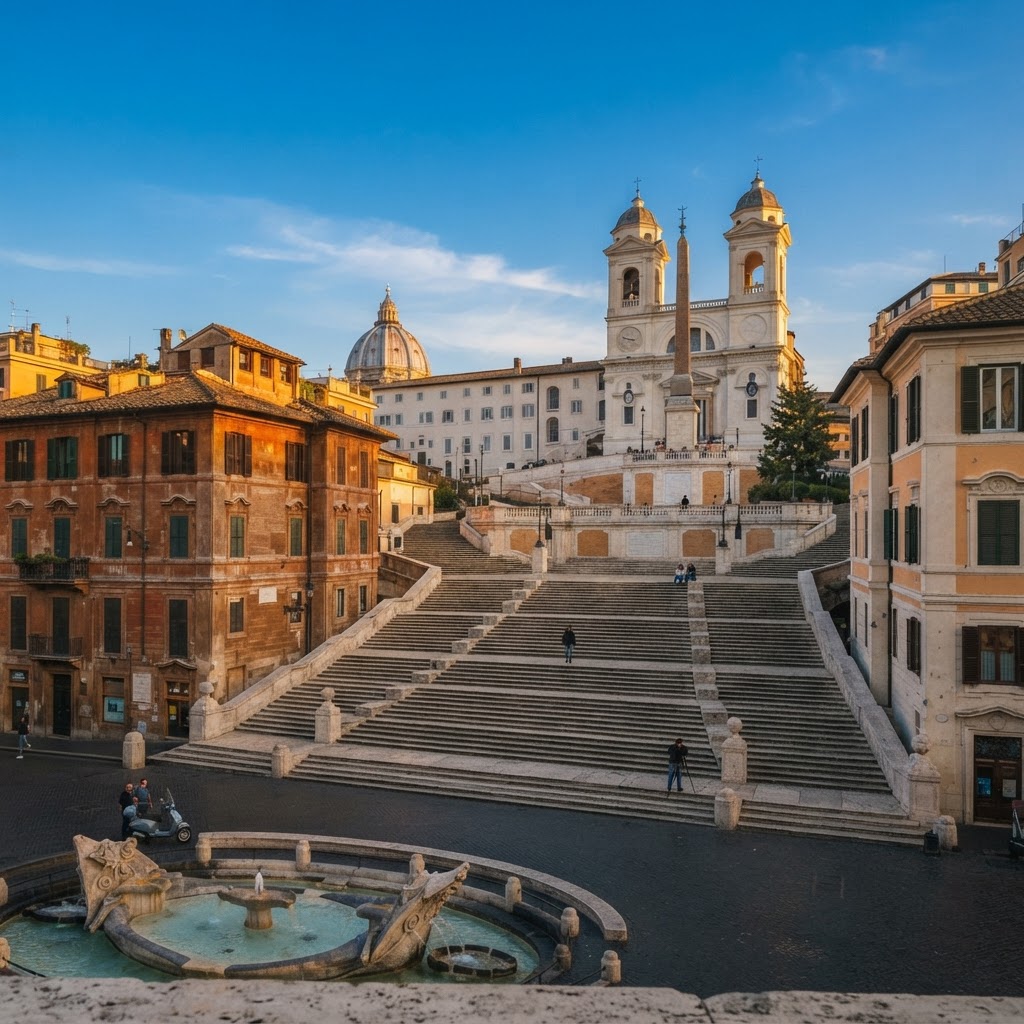
Although they are famously known as the Spanish Steps, their origins are deeply rooted in French diplomacy. The construction of the stairs, designed to link the Bourbon Spanish Embassy at the bottom with the Trinità dei Monti church at the top, was funded by a legacy from a French diplomat named Étienne Gueffier. Built between 1723 and 1725, the stairs were designed to harmonize the steep slopes with the surrounding urban landscape.
Architects and Artistic Vision
Francesco de Sanctis and Alessandro Specchi were the architectural minds behind the structure. Their vision was to create a fluid, rococo-style design that felt like an extension of the natural hillside. The result was a dramatic composition of curves, terraces, and wide steps that have survived centuries of wear and tear, remaining one of the most celebrated examples of Roman architecture.
Exploring the Piazza di Spagna
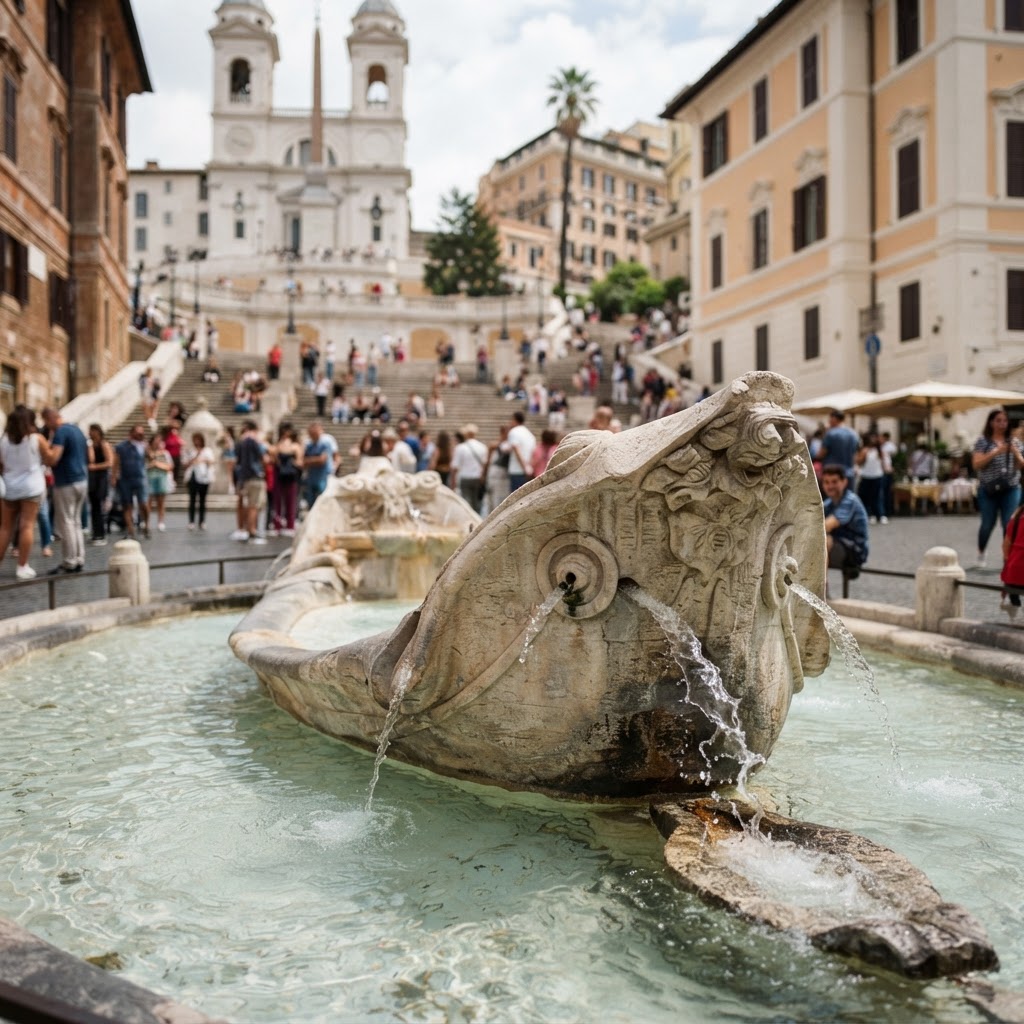
The base of the steps is known as the Piazza di Spagna, named after the Palazzo di Spagna which houses the Spanish Embassy to the Holy See. This lively square is a hub of activity, featuring the Fontana della Barcaccia, a fountain designed by Pietro Bernini and his more famous son, Gian Lorenzo Bernini. The fountain, shaped like a sinking boat, serves as a poignant reminder of the flood of the Tiber River in 1598, which supposedly washed a boat into this very spot.
The Shopping Haven
Beyond the history, the area surrounding the Piazza di Spagna is synonymous with luxury. Via dei Condotti, which leads directly from the square, is home to some of the world’s most prestigious fashion houses, including Gucci, Prada, and Valentino. Even if you aren’t planning to purchase high-end couture, window shopping along these historic cobblestone streets is an essential part of the Roman experience.
The Climb to Trinità dei Monti
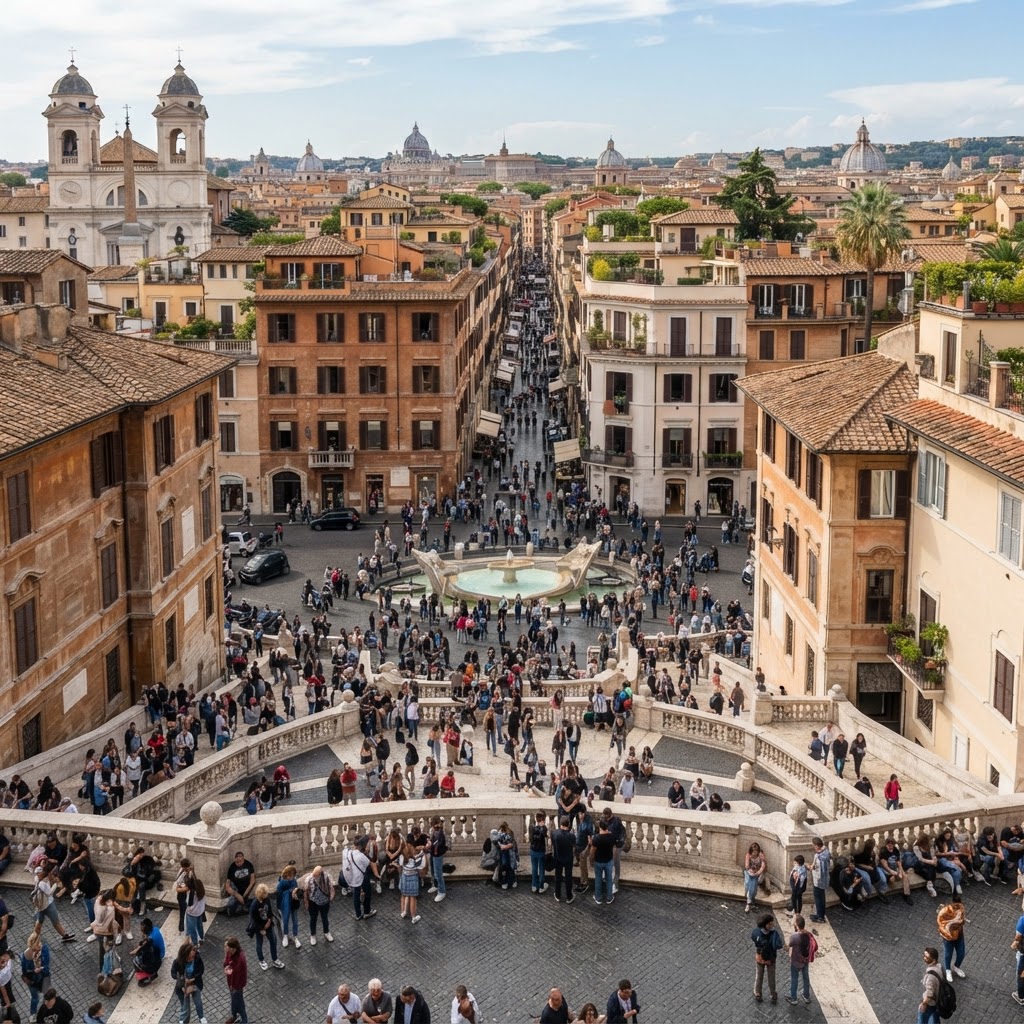
As you ascend the 135 steps, you will pass various levels of terraces, each offering unique vantage points of Rome. The steps are notoriously steep, but the climb is rewarded by the imposing sight of the Trinità dei Monti church. This 16th-century church, with its twin towers and striking facade, dominates the skyline and provides a peaceful contrast to the chaotic energy of the square below.
What to See at the Top
Once you reach the summit, don’t miss the chance to enter the church itself. Inside, you will find beautiful frescoes and an atmosphere of serenity that feels worlds away from the tourist-heavy base of the steps. The view looking back down across the city, especially during the “golden hour” as the sun sets, is arguably one of the best free panoramic views in Rome.
Cultural Significance and Famous Moments
Throughout the 18th and 19th centuries, the Spanish Steps became a focal point for international travelers, writers, and poets. Famous figures like John Keats, who died in the house located right at the foot of the steps, and Lord Byron were known to frequent the area. The house where Keats died is now the Keats-Shelley House, a museum dedicated to the Romantic poets.
The Steps in Modern Media
In the 20th century, the steps gained even more fame thanks to their role in cinema. Most notably, the 1953 film Roman Holiday, starring Audrey Hepburn and Gregory Peck, featured the steps prominently. Since then, the staircase has appeared in countless films and television shows, cementing its status as an iconic backdrop for romantic and dramatic moments in Rome.
Travel Tips for Visiting the Spanish Steps
If you are planning to visit the Spanish Steps, timing is everything. Because of their popularity, they can become extremely crowded, especially during the peak summer months. To avoid the massive throngs of tourists, try arriving as early as 7:00 AM or 8:00 AM. This gives you a rare opportunity to capture photos without hundreds of people in the background.
Practical Advice for Visitors
| Tip | Description |
| :— | :— |
| Timing | Visit early morning or late at night for fewer crowds. |
| Rules | Eating on the steps is currently prohibited by law; you may be fined. |
| Transportation | Accessible via the Spagna Metro stop on Line A. |
| Footwear | Wear comfortable walking shoes as the marble can be slippery. |
Respecting the Landmark
It is important to remember that the Spanish Steps are a protected historic monument. In recent years, local authorities have implemented strict regulations, including a ban on sitting on the stairs. While this may seem restrictive, it helps preserve the delicate structure for future generations. Always be mindful of your surroundings and adhere to local signage to avoid any run-ins with the Roman police.
Hidden Gems Near the Piazza di Spagna
While the steps are the main attraction, the neighborhood is full of hidden gems. Just a short walk away, you will find the Babington’s Tea Room, founded in 1893, which offers a slice of history and a perfect spot for afternoon tea. Additionally, the nearby Villa Medici offers stunning gardens and art exhibitions that many tourists skip in favor of the more crowded sights.
Conclusion
The Spanish Steps are more than just a staircase; they are the heart of Rome’s social and cultural history. By taking the time to appreciate the architecture, the history of the poets, and the sheer beauty of the piazza, you gain a deeper connection to the city. Have you already visited this iconic spot? Share your favorite memories or travel photos in the comments below, and start planning your next Italian adventure to experience the magic of Rome in person!
Leave a Reply