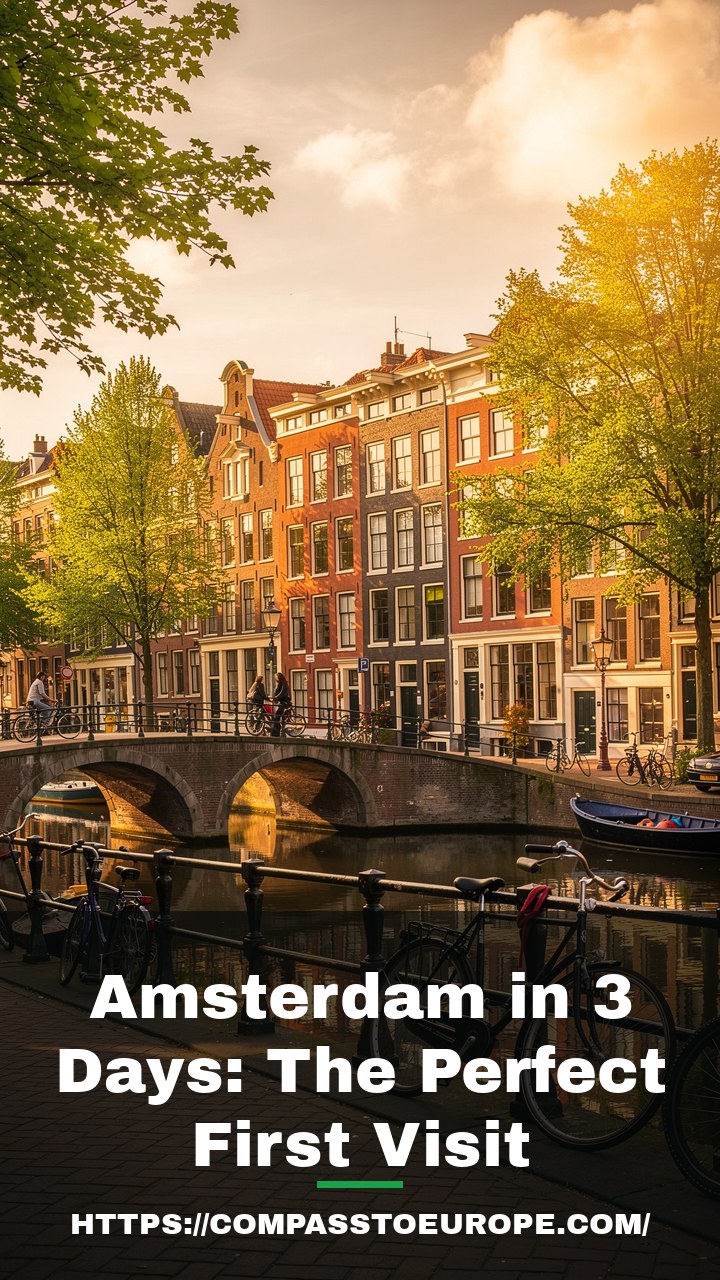
Amsterdam in 3 Days: The Perfect First Visit (Local-Approved Itinerary)
To experience the best of Amsterdam in 3 days, start by booking the Anne Frank House exactly six weeks in advance, then focus your time on the historic Jordaan district, the Museumplein arts hub, and the local culinary scene in De Pijp. This efficient route prioritizes authentic experiences while bypassing tourist traps for a deeper connection to the city.
Day 1:

Canals and History form the backbone of a successful first day in the city. Start your morning at the Anne Frank House, but remember that tickets must be booked exactly six weeks in advance online; attempting to enter without a reservation is impossible due to strict capacity limits. After the museum, immerse yourself in the Jordaan neighborhood, which is characterized by its 17th-century narrow streets and hidden independent galleries.
For an authentic lunch, head to a traditional ‘bruin café’ like Café Papeneiland, where you should order a slice of their famous Dutch apple pie, widely considered the best in the city. Spend your afternoon wandering the Nine Streets, or De Negen Straatjes, an area renowned for its charming boutiques, vintage shops, and local craftsmanship. As evening approaches, prioritize an open-boat canal cruise rather than the massive, enclosed tourist boats. Operators like Those Dam Boat Guys offer a more intimate, social, and flexible atmosphere that allows you to engage with the city’s canal-side architecture from the water at sunset.
Day 2:

Art and Parks define the second day, beginning at the sprawling Museumplein. The Rijksmuseum is massive, so maximize your visit by heading straight to the ‘Gallery of Honour’ to witness Rembrandt’s ‘The Night Watch.’ If you prefer Impressionism, the Van Gogh Museum is located immediately next door. To optimize your budget and time, purchase an I Amsterdam City Card to skip long ticket lines and access public transport for 24, 48, or 72 hours.
After soaking in the culture, retreat to Vondelpark, the city’s primary ‘green lung,’ for a relaxing lunch. Follow local tradition by grabbing cheese, fresh bread, and fruit from an Albert Heijn supermarket for a picnic on the lawns. To understand the city’s pulse, rent a bicycle for two hours; however, follow cycling paths strictly, as locals commute at high speeds and have little patience for tourists drifting into lanes. End your evening in De Pijp, the city’s culinary heart, where you should dine at a local Surinamese restaurant for a roti. This dish is a quintessential local staple that perfectly illustrates the multicultural food scene of modern Amsterdam.
Day 3:

Hidden gems and vibrant markets provide the perfect conclusion to your three-day journey. Start at the Albert Cuyp Market, the largest outdoor market in Europe, where you must try a fresh, warm stroopwafel made to order. Afterward, stroll toward the Skinny Bridge, or Magere Brug, for a classic canal photo. Depending on your interests, spend the afternoon at the Tropenmuseum if you appreciate anthropology, as it is generally less crowded than the central museums, or visit the Begijnhof, a secret medieval courtyard that offers a rare, silent escape from the urban bustle.
To end your trip on a high note, visit Brouwerij ‘t IJ, a craft brewery situated directly beneath a functioning wooden windmill. It offers a unique atmosphere for reflecting on your travels while sampling local Dutch beers. If you have extra time, take the free ferry from behind Centraal Station to NDSM Wharf, a former shipyard turned trendy art space. This area highlights a grittier, contemporary side of Amsterdam that many day-trippers overlook. Whether you prefer the history of the Begijnhof or the industrial charm of the NDSM, this final day allows you to balance sightseeing with personal leisure time.
Common Mistakes to Avoid.
Most visitors make the critical mistake of focusing their time in the Red Light District, which is noisy and fails to reflect genuine local life. While it is a historical site, keep your visit brief and move to more authentic neighborhoods. A secondary trap is dining near Dam Square, where restaurants are frequently overpriced and serve low-quality, tourist-targeted meals; walking just five minutes into the side streets significantly improves your dining quality and lowers your bill.
Additionally, do not rely on cash, as many Dutch cafes and shops have transitioned to card-only payment systems. Always carry a contactless credit or debit card. Safety regarding transit is paramount: never walk in the designated bike lanes, which are marked with painted bicycle symbols. If you hear a bell ringing behind you, move immediately to avoid collision. Finally, avoid purchasing ‘space cakes’ from random souvenir shops, as they are often low-quality products meant to exploit tourists. If you wish to explore that specific culture, visit a licensed coffeeshop and ask the budtender for guidance on dosage and quality.
Practical Tips for Navigating the City.
Using the GVB app for public transport is essential, as it provides real-time tracking for all trams, buses, and ferries. Trams are the most efficient way to cross the city center, and you can simply tap in and out using your contactless bank card, eliminating the need for paper tickets. For those planning to use transit frequently, buying a 72-hour transport pass can offer significant savings on extensive travel within city limits.
When it comes to weather, discard your umbrella; canal winds make them useless. Instead, pack a high-quality, waterproof jacket with a hood, as weather patterns often shift every thirty minutes. If you find yourself caught in a downpour, head to a HEMA store to purchase an affordable, durable rain poncho. Additionally, always check if your accommodation has elevator access. Amsterdam’s historic buildings often feature steep, narrow staircases that are difficult to navigate with heavy luggage. If you are on a budget, look for modern hostels offering ‘capsule’ rooms, which provide superior cleanliness and privacy compared to traditional, crowded dormitories.
How to Choose the Right Accommodation.
Avoid booking a hotel immediately near the Central Station, as the area is noisy and lacks the neighborhood character found in other districts. Instead, prioritize staying in the Canal Belt for central access or the Oud-West district for a more residential, local feel with high-quality independent cafes. You will generally pay less for a more pleasant stay in these areas compared to the primary tourist hubs.
When booking via platforms like Booking.com, use the site to narrow down your choices, but then call the hotel directly. Hotels can often provide a lower rate, a late checkout, or free breakfast when you book with them instead of through a third-party intermediary. Always verify the hotel’s elevator policy before finalizing your stay, as many boutique hotels in older canal houses lack lifts entirely, which can pose a significant challenge if you have heavy luggage. Asking the staff directly about their luggage storage policy can also save you significant stress on your check-in or check-out days.
FAQ:
Q: Is Amsterdam safe to walk around at night?
Amsterdam is very safe to walk around at night, as the city is well-lit and maintains active, social streets until late hours. Simply stay aware of your surroundings in very quiet, isolated areas.
Q: Should I tip at restaurants in Amsterdam?
Tipping is not mandatory in the Netherlands, but rounding up the bill is appreciated for good service. For excellent table service, adding a 5% to 10% tip is considered a polite and generous gesture.
Q: Is it better to use Uber or public transport?
Public transport and bicycles are consistently faster and cheaper than cars, which often get stuck in heavy canal-side traffic. Avoid taxis at the station unless you have specific mobility requirements.
Q: How far in advance should I book major attractions?
Book popular attractions like the Anne Frank House exactly six weeks in advance, as tickets sell out almost instantly. For other museums like the Rijksmuseum, booking 1–2 weeks ahead is generally sufficient.
Q: Can I pay with cash in Amsterdam?
Most Dutch cafes and shops have moved to card-only payment policies, so you should always carry a contactless debit or credit card. Carrying small amounts of cash is useful, but relying on it exclusively will lead to difficulties.
Leave a Reply