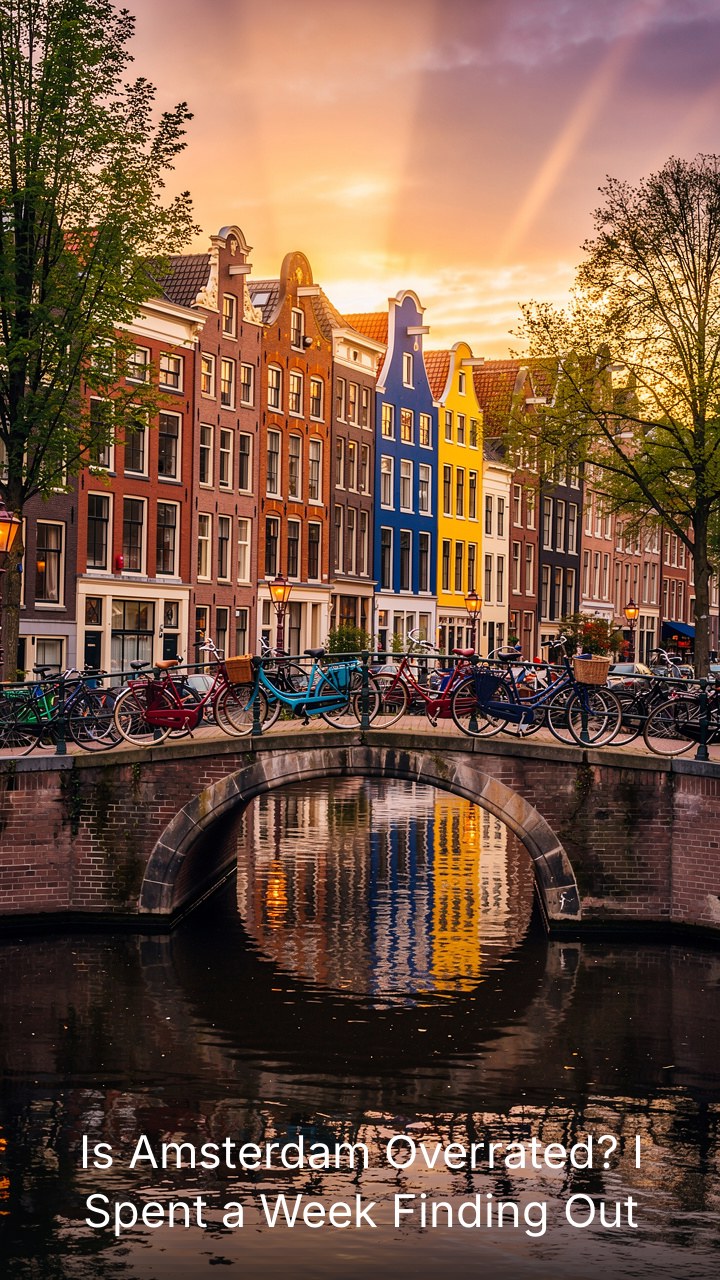

The Initial Impression
I arrived at Centraal Station expecting the worst. Every travel blog talks about the crushing crowds, the overpriced canal tours, and the constant smell of weed in the Red Light District. My goal was simple: spend seven days doing exactly what tourists do, then seven days living as a local would.
Is Amsterdam overrated? The short answer is yes, but only if you stick to the main tourist arteries. If you venture beyond the Dam Square radius, you find a city that is remarkably livable and charming.
My Experience in the City

I stayed in a hotel near the Leidseplein for the first three nights. It was loud, expensive, and surrounded by mediocre steak houses designed to trap tourists. I paid 220 euros per night for a room that barely fit a double bed.
When I moved to a rental apartment in De Pijp, the atmosphere shifted immediately. I was surrounded by local markets, independent coffee shops, and people who actually lived there. The cost of living felt grounded, and the quality of life was immediately apparent.
Common Mistakes: Where Tourists Go Wrong

The biggest mistake is assuming you need to stay in the Canal Ring. While it is beautiful, it is effectively an open-air museum where hotels charge a premium for historic character that often translates to thin walls and steep stairs.
Most tourists also make the error of trying to see the city in two days. You will spend your entire time rushing between museums, standing in queues, and eating at overpriced cafes on the main squares.
Instead, book your Anne Frank House tickets exactly six weeks in advance, or accept that you won’t get in. Don’t waste your afternoon waiting for a spot at a generic pancake house in the city center. Walk ten minutes away from the main streets to find authentic Dutch cuisine.
My Tried-and-True Practical Tips
If you want to see the canals without the tourist surcharge, skip the big glass-roofed boats. Rent a small electric sloop or a classic wooden boat from a company like Mokumboot. It costs about 75 euros for two hours, and you can bring your own snacks and drinks on board.
This is infinitely better than being packed like sardines on a cruise with a recorded audio guide. For getting around, never take a taxi or Uber inside the city limits. Traffic is a nightmare and the bike lanes are the priority.
Get an OV-chipkaart for the trams or just walk. Amsterdam is a compact city, and you will see much more on foot than you ever will from a tram window. If you must bike, stay in the bike lanes and signal your turns; the locals have zero patience for erratic tourist cycling.
Myths vs. Facts
Many people think the Red Light District is a lawless area. In reality, it is highly policed and functions as a specific, regulated part of the city infrastructure. It is not dangerous, but it is extremely crowded and quite hollow in terms of culture.
Another myth is that you need to speak Dutch to get around. While Dutch people appreciate a ‘dank u wel,’ everyone speaks fluent English. You will never face a language barrier in any business, restaurant, or government office.
Some assume the city is purely for party-goers. While the nightlife is vibrant, the city is actually incredibly quiet and residential once you step out of the tourist corridors. The vibe changes from frantic to peaceful within just three streets of distance.
What to Look for Before Booking
Check the location of your accommodation against a map of the tram lines. If you are staying in the Noord district, you rely on the free ferry. It is fun at first, but it gets tiring at 11 PM when you are exhausted and want to be home.
Check the ‘tourist density’ by looking at the proximity to the main train station and the Dam Square. If you are within 500 meters of those, expect high prices and heavy foot traffic. Always look for a ‘bakfiets’ (cargo bike) or a local supermarket like Albert Heijn near your accommodation.
If the area has these, it is a sign that residents live there, which usually guarantees better food prices and higher safety. Avoid hotels that advertise ‘canal views’ as their primary selling point; they charge a premium for the view but often ignore the noise levels from the canal boat parties.
Two Essential FAQs for Your Trip
Should I buy a city pass for museums?
Only if you plan on visiting at least three major museums in two days. If you stick to the Van Gogh Museum and the Rijksmuseum, just buy the individual tickets online. The pass saves you money only if you are aggressive with your itinerary, which usually leads to burnout.
Most people end up skipping the smaller museums they paid for in the pass, making individual tickets the more cost-effective choice.
Is the city safe for solo travelers?
Yes, absolutely. I felt safe walking alone at night even in quiet areas. The streets are well-lit, and the culture is generally respectful of personal space. Keep an eye on your belongings in crowded areas like the Centraal Station, as pickpockets target tourists near the train platforms.
Use a cross-body bag and keep your phone in your pocket, not on the table while sitting at a cafe.
Leave a Reply