
Introduction
When visiting the Netherlands, seeing traditional windmills is usually at the top of every traveler’s list. You are likely deciding between the two heavyweights: Zaanse Schans and Kinderdijk. Zaanse Schans is a reconstructed village showcasing various Dutch crafts.
Kinderdijk is a UNESCO World Heritage site consisting of 19 original 18th-century windmills. Choosing between them depends on whether you prefer a quick, interactive cultural experience or a serene, authentic historical landscape.
Zaanse Schans: The Living Museum

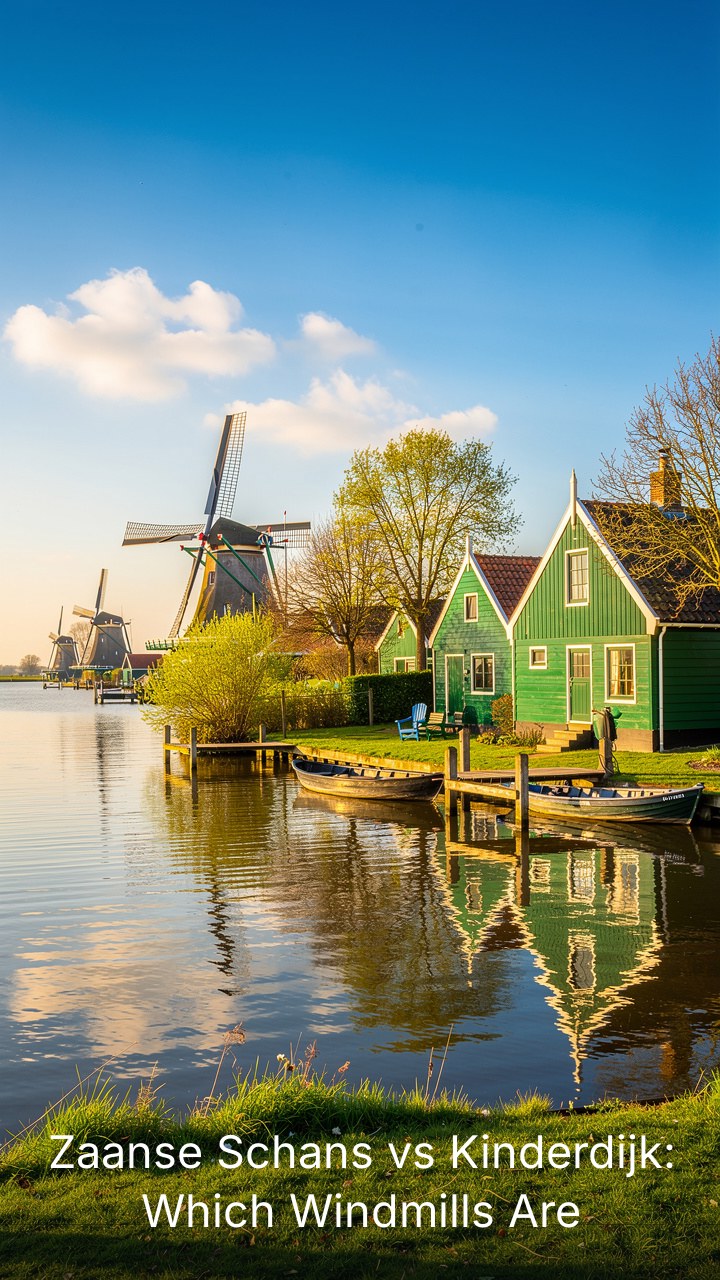
Zaanse Schans functions like an open-air museum located just north of Amsterdam. It brings historic buildings from across the Zaan region together in one spot. You will find active windmills used for grinding spices, sawing wood, and pressing oil.
It also features workshops where you can watch people make wooden clogs and Dutch cheese. It is highly commercial, crowded, and designed specifically for tourists. This makes it an incredibly convenient choice for a half-day trip from the capital.
Kinderdijk: The UNESCO Masterpiece
Kinderdijk offers a completely different vibe that feels far removed from the city bustle. These 19 windmills were built around 1740 to manage water levels in the low-lying polder. You are walking through an authentic drainage system that remains a testament to Dutch engineering.
There are no crowds of clog-makers or souvenir shops lining the paths. Instead, you get vast, open vistas of water, reeds, and rotating blades against the horizon. It is a place for nature lovers, history buffs, and anyone seeking a quiet walk in the countryside.
Practical Tips for Your Visit
Getting the most out of your day requires some strategic planning. At Zaanse Schans, arrive before 9:00 AM to avoid the massive bus tours arriving from Amsterdam. If you go later, be prepared to navigate narrow paths packed with tour groups.
Renting a bike here is often a waste of time because the walking paths become too congested by midday. Focus on visiting one or two windmills internally and spend your time browsing the small, unique craft shops instead.
At Kinderdijk, you absolutely must rent a bicycle to cover the full length of the site. It is a long, linear walk between the windmills, and doing it on foot can get exhausting. Bring your own water and snacks, as the on-site cafe options are limited and often overpriced.
If you visit in the summer, aim for the golden hour near sunset. The light reflecting off the water around the windmills is spectacular for photography and offers much cooler walking temperatures.
Common Mistakes to Avoid
Most travelers underestimate the travel time to Kinderdijk. If you are coming from Amsterdam, expect a two-hour journey via train to Rotterdam and then a bus or waterbus. Many tourists miss their scheduled waterbus connection and end up stranded for 45 minutes at the terminal.
Always check the seasonal ferry schedules, as they change drastically between winter and summer months. Don’t assume you can visit both sites in a single day, as the commute will eat up four to five hours total.
Another frequent mistake is focusing only on the windmills at Zaanse Schans. The site includes fascinating heritage homes and the Zaan Museum, which covers industrial history beyond the milling. Many people walk past these buildings thinking they are just scenery.
Take the extra hour to step inside the Zaanse Museum; it provides the context that explains why these windmills were so critical to the early Dutch economy.
A Quick Checklist for Your Trip
- Check the weather: Windy days make for great photos, but heavy rain ruins the walking experience at both locations.
- Purchase tickets online: Kinderdijk requires a ticket for the visitor center and two museum mills. Pre-booking saves you from queuing at the desk.
- Pack layers: The Dutch countryside is exposed, and the wind chill by the water can be biting even in late spring.
- Bring comfortable footwear: You will likely walk at least three to five kilometers if you explore the full Kinderdijk grounds.
- Check train disruptions: Use the NS app to ensure no construction on the Rotterdam-Amsterdam line interferes with your transit plans.
Myths vs. Facts
There is a common myth that Kinderdijk is ‘boring’ because you cannot go inside all the windmills. The fact is, the site’s value lies in its landscape and history of water management, not in touring every interior.
You do not need to see the inside of twenty different mills to understand how they function. Conversely, many assume Zaanse Schans is ‘fake’ because the buildings were moved there. While it is a reconstruction, the mills themselves are functioning, historic machines that were saved from destruction and moved to be preserved.
Both sites provide valid historical insight, just through different methods of curation.
FAQ: Making the Final Decision
Which site is better for families with young children?
Zaanse Schans is objectively better for kids. It has more interactive elements, like the cheese-making demonstrations and the clog shop, which hold a child’s attention better than the vast, open fields of Kinderdijk.
The walk is much shorter and provides frequent breaks.
If I only have one day in the Netherlands, which should I choose?
Choose Zaanse Schans. The proximity to Amsterdam saves you a massive amount of travel time. You can spend a productive morning there and still have plenty of time for museums or canal cruises in the city during the afternoon.
Is there any reason to visit Kinderdijk if I have already seen Zaanse Schans?
Yes, absolutely. If you loved the history and want to see how the Dutch truly conquered the water, Kinderdijk is a far more impressive engineering feat. It represents the ‘real’ Holland without the commercial layers added for tourism.
Leave a Reply