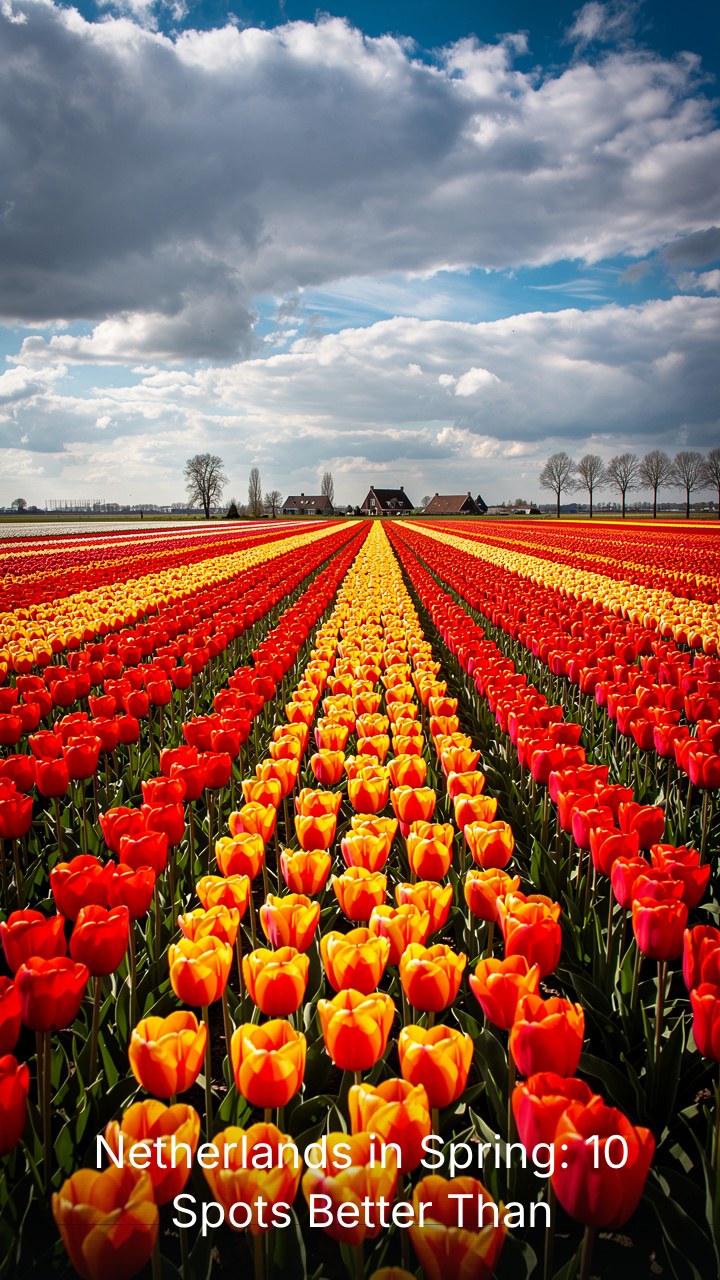

Keukenhof is the famous face of Dutch spring, but it isn’t the only way to see tulips. Many visitors flock there, leaving quieter, more authentic corners of the country wide open for exploration. If you want to see the real Dutch landscape, you need to head off the beaten path.
These 10 spots offer stunning floral displays without the crushing tourist crowds.
1. The Noordoostpolder Flower Route
The Noordoostpolder region features some of the longest tulip routes in the country. It is far less commercial than the Bollenstreek area near Lisse. You can drive or cycle over 100 kilometers of vibrant, rainbow-colored fields here.
The space is massive, so you rarely deal with traffic or crowded footpaths.
How to Navigate the Route
Start your journey in the town of Creil. You will find clearly marked signs for the ‘Tulpenroute’ that guide you through the best agricultural plots. Rent a bike at a local shop for about 15 euros per day to get closer to the rows.
Always respect the farmers; never walk directly into the planted tulip beds. Staying on the public paths ensures you get great photos while keeping the flowers intact for the harvest.
2. The Islands of Texel

Texel offers a unique spring experience where dunes meet vast tulip fields. The island’s microclimate often makes the flowers bloom slightly differently than on the mainland. You get the benefit of crisp sea air combined with rows of bright red and yellow tulips.
It feels like a true getaway rather than just a day trip.
Travel Logistics for Texel
Take the ferry from Den Helder; the crossing takes about 20 minutes. It costs roughly 30 euros for a car with passengers or just 5 euros for a pedestrian. Once on the island, prioritize cycling.
The landscape is flat and protected, making it an easy ride even for beginners. Visit in late April to maximize your chances of seeing the peak bloom across the island’s many fields.
3. The Flower Fields of Zeeland

Zeeland is often overlooked by international tourists who stick to the Amsterdam orbit. However, the sandy soil here is perfect for cultivating sturdy tulips. The fields are scattered across islands connected by impressive engineering marvels like the Oosterscheldekering.
You get a mix of agricultural beauty and dramatic coastal views that you won’t find anywhere else.
4. Avoiding Common Tulip Tourist Mistakes
Most travelers make the mistake of assuming all tulips bloom at the same time. The season actually spans from mid-March to early May, depending on the weather. If you arrive too early, you find green stems; too late, and the farmers have already topped the flowers.
Check the ‘Flower Radar’ online or local grower websites before booking your train tickets. Another mistake is ignoring the weather forecast. Spring in the Netherlands is notoriously unpredictable and windy.
Always pack a windbreaker and waterproof shoes. You do not want to be stuck in a muddy field with wet sneakers. If it rains, head to a local indoor bulb museum instead of trying to force a field visit.
5. A Step-by-Step Guide to Planning Your Route
First, define your transportation mode. If you are using public transit, target the regions around Haarlem or Leiden, which have train access. If you prefer a car, the Flevoland region gives you total control over your stops.
Second, choose your timing carefully. Aim for the third week of April for the highest success rate. Third, map your ‘must-see’ stops using Google Maps pins.
Limit yourself to three locations per day to avoid burnout. Spending an hour at one location is usually enough to soak in the view and take photos. Finally, book your accommodation at least three months in advance, especially if visiting during the Easter weekend or King’s Day.
6. Myths vs Facts: Tulips in the Netherlands
Many think that all tulips are native to the Netherlands. The truth is they were imported from the Ottoman Empire in the 16th century. Another myth is that you can pick flowers from any field you find.
Do not do this; it is considered theft and can damage the bulb’s future yield. Stick to ‘pluktuinen’ (picking gardens) where you pay a small fee to harvest your own bouquet. These spots are legal, sustainable, and provide a much better souvenir than a stolen flower.
Finally, don’t believe the hype that you need a guide to find fields. The landscape is very open and easy to navigate with a simple bicycle map.
7. FAQ: Expert Advice for Spring Travelers
How much should I budget for a day of tulip spotting?
Budget roughly 50 euros per person. This covers bike rental, train tickets, and a nice lunch in a village. If you bring your own bike and pack a picnic, you can easily cut this cost by half.
The views themselves are free, which is the beauty of avoiding paid parks.
Is it better to cycle or drive?
Cycling is objectively better. You can stop anywhere, pull over on narrow dikes, and access roads cars cannot reach. Driving is often stressful because narrow country roads become clogged with tourists looking for the perfect photo spot.
If you are not a confident cyclist, stick to organized bus tours or pre-planned taxi routes.
What if the tulips have already been cut?
If the tulips are gone, focus on the nearby bulb fields growing hyacinths or daffodils, which bloom at different intervals. Also, shift your focus to the blooming fruit orchards in areas like the Betuwe.
The scenery is just as beautiful and far less crowded than any tulip field could ever be.
8. Essential Gear Checklist
- Sturdy, waterproof walking shoes or boots.
- A portable battery pack for your phone or camera.
- A high-quality rain jacket (not just a poncho).
- A printed paper map as backup for phone signal dead zones.
- A reusable water bottle and snacks.
- Small cash coins for local farm stands or parking meters.
Leave a Reply