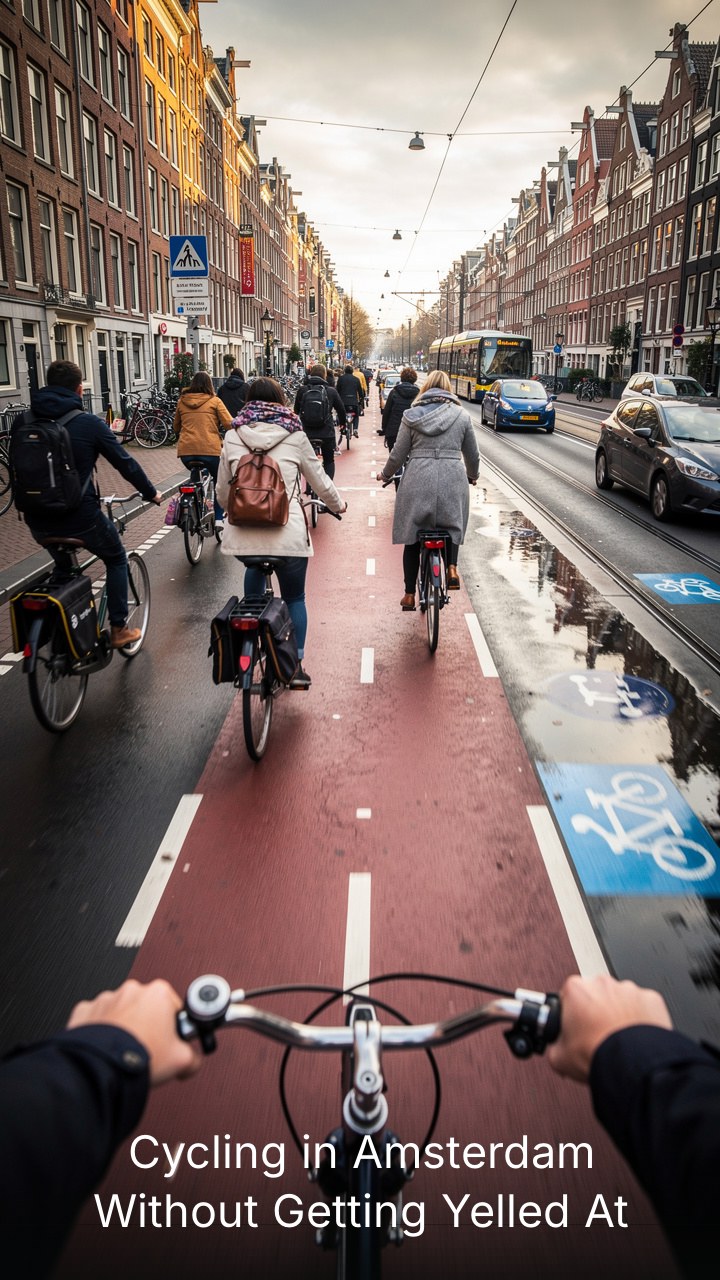
Understanding the Flow of Amsterdam Traffic

To cycle in Amsterdam without getting yelled at, you must maintain a consistent speed, stay to the far right of the cycle lane, and signal all turns. Predictability is the cardinal rule of Dutch cycling; never stop abruptly, weave through traffic, or ride side-by-side with friends in busy, narrow bike lanes.
Cycling in Amsterdam is not a leisure activity for the locals; it is their primary commute. When you step onto a bike, you enter a highly efficient, high-speed ecosystem where speed and predictability are paramount. Locals expect you to maintain a steady pace and stick to the right side of the lane at all times. If you weave unpredictably, you block the flow, and that is precisely when you hear the sharp, impatient bell rings or shouting.
Never stop suddenly in the middle of a bike lane to check your map or take a photo. If you need to stop, look behind you, signal, and pull over completely to the curb. Most collisions between tourists and locals occur because the tourist stopped or swerved without looking. Keep your eyes up, watch for indicators from others, and always anticipate that the person behind you wants to pass. When in doubt, glance over your left shoulder to ensure the path is clear before making any lateral movement.
The Anatomy of an Amsterdam Bike Lane

Understanding the pavement markings and hierarchy of Amsterdam’s road infrastructure is critical for your safety and integration into local traffic flow. Red asphalt indicates a designated cycle path, and you must stay within these bounds whenever possible to avoid conflict with motorized vehicles. When no red path exists, look for ‘fiets’ (bicycle) icons on the road, which indicate shared traffic zones.
In these shared zones, cyclists usually have priority, but buses and trams are the apex predators of the street; you must yield to them every single time. Pay close attention to the traffic light system, which often features a smaller, dedicated light specifically for bicycles. These lights often turn green 3 to 5 seconds before car traffic lights to provide cyclists a safer head start across busy intersections. If you are waiting at a red light, stay in your lane and do not crowd the front of the pack unless you plan to accelerate quickly. Blocking the path when the light changes is a quick way to earn a chorus of complaints from riders behind you.
Essential Equipment and Safety Gear

Most rental bikes in Amsterdam are heavy, upright city bikes featuring back-pedal brakes, which require a specific technique distinct from the hand-brake mountain bikes common in other regions. Before navigating hectic intersections around Centraal Station, practice your stopping in a quiet side street to adjust to the pedal-back resistance. Ensure your seat height is adjusted properly; your legs should maintain a slight, comfortable bend at the bottom of the pedal stroke to provide maximum control and stability during sudden stops.
Legal compliance is essential, particularly regarding lighting; Dutch police enforce strict regulations, and riding without working front and rear lights after sunset can result in a fine of up to 60 euros. If your rental lacks integrated lights, purchase a cheap clip-on set from nearby retailers like HEMA or Action. Furthermore, bike theft is a massive industry in the city, with over 10,000 bikes reported stolen annually. Always lock your bike to a fixed object using both the frame lock and the secondary chain lock provided. Never leave your bicycle unattended without securing it, even for a brief “one-minute” errand.
Common Mistakes Tourists Make
Cycling in groups of three or four abreast across the entire lane is the single most frustrating behavior for a Dutch commuter, as it renders overtaking impossible. If you are riding with friends, always ride single file, especially on narrow bridges or during the morning (8:00–9:00 AM) and evening (5:00–6:00 PM) rush hours. The efficiency of Amsterdam traffic relies on every rider keeping the lane as narrow as possible to accommodate high-volume throughput.
Another frequent blunder is ignoring the ‘Give Way’ triangles painted on the ground at intersections. In the Netherlands, traffic from the right generally has the right of way unless otherwise indicated by road signs. You must actively scan side streets to your right before entering an intersection, even if you are on what appears to be a main road. Failing to yield to traffic from the right is a primary cause of accidents and will certainly result in a heated exchange. When in doubt, prioritize defensive riding: assume the other person does not see you and stay alert to your peripheral vision to avoid collision.
Navigating Trams and Rail Tracks
Tram tracks present a significant, unique hazard to inexperienced cyclists and must be crossed with extreme caution to avoid wheel entrapment. Never cross tram tracks at an acute angle; if your tire slips into the groove, the sudden jolt will almost certainly throw you from the bike. Always approach tracks at a 90-degree angle, lifting your front wheel slightly if necessary and keeping your handlebars perfectly straight during the crossing. If you encounter a situation where crossing at a safe angle is impossible, dismount and walk your bike across the tracks instead.
Remember that trams are fast, heavy, and mechanically incapable of swerving or stopping quickly. If you hear a high-pitched tram bell ringing, get out of the way immediately. Never attempt to overtake a tram on the left, and always operate under the assumption that the tram driver does not see you if you are lingering in their blind spot. The safest position is consistently well behind or well ahead of any tram you encounter on your route. Treat tram lines as “no-go” zones for cycling unless you are crossing them perpendicular to their path.
A Quick Checklist for Amsterdam Cyclists
Before you set off on your bike rental, perform a comprehensive safety check to ensure your vehicle is roadworthy for the dense Amsterdam environment. First, test that your back-pedal brake provides sufficient stopping power and ensure your tires feel firm. Second, confirm your bell is audible; it is your primary tool for communicating with pedestrians who stray into your lane. Third, map your route in advance, as stopping to check a smartphone while moving or parked in a lane is both dangerous and illegal.
Always carry a rain poncho, as Dutch weather can change within minutes, and moisture-wicking gear is often insufficient against a sudden downpour. If you choose to ride with a backpack, ensure it is cinched tight against your back so it does not snag on passing objects or cause balance issues. Keep your valuables in a zippered pocket, as bike baskets are easy targets for pickpockets in busy tourist areas. Finally, if you feel overwhelmed by the pace, do not hesitate to pull over to a safe area and walk your bike for a block until your confidence recovers.
FAQ
Is it better to rent an e-bike or a standard city bike?
It is generally better for novices to stick to a standard city bike. While e-bikes are faster, they feature quick acceleration that can be dangerous for riders not accustomed to navigating dense, high-speed Dutch traffic.
Do I really need to signal with my hands?
Yes, signaling is mandatory for safety, especially when making left turns across traffic. The cyclists behind you rely on these signals to anticipate your movement and prevent high-speed collisions.
Is it rude to ring my bell at pedestrians?
It is not rude to use your bell if pedestrians are walking in the bike lane. A short, polite ‘ting-ting’ is expected; avoid laying on the bell, as prolonged or aggressive ringing is considered antisocial behavior.
What should I do if my bike is stolen?
Immediately report the theft to the local police and contact your rental shop. You will likely be liable for the value of the bike as stipulated in your rental agreement, so always use the provided locks.
Which side of the road do I cycle on?
Always stay to the right side of the cycle path. Overtaking should only be done on the left, but only after checking that the path is clear of oncoming and passing traffic.
Leave a Reply