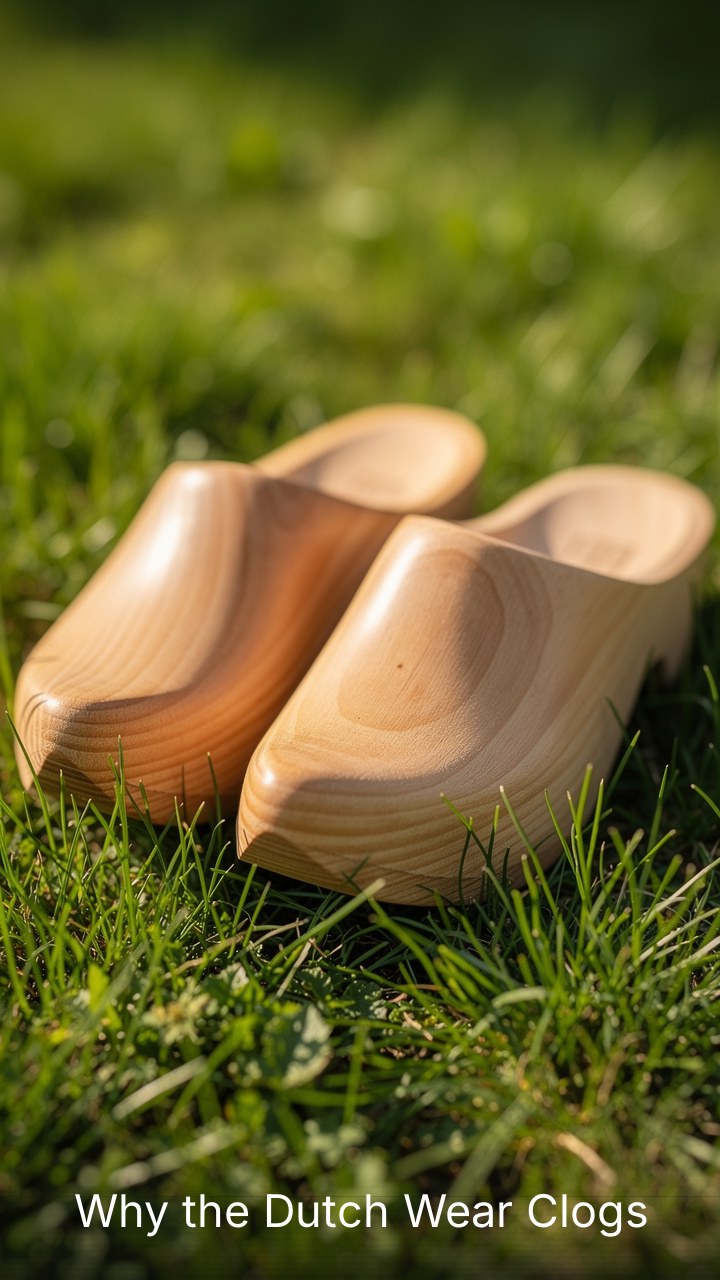
The Dutch wore wooden clogs, or ‘klompen’, primarily because they provided affordable, waterproof, and insulating protection for working in the Netherlands’ marshy, water-logged soil. Unlike leather, which would rot in damp conditions, wood offered a rigid, protective shell that kept farmers and fishermen dry while providing essential arch support.
For centuries, the humble wooden clog, or ‘klomp’, served as the essential footwear for the Dutch working class. While today they are largely relegated to museum displays or souvenir shops, their design was once a marvel of practical engineering.
These shoes were not chosen for comfort in the modern sense but for survival in the Netherlands’ notoriously damp, marshy soil. The thick wood acted as a natural insulator, keeping feet dry and warm in conditions that would quickly ruin leather footwear.
Before the industrialization of shoe manufacturing, the klomp was the only affordable, durable option for farmers, fishermen, and factory workers. Each pair was hand-carved from poplar or willow wood, chosen for their lightness and resistance to splintering. Poplar is traditionally favored for its durability and relatively soft grain, which makes it easier for artisans to carve, while willow offers a lightweight alternative for daily tasks.
The shape itself was wide and rounded, allowing for the inclusion of thick wool liners during winter months. This was not merely a cultural quirk; it was a necessary adaptation to a landscape defined by water. In many agricultural regions, workers would pack their clogs with dried ‘klompenstro’—a type of straw—to provide additional insulation and comfort during freezing temperatures.
Choosing and Buying Authentic Klompen Today
If you are looking to purchase a pair of clogs, prioritize quality and certification over mass-produced, brightly painted souvenirs found in tourist centers. Authentic, wearable clogs are still produced by master woodworkers using traditional techniques and specialized machinery. When shopping, look for the ‘Keurmerk’ or seal of quality provided by the official Dutch association of clog makers. A high-quality pair will cost between 60 and 120 euros, depending on the complexity of the carving and the quality of the wood. The wood should feel firm and show no visible cracks or soft spots when inspected closely. You must also decide if you want ‘blank’ clogs, which are raw wood, or ‘painted’ ones. Blank clogs are best if you intend to actually wear them, as paint can hide wood defects. If you plan to wear them for gardening, choose a pair with a slightly thicker sole. Ensure the heel is cupped properly; if the heel is too flat, your foot will slide, causing painful blisters within minutes. Always buy them half a size larger than your standard shoe to accommodate thick, hand-knitted wool socks.

The Proper Way to Wear and Maintain Them
Wearing wooden shoes is a skill that requires specific techniques, as they do not bend like modern sneakers, necessitating a deliberate shuffling gait. You must slide your foot in and adopt a slightly shuffling movement, keeping your weight centered to ensure the clog remains secure. If you try to walk normally by rolling from heel to toe, you will quickly find the clogs falling off. I recommend practicing for 10-minute intervals on soft grass before trying them on hard surfaces like concrete to build the necessary muscle memory.
Maintenance is surprisingly simple if you follow standard wood-care protocols. Wash them with mild soap and cold water once a week to remove dirt and mud, which can degrade the wood surface over time. Never place them near a heater or radiator to dry, as rapid moisture loss will cause the wood to split or warp. Instead, allow them to air dry in a shaded, cool area for at least 24 hours. If the wood begins to look dull, a light application of boiled linseed oil will restore the finish and protect the grain. For heavy-duty use in wet mud, some people coat the bottom with a thin layer of rubber, though this is a modern addition that deviates from traditional, fully-wood construction.

Myths vs. Facts: Clearing the Air
Many common misconceptions about wooden shoes stem from romanticized tourist narratives, but historical records provide a clear picture of their role in Dutch history. Many people believe that all clogs were painted yellow or red with intricate floral patterns. In reality, most working-class clogs remained the natural color of the wood until they were eventually discarded, as paint was an unnecessary expense for labor-intensive work.
The elaborate painting you see in photos was typically reserved for special occasions like weddings or church services. Another common myth is that Dutch people still wear clogs to work in offices or schools today. This is false; clogs are now treated as specialist protective gear for heavy gardening or specific agricultural tasks, effectively serving the same purpose as steel-toed safety boots. A final point of confusion is the supposed ‘discomfort’ of wood. When sized correctly with proper wool liners, a wooden clog provides excellent arch support that rivals many modern orthotics. They aren’t meant for long-distance hiking, but for standing in a workshop, they are remarkably effective and cooling, preventing the overheating often experienced in waterproof synthetic boots.
Common Mistakes and How to Avoid Them
The biggest mistake beginners make is wearing thin cotton socks instead of heavy wool, which leads to excessive friction and moisture buildup. Cotton absorbs moisture and holds it against the skin, which will cause your feet to swell and chafe. Always wear at least one pair of thick, unwashed wool socks to create a friction-free buffer. Another error is purchasing clogs that are too tight; you need enough room for your toes to move freely inside the shell, as clogs do not stretch over time.
If your toes touch the front of the wood while standing, they are definitely too small for long-term wear and will lead to bruising. Many people also make the mistake of leaving their clogs out in direct summer sunlight for extended periods. Sunlight causes the wood to warp, and once the shape is compromised, it is impossible to fix, as the fibers become brittle. Store them in a cool, dark shed or hallway when they are not in use to preserve the integrity of the wood. Finally, do not wait until the clogs are completely worn through the sole before replacing them. A thin sole provides less protection and can lead to uneven weight distribution that causes back pain, negating the original ergonomic benefits of the design.
FAQ: Practical Insights for Enthusiasts
Are clogs actually waterproof?
Clogs are highly water-resistant due to the dense nature of poplar or willow wood, but they are not fully waterproof if submerged for long periods. They are ideal for navigating muddy fields, dew-covered grass, and shallow puddles, as the wood acts as an effective barrier against external moisture.
How long should a pair of handmade clogs last?
With daily heavy-duty use in agricultural settings, expect about six to twelve months of wear before the soles become too thin. If used only for light, casual gardening tasks, a pair can easily last for several years with proper maintenance and occasional linseed oil treatments.
Can I wear clogs if I have flat feet?
Yes, because the rigid wooden structure provides a consistent, non-collapsing arch support that prevents the foot from rolling inward. Many people with flat feet find them more comfortable than modern shoes, as the wood forces the foot into a neutral, supportive position that does not collapse under weight.
How do I size clogs correctly?
Always buy your clogs at least half a size to a full size larger than your standard shoe size to accommodate thick wool socks. Because the wood is rigid and will never stretch, you must ensure you have at least 0.5 to 1 centimeter of clearance for your toes while standing.
Is it safe to walk on tile or wood floors in clogs?
While clogs are stable on earth and grass, they can be slippery on polished tile or hardwood floors. If you must wear them indoors, consider applying a thin rubber strip to the bottom of the sole to increase traction and prevent scratching the flooring or causing a slip-and-fall accident.
Leave a Reply