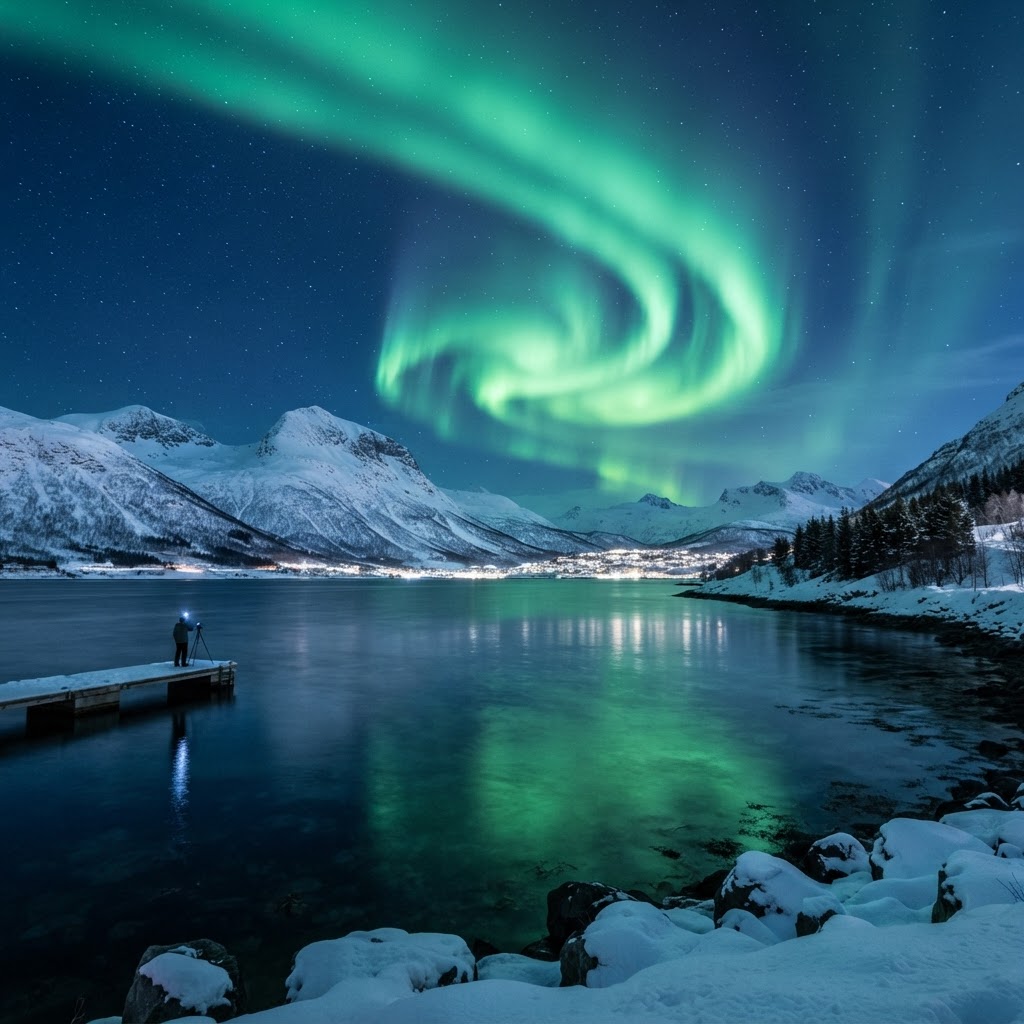
Chasing the aurora in Tromsø is best achieved between late September and early April, with peak viewing occurring during the solar maximum—a cycle currently trending toward high intensity through 2025. To maximize your chances, plan your trip during the spring equinox months of March and April when geomagnetic activity historically peaks.
Understanding the Science of the Aurora
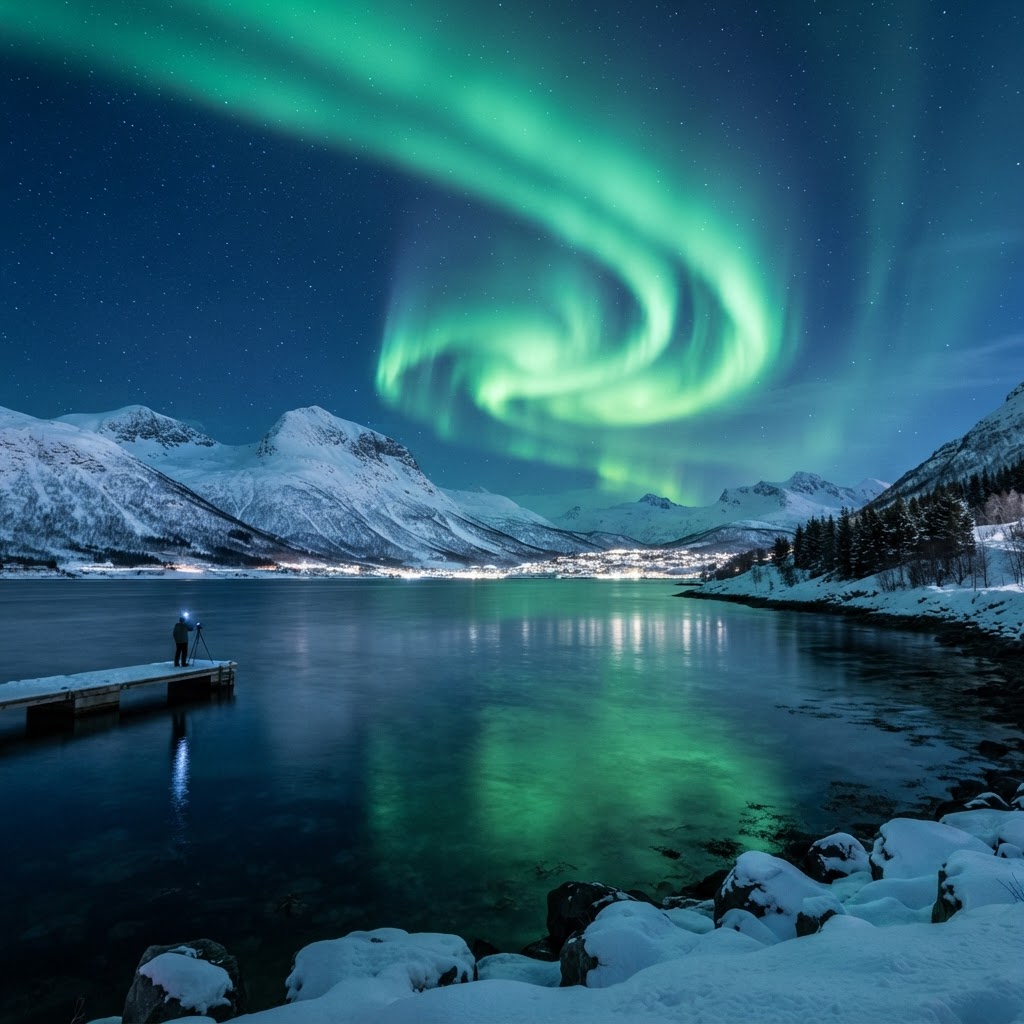
The aurora borealis occurs when charged solar particles collide with atmospheric oxygen and nitrogen atoms, creating light displays 80 to 300 kilometers above the Earth’s surface. These geomagnetic storms are influenced by the Sun’s 11-year solar cycle, which governs the volume of charged particles ejected toward our planet. During the solar maximum, observers in Tromsø benefit from more frequent and vibrant displays, including rare purple and deep red hues caused by high-altitude collisions.
The Role of Solar Cycles
Solar activity follows an eleven-year cycle, impacting the frequency and intensity of auroral displays. During solar maximum, the sun produces more frequent solar flares, which lead to more vivid and energetic displays for those chasing the aurora in Tromsø. While you can see lights during solar minimum, high-activity years offer a significantly better chance of seeing a dancing corona overhead. Current projections indicate that the solar cycle is approaching its peak, making the mid-2020s an exceptional period for northern lights tourism compared to previous years.
Determining the Best Time for Your Visit
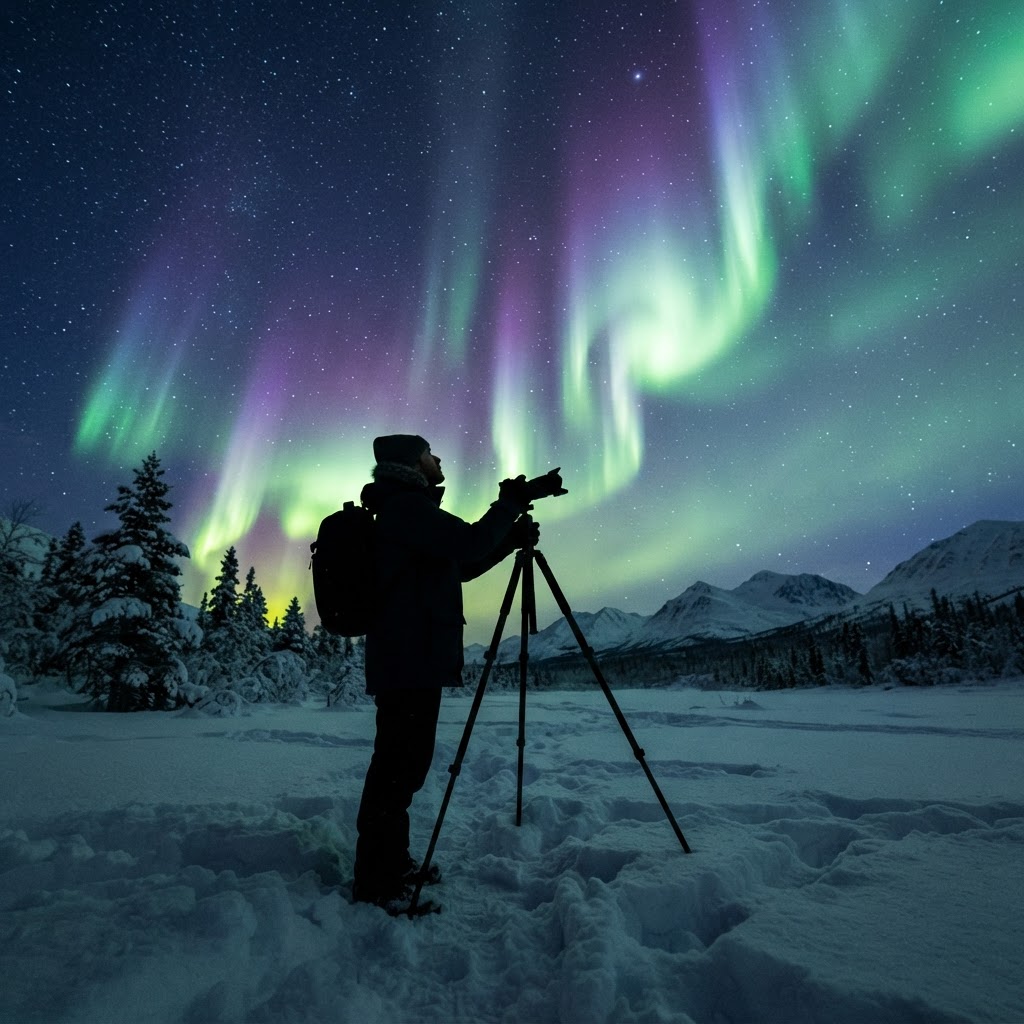
The optimal window for viewing the Northern Lights in Norway spans from late September to early April, as this period provides the essential darkness required for visibility. While darkness is the primary factor, local weather patterns and geomagnetic intensity fluctuate throughout the season, as outlined in the table below.
| Month | Conditions | Pros | Cons |
|---|---|---|---|
| Oct-Nov | Mild/Transition | Less extreme cold | More cloud cover frequent |
| Dec-Jan | Polar Night | Max darkness, high chance | Extremely cold, limited daylight |
| Feb-Mar | Stable/Clear | High magnetic activity | High demand for tours/hotels |
Seasonal Considerations
- September/October: Enjoy milder temperatures, though the nights are shorter.
- November/December: Deep winter sets in with long, dark nights, perfect for aurora viewing.
- January/February: These months often offer the clearest skies, though it is exceptionally cold.
- March/April: Often considered the best time due to the spring equinox effect, which historically increases magnetic activity.
Essential Gear for Arctic Nights
Successful aurora hunting requires a rigid commitment to the three-layer clothing system, as temperatures in Tromsø often drop below -15°C (5°F) during clear nights. A base layer of merino wool, a thick fleece or wool mid-layer, and a windproof, waterproof outer shell are mandatory to maintain core temperature during long hours of inactivity.
The Layering System
Your base layer should always consist of high-quality merino wool, which wicks moisture away from the skin. The mid-layer should be a thick fleece or wool sweater designed to trap body heat effectively. Finally, your outer layer must be windproof and waterproof to protect you from the harsh Arctic gusts that can penetrate even the warmest insulation.
Don’t forget your extremities. Frostbite is a real risk, so invest in heavy-duty mittens, wool-lined boots, and a thermal hat that covers your ears. Chemical hand warmers placed inside your gloves can make the difference between a miserable night and a successful outing. Ensure your footwear is insulated and rated for sub-zero temperatures, as cold conducts directly through thin soles when standing on frozen ground.
Photography Tips for Capturing the Lights
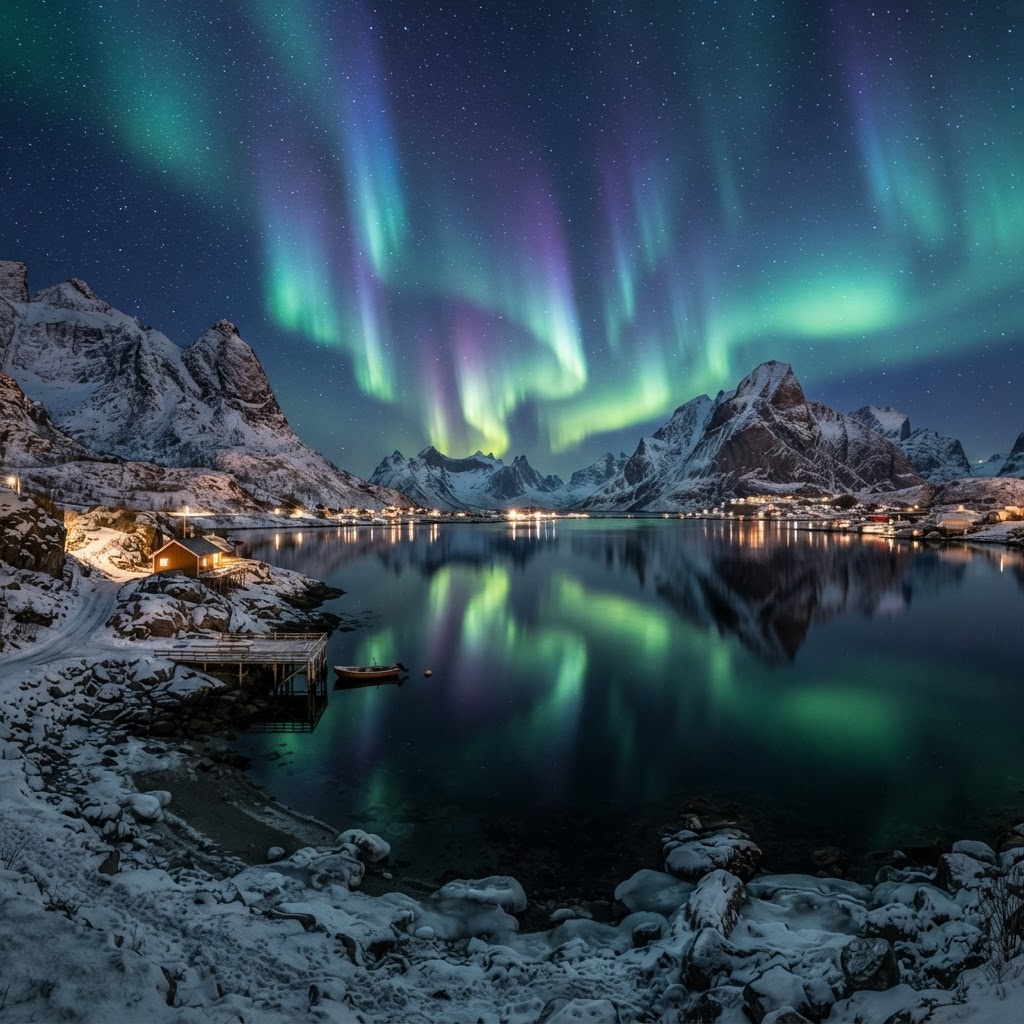
Capturing professional-grade aurora photos requires manual control over your camera’s exposure settings and a rock-steady platform to counteract the long shutter speeds needed for low-light conditions. Because digital sensors struggle to autofocus in pitch-black environments, setting your focus to manual “infinity” is the most critical step for sharp, celestial images.
Key Settings for Success
- Use a sturdy tripod: Long exposures are mandatory, and any camera shake will result in blurry images.
- Set your lens to the widest aperture: Aim for f/2.8 or lower to allow as much light as possible to reach the sensor.
- Manual focus: Set your lens to infinity focus, as the autofocus will struggle to find a point in the pitch black.
- High ISO: Begin at ISO 800 or 1600, adjusting based on the intensity of the lights.
Choosing Between Tours and Solo Expeditions
Organized tours are generally recommended for visitors, as guides utilize real-time satellite data and weather reports to navigate toward cloud-free microclimates. While a tour typically costs between 1,500 and 2,500 NOK, the inclusion of expert knowledge and transport into the wilderness significantly improves the probability of a successful sighting compared to staying stationary.
| Feature | Organized Tour | Solo Expedition |
|---|---|---|
| Mobility | High (Expert tracking) | Variable (Dependent on skill) |
| Safety | High (Professional guides) | Low (Risky on icy roads) |
| Cost | Moderate/High | Low (Fuel/rental only) |
| Flexibility | Scheduled | Unlimited |
On the other hand, renting a car gives you the freedom to move at your own pace. If you choose to go solo, ensure you have an offline GPS, plenty of fuel, and the experience to drive on icy, winding roads. Driving in the Arctic requires specialized knowledge and, ideally, a rental vehicle equipped with studded winter tires.
Where to Stay in Tromsø
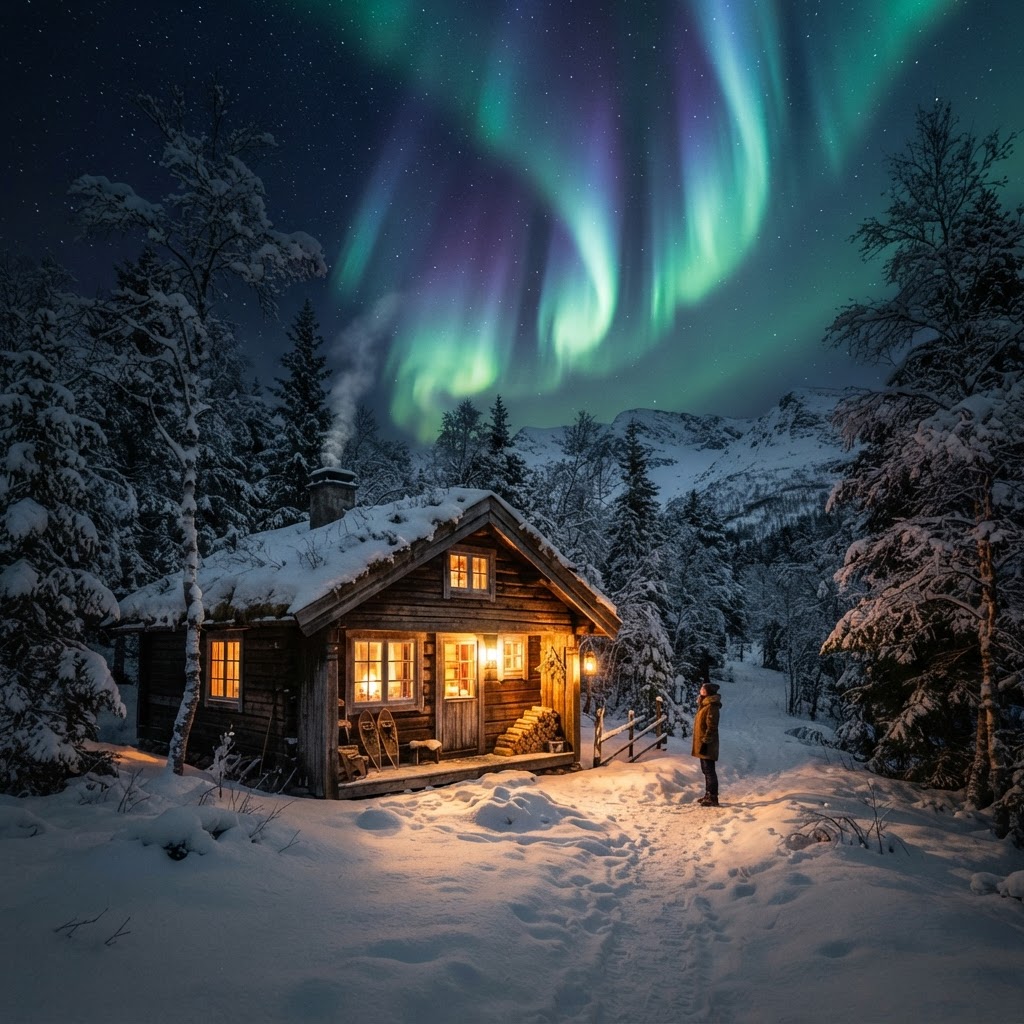
Your accommodation choice can influence your experience. Some hotels offer “aurora wake-up calls,” where staff will contact you if the lights appear during the night. Other visitors prefer staying in remote cabins outside the city center, which offer less light pollution and a more immersive experience in the Arctic wilderness.
Staying closer to the harbor provides easy access to museums, restaurants, and whale-watching tours. Conversely, staying in the Kvaløya area brings you closer to the fjords, providing a breathtaking backdrop for your photos. Whatever your choice, ensure your location has a clear northern horizon view.
Safety and Respecting the Arctic Environment
The Arctic is a fragile and unforgiving ecosystem. When chasing the aurora in Tromsø, always follow “Leave No Trace” principles. Keep to marked trails, carry out all trash, and never disturb local wildlife, even if you are hoping for a perfect shot. Furthermore, check weather reports daily; Arctic storms can move in rapidly, turning a clear night into a dangerous blizzard without warning.
FAQ
Q: What is the single best month to see the Northern Lights in Tromsø?
March is widely considered the best month due to the combination of longer daylight hours for sightseeing and the spring equinox, which traditionally triggers higher levels of geomagnetic solar activity.
Q: Do I need a professional camera to photograph the aurora?
No, you do not need professional equipment, but you do need a camera that allows for manual control. A smartphone with a dedicated “Night Mode” or a pro-mode app that allows for long exposure times can also capture impressive images.
Q: How cold does it get when watching the Northern Lights?
Temperatures in Tromsø during the aurora season typically range from -5°C to -15°C, though wind chill can make it feel significantly colder. Proper layering with wool base layers is essential for standing still for long periods.
Q: Can I see the Northern Lights from downtown Tromsø?
Yes, it is possible to see the aurora from the city center, but it is rarely optimal due to light pollution. For the best viewing experience, travel at least 20-30 minutes away from the city center toward the dark fjords or mountain plateaus.
Q: Are guided aurora tours worth the price?
Yes, professional tours are worth the investment because guides have the resources to track clear skies across a wide geographic range. They often drive hundreds of kilometers to find patches of clear weather, which significantly increases your statistical chance of seeing the lights.
Leave a Reply