
The Spanish plaza is far more than a mere geographical intersection or a simple city square. It is the beating heart of the community, a communal living room that has served as the social, political, and commercial center of life in Spain for centuries. To truly understand the Spanish way of life, one must spend a full day observing the rhythms of this sacred public space.
The Quiet Awakening of the Morning
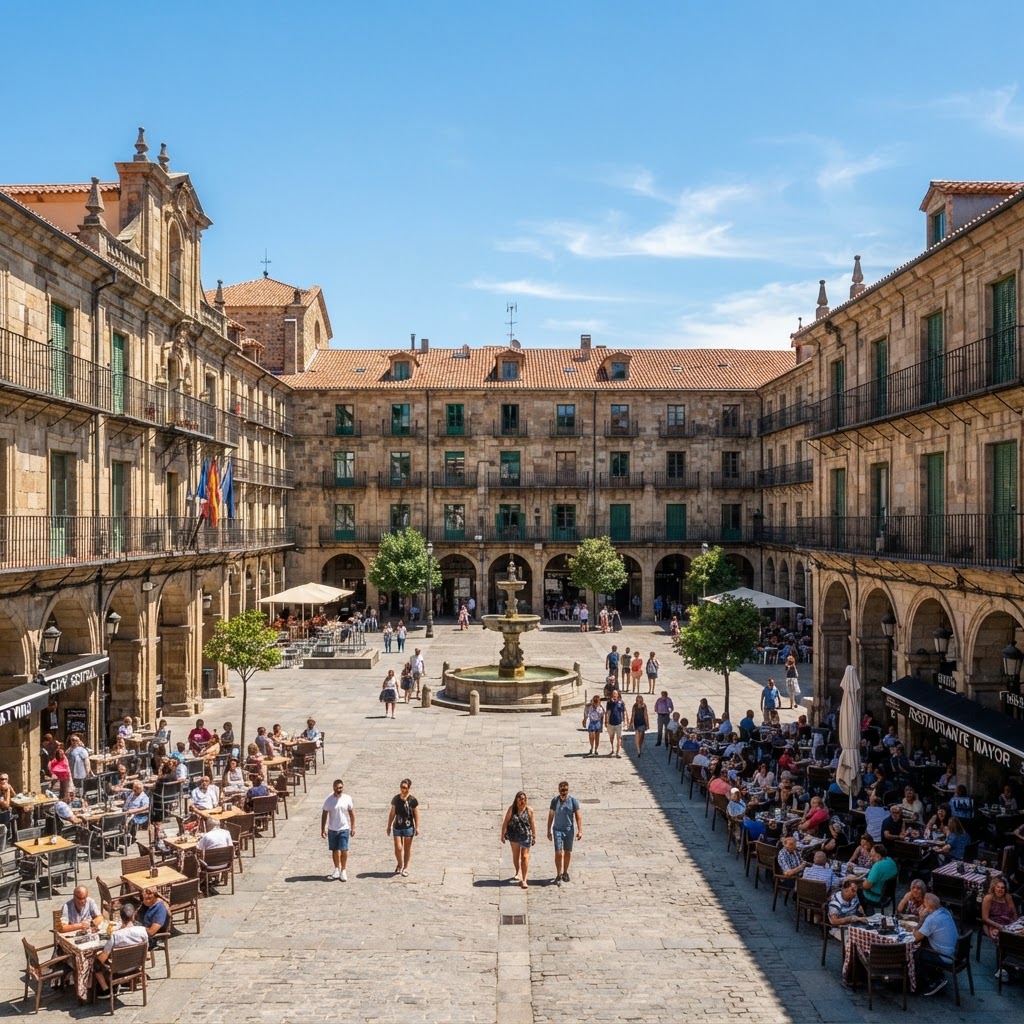
The day begins in the Spanish plaza with a subtle, hushed transition from the stillness of dawn to the first stirrings of city life. Before the heat of the afternoon settles in, the plaza feels intimate and almost domestic. You will see delivery trucks maneuvering carefully across the cobblestones, dropping off fresh crates of oranges, bread, and newspapers to the local cafes.
Residents begin to trickle in, often making a beeline for their favorite corner cafe. This is the time of ‘desayuno’—the Spanish breakfast. A typical ritual involves a small cup of strong coffee paired with a slice of toasted bread drizzled with olive oil and tomato, or a simple churro dipped in thick chocolate. The mood here is one of quiet connection, where locals exchange brief, friendly greetings before starting their workday.
The Role of Local Businesses
These small cafes and kiosks are essential to the plaza’s function. They are the gatekeepers of the square, providing the fuel that keeps the community running. You will notice that the seating is almost always oriented toward the center of the square, encouraging patrons to act as spectators to the morning’s slow-moving drama.
Midday: The Hub of Commercial and Social Activity
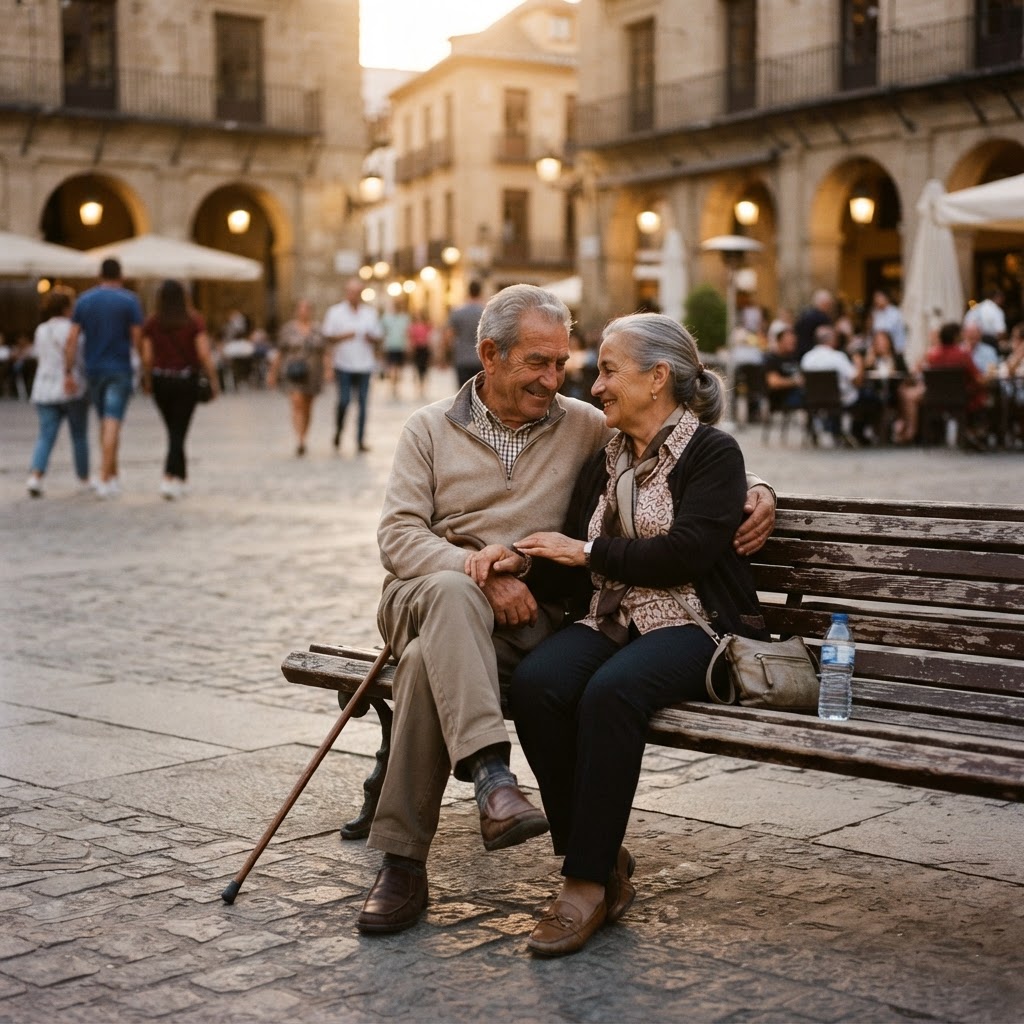
By mid-morning, the atmosphere shifts significantly. The plaza transforms into a buzzing hive of activity as office workers take their mid-morning break, retirees gather on benches to discuss the news, and children begin to swarm after school. The acoustic quality of a well-designed plaza is remarkable; the sound of distant church bells often intermingles with the animated chatter of groups huddled around outdoor tables.
This is the time when the plaza functions as a town hall. Whether it is a small village or a bustling city like Madrid or Seville, the square is the place where information is exchanged. It is where you hear about upcoming festivals, local political developments, and community events. It is a space of transparency and social cohesion that modern suburban planning often lacks.
Typical Midday Plaza Activities
- Pensioners playing dominoes or chess on public tables.
- Local artisans or street vendors setting up stalls.
- Tourists consulting maps and pointing at historic architecture.
- The sudden arrival of a street musician or performer adding rhythm to the air.
The Sacred Siesta and the Afternoon Lull
As the sun reaches its zenith, the pace of the plaza begins to slow. In many parts of Spain, the mid-afternoon hours are dedicated to the ‘siesta’—or at least, a quiet period where shops close and businesses shutter for a few hours. The plaza becomes nearly empty, save for the shadows creeping across the stone facade of the surrounding buildings.
This lull is essential for maintaining the energy of the space. It provides a natural reset button for the city. During this time, the temperature often drops slightly, and the stone architecture helps keep the plaza cool. It is the perfect time for a traveler to appreciate the intricate details of the square—the ornate fountains, the statues of historical figures, and the balconies overlooking the scene.
The Evening Resurgence
As the sun starts to dip below the horizon, the Spanish plaza experiences its most magical transformation. The ‘paseo,’ a traditional evening stroll, brings people out of their homes in droves. Families with young children, teenagers laughing in groups, and couples taking a leisurely walk collectively occupy the square. It is a social dance that has persisted for generations.
This is when the lights of the cafes glow brighter and the sound of conversation rises to a lively crescendo. The plaza becomes a theater of life. You will see people of all ages mixing effortlessly, proving that the square is truly a neutral ground that belongs to everyone, regardless of age or social standing.
Tapas and the Nighttime Rhythm
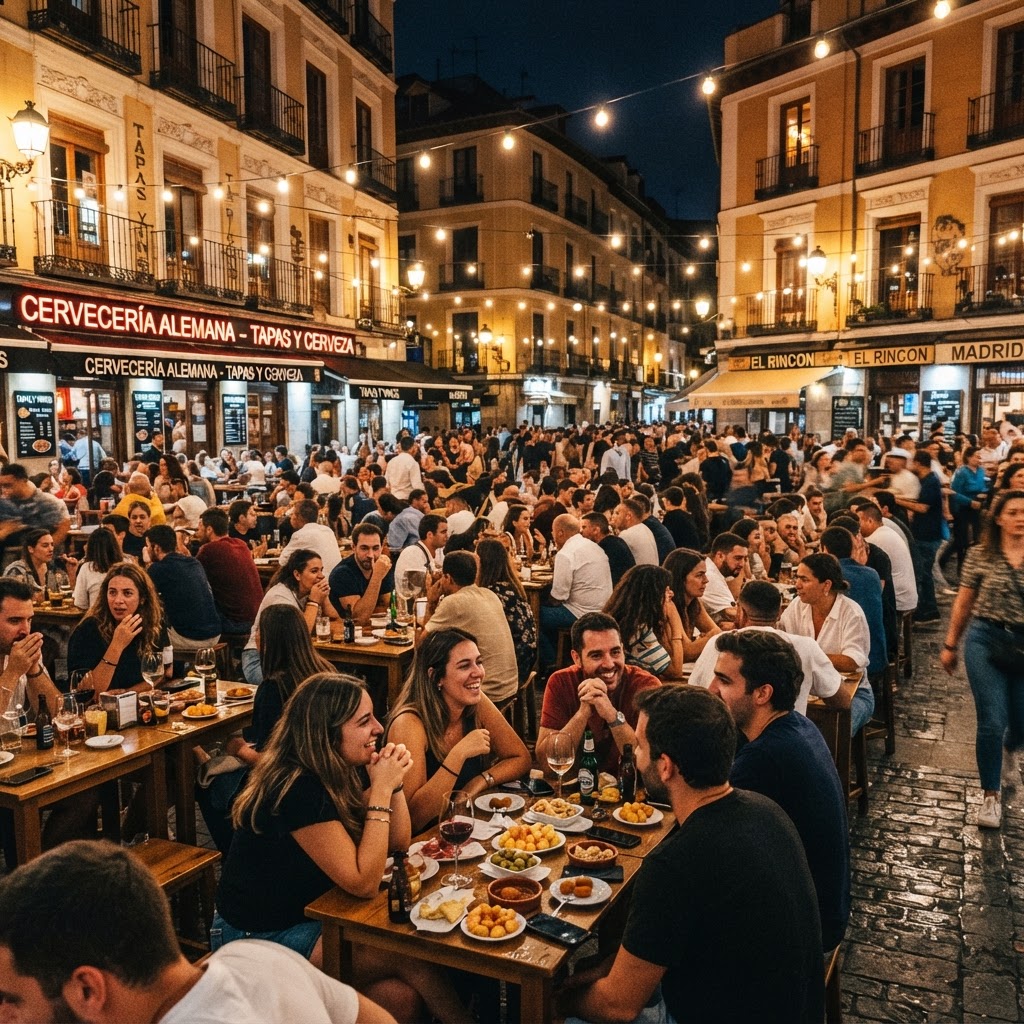
As the evening progresses into night, the focus shifts to food and drink. The Spanish tradition of ‘tapear’—moving from bar to bar to sample small plates—is in full swing. Because the plaza is surrounded by these establishments, it functions as the central node of a larger culinary network.
It is common for groups to stand outside in the open air, glass of wine in one hand and a plate of ‘jamon’ or ‘patatas bravas’ in the other. The conversation is animated, the gestures are expansive, and the laughter is infectious. This nighttime atmosphere is what many travelers cite as the highlight of their experience in Spain; it is an environment where hospitality is practiced as an art form.
Why the Plaza Survives
In an age of digital isolation, the Spanish plaza survives because it fulfills a biological need for proximity. Human beings are social animals, and the physical design of these squares encourages face-to-face interaction. Unlike shopping malls or isolated residential complexes, the plaza offers a sense of shared destiny.
The Cultural Importance of the Plaza Mayor
While every neighborhood has its ‘plaza,’ the main square, or ‘Plaza Mayor,’ holds special status. Historically, these were the locations for bullfights, public proclamations, and markets. Today, they are the architectural anchors of the city. Their scale, symmetry, and historical significance serve to remind citizens of their heritage.
| Feature | Function | Frequency |
| :— | :— | :— |
| Cafe Seating | Social interaction | Daily |
| Central Fountains | Meeting point | Constant |
| Public Benches | Passive recreation | Hourly |
| Historical Monuments | Cultural education | Permanent |
Conclusion: A Living Legacy
The Spanish plaza is a testament to the enduring power of community. It is a place where time slows down, allowing the nuances of culture and human connection to take center stage. Whether you are observing the morning coffee ritual or joining in the lively evening paseo, the plaza invites you to be a participant rather than just a spectator. By prioritizing communal space, Spain has preserved a way of life that values interaction over speed, and community over convenience.
If you find yourself traveling in Spain, make it a point to sit in a plaza for an hour. Put your phone away, order a cafe con leche, and just watch the world go by. You will find that you aren’t just observing a space, but participating in a tradition that makes Spain the vibrant place it is today. When was the last time you sat in a public square and simply engaged with your surroundings? Start planning your trip today and experience the rhythm of the plaza for yourself.
Leave a Reply