
Florence at Golden Hour: A Guide to Pure Romance
Florence at golden hour is best experienced between 4:00 PM in winter and 8:30 PM in summer, primarily from elevated viewpoints like Piazzale Michelangelo or the Basilica di San Miniato al Monte. The hour before sunset creates a unique, diffused Tuscan light that highlights the city’s terracotta, marble, and sandstone architecture.
The Magic of Tuscany’s Light
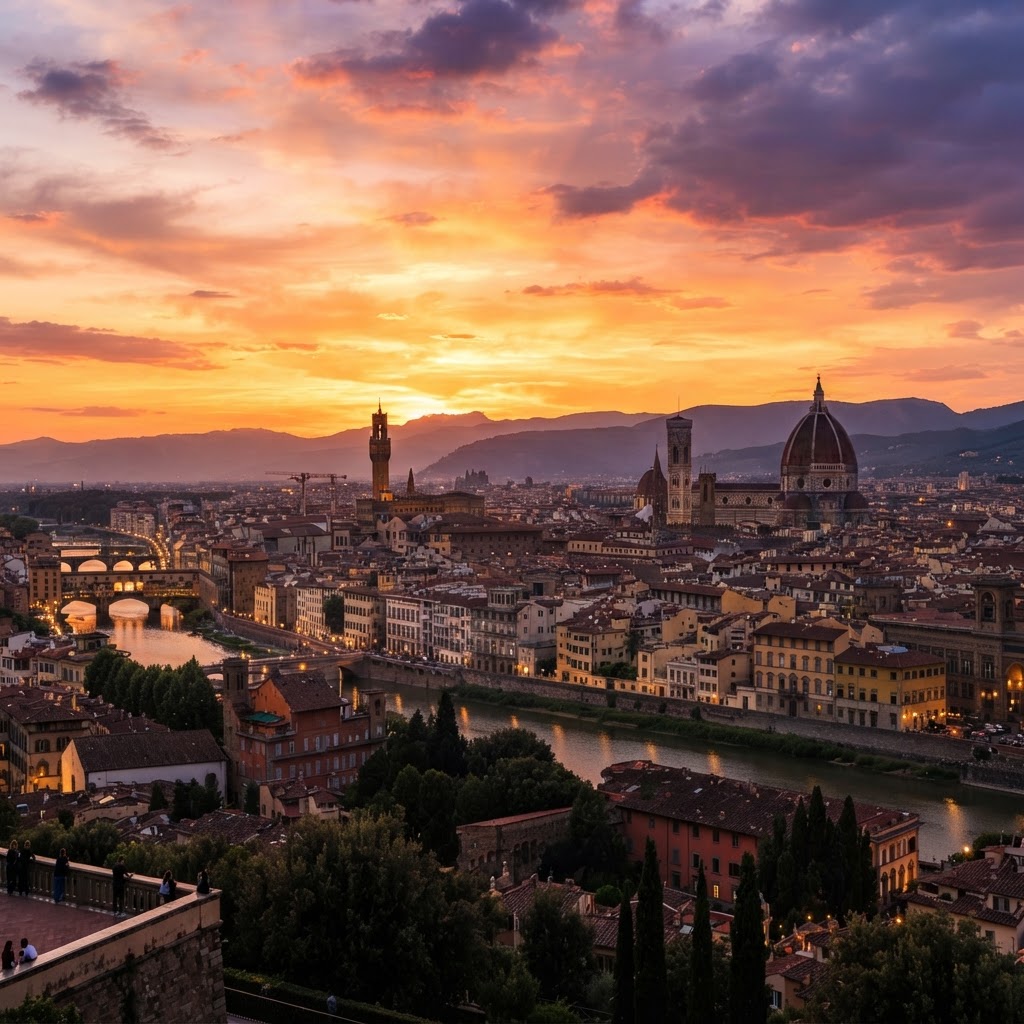
Scientific and aesthetic factors unique to the Arno River valley contribute to the legendary golden quality of light in Florence, which photographers often describe as a natural “softbox” effect. This phenomenon occurs when the sun’s low angle (typically below 6 degrees) increases the path length of light through the atmosphere, scattering blue light and leaving a warm, golden spectrum that enhances the textures of the city’s Renaissance structures. Unlike the harsh, high-contrast light of midday, which flattens architectural detail, the golden hour light rakes across the Duomo’s marble façade, creating depth and a distinct, glowing luminescence that is geographically specific to this region.
Understanding the Golden Hour
The golden hour is characterized by a low sun angle that provides a warm color temperature and softer lighting. In Florence, this is especially dramatic because of the abundance of sandstone and cream-colored plaster that covers the city’s historic buildings. This natural filter turns the entire city into a studio, making every street corner a potential masterpiece.
Iconic Viewpoints for Sunset Seekers
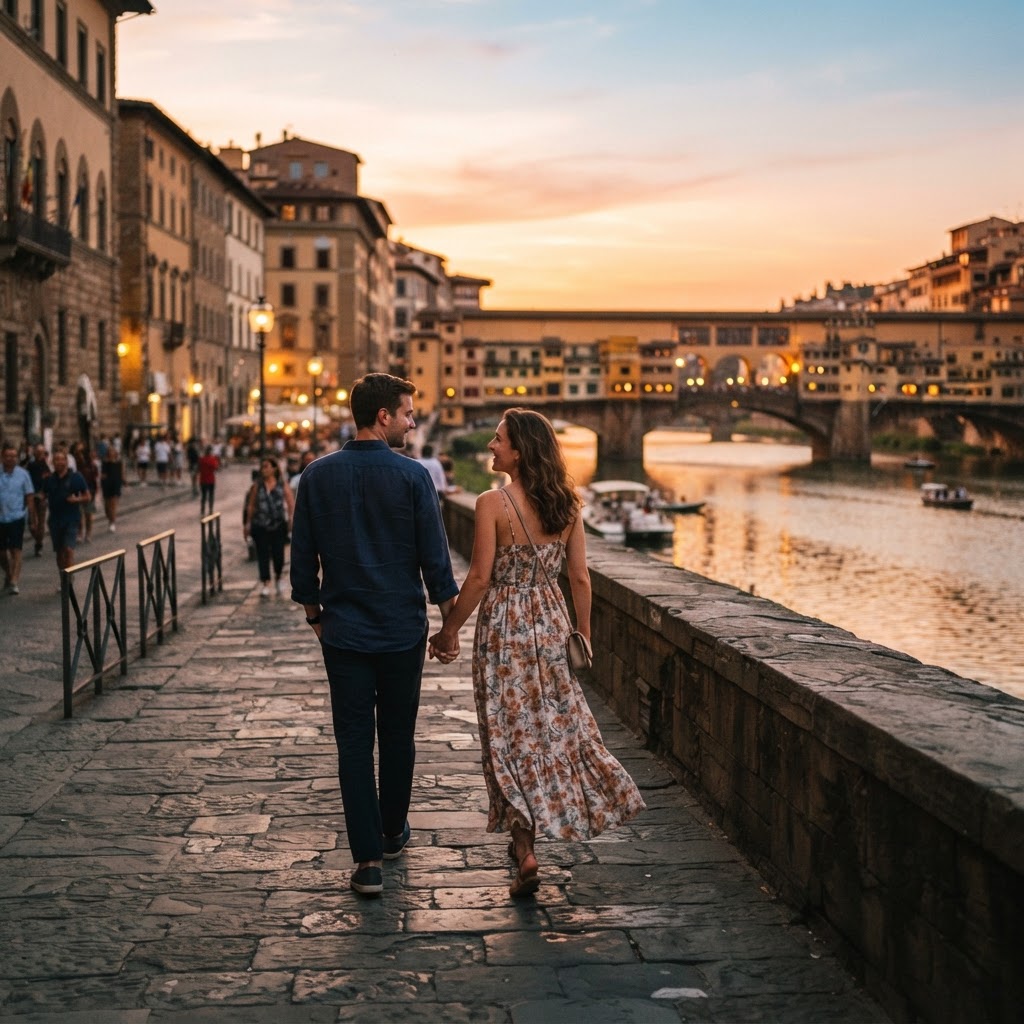
Securing the perfect vantage point is essential for capturing the city’s skyline, with Piazzale Michelangelo remaining the most iconic location for panoramic photography. Located at the end of Viale Michelangelo, this spot offers a 180-degree view that captures the Arno River, the Ponte Vecchio, and the Basilica di Santa Maria del Fiore. While iconic, it attracts significant crowds, so arriving 60 minutes before the calculated sunset time is recommended to secure a front-row spot along the stone balustrade. For a superior, quieter alternative, the Basilica di San Miniato al Monte, situated at a higher elevation than Piazzale Michelangelo, offers a more intimate experience. The basilica’s forecourt provides an unobstructed view of the valley, often accompanied by the Gregorian chants of the monks during vespers, which occur daily around 5:30 PM to 6:00 PM, providing a profound auditory contrast to the visual splendor of the setting sun.
Walking the Romantic Streets of Oltrarno
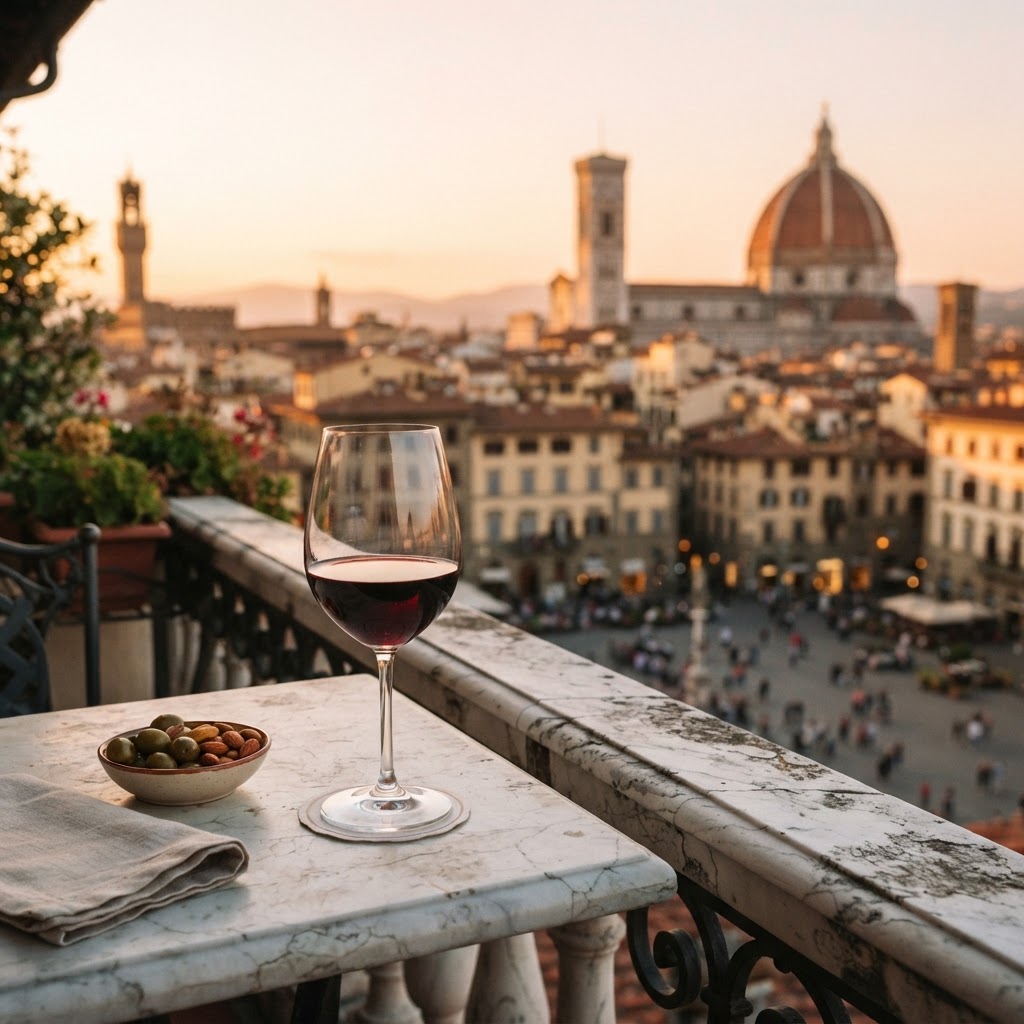
The Oltrarno district, specifically the area south of the Ponte Vecchio, offers an authentic “living” atmosphere where golden hour light illuminates the historic workshops and ivy-covered stone facades that characterize this artisans’ quarter. Unlike the bustling tourist centers north of the river, Oltrarno remains a residential hub, allowing visitors to engage in the passeggiata—the traditional evening social walk—at a slower, more authentic pace. As the light dims, the narrow alleys of the Santo Spirito neighborhood become ambient, with local enotecas spilling into the streets. This area is ideal for capturing the juxtaposition of centuries-old architecture against the vibrant, modern life of local Florentines. The golden light here is particularly rich, reflecting off the warm-toned plaster of medieval buildings and creating long, dramatic shadows that define the district’s narrow, winding geography.
Suggested Sunset Walking Route
- Start at the Ponte Santa Trinita, widely considered the most beautiful bridge in the city.
- Wander through the quiet streets near the Pitti Palace.
- Stop at a local enoteca for a glass of Chianti to enjoy as you walk.
- End your journey near the Santo Spirito square as the evening buzz begins.
Dining Under the Twilight Sky
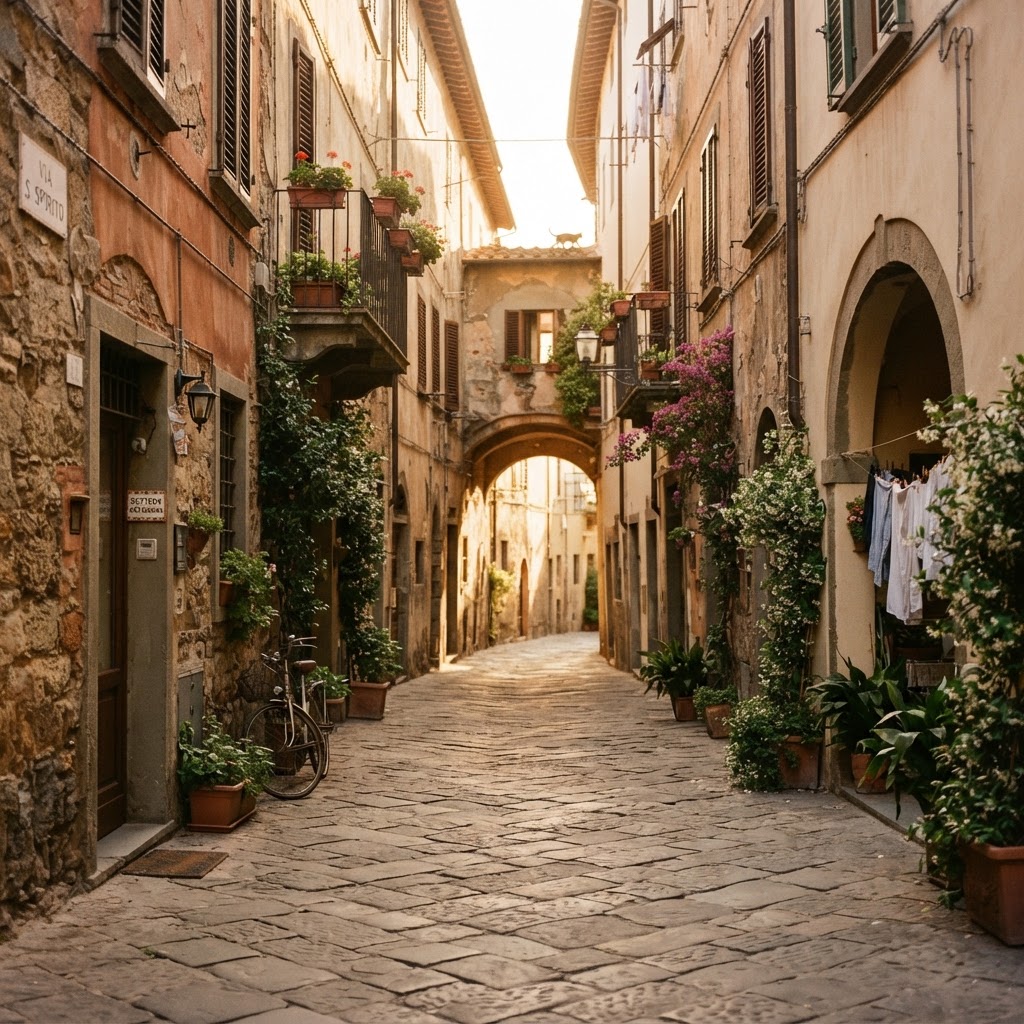
Selecting a rooftop terrace for dinner during the golden hour allows you to witness the seamless transition of the city from daylight to a illuminated nighttime tapestry. When booking, look for establishments on Via de’ Bardi or near the Piazza della Repubblica that offer unobstructed western views, as these will provide the longest exposure to the setting sun. Many high-end terraces provide an aperitivo service between 6:00 PM and 8:30 PM, typically priced between 15€ and 25€, which includes a cocktail, such as a traditional Negroni, and a selection of local stuzzichini (snacks). This experience is a hallmark of Florentine life, allowing travelers to observe the sky changing from deep gold to indigo while the city lights flicker on below. It is highly advised to make dinner reservations at least 48 to 72 hours in advance, especially during the peak tourist season (May through September), to ensure a prime table on a terrace rather than an interior dining room.
Capturing the Moment: A Photographer’s Guide
Achieving professional-grade golden hour photos requires specific technical adjustments, such as maintaining a low ISO and avoiding artificial flash to preserve the authentic, warm color temperature of the Tuscan sunset. Because the light is soft, you should aim to shoot in RAW format to maximize dynamic range, which will allow you to recover details in the shadows of the historic stone buildings. For landscape shots from Piazzale Michelangelo, use a focal length between 24mm and 35mm to capture the breadth of the skyline; for street portraits in the Oltrarno, a 50mm or 85mm prime lens with a wide aperture (f/1.8 to f/2.8) will create a pleasing bokeh effect that separates the subject from the glowing background. If you are shooting handheld, keep your shutter speed above 1/125s to avoid camera shake, or use a lightweight travel tripod if you intend to shoot during the “blue hour”—the 20-minute window of twilight that follows the sun setting below the horizon.
The Cultural Significance of the Hour
For the Florentine people, this time of day is deeply rooted in the concept of ‘la bella figura’—the art of living well and presenting oneself with elegance. It is a time for ‘passeggiata,’ the traditional evening stroll. You will see families, couples, and friends walking arm-in-arm, discussing the day, and simply existing in the shared space of the city squares. By participating in this ritual, you move from being a mere spectator to a participant in the rhythm of the city. There is a profound beauty in this collective pause, a reminder that in a city built on centuries of artistic achievement, the simple act of living is also a form of art.
Practical Tips for Your Visit
To make the most of your golden hour experience, planning is essential. The timing of the sunset varies significantly by season, so check the local weather forecasts before you set out. In the summer months, the golden hour can start as late as 8:00 PM, while in the winter, it may occur as early as 4:00 PM.
- Wear comfortable walking shoes, as the cobblestones are unforgiving.
- Carry a light jacket, as the temperature can drop quickly once the sun disappears.
- Book your dinner reservations well in advance if you want a table at a popular terrace.
- Keep your camera battery charged, as you will likely take hundreds of photos.
FAQ
Q: What is the best time of year for golden hour in Florence?
Golden hour is excellent year-round, but late spring (May-June) and early autumn (September) offer the most comfortable temperatures and clearest light. During these months, the sunset occurs at a convenient time for dining, typically between 7:30 PM and 8:30 PM.
Q: Is Piazzale Michelangelo free to enter?
Yes, Piazzale Michelangelo is a public square and is completely free to access at any time of day. It is an open-air viewpoint, making it the most accessible and popular location for sunset photography in the city.
Q: Can I drive to the viewpoints?
While you can drive to Piazzale Michelangelo, parking is extremely limited and the area is often restricted to local traffic during peak times. It is highly recommended to take the local ATAF bus (Line 12 or 13) or walk from the city center to avoid parking fines.
Q: What should I wear for an evening in Florence?
Follow the local tradition of la bella figura by wearing smart-casual attire, especially for dinner. Comfortable walking shoes are a priority due to the uneven cobblestone streets, while a light layer or scarf is recommended even in summer to manage the evening temperature drop near the river.
Q: How early should I arrive at sunset spots?
For popular spots like Piazzale Michelangelo, aim to arrive at least 45 to 60 minutes before the actual sunset time. This ensures you can secure a spot against the wall, set up your tripod, and witness the full transition of colors in the sky.
Leave a Reply