
The Ultimate Ireland 7-Day Road Trip: Route Map & Stops
A 7-day Ireland road trip is the perfect amount of time to explore the iconic Wild Atlantic Way, starting in Dublin and looping through Galway, the Cliffs of Moher, and the Ring of Kerry. This itinerary balances historic city sites with rugged coastal scenery for a comprehensive one-week experience.
Dublin: The Starting Point of Your Adventure
Your 7-day adventure begins in Dublin, a city where 1,000 years of history meet a modern, energetic urban culture. Start your first morning at Trinity College to view the 9th-century Book of Kells, an essential stop that usually requires booking tickets online at least two weeks in advance. After exploring the campus, walk to St. Stephen’s Green to enjoy 22 acres of Victorian landscaping before heading to the EPIC The Irish Emigration Museum, which costs approximately €19 for adults. While Temple Bar is famous for its lively atmosphere, savvy travelers head to the north side of the Liffey to authentic “snug” pubs for a quieter, more local experience. Before picking up your rental car, ensure your documentation is ready, as rental agencies often require a credit card deposit of €1,500 to €3,000. Navigating out of Dublin is manageable if you stick to the M50 motorway, but always stay left and remember that Irish rural roads are often narrow, stone-walled lanes that require extra caution.
Essential Dublin Packing List
- Comfortable, waterproof walking shoes for cobblestones.
- A lightweight, high-quality rain jacket.
- A universal power adapter for Ireland’s three-pin outlets.
- A physical map as a backup for GPS signals.
Journey to the Wild Atlantic Way
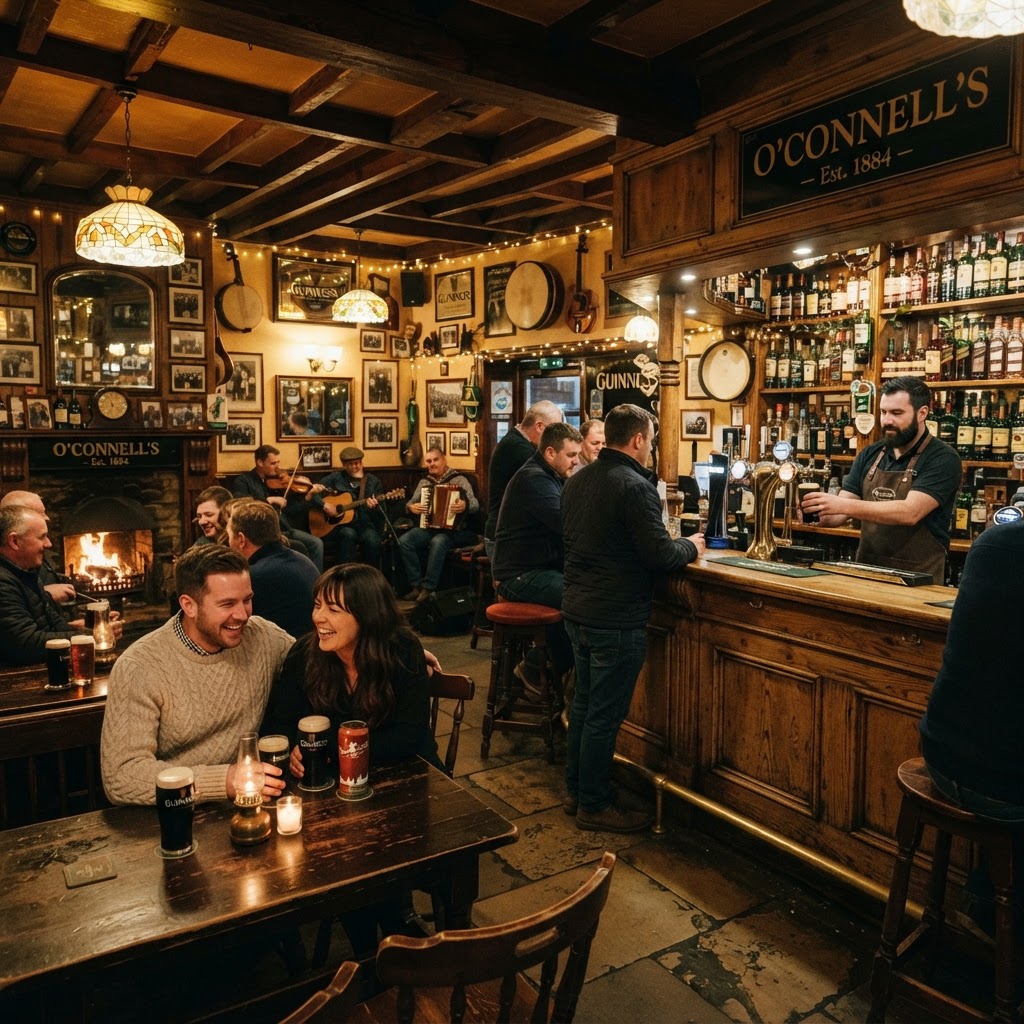
Heading west, you will leave the Dublin sprawl for the verdant hills of County Galway, marking your entry into the iconic Wild Atlantic Way. This 200-kilometer drive is where the landscape transforms into rugged pastures and stone-walled fields, leading you to the bohemian heart of Galway City. Galway is famous for its vibrant street performers on Shop Street and the historic Spanish Arch, which dates back to 1584. Spend your evening listening to live traditional Irish music in a venue like Tigh Neachtain, where the atmosphere is authentic and the seafood is world-class. Being just 90 minutes from the Connemara National Park, Galway serves as an ideal base for hikers and photographers. If you have extra time, drive the 40-minute route to the village of Spiddal to witness the Irish language (Gaeilge) being spoken in a traditional Gaeltacht region. This area provides the quintessential Irish experience of mountains meeting the sea.
The Cliffs of Moher and County Clare
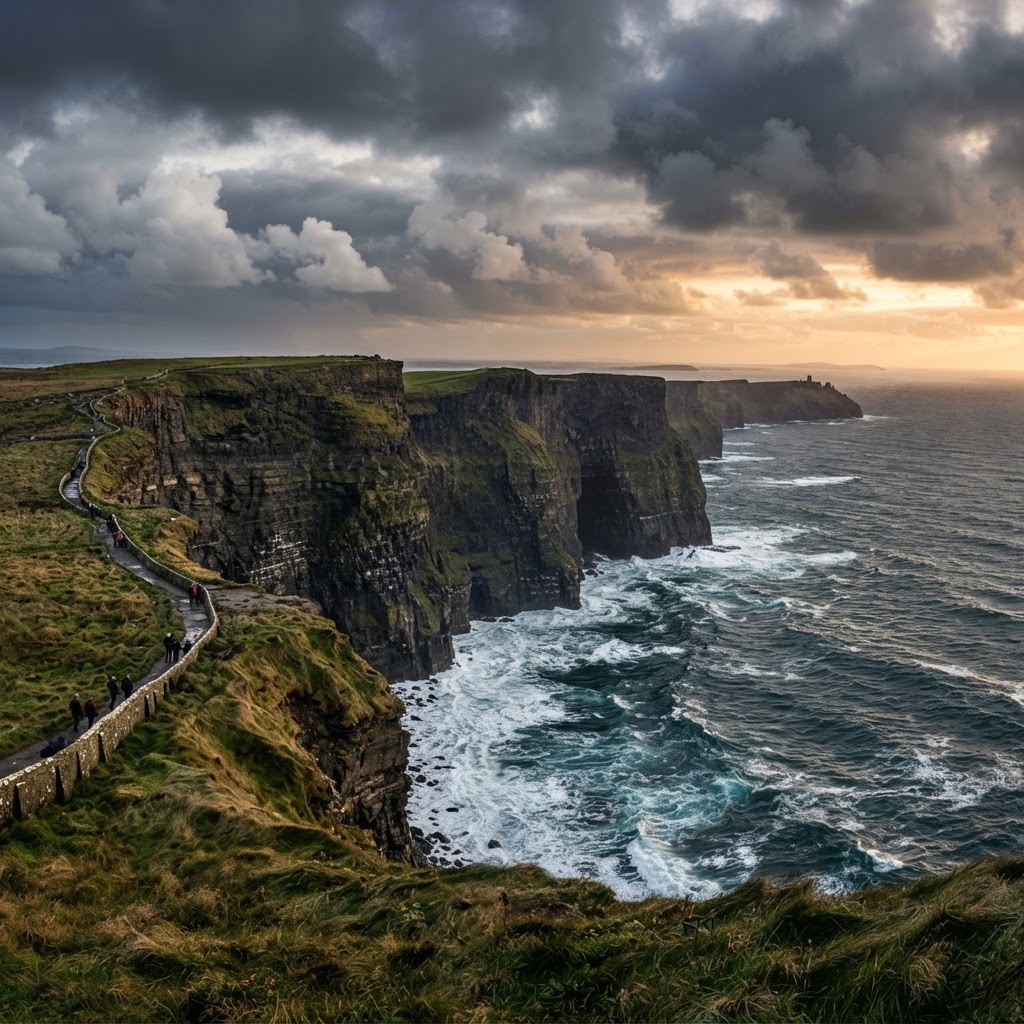
Continuing south, the landscape becomes dramatic as you encounter the world-famous Cliffs of Moher, which soar 214 meters above the Atlantic Ocean. To avoid the peak-hour tourist surge, aim to arrive before 10:00 AM or after 4:00 PM; tickets start at €7 online. Walking the cliff path toward Hag’s Head offers a much quieter, more immersive perspective of the geological majesty, spanning over 14 kilometers of coastal trail. After the cliffs, traverse the Burren, a unique 250-square-kilometer limestone karst landscape that feels like another planet. Make sure to stop at the Poulnabrone Dolmen, a prehistoric portal tomb that has survived for over 5,000 years. This region is a testament to the resilience of early Irish settlers who farmed this harsh, treeless terrain since the Neolithic period. Always check local weather alerts before hiking the cliff edges, as wind speeds can reach 80 km/h during Atlantic storms.
The Magic of the Ring of Kerry
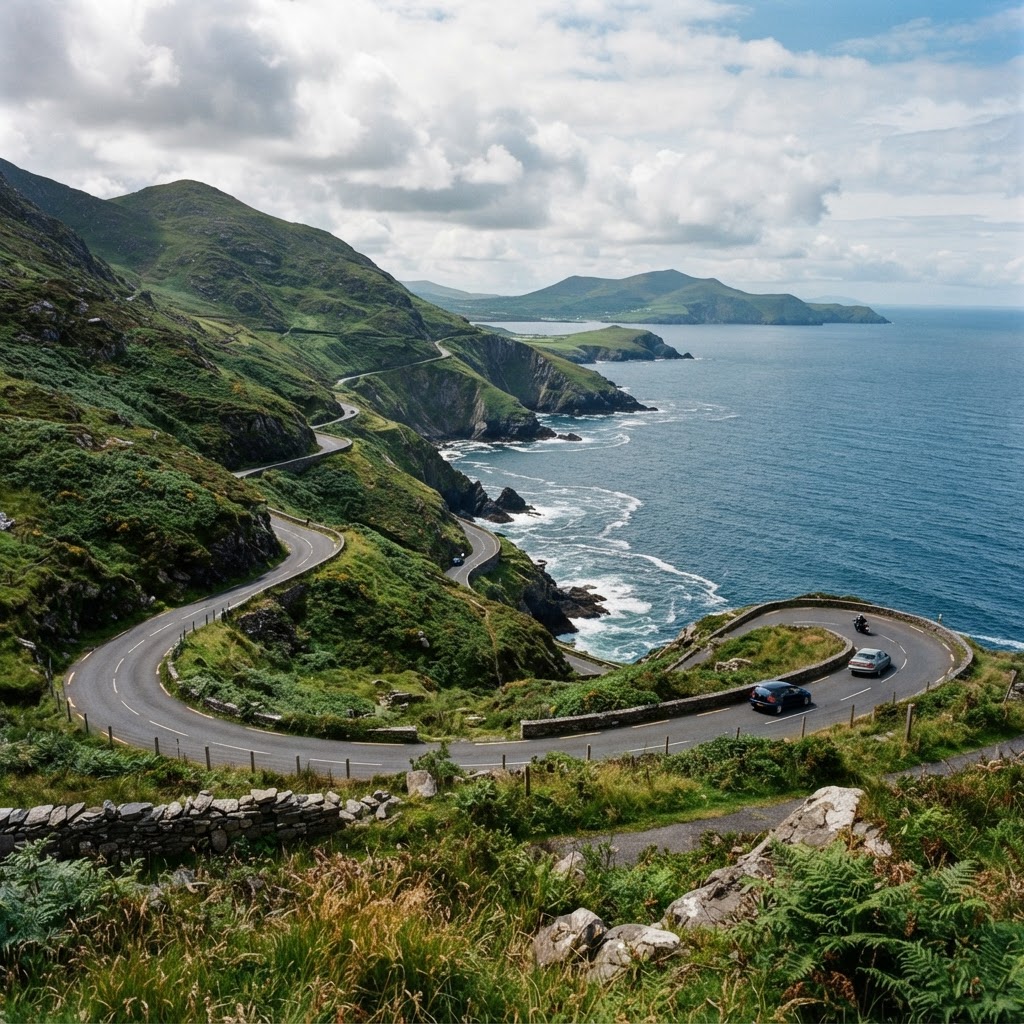
No Ireland road trip itinerary would be complete without the legendary Ring of Kerry, a 179-kilometer circular coastal route that captures the raw essence of the Irish landscape. To beat the heavy tour buses, start your loop at 8:00 AM, heading in a counter-clockwise direction to catch the early light hitting the dramatic Skellig Coast. You will encounter pristine beaches like Rossbeigh Strand, dense oak forests in Killarney National Park, and charming heritage villages like Kenmare, known for its vibrant craft shops. The Ring of Kerry is not just about the drive; it’s about the detours, such as the Skellig Ring, which provides spectacular views of the UNESCO-listed Skellig Michael island. Our comparison of Ireland’s most famous scenic loops helps you decide which route best matches your driving comfort and interest levels.
Return Through the Heartland
As you loop back toward Dublin, dedicate your final full day to the Rock of Cashel in County Tipperary, a spectacular group of medieval buildings set upon a limestone outcrop. Entry costs approximately €8-€10 per person, and the site includes a 12th-century round tower, a High Cross, and a Romanesque chapel. Walking through these ruins provides a grounding sense of the sheer royal history packed into this island. On your final morning, explore the monastic site of Glendalough in the Wicklow Mountains, founded by St. Kevin in the 6th century. The dual lakes and ancient valley ruins offer a serene, meditative final stop before returning your vehicle. Driving in Ireland becomes second nature by this point, and the quiet mountain passes of Wicklow provide a perfect finale to your week of discovery. Be aware that the Wicklow Gap road can be foggy; prioritize safety by using your fog lights and driving slowly through the mountain switchbacks.
FAQ
Is 7 days enough for an Ireland road trip?
Yes, 7 days is an excellent timeframe to see the major highlights of the western and southern coasts. You should focus your itinerary on specific regions, such as the Wild Atlantic Way, to avoid spending the majority of your trip inside your rental car.
What is the best time of year to visit?
Late spring (May) and early autumn (September) offer the best balance of daylight hours, manageable tourist crowds, and milder weather. These months avoid the mid-summer peak season price hikes while ensuring most tourist attractions remain open.
Do I need an international driving permit?
If you hold a valid driver’s license from the US, Canada, or any EU member state, you generally do not need an international driving permit. However, you should always carry your physical driver’s license and confirm documentation requirements with your specific rental agency before arrival.
Is it hard to drive on the left?
It typically takes a few hours of driving to adjust to the left side of the road. Most travelers find that sticking to well-marked, major “N” or “M” roads for the first day makes the transition much safer and easier than navigating narrow rural lanes immediately.
What is a hidden gem on this route?
The Skellig Ring is a spectacular, less-traveled alternative to the main Ring of Kerry route. It offers superior coastal views, significantly less traffic, and a closer look at the Skellig islands without the heavy tourist congestion of the primary loop.
Mastering the Rental Car Logistics
Driving in Ireland is a different beast than driving in most other countries. You will be sitting on the right side of the car and driving on the left side of the road. Most rental cars are manual transmission by default. If you need an automatic, book it at least three months in advance, as they are in high demand.
Avoiding the Insurance Trap
Rental agencies will try to upsell you on “Super CDW” insurance at the counter. This can cost upwards of €30 per day. Check if your credit card covers international rental car insurance before you leave home. If you rely on your card, be prepared to provide proof of coverage in writing. Keep your credit card deposit funds accessible, as the hold on your account can take up to ten business days to clear after you return the car.
The Truth About Irish Weather
The saying that you can experience four seasons in one day is entirely accurate. Even in the middle of July, you might face heavy rain followed by intense sun. Never rely on a standard hoodie as your main layer. Always carry a waterproof, breathable shell that can handle heavy Atlantic mist. Avoid umbrellas, as they are useless against the strong coastal winds and will likely break within an hour.
Common Road Trip Mistakes to Avoid
- Underestimating drive times: Google Maps often underestimates travel times on rural roads. If it says a drive takes two hours, budget for three. You will get stuck behind tractors, sheep, or large tour buses on single-lane tracks.
- Ignoring the ‘Local’ rule: If a local flashes their lights at you, they are giving you a warning. They might be alerting you to a speed trap ahead or an upcoming hazard on the bend.
- Overpacking for a week: Most B&Bs and hotels have limited space for luggage. A massive suitcase is a burden in a small rental car trunk. Use a soft-sided duffel bag instead of a hardshell suitcase for easier storage.
- Skipping the toll fees: The M50 motorway around Dublin uses a barrier-free toll system. You must pay this online by 8 PM the following day. Your rental agency might charge an admin fee if they have to pay it for you.
Strategic Dining and Tipping
You do not need to tip for every single drink at the bar. If you are sitting down for a meal at a restaurant, a 10% to 15% tip is standard for good service. If the service was just average, rounding up the bill is perfectly acceptable. For casual cafe lunches, simply leaving the change is sufficient.
Frequently Asked Questions
Is it better to stay in one hub or move every night?
Move every two nights. Spending only one night in each location forces you to spend your vacation packing and unpacking. Staying in one place for two nights allows you to see the sights during the day and enjoy a relaxed evening in a local pub without needing to drive.
Can I visit the Ring of Kerry in a single day?
Yes, but you will spend most of your day in the car. It is a 179-kilometer loop that requires patience. If you want to actually stop, hike, and take photos, dedicate at least six hours to the drive alone. Start early, around 8 AM, to beat the heavy tourist coaches that clog the narrow roads.
Do I need cash or is card accepted everywhere?
While cards are accepted in almost all shops and restaurants, always carry at least €50 in small bills and coins. Some rural petrol stations, small craft shops, and cash-only pubs in remote areas will not accept cards. You will also need coins for parking machines in small towns.
Leave a Reply