
Stepping into the Plaza de España in Seville feels like walking onto a movie set, where history, art, and grand scale collide to create an atmosphere of pure enchantment. Located within the lush greenery of the Maria Luisa Park, this architectural marvel is widely considered the most beautiful square in all of Spain, if not the entire world. Built for the Ibero-American Exposition of 1929, it serves as a stunning testament to the cultural richness of the region.
The Architectural Grandeur of Plaza de España
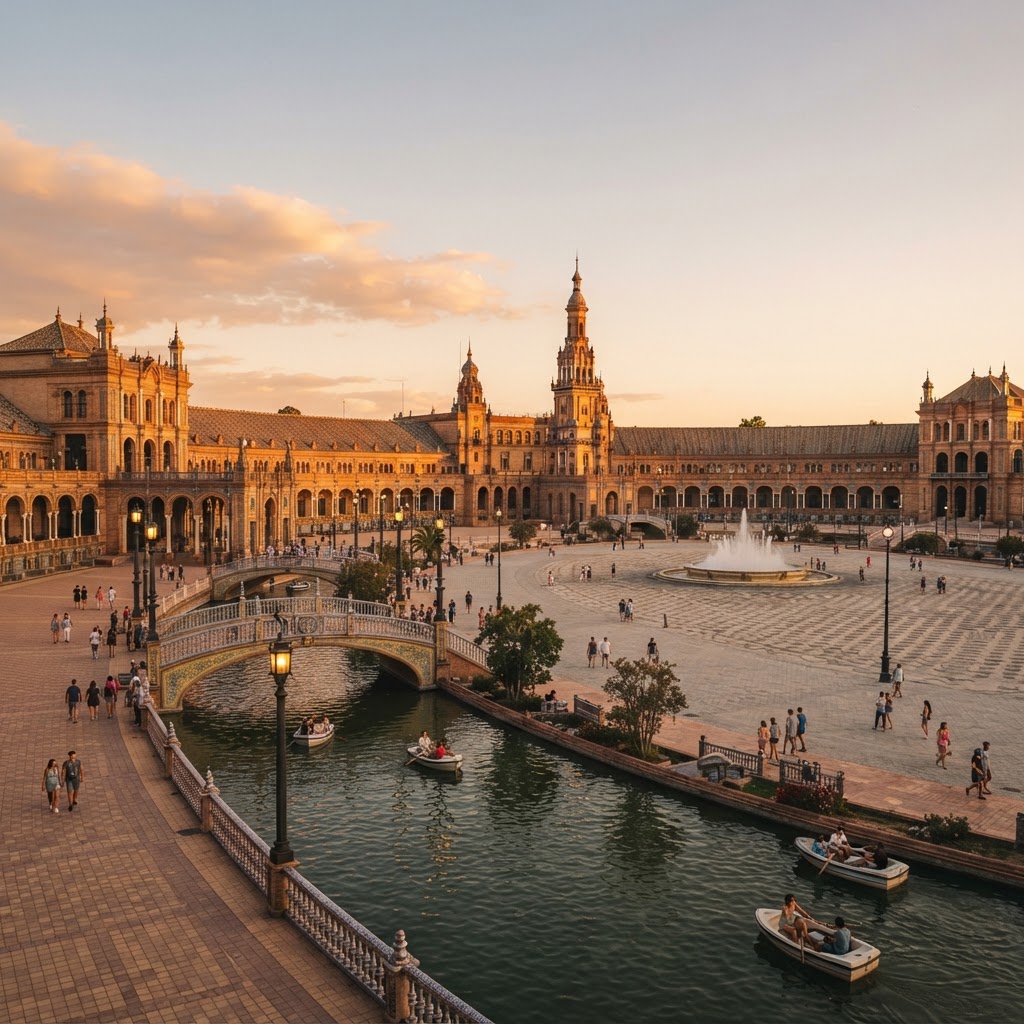
Designed by the visionary architect Aníbal González, the Plaza de España is a masterpiece of Regionalist architecture. This unique style blends elements of Renaissance Revival and Moorish Revival, often referred to as Neo-Mudéjar. The immense semi-circular structure is meant to symbolize Spain embracing its former colonies in the Americas, looking out toward the Guadalquivir River.
Iconic Features of the Design
The square is anchored by a massive canal that curves along the perimeter, crossed by four distinct bridges. These bridges represent the four ancient kingdoms of Spain: Castile, León, Aragon, and Navarre. The intricate brickwork, combined with the vibrant, hand-painted ceramic tiles known as azulejos, creates a visual rhythm that is quintessentially Andalusian.
The Allure of the Tiled Alcoves
The most striking features are the fifty-eight tiled alcoves that line the inner walls of the square. Each alcove represents a different province of Spain and features scenes from the region’s history, along with a map and a coat of arms. It is a popular tradition for visitors to take a photo in the alcove corresponding to their favorite city or home region.
A Deep Dive into Historical Significance
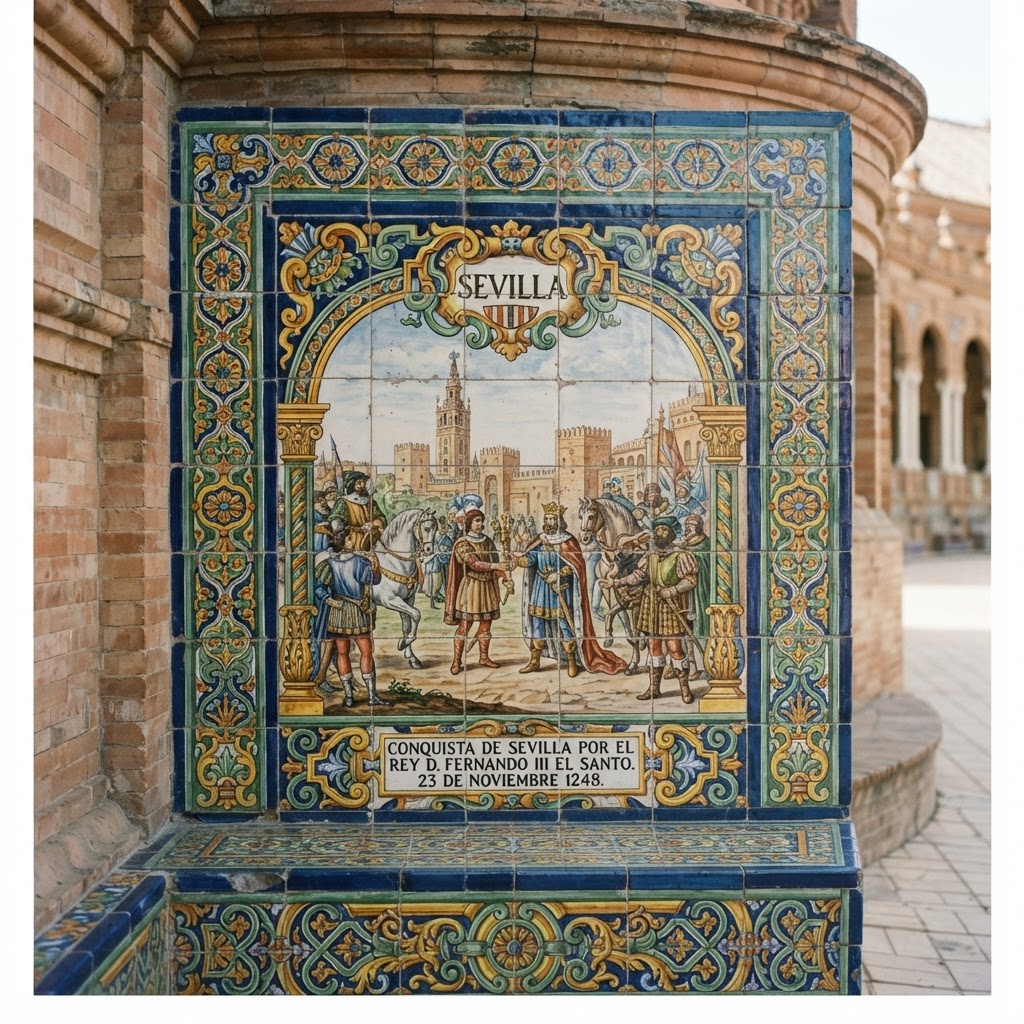
Commissioned as the centerpiece of the 1929 Ibero-American Exposition, the plaza was designed to showcase Spain’s industrial and cultural prowess. The construction took fifteen years and involved thousands of workers, resulting in a site that covers a staggering 50,000 square meters. The project was meant to mend relations with former Latin American colonies, positioning Seville as a bridge between two worlds.
Symbolism in the Architecture
The semi-circular shape is intentional, facing towards the park and the river. This orientation was designed to welcome visitors who arrived by boat, creating an immediate sense of arrival. The two towers on either side of the palace reach heights of 74 meters, acting as landmarks that can be seen from various points across the city.
Tips for a Perfect Visit
Planning a visit to Plaza de España requires a bit of strategy to avoid the peak crowds. The square is free to enter, which makes it one of the most accessible major attractions in Seville. However, because of its popularity, it can get quite busy during the midday heat.
Best Time to Explore
For the best photographic opportunities, arrive shortly after sunrise. The soft morning light hits the tiles and the golden brick, creating a magical glow without the interference of large tour groups. Alternatively, visiting during the late afternoon allows you to enjoy the cooler temperatures and the sunset over the towers.
Essential Activities Inside the Plaza
- Rent a Rowboat: You can rent a small boat to row through the canal, providing a unique vantage point of the bridges.
- Hire a Horse-Drawn Carriage: Enjoy a traditional experience by touring the park and the square in an authentic Andalusian carriage.
- Explore the Gardens: Take time to walk into the adjacent Maria Luisa Park, which provides a serene escape from the bustle of the city.
Cultural Impact and Film Appearances
It is no wonder that filmmakers and artists are drawn to the location. The Plaza de España has gained international fame as a filming location for several blockbusters. It famously served as the planet Naboo in ‘Star Wars: Episode II – Attack of the Clones,’ where characters walk across the grand plaza.
The Square as a Cinematic Icon
Beyond Star Wars, the square has appeared in ‘The Dictator’ and various period dramas. Its ability to look like a fantasy palace while remaining grounded in real, historical craftsmanship makes it the perfect backdrop for directors looking for opulence and grandeur. This cinematic legacy has cemented its status as a bucket-list destination for international travelers.
Frequently Asked Questions
Is the Plaza de España always free?
Yes, access to the square itself remains free for the general public, allowing everyone to admire the architecture and the fountains. Certain activities, such as renting a boat, do require a fee.
How much time should I spend here?
Most visitors spend between one to two hours. However, if you plan to fully explore the Maria Luisa Park and enjoy a leisurely boat ride, you can easily spend half a day in this area.
Is it accessible for people with mobility issues?
The central plaza is largely flat and accessible. There are ramps available to navigate between the different levels of the square, though some of the older bridge areas may be uneven.
Why This Square Represents the Heart of Andalusia
Beyond the architecture and the films, the Plaza de España embodies the spirit of Seville. It is a place where music, tradition, and life intersect. You will often hear the sound of local street performers playing guitar or a Spanish flute, echoing against the grand walls, creating an authentic soundscape that feels timeless.
The Atmosphere
Whether it is the sound of the fountains, the sight of couples taking wedding photos, or children chasing pigeons, the square is always alive. It serves as a central hub for the social life of the park, reminding locals and tourists alike of the golden age of Andalusian architecture.
Conclusion
Plaza de España is not just a destination; it is an experience that defines a trip to Seville. From the intricate tiles depicting Spain’s history to the peaceful canal waters, every corner of this square holds a story worth discovering. If you are planning a journey to southern Spain, ensure this architectural masterpiece is at the top of your itinerary. It remains a timeless beacon of beauty that leaves every visitor breathless. Have you visited this iconic site yet? Let us know about your favorite spot in the square in the comments below, and start planning your Andalusian adventure today!
Leave a Reply