
Stepping into Barcelona for the first time, you are immediately struck by a blend of gothic charm and vibrant modernity. Yet, among the sprawling streets and hidden plazas, one structure dominates the horizon and the collective imagination: the Sagrada Familia. It is not merely a church; it is a monumental testament to artistic ambition, faith, and patience that has been unfolding for over 140 years. For any traveler, this basilica stands as the single most significant point of interest in the Catalan capital.
The Vision of Antoni Gaudi
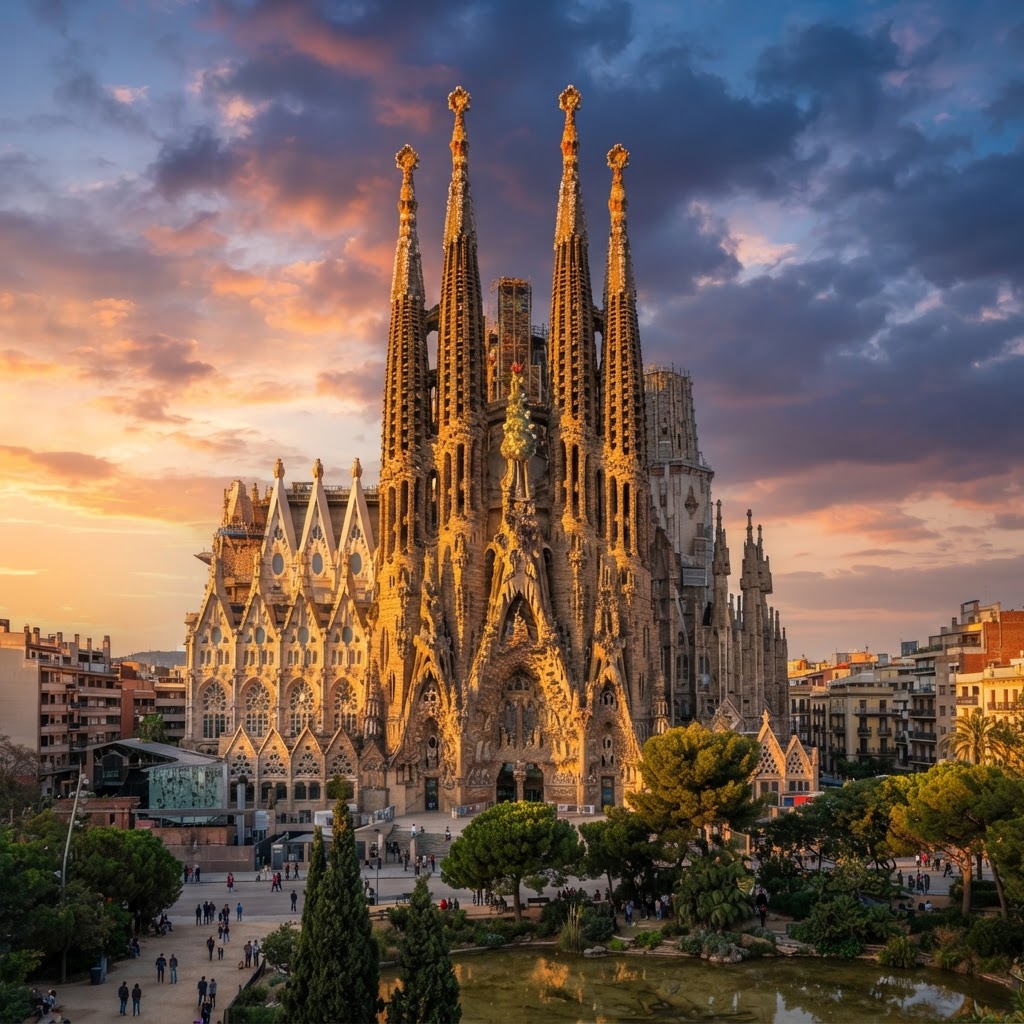
To understand the Sagrada Familia, one must first understand Antoni Gaudi. As the primary architect who took over the project in 1883, Gaudi transformed the original neo-Gothic design into something entirely otherworldly. He believed that nature was the greatest architect, pulling inspiration from the complex shapes of forests, caves, and skeletal structures to create his unique brand of Catalan Modernism.
Gaudi dedicated the final decade of his life exclusively to this project, living on-site as he obsessed over every stone and stained-glass panel. He knew he would never see its completion, often stating, “My client is not in a hurry.” This profound philosophy allowed the project to evolve organically, moving away from traditional religious architecture into a realm of light and geometry that defies simple description.
Nature as a Blueprint
Unlike traditional cathedrals that rely on heavy, dark buttresses, Gaudi’s columns look like soaring redwood trunks that branch out as they reach the ceiling. This design choice does more than just support the immense weight; it creates a canopy effect, making visitors feel as though they are walking through a celestial forest rather than a confined space. Every inch of the structure reflects Gaudi’s deep respect for natural forms.
The Evolution of the Facades
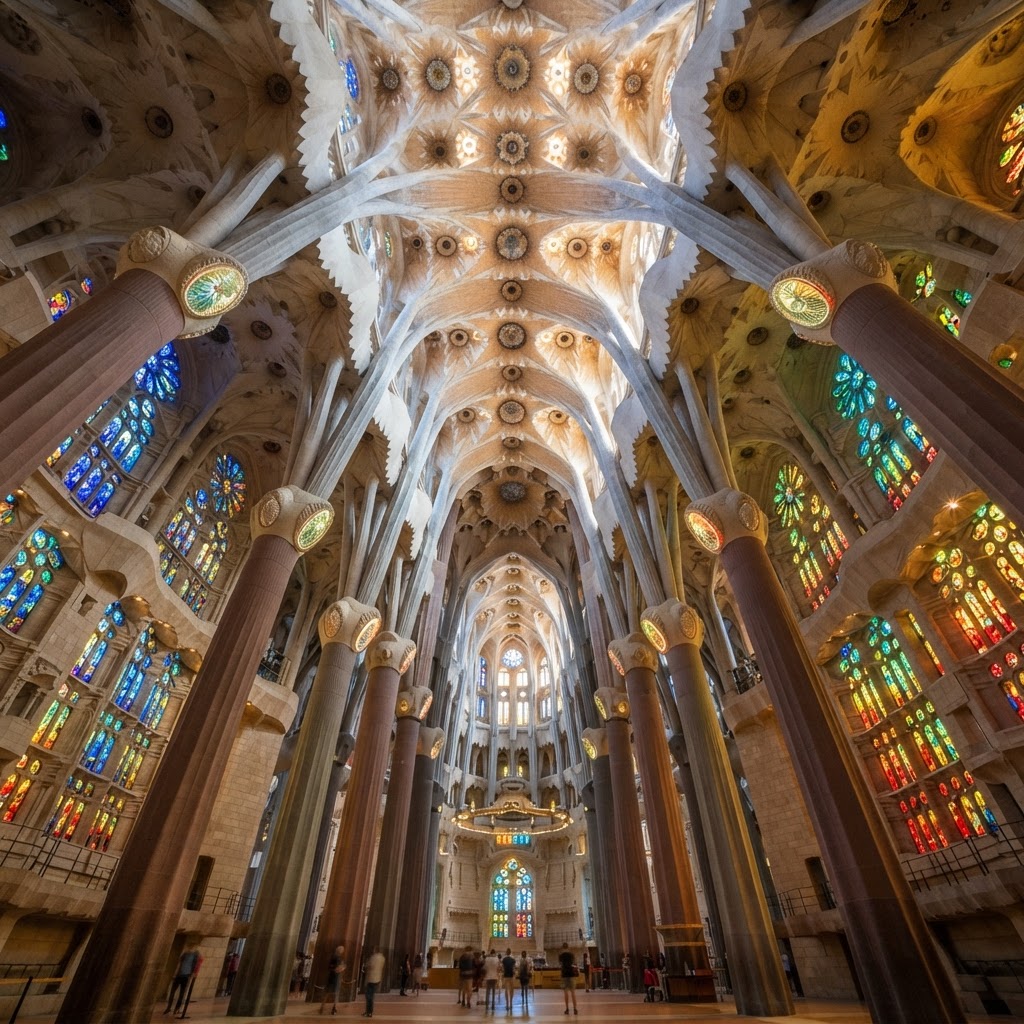
The exterior of the Sagrada Familia tells a story through its three distinct facades: the Nativity, the Passion, and the Glory. Each was designed to convey a specific emotional tone. Walking around the perimeter of the building, you will notice that the styles vary significantly, representing the evolution of the construction process over the decades.
The Nativity Facade
The Nativity Facade is the only one largely completed during Gaudi’s lifetime. It is bursting with life, intricate sculptures of plants, animals, and biblical figures that celebrate the birth of Jesus. The texture is rough and organic, reflecting the joy and chaos of life itself. It feels almost alive, with stone turning into foliage and faces.
The Passion Facade
In stark contrast, the Passion Facade is angular, harsh, and minimalist. Designed to depict the suffering and death of Jesus, it strips away the decorative foliage of the Nativity, opting instead for sharp lines and emotional intensity. This transition reflects the stark reality of the subject matter and the shift in artistic perspective following Gaudi’s death.
Stepping Inside: A Symphony of Light
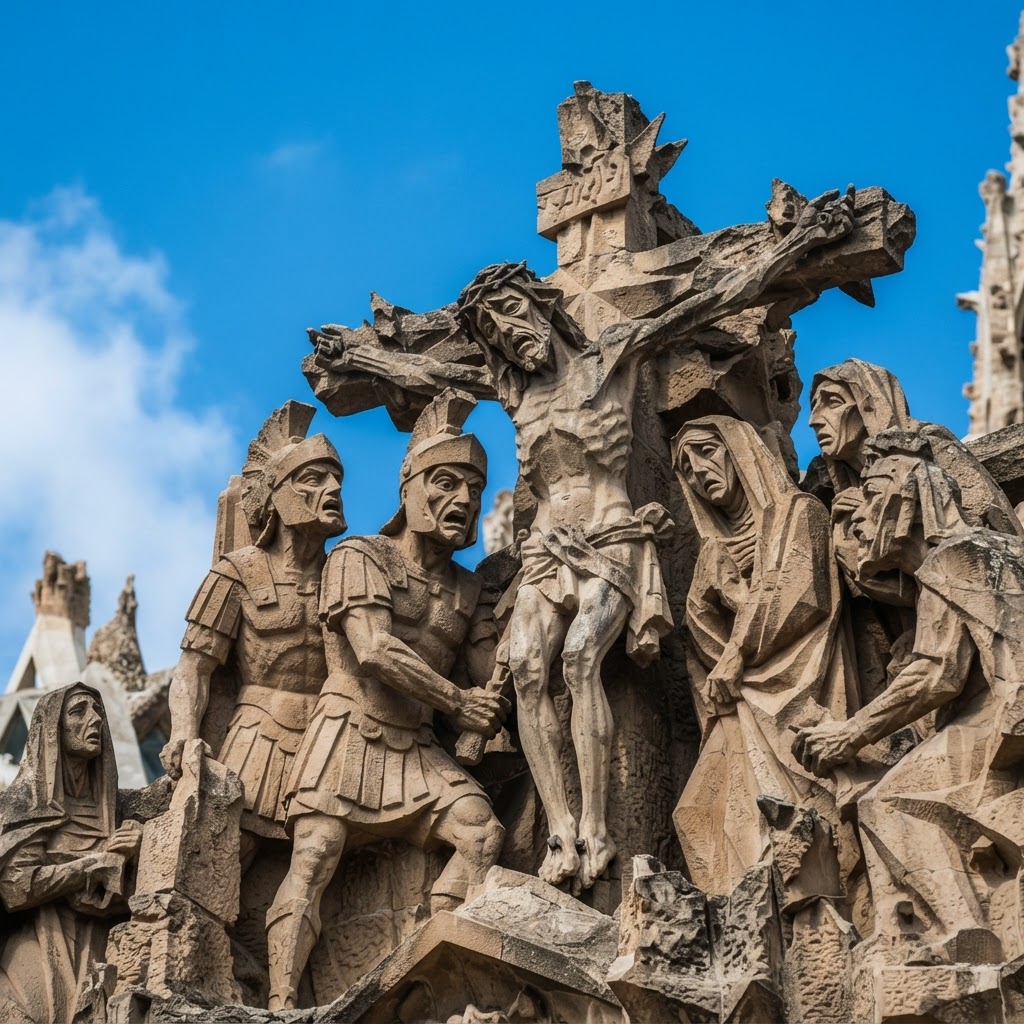
If the exterior creates an impression of grandeur, the interior provides an experience that is nothing short of spiritual. Upon crossing the threshold, you are greeted by an explosion of color. The stained-glass windows are not merely decorative; they are carefully placed to filter sunlight through the seasons and the hours of the day.
In the morning, the east-facing windows bathe the nave in cool blues and greens, evoking the dawn. By the afternoon, the west-facing windows flood the space with warm, vibrant reds and golds. This deliberate manipulation of light ensures that the interior is never the same twice, offering a unique “show” depending on when you visit.
The Forest of Columns
Standing in the center of the nave, look up. The columns rise like massive trees, their intricate stone work mimicking the veins of leaves and the bark of ancient oaks. This architectural ingenuity is not just for show; it effectively distributes the weight of the massive towers, allowing for the height that makes the Sagrada Familia the tallest church in the world once completed.
Essential Tips for Your Visit
Visiting the Sagrada Familia requires a bit of logistical preparation to ensure a smooth experience. Because it is the most popular tourist destination in Spain, tickets frequently sell out weeks in advance. It is highly recommended to purchase your tickets online through the official website well before your travel dates.
| Tip Type | Advice |
| :— | :— |
| Booking | Book at least 3-4 weeks ahead |
| Best Time | Early morning or late afternoon for light |
| Transport | Accessible via Metro L2 or L5 (Sagrada Familia stop) |
| Dress Code | Respectful attire (cover shoulders and knees) |
Enhancing Your Experience
While wandering through the basilica on your own is wonderful, booking an audio guide is invaluable. The storytelling provides deep insights into the meaning behind the specific sculptures and Gaudi’s hidden symbols. For those who want the ultimate view, consider booking a ticket that includes access to one of the towers for a sweeping vista of Barcelona.
The Never-Ending Construction
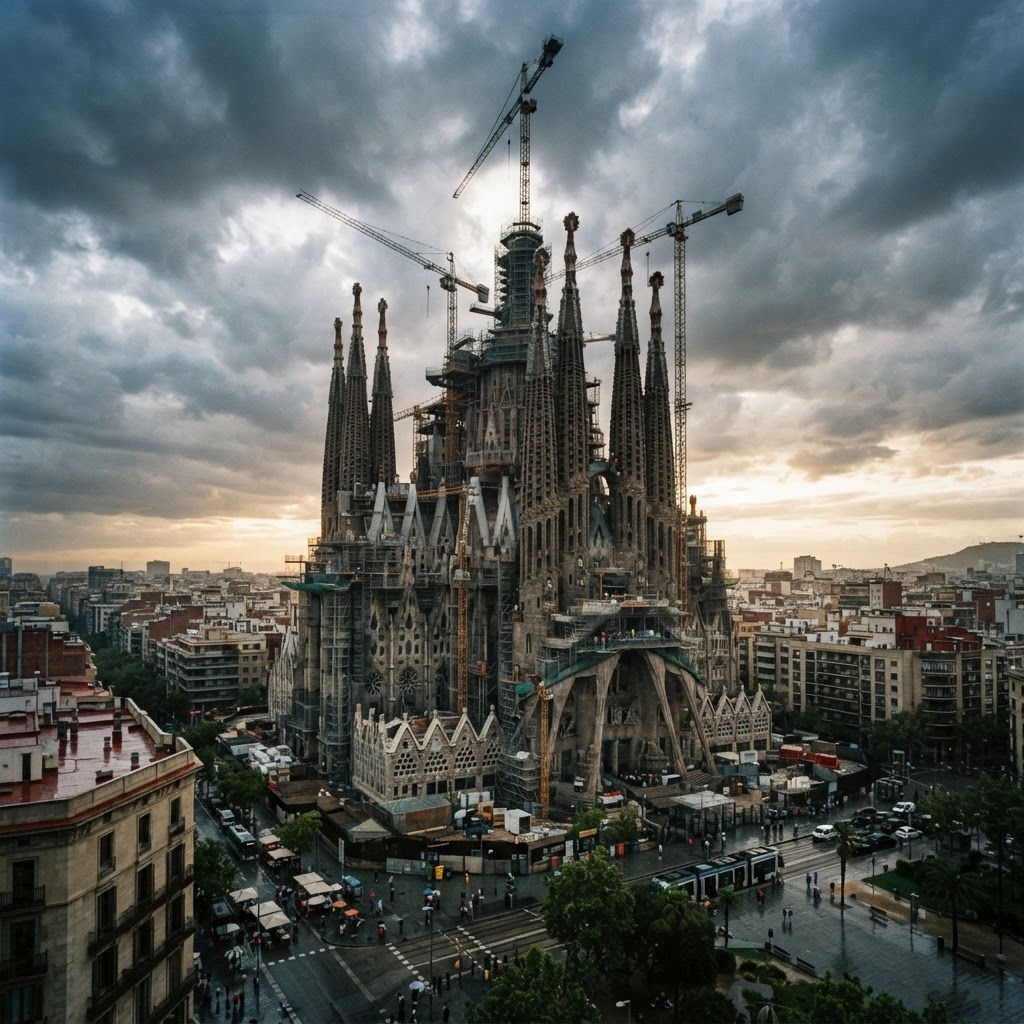
One of the most fascinating aspects of the Sagrada Familia is that it is still very much a work in progress. When you visit, you will likely see cranes hovering above the spires. This continuous evolution is what makes the building so special; it represents the resilience of a project that has survived wars, economic shifts, and changes in artistic trends.
Currently, the focus is on finishing the central towers, including the tallest one dedicated to Jesus Christ. Each completed stage is a victory for the artisans and architects who have committed their lives to realizing Gaudi’s dream. Seeing the construction in motion adds a layer of humanity to your visit—it reminds you that this is a living, breathing project, not a stagnant museum piece.
Why It Is More Than Just a Landmark
Many landmarks are worth seeing once and then forgotten. The Sagrada Familia is different. Because of the way light changes, the ongoing construction, and the sheer density of detail, it remains a place you can visit multiple times and discover something new each time. It is a dialogue between the past and the future.
The Cultural Impact
Beyond architecture, the basilica serves as a bridge for the city’s identity. It draws millions of visitors annually, fueling the local economy and putting Barcelona on the map as a center for world-class design. It represents the pride of the Catalan people and their ability to blend tradition with bold, futuristic vision.
Conclusion
Barcelona is a city of endless wonders, from its pristine beaches to its delicious tapas bars, but the Sagrada Familia remains its crowning achievement. Whether you are an architecture enthusiast, a history buff, or a casual traveler, this masterpiece leaves an indelible mark on your soul. Do not just put it on your itinerary; prioritize it. Experience the play of light, trace the shapes of nature in stone, and witness the ongoing legacy of one of the world’s greatest architects. Ready to witness history in the making? Book your tickets today and prepare to be inspired.
Leave a Reply