
There is a specific, intangible shift that occurs in the Andalusian capital as the sun begins its slow, deliberate descent toward the horizon. The harsh glare of the midday Mediterranean sun fades, replaced by a honeyed, liquid gold that clings to the ancient stone of the Cathedral and dances through the orange groves of the Alcázar. This is the phenomenon of the late afternoon light in Seville, a time when the city seems to hold its breath, exhaling the heat of the day in favor of a soft, luminous tranquility that has captivated poets, artists, and travelers for centuries. To witness this transition is to understand the true soul of Spain’s most enchanting city.
The Alchemy of Golden Hour Architecture
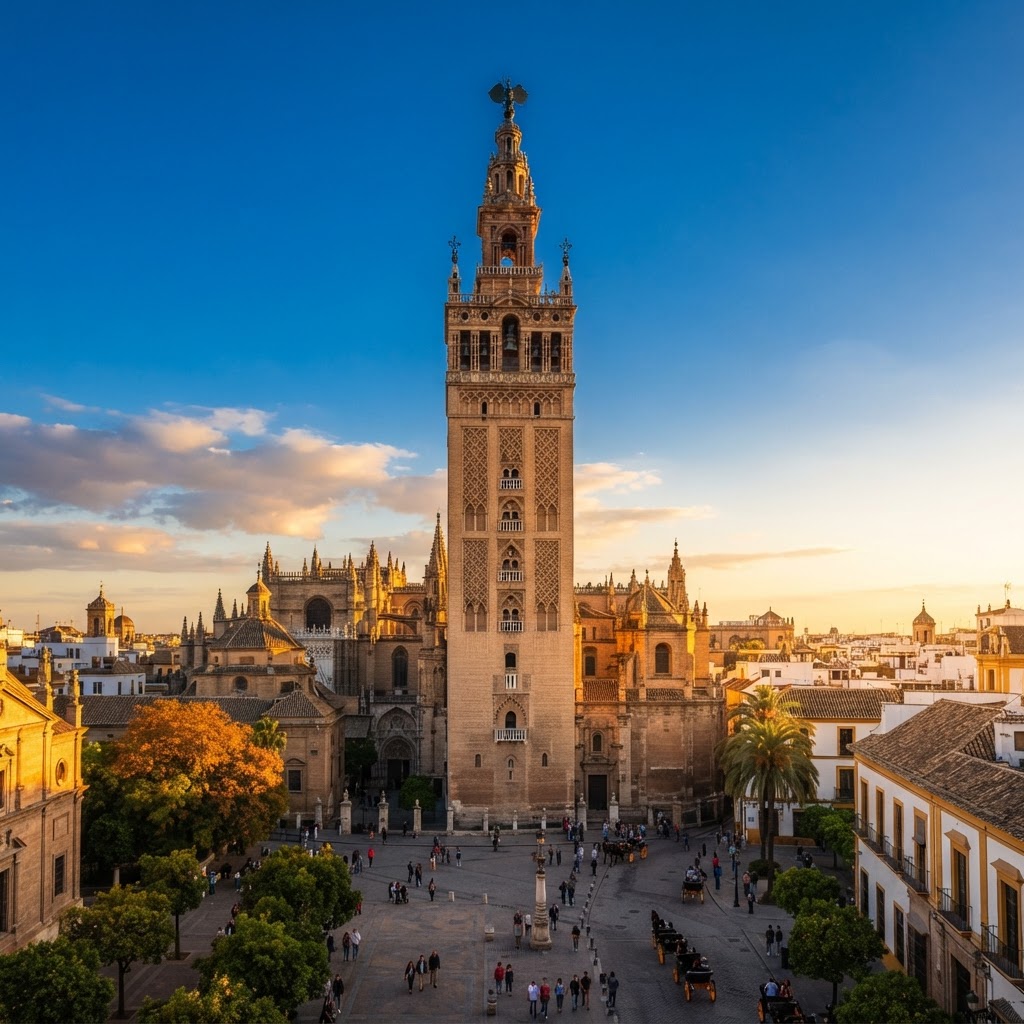
In Seville, architecture and light are not separate entities; they are a singular, living conversation. As the afternoon wanes, the materials that define the city—limestone, yellow-washed stucco, and terracotta—begin to glow from within. This is not merely a change in intensity, but a transformation of texture. The Mudejar arches of the Real Alcázar gain a depth of shadow that accentuates their intricate plasterwork, making the walls look like delicate lace rather than heavy masonry.
The Cathedral at Dusk
The Seville Cathedral, a colossus of Gothic architecture, undergoes the most profound change during these final hours of daylight. As the sun dips, the Giralda tower catches the light first, becoming a brilliant lighthouse of stone against the deepening blue of the sky. Wandering around the base of the Cathedral, you notice how the shadows stretch and reach, turning the rugged carvings into expressive, deep-relief sculptures that look almost fluid.
The Plaza de España in Radiant Focus
No discussion of light in this city would be complete without mentioning the Plaza de España. By late afternoon, the semi-circular structure is bathed in a warm, amber hue that makes the colorful azulejo tiles pop with vibrant intensity. This is the perfect moment to rent a rowboat on the canal. As you glide across the water, the reflections of the bridges shimmer in the golden light, creating a kaleidoscope of color that feels more like an Impressionist painting than a tourist attraction.
Why Time Your Visit Correctly
The crowd dynamics in Seville change as the day shifts. By arriving at the Plaza de España around 5:00 PM or 6:00 PM, you bypass the midday school groups and tour buses, finding a more contemplative atmosphere. The lower sun angle creates dramatic silhouettes against the grand staircase, offering photographers a dream scenario for capturing the scale and grandeur of the Aníbal González masterpiece.
Walking the Barrio Santa Cruz
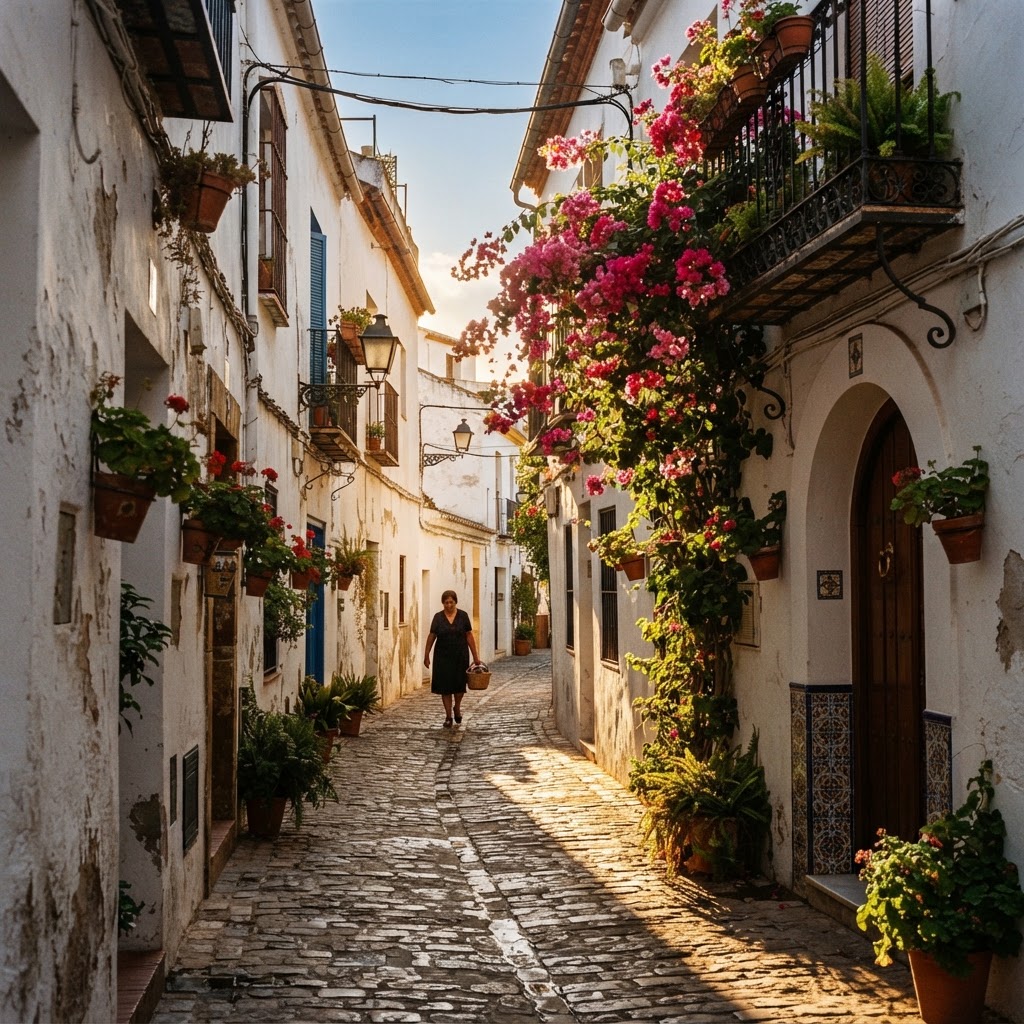
The narrow, labyrinthine streets of the Santa Cruz quarter are designed to trap the cool air and shade of the day, but in the late afternoon, the light manages to penetrate the “callejones” in unexpected ways. It sneaks down the white-washed walls, reflecting off cobblestones and illuminating the hidden corners where bougainvillea spills over wrought-iron balconies. The interplay between deep, cool shadows and bright, concentrated beams of light creates a cinematic atmosphere that feels frozen in time.
The Sensory Experience of the Light
As the light dims, your other senses seem to sharpen. You begin to notice the scent of bitter oranges lingering in the air, a hallmark of the city’s streets. You hear the rhythmic clatter of footsteps on stone and the distant sound of a Spanish guitar playing in a small courtyard. The late afternoon light provides the visual soundtrack to the rhythm of local life, where business slows down and the social ritual of the ‘paseo’ begins.
Rituals of the Sunset: Tapas and Terraces
In Spain, the transition to evening is marked by the culinary tradition of tapas. In Seville, this ritual is best enjoyed on a terrace during the golden hour. As the golden light fades into the twilight of the ‘hora azul’ or blue hour, locals flock to bars around the Alfalfa or the Alameda de Hércules. This is the time to order a glass of crisp fino sherry, which reflects the dying light of the sun in your glass.
| Location Type | Best Time for Light | Vibe |
| :— | :— | :— |
| Rooftop Bars | 18:30 – 20:00 | Cosmopolitan |
| Riverside Walk | 19:00 – 20:30 | Romantic |
| Plaza Squares | 17:00 – 19:00 | Authentic |
Capturing the Glow: A Photographer’s Insight
If you are traveling with a camera, the late afternoon light in Seville is your greatest asset. The key is to move away from the flat, direct sunlight of noon. Look for “rim lighting”—where the sun illuminates the edges of a subject—such as the intricate ironwork on a lamp post or the silhouette of a horse-drawn carriage. The low angle of the sun also highlights the dust particles dancing in the air, lending a nostalgic, ethereal quality to your images.
Essential Tips for Better Images
- Use a wider aperture to soften the background and focus on textures.
- Underexpose your shots slightly to preserve the rich, golden tones in the highlights.
- Look for reflections in the Guadalquivir River as the sun sets behind the Triana district.
The Triana Transition
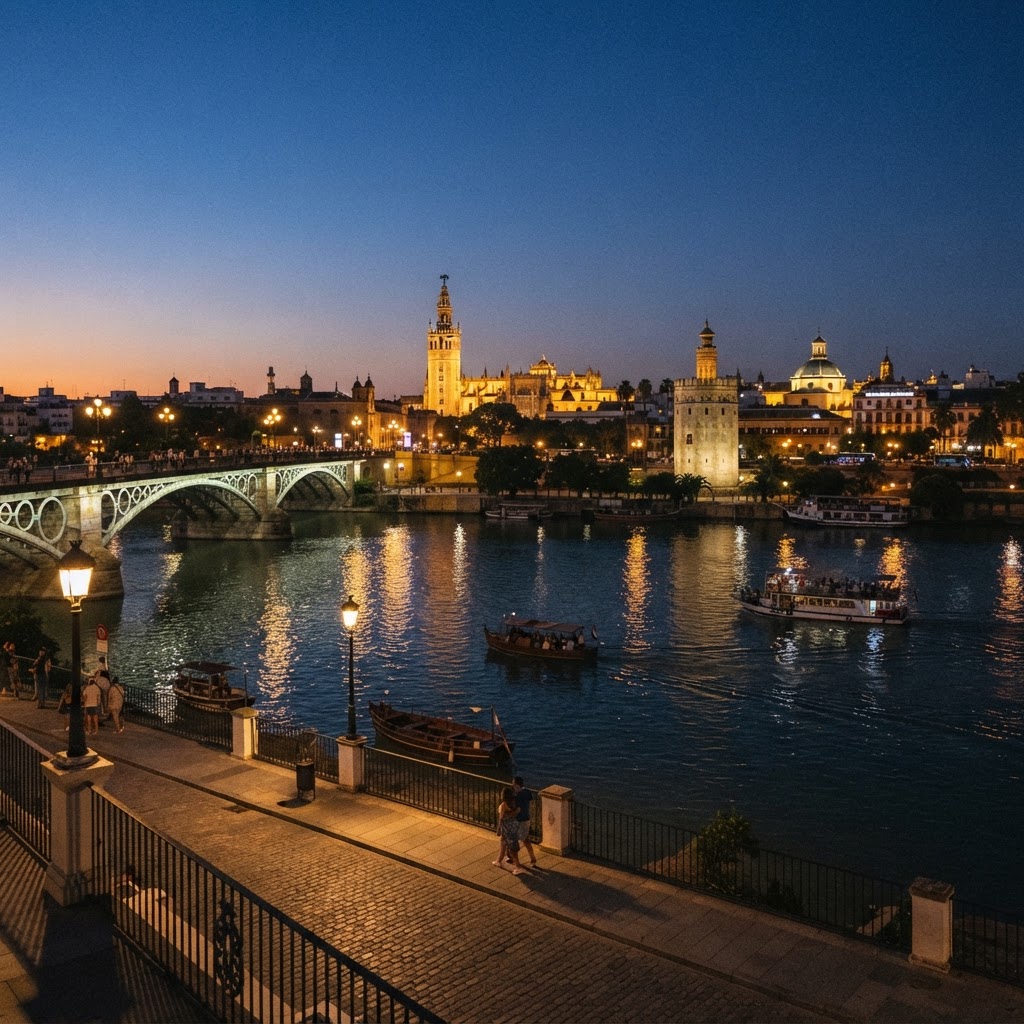
Cross the Isabel II Bridge into Triana as the sun sets. From this side of the river, you get the best vantage point of the city center bathed in the dying light. The Torre del Oro, or Gold Tower, lives up to its name during this time, catching the final rays and acting as a beacon on the riverbank. This is the moment when the city feels most connected to its maritime past, as the river reflects the city’s transition into the night.
Conclusion
Seville is a city that demands to be experienced slowly. When you prioritize the late afternoon hours, you move beyond the checklist of monuments and enter into the heartbeat of the city. Whether you are finding a quiet corner in the Maria Luisa Park, watching the light change across the Cathedral, or sharing a plate of jamón in a bustling plaza, the golden light of Seville offers a transformative perspective. Plan your days to align with the sun’s rhythm, and you will find that the city rewards you with moments of pure, unfiltered beauty. Next time you plan a trip to Andalusia, ensure you leave your late afternoons completely open for wandering, watching, and wonder.
What is your favorite spot in Seville to watch the sunset? Let us know in the comments below, or sign up for our newsletter to receive more expert tips on hidden gems in Spain!
Leave a Reply