
There is a unique magnetism to the landscape of Italy, defined most famously by the Tuscany rolling hills that seem to ripple like silk toward the horizon. When the sun begins its descent, the entire region is bathed in a sublime golden light that transforms simple dirt paths and cypress-lined driveways into masterpieces of natural art. For travelers and photographers alike, this interplay of undulating earth and atmospheric brilliance creates an experience that feels less like a vacation and more like stepping into a Renaissance painting.
The Anatomy of the Tuscan Landscape
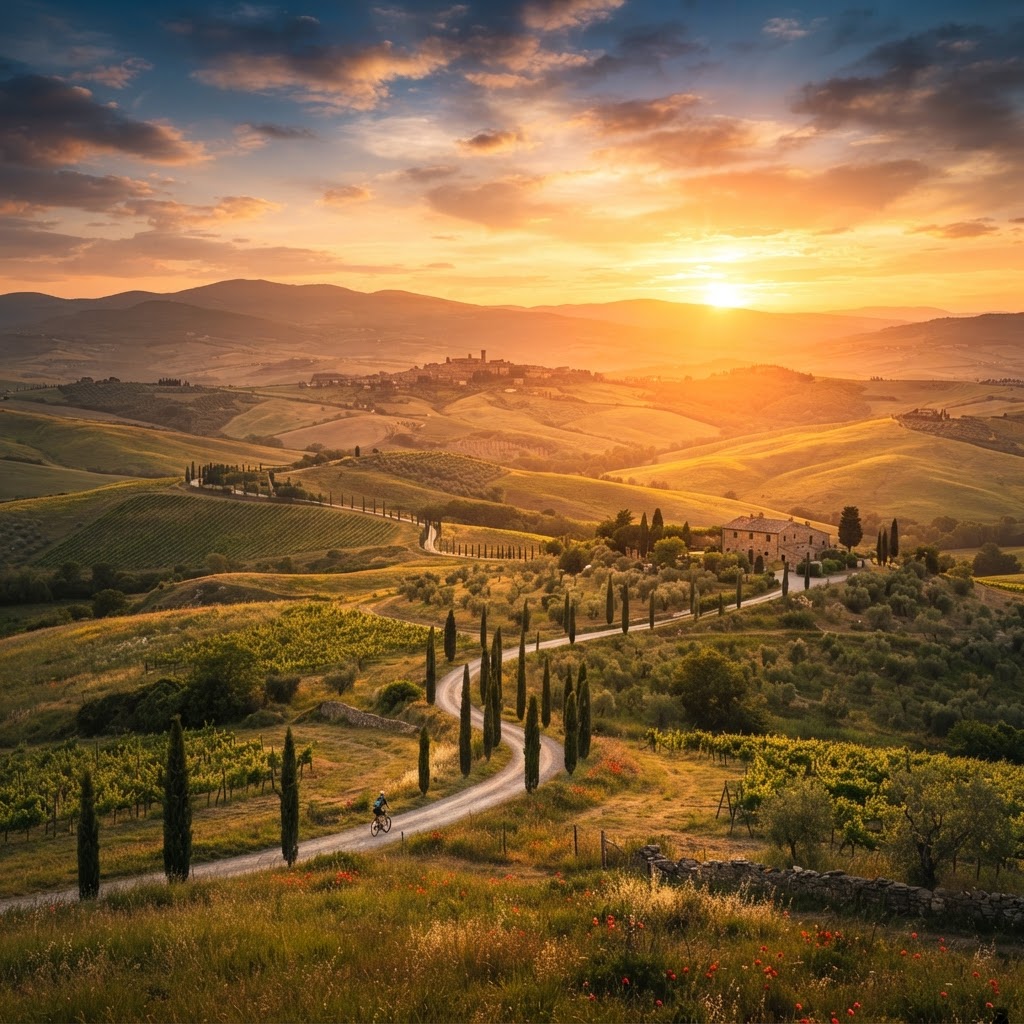
The geography of this region is characterized by its soft, rolling contours which were sculpted over centuries by both nature and human cultivation. These aren’t just hills; they are the result of careful agricultural stewardship where wheat fields, vineyards, and olive groves follow the organic curvature of the terrain. The result is a rhythmic visual experience where the eye is constantly drawn forward, following the crests and valleys that define the heart of Italy.
Why the Golden Light Matters
Photographers often obsess over the ‘Golden Hour’—that brief window just after sunrise or before sunset. In Tuscany, this phenomenon is amplified by the unique dust particles and moisture content in the air. The low-angle sunlight strikes the slopes at a shallow tilt, highlighting the textures of the plowed fields and casting long, dramatic shadows that emphasize the three-dimensional depth of the landscape.
Discovering the Val d’Orcia
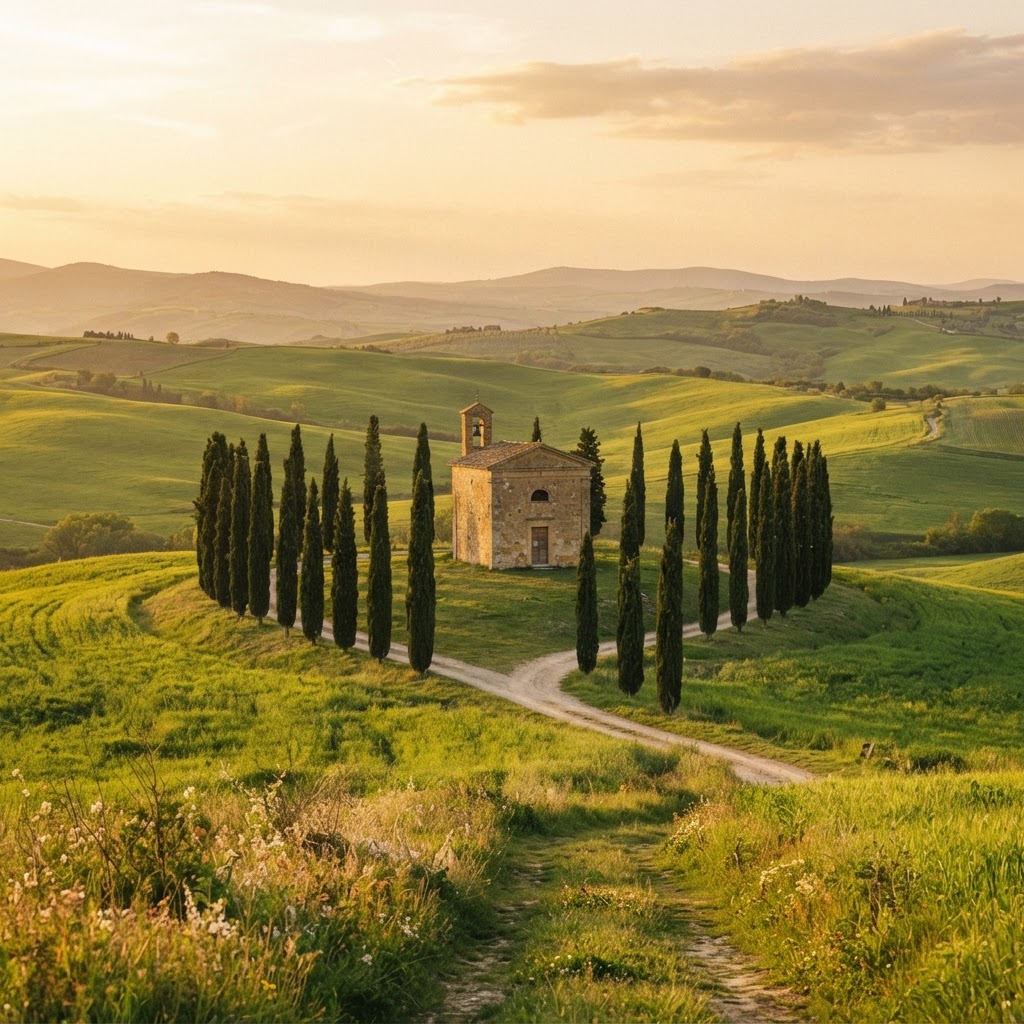
If you are searching for the quintessence of Tuscany rolling hills, the Val d’Orcia is your primary destination. This UNESCO World Heritage site is a managed landscape, preserved specifically for its aesthetic harmony. It represents a model of how human intervention can enhance natural beauty rather than diminish it, resulting in views that have inspired artists since the Middle Ages.
Iconic Photography Spots
To capture the magic of the golden light, you need to be in the right place at the right time. Here are the most photogenic locations in the region:
- The Chapel of Vitaleta: A tiny, lonely church surrounded by sweeping hills.
- The Cypress Trees of San Quirico d’Orcia: The iconic cluster of trees standing on a hill.
- Pienza: Known as the ‘ideal city’ of the Renaissance, it offers panoramic vistas over the valley.
- Monticchiello: Famous for its serpentine road lined with cypress trees.
Planning Your Trip for Optimal Light
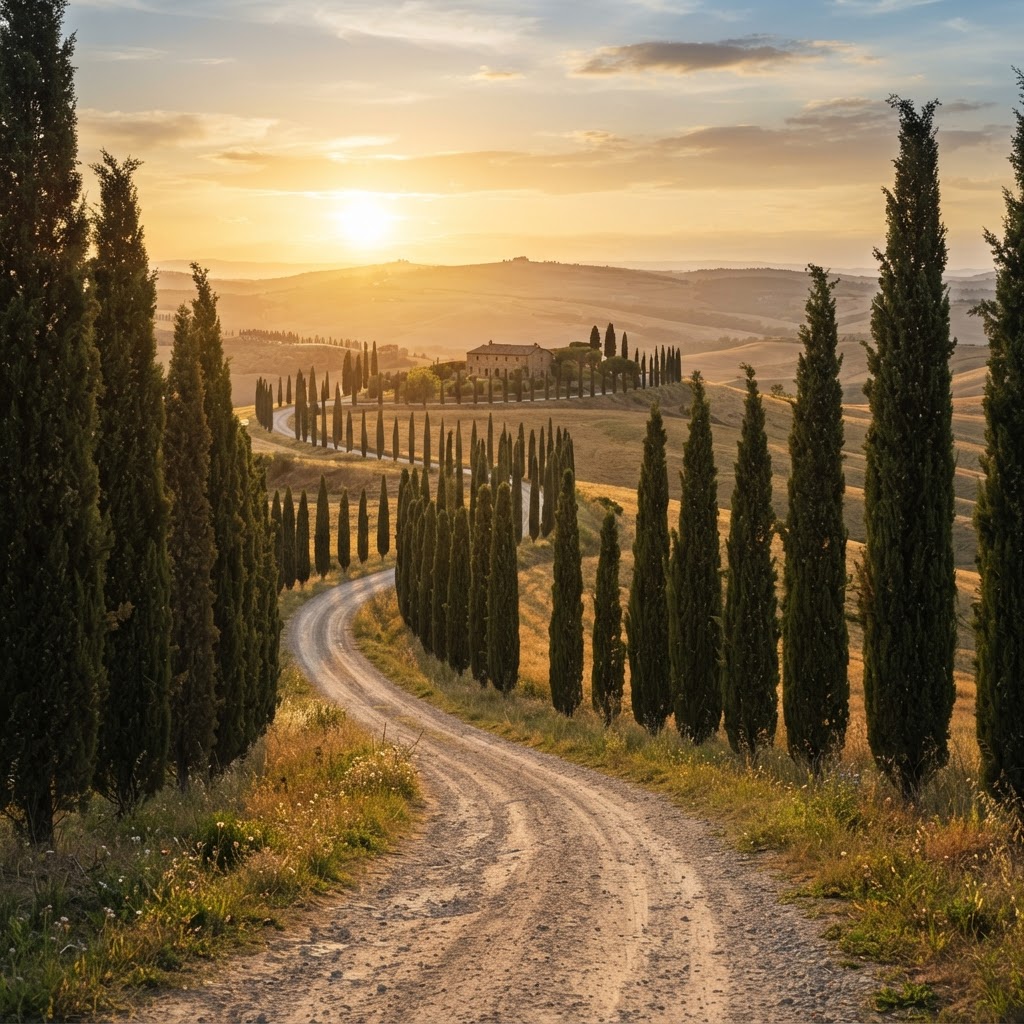
Visiting Italy requires careful seasonal planning to ensure you catch the light at its best. While summer offers long days, it can often be hazy, which softens the light too much. For the clearest, crispest golden light, shoulder seasons are your best friend.
Seasonal Considerations
- Spring (April – May): The hills are a vibrant, emerald green, contrasting beautifully with the early golden sun.
- Autumn (October – November): The wheat has been harvested and the earth turns a rich, toasted brown. This provides a warm monochromatic palette that glows intensely under the evening sun.
The Art of Landscape Photography in Tuscany
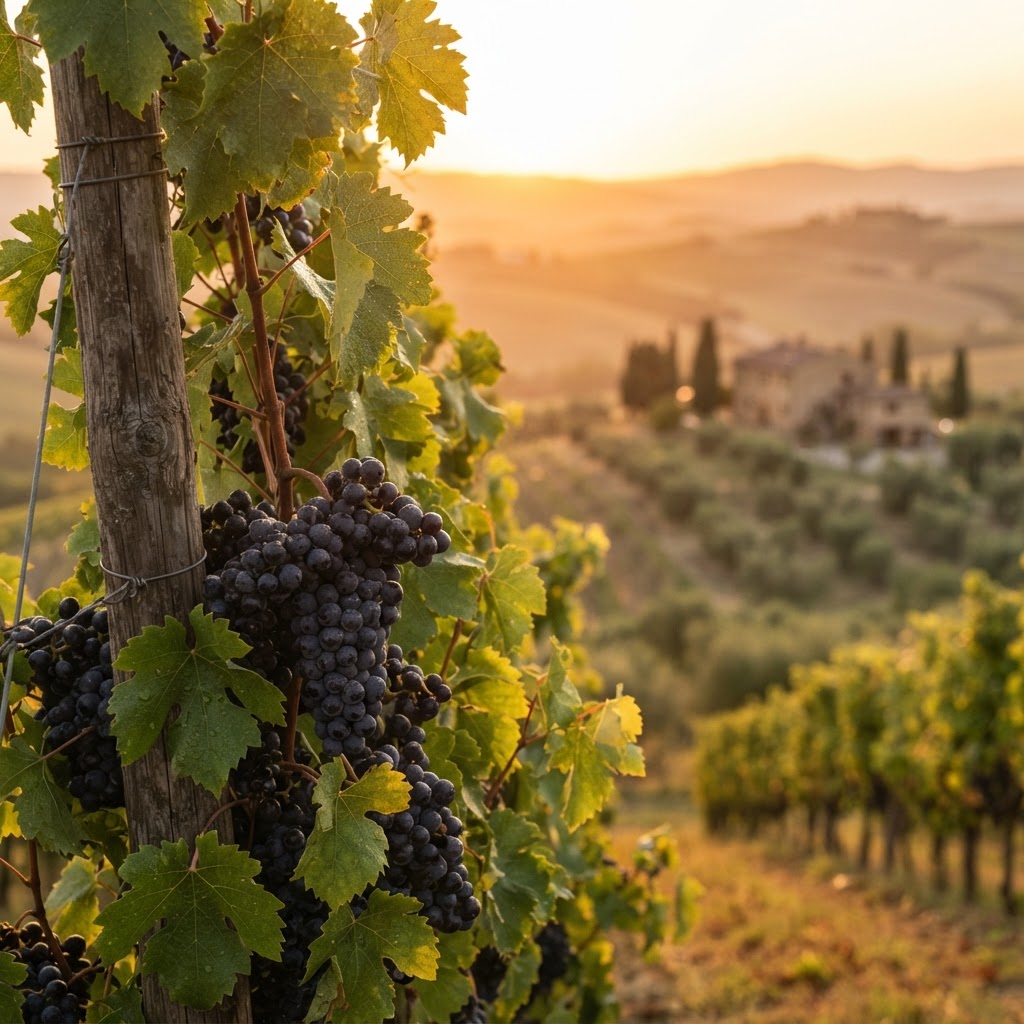
Capturing the Tuscany rolling hills is as much about patience as it is about equipment. Because the light changes rapidly, you must arrive at your location at least 45 minutes before the sun hits the horizon. This allows you to scout the terrain, set up your tripod, and witness the color temperature shifting from cool blues to warm, molten gold.
Technical Tips for Success
Always shoot in RAW format to retain the maximum dynamic range. The contrast between the shadows in the valleys and the highlights on the hilltops can be extreme, and RAW files will give you the latitude to recover details in post-production. Use a medium telephoto lens to compress the layers of hills, making the undulating landscape appear more packed and textured.
Immersing Yourself in the Local Culture
While the visual allure is the main draw, the culture of the region adds a deep, meaningful layer to the experience. The Tuscany rolling hills are dotted with agriturismos—working farms that offer accommodation. Staying in one of these allows you to wake up directly in the heart of the landscape, giving you a head start on sunrise photography before the tour buses arrive.
Authentic Experiences
- Wine Tasting in Montalcino: Experience the legendary Brunello while overlooking the valley.
- Thermal Baths in Bagno Vignoni: Soak in ancient, mineral-rich waters as the twilight hits.
- Local Pecorino Cheese Workshops: Learn the history of Pienza’s famous cheese-making traditions.
Beyond the View: A Sustainable Approach
As the popularity of the region grows, it is vital to practice responsible tourism. The trails and fields that make up the Tuscany rolling hills are often private property. Always stay on public paths, do not trample the crops for a photo, and respect the local farmers who maintain these landscapes for us to enjoy. By respecting the land, you ensure that future generations can continue to witness the stunning golden light of Italy.
Conclusion
The experience of standing atop a crest in the Val d’Orcia, watching the golden light sweep across the landscape, is something that stays with a traveler forever. It is a reminder of the slow, deliberate beauty of a place where time seems to hold its breath. Whether you are a professional photographer or simply a lover of beauty, Tuscany offers a sanctuary for the soul. Start planning your Italian journey today and prepare to see the world in a more brilliant, golden hue.
Leave a Reply