
Venice in soft morning light is best captured between 5:30 AM and 7:30 AM, when the sunrise illuminates the Grand Canal and the city is devoid of tourists. Prime photography spots include St. Mark’s Square for golden hour reflections and the Dorsoduro district for tranquil, authentic canal views before daily operations begin.
The Alchemy of Dawn in the Floating City
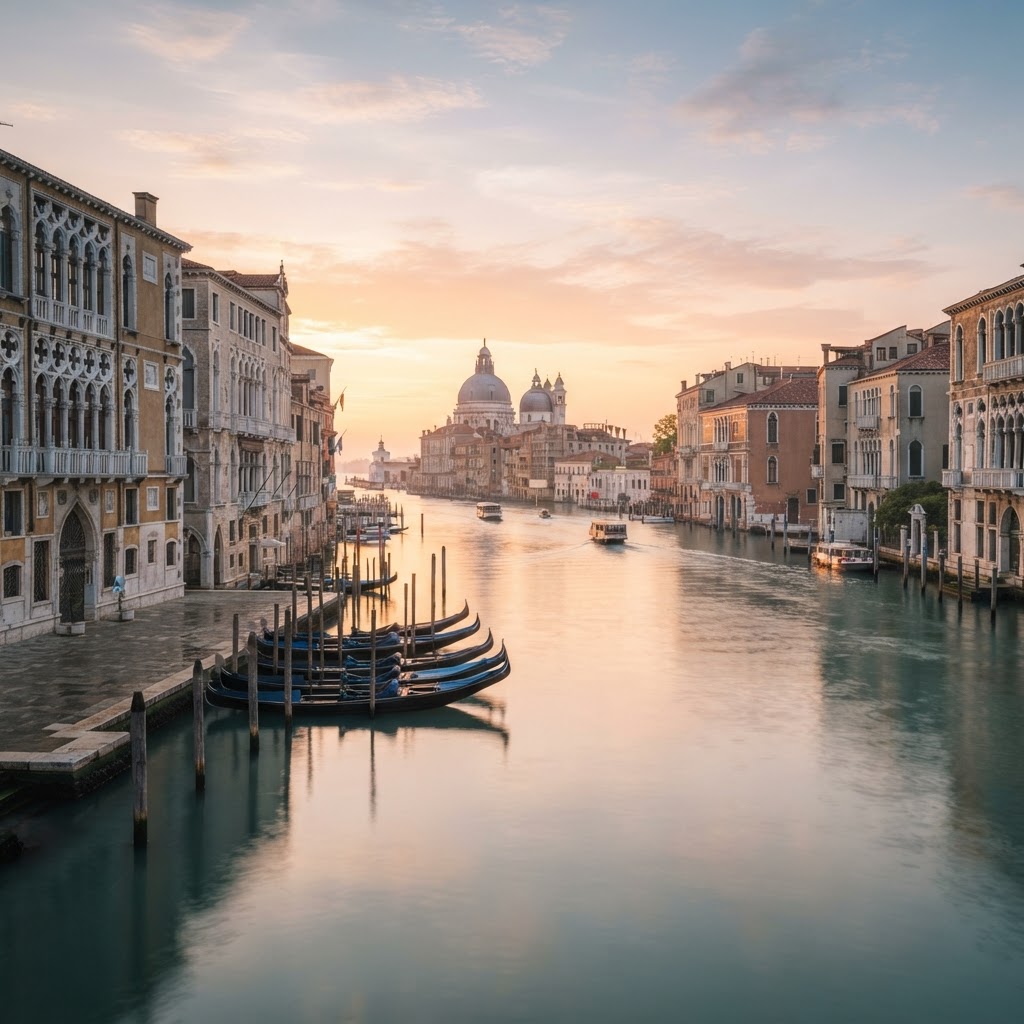
Photography in Venice is defined by the unique relationship between the lagoon’s humidity and the early morning sun. By waking before the rest of the world, you capture the city in a rare, pearlescent haze that accentuates the burnt oranges and ochre yellows of Venetian architecture. During these early hours, the lack of wake generated by motorboats leaves the water surface perfectly still, creating mirror-like reflections of the facades. This “blue hour” period—roughly 30 to 45 minutes before sunrise—provides a cool, moody light that is perfect for capturing the gothic details of the city’s ancient stone. Without the crowds, you have the freedom to compose shots without human interference, allowing the authentic character of the floating city to emerge in high-definition clarity.
Why Sunrise Changes Everything
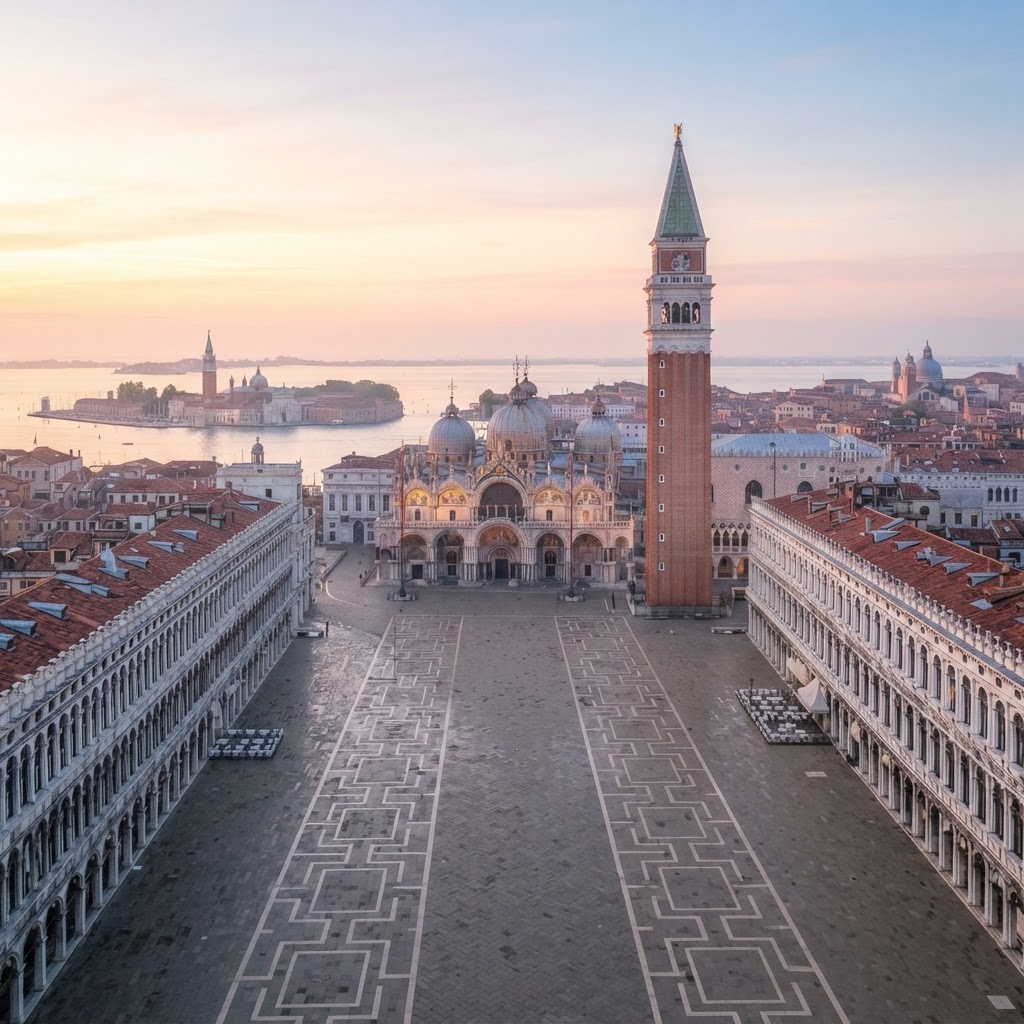
Standing in St. Mark’s Square at 6:00 AM reveals a completely different reality compared to the bustling midday hours. The silence is profound, punctuated only by the distant chime of the Campanile bell tower and the soft lapping of water against moorings. This stillness allows for unobstructed appreciation of the Procuratie Nuove and the Doge’s Palace. During peak hours, the square is crowded with thousands of tourists, but at dawn, you can capture the symmetry and scale of the architecture in solitude. Research suggests that light temperature during the first hour after sunrise is approximately 3000K, offering a warmer, softer glow that is vastly superior for portraiture and architectural photography compared to the harsh, high-contrast light seen at 12:00 PM.
Scouting the Best Locations for Early Light
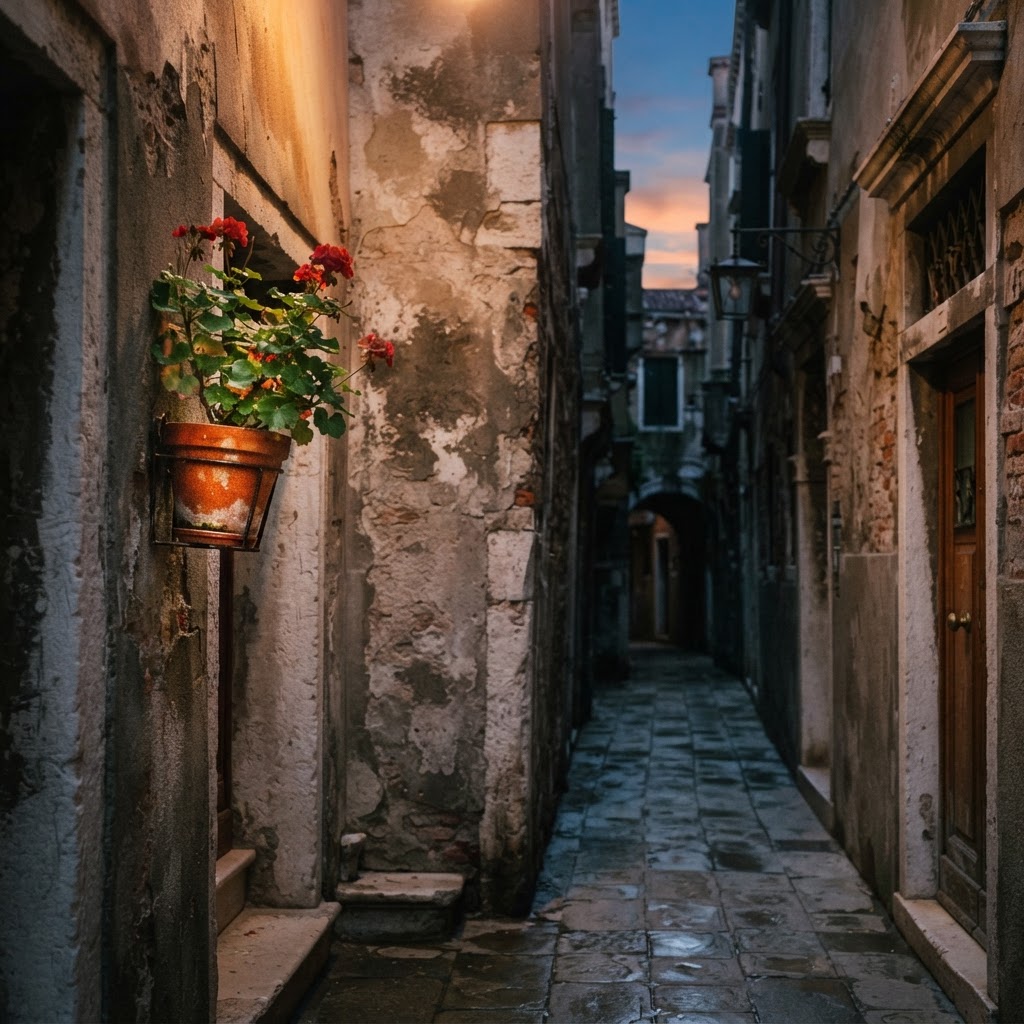
Strategic location planning is mandatory for capturing the magic of Venice, as the optimal light quality shifts rapidly within a 15-minute window. While major landmarks are iconic, the true character of the city hides in the smaller, quieter sestieri, where narrow passages create dramatic light-and-shadow compositions. You should identify your route the night before using topographical maps to determine which facades will be front-lit by the rising sun. Focusing on the orientation of canals relative to the East is critical; narrow canals with North-South orientations often retain deep, moody shadows long after the sun has risen, creating a high-contrast aesthetic that is highly coveted by professional photographers.
The Iconic St. Mark’s Square
Positioning yourself facing east toward the lagoon at St. Mark’s Square provides the best opportunity to see the Doge’s Palace bathed in golden light. As the sun rises behind the Island of San Giorgio Maggiore, the reflections dancing across the Piazza are unparalleled. This location is the quintessential Venetian image, yet it feels entirely fresh when seen before the morning tide of visitors. By arriving 20 minutes before official sunrise, you can capture the changing color temperature of the sky from deep violet to warm gold without the constant foot traffic that begins around 8:30 AM when the vaporettos reach full capacity.
The Quietude of Dorsoduro
For those who prefer a more localized, authentic experience, the Dorsoduro district offers stunning opportunities to photograph the play of light on rippling water. The Zattere, a long promenade facing the Giudecca Canal, provides an expansive horizon perfect for capturing the sunrise as it paints the sky in vibrant shades of pink. Unlike the central hub of San Marco, Dorsoduro feels like a neighborhood rather than a museum. You will find that the local art students and residents provide a human element that fits perfectly into the soft, ethereal dawn palette of the lagoon.
Mastering the Art of Venetian Morning Photography
Photographing in low-light conditions requires a mastery of your equipment to preserve detail in deep shadows. A tripod is highly recommended for long exposures of canal water to create a silky, ethereal effect that transforms rippling channels into smooth, glassy surfaces. If you are shooting handheld, utilize a lens with an aperture of f/2.8 or lower to keep ISO levels manageable and prevent noise in the darker areas of your frame. Always shoot in RAW format, as this allows you to recover significant information from the highlights when the sun inevitably becomes brighter. Being prepared with extra batteries is non-negotiable; cold morning air can reduce lithium-ion battery performance by up to 20% compared to standard daytime conditions.
Equipment Recommendations for Early Shooters
Playing with Reflections
Venice is defined by its dual nature—the buildings and their reflected images in the canals. In the soft light of the morning, the water is often at its most glass-like state, providing a natural mirror for the gothic arches and colorful shutters above. Look for deep, narrow canals where the sky is reflected as a sliver of blue, creating a striking contrast with the dark, mossy textures of the submerged masonry. By setting your camera low to the water’s surface, you can emphasize the symmetry of the reflections, turning a simple alleyway photo into a compelling study of light and structure.
Hidden Gems Away from the Crowds
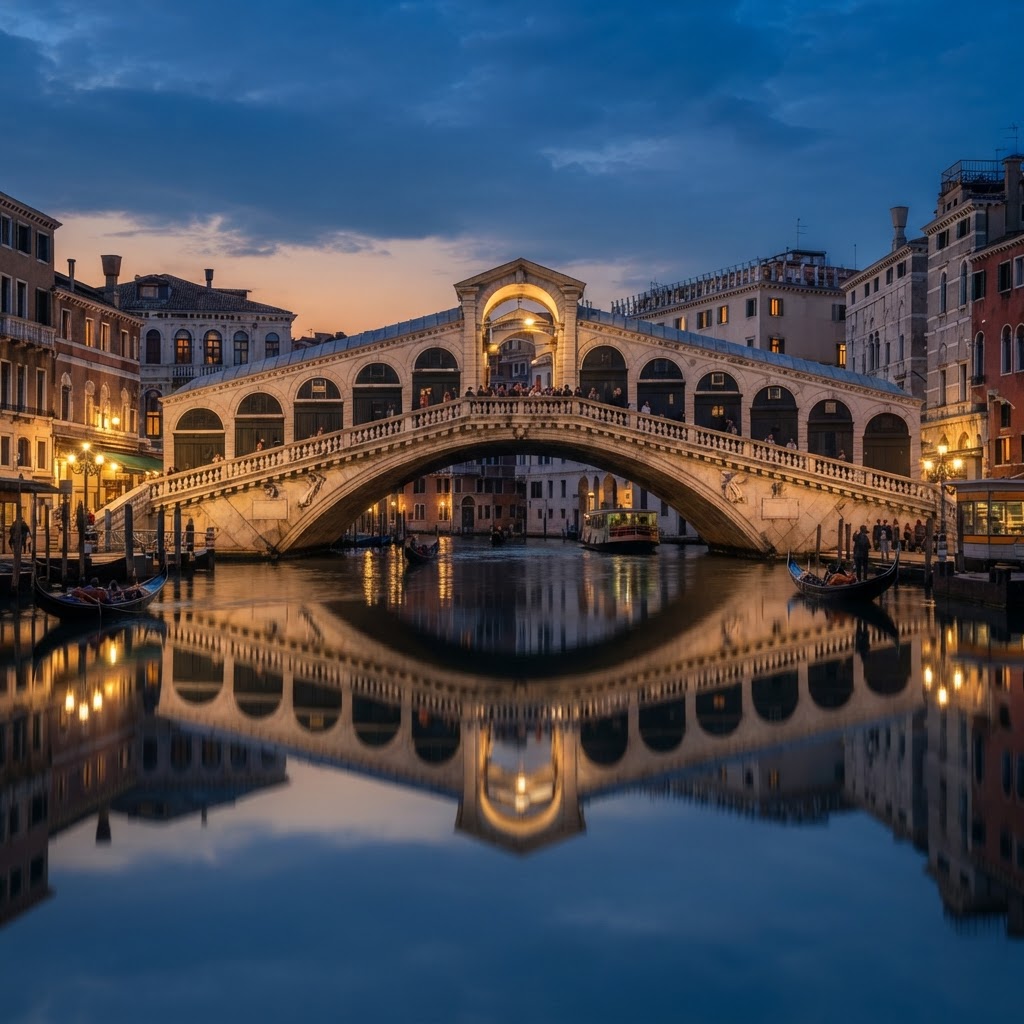
While the Rialto Bridge is a classic landmark, it is rarely empty and often suffers from distracting construction or maintenance equipment. If you seek true serenity, look toward the northern reaches of the city, specifically the islands of Burano or the quieter residential edges of Cannaregio. These areas retain a working-class charm that feels untouched by mass tourism. In these regions, you are likely to encounter local fishermen preparing their boats, providing an authentic slice of Venetian life that is perfect for candid, human-interest photography. The lighting here is often better suited for detail shots because the buildings are frequently painted in vibrant, distinct colors that pop against the soft morning sky.
The Charm of Cannaregio
Cannaregio is home to the historic Jewish Ghetto and several magnificent churches that face wide, open canals, providing unique compositions. In the early morning, the light hits the facades with a gentle touch, highlighting intricate stone carvings that are easily missed during the bustle of the afternoon. It is a photographer’s dream to capture the authentic, lived-in feel of the city—such as laundry hanging from windows—draped in the soft, diffused glow of early morning. This district is also significantly less congested, meaning you can set up a tripod safely without worrying about being bumped by passing crowds.
Navigating Venice at Dawn
Logistics are the most critical aspect of a successful morning photography mission in Venice. Because bridges are interconnected, a single wrong turn can result in a 15-minute detour, causing you to miss the peak sunrise window. It is recommended to download offline maps using the Google Maps app, as GPS connectivity can occasionally drop in the narrow, high-walled calli. Wear supportive, grippy shoes, as the combination of dew and limestone can make the steps of bridges dangerously slippery. Carry your own water and a high-protein snack, as most cafes, even in the tourist hubs, do not open their doors until 8:00 AM, and early-morning hunger can distract you from your creative process.
The Importance of Patience
Sometimes the best lighting occurs not at the precise moment of sunrise, but during the “blue hour” preceding it. This phase offers a cooler, sophisticated color tone that complements the gothic architecture and limestone facades beautifully. We recommend staying in one location for at least 45 minutes to watch how the color temperature transitions. You will notice that as the sun begins to emerge, the blue hues are replaced by warmer gold, allowing for a wide variety of shots from a single vantage point. The key is to be stationary and observant, rather than rushing from one site to another.
Practical Tips for the Early Bird Traveler
To ensure maximum efficiency, stay in a hotel located within the central sestieri like San Marco or Castello. Staying in Mestre or on the mainland is discouraged for photographers, as the first public vaporetto often arrives too late to catch the pre-dawn light. Furthermore, consider traveling during the shoulder seasons—specifically late April or mid-October. During these months, the sunrise occurs at a more comfortable time (around 6:30 AM), compared to the extreme 5:15 AM sunrises of mid-summer, which require a much more strenuous sleep schedule.
Managing the Light
As the sun rises, light transitions rapidly from soft and diffused to hard and contrasty. Always use a histogram on your digital camera to ensure that your highlights are not clipping, as the white Venetian stone can reflect sunlight aggressively. If the sun becomes too bright, utilize a neutral density (ND) filter to allow for slower shutter speeds even as the day progresses. This will ensure that you can continue to capture the “painterly” quality of the morning light even after the sun is firmly above the horizon.
FAQ
Q: What is the best month to photograph Venice at sunrise?
April and October are the ideal months for photography because sunrise occurs at a convenient time and the weather is cool, which reduces the morning haze. These months also avoid the extreme heat and peak crowds of summer, providing more space for long exposure setups.
Q: Do I need a tripod to photograph Venice at dawn?
A tripod is essential for achieving professional-grade long exposures of canal water, but it is optional if you have a modern camera with in-body image stabilization. For architectural detail shots at high shutter speeds, a lightweight travel tripod is recommended to ensure maximum sharpness.
Q: Are the vaporetto services running at sunrise?
Vaporetto services run 24 hours a day in Venice, though they operate on a limited schedule during the early morning hours (typically every 20-30 minutes). You should check the official ACTV website or app for the most current timetables to plan your transit to specific shooting locations.
Q: Which sestiere is best for morning photography?
Cannaregio and Dorsoduro are widely considered the best districts for morning photography due to their quieter canals and authentic, lived-in atmosphere. These areas offer fewer tourists and more opportunities to capture local life and architectural details without the interference of massive crowds.
Q: Is it safe to walk around Venice at 5:00 AM?
Venice is extremely safe for solo travelers and photographers at any time of the night or morning. The city is well-patrolled, and because it is pedestrian-only, there is no threat of vehicle traffic, making it one of the safest major European cities for early morning exploration.
Leave a Reply