
White Villages of Andalusia: A Complete Travel Guide
The Pueblos Blancos are a collection of stunning, whitewashed hilltop villages in southern Spain, primarily located in the Sierra de Grazalema Natural Park and the Serranía de Ronda. Famous for their lime-painted walls and Moorish architecture, these villages offer a unique cultural escape from the coastal crowds of the Costa del Sol.
The History and Heritage of the Pueblos Blancos
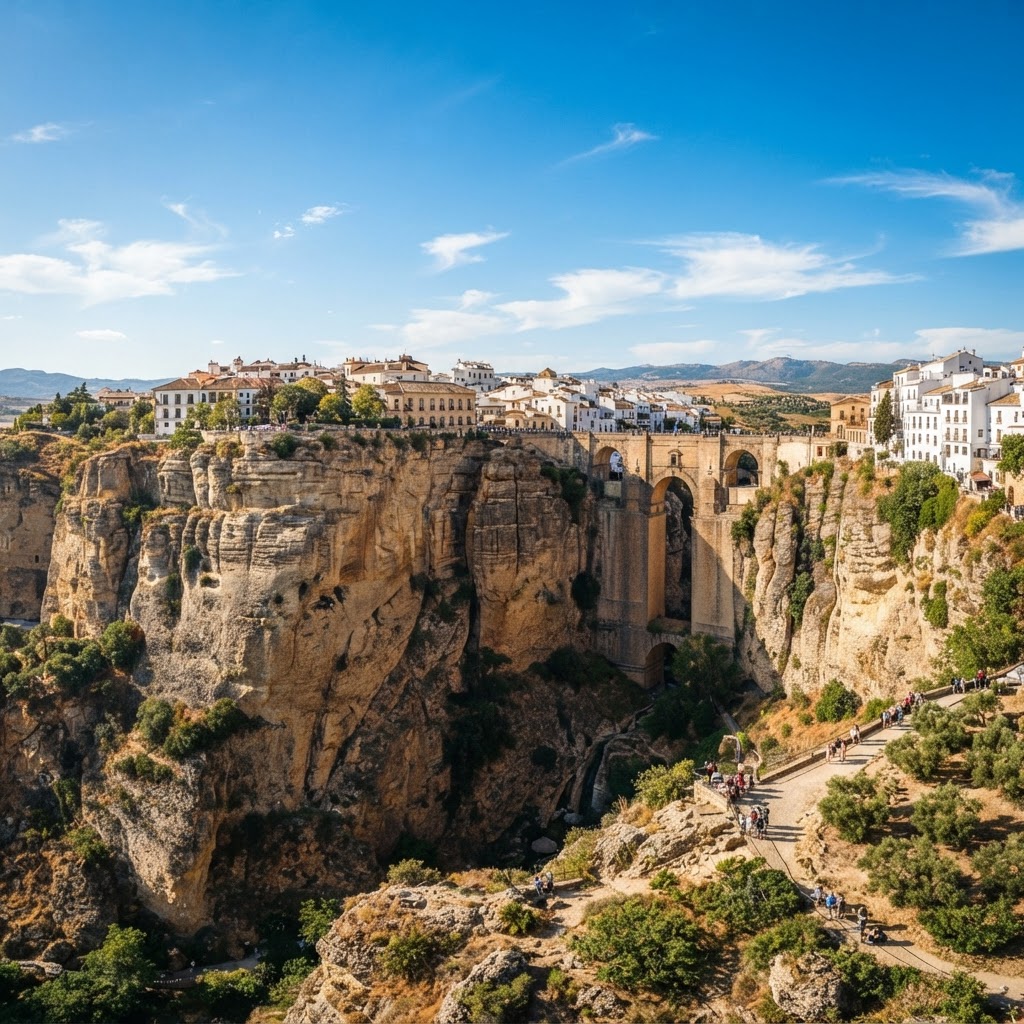
The distinct white aesthetic of Andalusian villages serves as a thermal regulation strategy developed over centuries to combat the intense Mediterranean sun. By coating exterior walls in lime—a process known as whitewashing—residents reflect solar radiation, maintaining interior temperatures up to 5-7 degrees Celsius cooler than the outdoor ambient air during summer months exceeding 40°C. This practice dates back to the Al-Andalus era, where Moorish urban planning integrated interior patios with water features to facilitate evaporative cooling and improved air circulation in dense mountain clusters.
Architectural Marvels of the South
Beyond the white lime, these villages are defined by their narrow, winding streets designed to provide maximum shade and to protect against the wind. You will notice that many of the houses feature interior courtyards, known as patios, which are often decorated with vibrant geraniums and bubbling fountains. This layout is a direct inheritance from the period of Al-Andalus, creating a micro-climate of coolness that is both functional and profoundly beautiful.
| Feature | Purpose | Historical Era |
|---|---|---|
| Lime Wash | Heat Reflection | Moorish (8th–15th c.) |
| Narrow Streets | Shade Production | Medieval Defensive |
| Interior Patios | Natural Ventilation | Roman-Moorish Hybrid |
Ronda: The Jewel of the Sierra de las Nieves
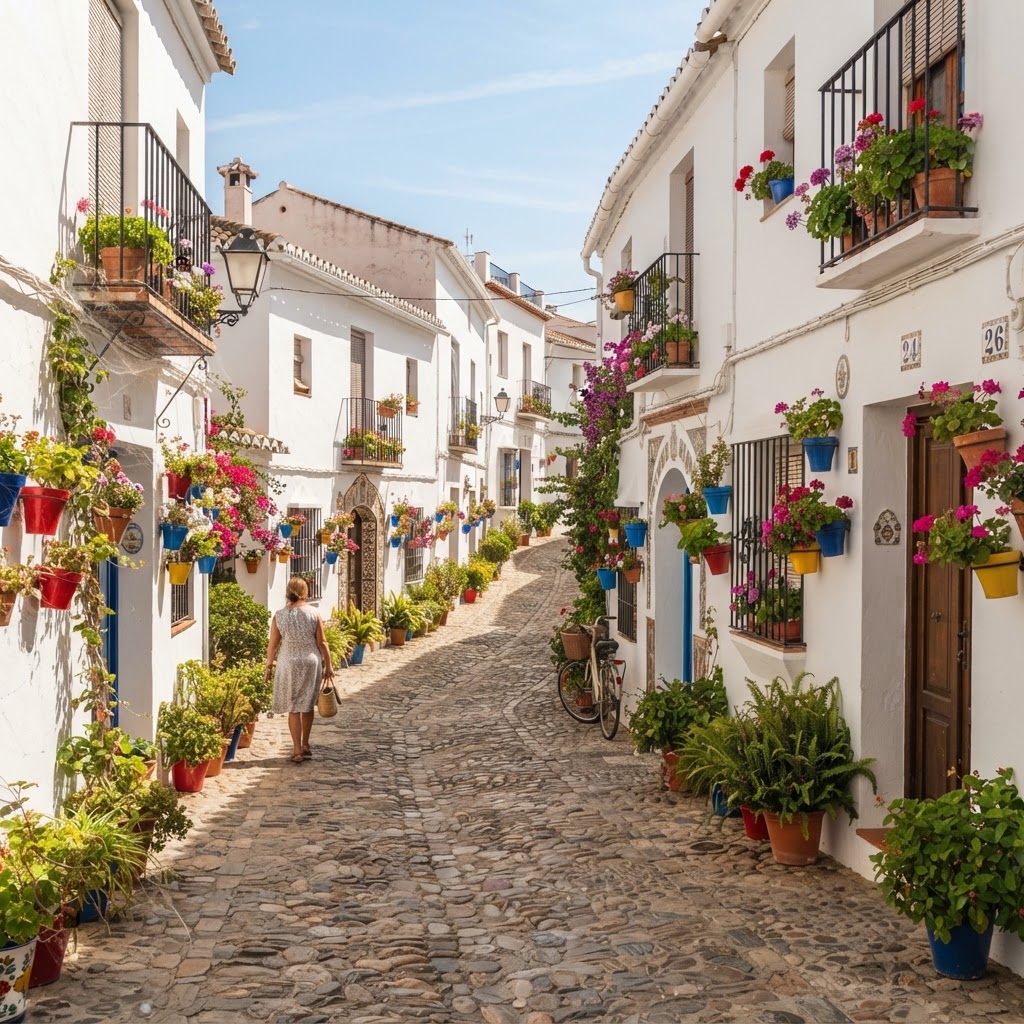
Ronda stands as the most prominent “Pueblo Blanco,” physically split by the 120-meter-deep El Tajo gorge, which attracts over one million visitors annually due to its dramatic verticality. The town functions as the regional capital for the surrounding sierras, offering a sophisticated blend of 18th-century infrastructure and preserved Islamic heritage. Visitors can traverse the Puente Nuevo, a stone arch bridge completed in 1793, which provides the quintessential panoramic view of the Serranía de Ronda mountain range.
Must-See Sights in Ronda
- The Puente Nuevo Bridge: The city’s iconic landmark.
- Plaza de Toros: One of the oldest bullrings in Spain.
- The Mondragón Palace: A stunning example of Mudéjar-Renaissance architecture.
- The Arab Baths: Well-preserved remnants of the town’s Islamic past.
Walking through the old town, you will encounter charming cobblestone squares and historic mansions. Ronda offers a sophisticated mix of history, local culture, and incredible gastronomy, making it the perfect base for your exploration of the surrounding mountains.
Setenil de las Bodegas: The Town Under the Rocks
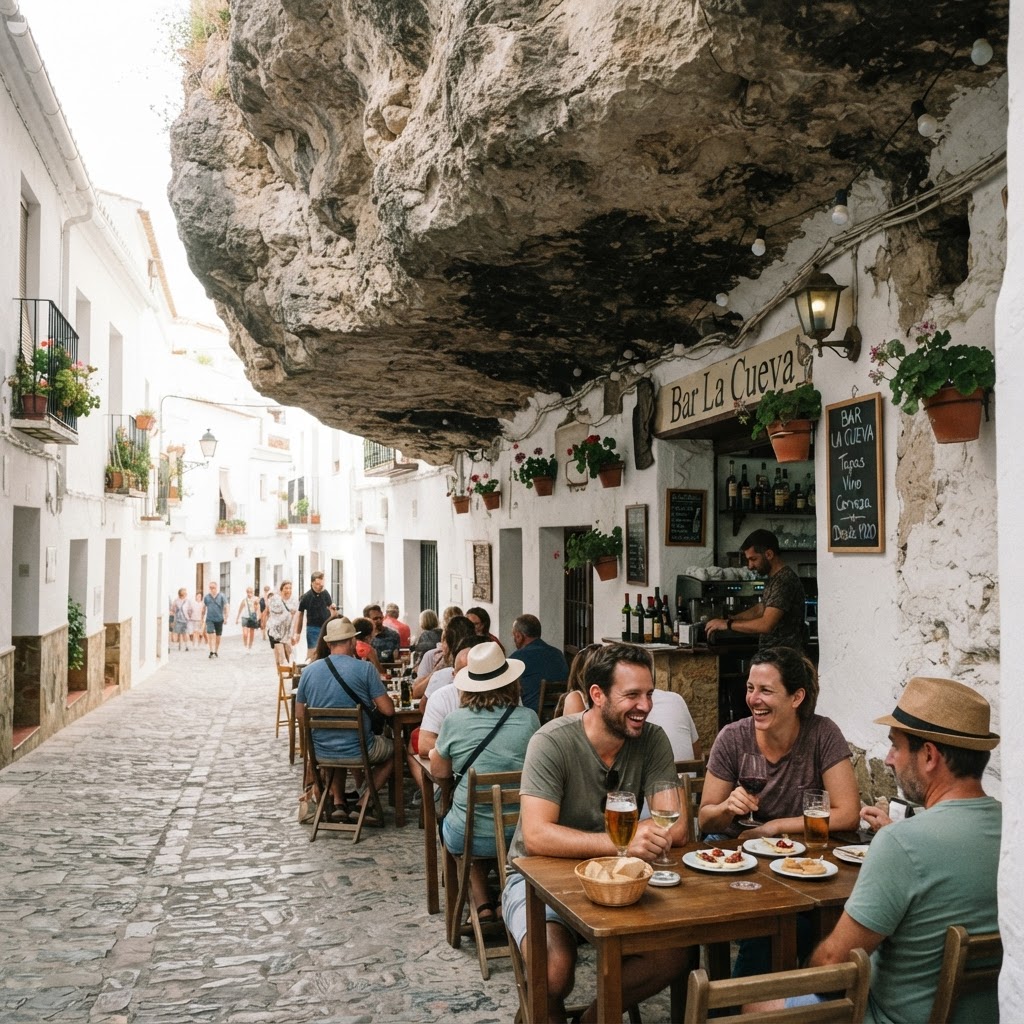
Setenil de las Bodegas is a geological anomaly where the village is constructed directly into the basaltic rock overhangs of a river canyon rather than atop a peak. Unlike typical defensive hilltop settlements, this village utilized natural rock shelters to minimize construction materials, resulting in a town where the roof of a house is often a massive, prehistoric boulder. This natural insulation keeps the indoor climate remarkably stable at roughly 20°C year-round.
Why Setenil is Unique
Walking through Calle Cuevas de la Sombra, you are literally beneath a mountain. It is a fascinating geological and architectural marriage that offers a cool reprieve from the sun. The village is also famous for its local chorizo and honey, which are best enjoyed in one of the tiny cafes tucked into the rock face.
Zahara de la Sierra: A View Above the Clouds
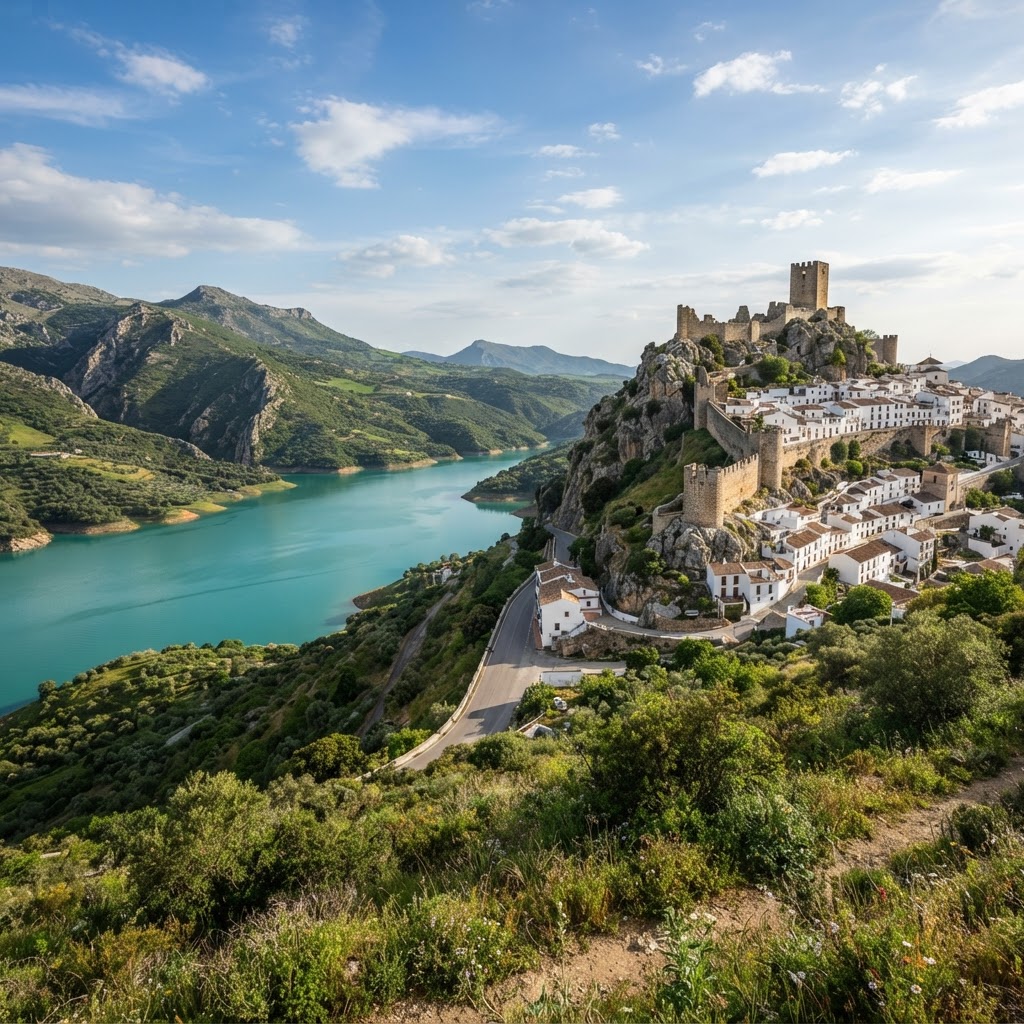
Zahara de la Sierra occupies a strategic, high-altitude position overlooking the Zahara-El Gastor reservoir, offering one of the most elevated vantage points in the region. The village is defined by its 13th-century Moorish fortress, which looms over the white houses below, serving as a reminder of the frontier battles between the Nasrid Kingdom of Granada and the Christian Reconquista forces. Climbing the steep path to the tower at 500 meters elevation requires stamina, but rewards travelers with a 360-degree vista of the surrounding olive groves and turquoise water below.
Practical Tips for Exploring Zahara
Wear comfortable shoes, as the incline is steep and the streets are uneven. The best time to visit is during the spring, when the surrounding hills are lush with wildflowers. If you are visiting in the heat of summer, plan your climb for the early morning or the late afternoon to avoid the peak temperatures.
Grazalema: The Gateway to Nature
Grazalema serves as the primary gateway to the Sierra de Grazalema Natural Park, an area recognized by UNESCO as a Biosphere Reserve due to its unique micro-climate and high rainfall. While most of Andalusia experiences semi-arid conditions, Grazalema holds the record for the highest annual precipitation in Spain, often exceeding 2,000 mm, which sustains the rare Pinsapo fir forest. This ecological diversity makes it the top destination for trekkers looking to escape the dry, desert-like conditions of the lower plains.
Cultural Life in Grazalema
The town itself is a maze of flower-filled alleys and traditional artisans. It is particularly famous for its wool blankets, which have been produced here for centuries. Stopping by a local workshop to watch the weaving process is a fantastic way to support local traditions while picking up a durable, handmade souvenir.
Planning Your Ultimate Andalusia Road Trip
Traveling through the white villages of Andalusia is best experienced by car to navigate the winding roads of the Sierra de Grazalema. Public bus routes between smaller villages such as Zahara and Grazalema are limited, often running only once or twice daily, which can cripple a tight itinerary. A rental car provides the flexibility to navigate the narrow mountain passes where professional bus drivers often struggle.
| Village | Highlights | Best For |
|---|---|---|
| Ronda | Puente Nuevo, History | First-time visitors |
| Setenil | Rock homes, Dining | Photography buffs |
| Zahara | Castle, Reservoir | Hikers and views |
| Grazalema | Nature, Weaving | Outdoorsy travelers |
Essential Travel Advice
Avoid driving in the very narrow village centers; instead, look for designated public parking lots at the entrance of each town. Most of these villages were built long before automobiles, and navigating them can be extremely stressful for tourists. Park on the outskirts and enjoy the walk into the historical center—it is the best way to soak in the atmosphere.
Gastronomy: What to Eat in the Pueblos Blancos
Andalusian mountain cuisine is defined by high-calorie, rustic meals designed to sustain agrarian workers during the harvest. Key regional staples include “migas,” a dish of sautéed breadcrumbs with garlic and chorizo, and “sopa de espárragos,” utilizing wild mountain asparagus. For dessert, travelers should seek out “tortas de aceite,” which are traditional hand-pressed olive oil biscuits, often paired with a local dry Sherry (Jerez-Xérès-Sherry) to balance the intense flavors.
FAQ
Q: What is the best time of year to visit the white villages?
The best time to visit is during the spring (April to June) or autumn (September to October). These months offer mild temperatures, ideal for hiking the trails, while avoiding the extreme summer heat that often exceeds 40°C in the valleys.
Q: Do I need a car to visit all the villages?
Yes, renting a car is highly recommended for an efficient trip. Public transport is unreliable and limited between the smaller mountain towns, and a personal vehicle provides the freedom to reach remote viewpoints and parks that buses cannot access.
Q: Are the roads in the mountain villages difficult to drive?
The roads are generally paved but extremely winding with steep gradients. If you are not comfortable driving manual cars on narrow, cliff-side mountain passes, consider renting a small automatic vehicle and park in the designated zones at the village entrance.
Q: Can you visit the white villages as a day trip from the coast?
Yes, most villages like Ronda or Setenil can be visited in a day trip from the Costa del Sol. However, a stay of 3 to 4 days is recommended to fully experience the atmosphere of the smaller villages after the daily tour bus crowds depart.
Q: What is the most famous white village in Andalusia?
Ronda is considered the most famous village due to the iconic Puente Nuevo bridge. Its status as a major historical hub and its dramatic position on the El Tajo gorge make it the most visited location in the region.
Leave a Reply