
Golden light transforms Barcelona’s architecture by highlighting the intricate textures of limestone, glass, and mosaic tiles during the ‘golden hour’—typically the hour after sunrise and the hour before sunset. The city’s Mediterranean position, combined with the unique 45-degree angle of the Eixample grid, creates dramatic shadow-play and warmth that elevates iconic landmarks into otherworldly displays of color.
The Anatomy of Mediterranean Light
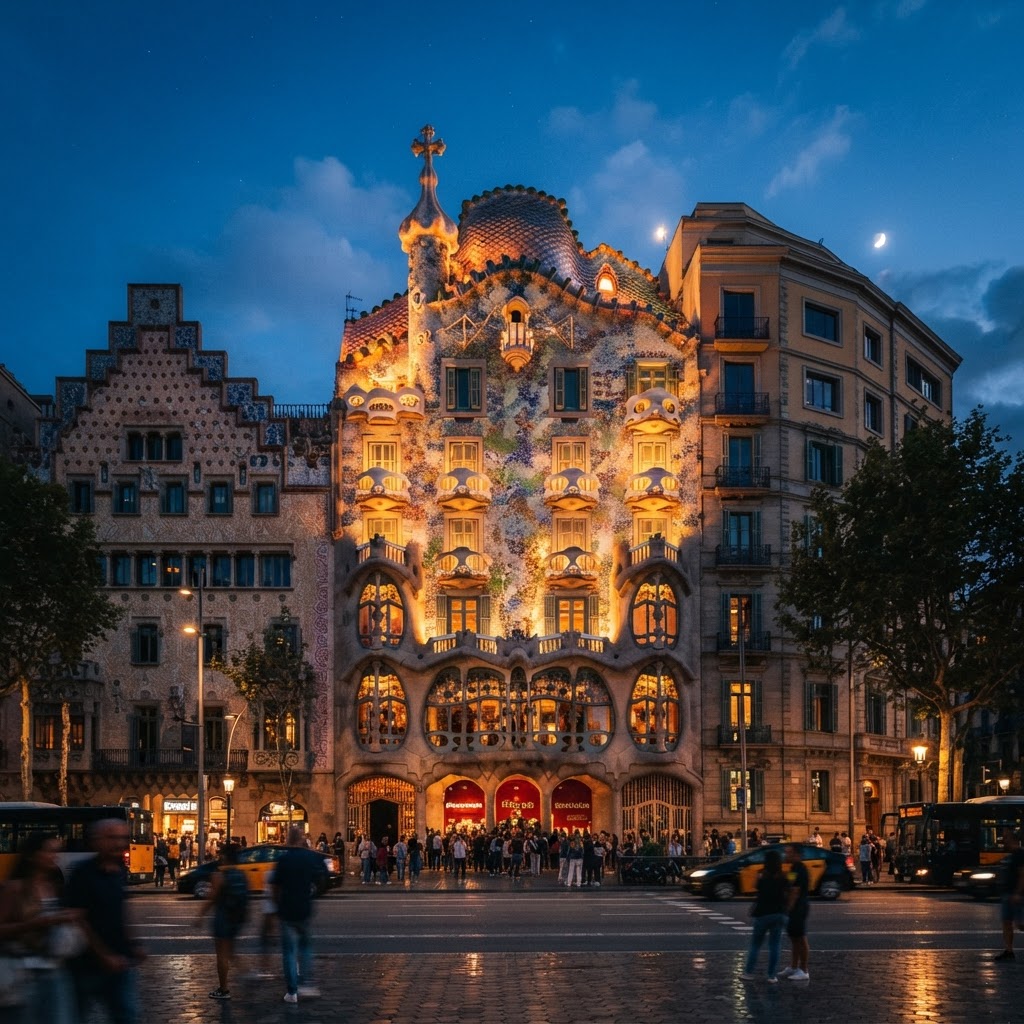
Barcelona’s unique geographical position on the Balearic Sea creates a high-diffuse light quality that distinguishes its aesthetic from the rest of Europe. When direct sunlight hits the limestone and trencadís mosaic tiles of the city’s facades, the atmospheric refraction creates a depth that brings architectural details to life. This light interaction is not accidental; the coastal humidity levels often hover between 60% and 75%, which filters harsh UV rays and creates a softer, golden spectrum.
Why Time of Day Matters
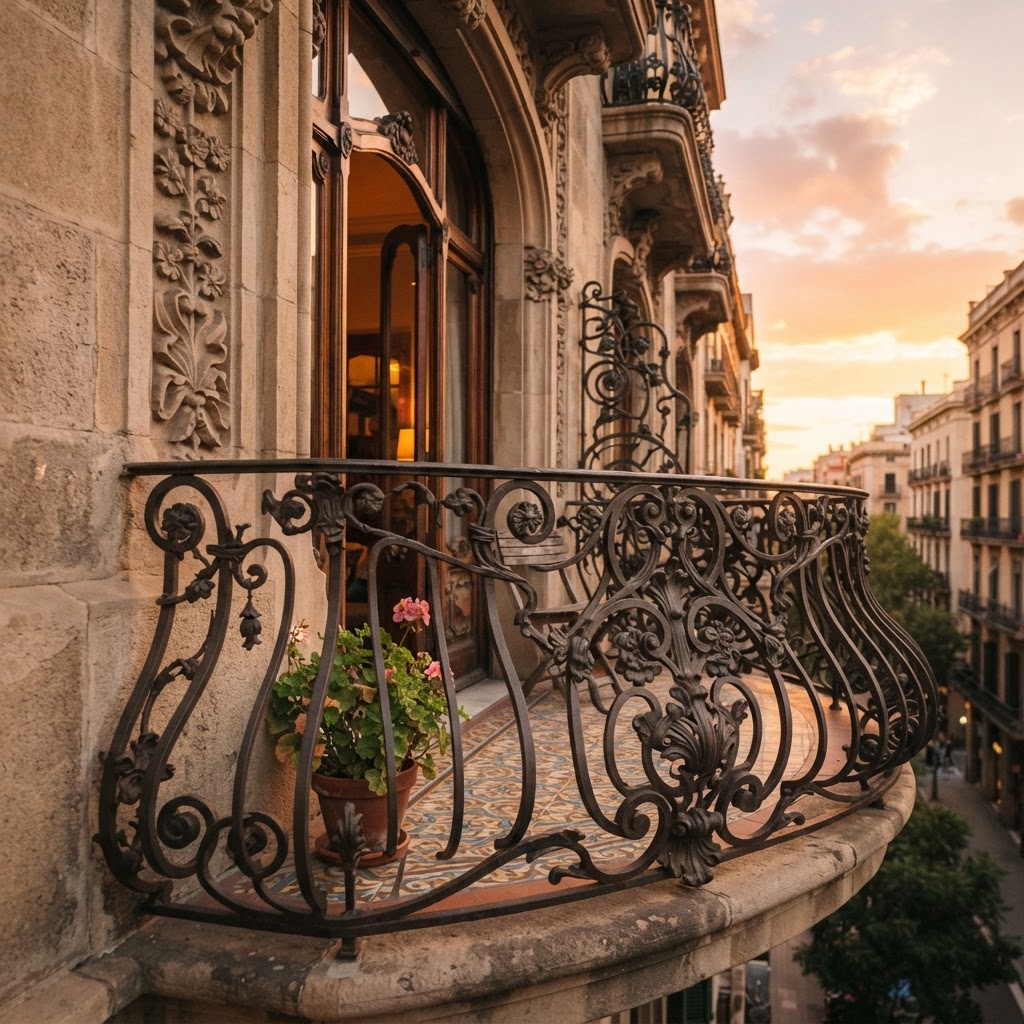
The ‘golden hour’ occurs when the sun sits between 6 and 10 degrees above the horizon. In Barcelona, the sun’s low trajectory during these periods interacts perfectly with the Cerdà grid layout, allowing light to penetrate deep into the Eixample district’s long streets. This long-angle lighting emphasizes the decorative flourishes of Modernista balconies and ornate doorways, revealing textures that are effectively invisible under the flat light of high noon.
The Eixample Grid Advantage
The design of the Eixample district acts as a giant light trap. Because the streets intersect at 45-degree angles, the sun casts long shadows that frame building corners, creating dramatic contrast. This architectural planning ensures that even on the ground floor, light plays a significant role in defining the streetscape.
Gaudí’s Masterpieces in the Glow
Antoni Gaudí meticulously designed his structures to capture the full spectrum of Mediterranean light throughout the day. His masterpieces, including Casa Batlló and Casa Milà, utilize undulating stone facades and reflective trencadís mosaics specifically to maximize light capture during the sunset hours. These materials act as organic prisms, turning static stone into a dynamic surface that mirrors the shifting sky.
Casa Batlló at Sunset
As the sun dips toward the horizon, the facade of Casa Batlló seems to shimmer. The colorful fragments of broken glass and ceramics reflect the warm, orange hues of the twilight. This creates an optical illusion of movement, making the building feel alive rather than static. Photographers flock here during this time to capture the way the sun ignites the ‘scales’ of the roof, which resembles the back of a dragon. By utilizing a wide-angle lens with an aperture set between f/8 and f/11, you can maintain deep focus on both the detailed mosaic work and the surrounding sunset colors.
The Gothic Quarter: A Timeless Perspective
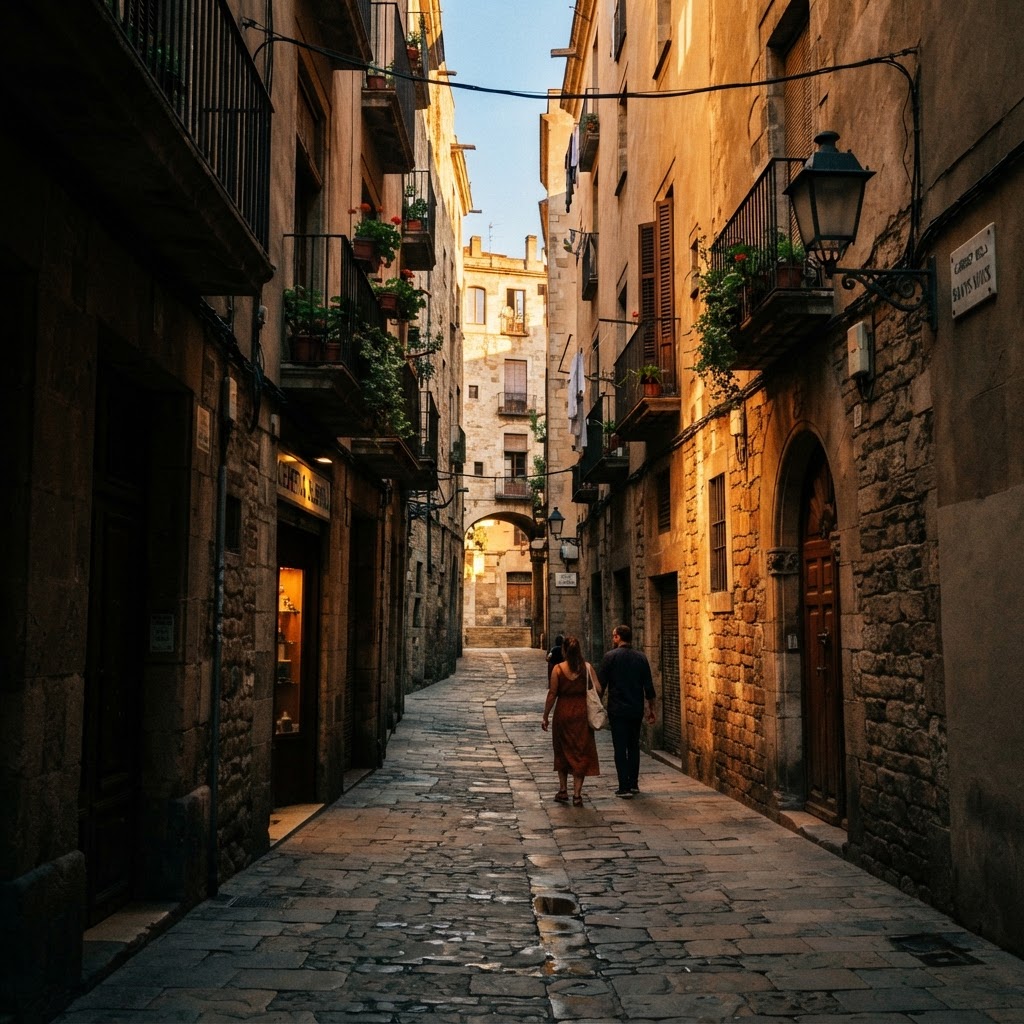
The Gothic Quarter is a dense maze of narrow alleyways and high, imposing stone walls where light behaves in vertical shafts rather than broad sweeps. Instead of bathing entire structures, the golden light filters down from above, illuminating specific gargoyles or weathered cornerstones while keeping the streets below in cool, blue shadow. This creates a high-contrast environment that is ideal for black-and-white photography or dramatic architectural studies of medieval textures. If you are a fan of dramatic sunset architecture, you might also be interested in the best balcony views in Oia to capture the caldera at dusk.
Capturing Shadows and Light
- Visit the Plaça de Sant Felip Neri early in the evening to catch the light hitting the upper facade.
- Look for light hitting the upper levels of the Cathedral of Barcelona, typically 30 minutes before sunset.
- Use the high contrast to frame silhouettes against the illuminated stone.
- Focus on the texture of the ancient masonry as it catches the low-angle sun.
This play between light and dark creates a sense of mystery that defines the Gothic district. It is a photographer’s dream to watch how the light slowly creeps down the walls, signaling the arrival of the evening transition.
Panoramic Views from Mountjuïc
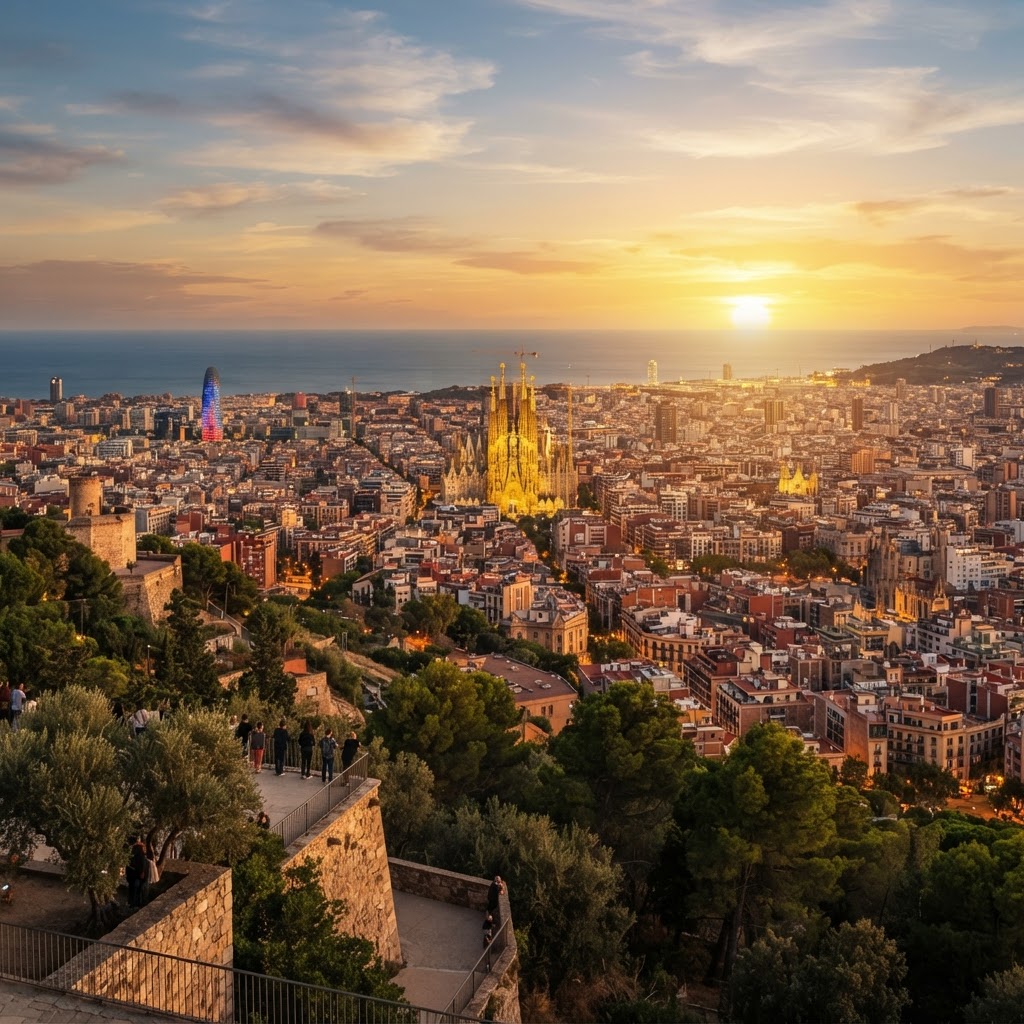
For a comprehensive view of how light affects the entire city, head to the heights of Montjuïc, which sits approximately 180 meters above sea level. From this vantage point, you can observe the transition from golden sunlight to the blue hour as the city lights begin to flicker on across the horizon. The golden light hits the Sagrada Família in the distance, making the towers glow like burning candles against the twilight sky.
The Sagrada Família Glow
There is no more iconic sight than the Sagrada Família bathed in sunset light. The sheer scale of the spires, which rise to 172 meters, provides a vertical canvas for the golden reflection of the sunset. It is the perfect location to witness the culmination of the golden light on Barcelona’s architecture. For the best vantage point, arrive at the Montjuïc Castle observation deck at least 45 minutes before the official sunset time to secure a stable position for a tripod.
Photography Tips for Barcelona
To make the most of the golden light, you need more than just a good camera; you need timing, planning, and specific technical settings. The city changes rapidly as the sun moves, so scout your location at least one day in advance. Do not try to rush; choose one area and stay there for at least an hour to observe the light’s progression.
Equipment and Settings
- Use a tripod for long exposure shots as the light fades below 1/60th of a second.
- Prioritize a lens with a wider aperture (f/2.8 to f/4) to capture the subtle color gradients.
- Shoot in RAW format to recover detail in the deep, blue shadows of the Gothic Quarter.
- Don’t be afraid to underexpose by -0.7 EV to preserve the rich, saturated colors of the sunset.
The Seasonal Impact on Lighting
The time of year significantly changes how the sun hits the city’s landmarks due to the Earth’s axial tilt. In the summer, the sun reaches an altitude of roughly 73 degrees, meaning the golden hour is longer and more intense. In the winter, the sun stays lower at approximately 26 degrees, providing a more diffused and soft quality that makes the city feel nostalgic and quiet. If you are planning to travel further into Europe and want to experience the charm of rural England, you can also easily explore the Cotswolds by train from London for a refreshing change of pace.
Spring vs. Winter Light
- Spring light (March-May) is sharp and clear due to lower humidity, making colors pop against the blue sky.
- Winter light (December-February) has a golden warmth that persists throughout the shorter afternoons, ideal for long-exposure photography.
- Autumn offers a mix, often accompanied by clouds that create dramatic, moody lighting scenarios, perfect for framing the Sagrada Família against stormy backgrounds.
Regardless of the season, the architecture responds with grace, proving that Barcelona is a city built to be illuminated. Each season provides a different “filter” for the city’s limestone and colorful glass, ensuring that every visit offers a new perspective.
FAQ
Q: What is the best time of day to photograph Barcelona architecture?
The best time to photograph Barcelona is during the ‘golden hour,’ which occurs the hour after sunrise and the hour before sunset. These periods provide soft, directional light that highlights the textures of Gaudí’s mosaics and the stone of the Gothic Quarter.
Q: Does the Eixample grid affect lighting in Barcelona?
Yes, the Eixample district’s 45-degree grid acts as a light trap, allowing low-angle sunlight to penetrate deep into streets and frame building corners with dramatic shadows. This architectural layout is specifically designed to maximize light exposure on ground-level facades.
Q: Is the lighting different in the Gothic Quarter than the Eixample?
Yes, light in the Gothic Quarter is defined by narrow, vertical shafts that illuminate specific stone details, while Eixample light is broader and more consistent due to wide boulevards. You will need to account for higher contrast when shooting in the Gothic Quarter.
Q: What camera settings should I use for sunset architecture shots?
Shoot in RAW format and underexpose by -0.7 EV to protect the vibrant colors of the sunset. Using a tripod is highly recommended once the light levels drop, as this allows for lower ISO settings to ensure maximum image sharpness and reduced digital noise.
Practical Tips for Sunset Photography
Position yourself at least twenty minutes before the official sunset time. The light changes rapidly in the final stretch, shifting from a pale yellow to a deep, fiery copper. Bring a sturdy tripod because street lighting begins to activate shortly after, creating a beautiful mix of artificial and natural glow.
Use a polarizing filter to manage reflections on glass facades like those on Passeig de Gràcia. This tool helps you maintain the vibrant colors of the ceramic tiles without washing them out. If you carry a prime lens, a 35mm works best to capture both the ornate balcony details and the scale of the buildings.
Avoiding Common Pitfalls
Many travelers wait for the sun to disappear entirely before leaving their spot. Do not make this mistake, as the ‘blue hour’ that follows offers a moody, ethereal aesthetic that is perfect for capturing the city’s silhouettes. Avoid the heavy crowds at the main entrance of Sagrada Familia during the peak sunset window.
Instead, move two blocks east toward Avinguda de Gaudí. This perspective allows you to frame the towering spires against a deepening sky without hundreds of tourists blocking your tripod legs. Stay away from noon, as the harsh overhead light flattens the textured relief of Modernista stone carving.
Planning Your Golden Hour Itinerary
Spend at least three days dedicated to light-chasing if you want a complete portfolio of the city. Dedicate day one to the Eixample district to master the grid-based light patterns. Use day two for the Gothic Quarter, where you must hunt for light shafts reflecting off medieval stone.
Reserve day three for the seaside structures like the W Hotel or the Port Olímpic area. The ocean reflection adds a completely different dimension to the Mediterranean light profile compared to the city center. Expect to walk at least eight kilometers per day if you are serious about finding the perfect angle.
Essential Gear Checklist
- Wide-angle lens for capturing the expansive facades of Casa Milà.
- Remote shutter release to eliminate vibrations during long evening exposures.
- Extra batteries because cold sea breezes often drain power faster than you expect.
- Light jacket, as temperatures drop noticeably once the sun clears the horizon.
- Offline map marked with specific building corners that face the sunset directly.
Frequently Asked Questions
Is it better to photograph in the morning or evening?
Evening provides a warmer, more golden spectrum, while morning light is clearer and sharper. I recommend evening for the romantic, saturated hues that make the trencadís mosaics look like liquid jewels.
Are there any neighborhoods that offer better light than others?
The Eixample is unmatched due to the Cerdà grid design. However, the Raval district offers interesting high-contrast opportunities in narrow, dark alleys where small beams of light hit old stone walls.
Do I need a permit for professional photography?
You do not need a permit for handheld photography in public spaces. Only bring a tripod if you are prepared to move quickly if police or security staff request it in high-traffic areas.
Leave a Reply