
Bergen’s Colorful Harbor at Dusk: A Magic Hour Guide
Bergen’s harbor, centered around the iconic Bryggen wharf, is best experienced at dusk when the soft Scandinavian twilight illuminates the historic wooden facades, creating perfect reflections in the calm waters of Vågen bay. This golden hour offers optimal conditions for photography and quiet exploration away from the midday tourist crowds.
The Historic Significance of Bryggen
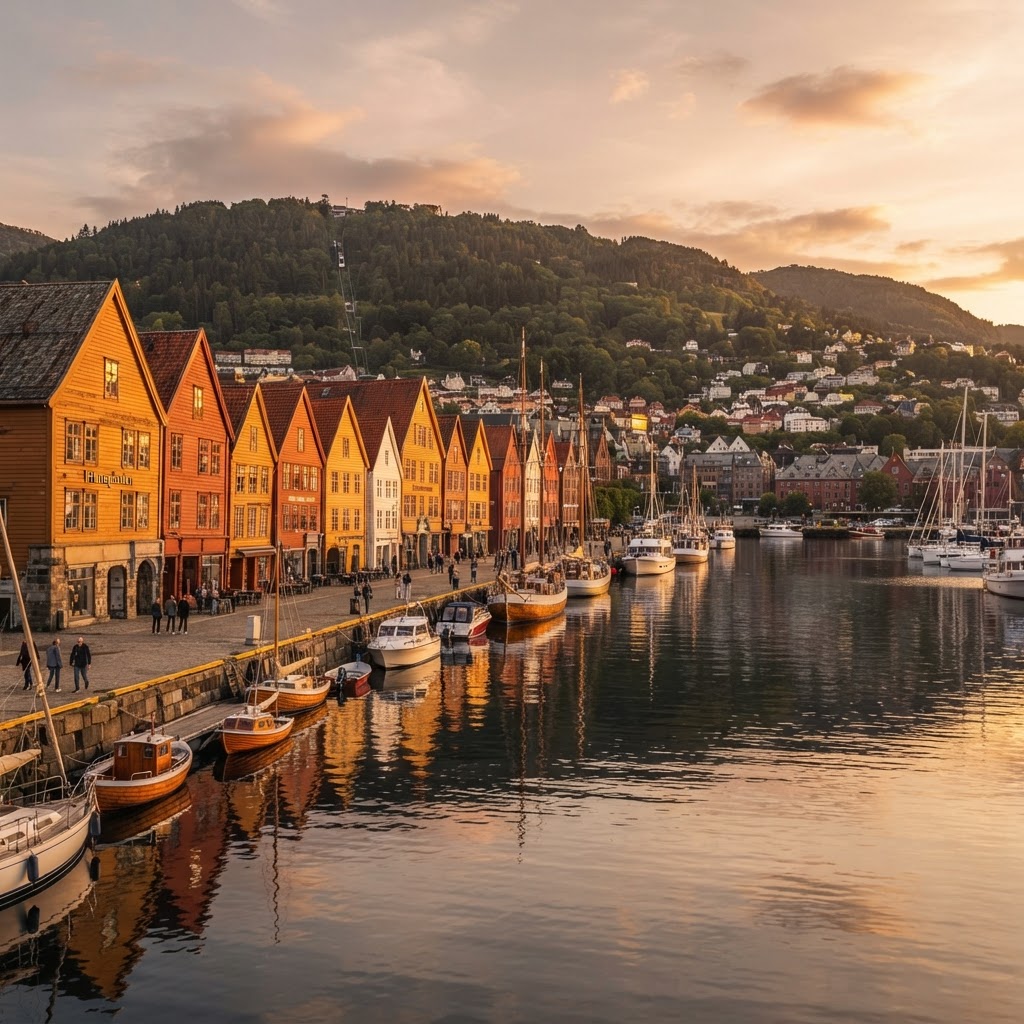
Bryggen serves as a living monument to Norway’s medieval trade history, established as a UNESCO World Heritage site that originally functioned as the Hanseatic League’s primary trading hub. These distinctive, narrow wooden buildings were constructed following the 1702 fire, maintaining a structural design that dates back to the Middle Ages. The harbor area contains 62 preserved buildings, each representing the economic power that Bergen wielded in the North Sea maritime trade network. As you walk the wooden pathways at night, you are physically traversing the same ground where merchants from Germany and Northern Europe negotiated contracts for stockfish exports for over 400 years.
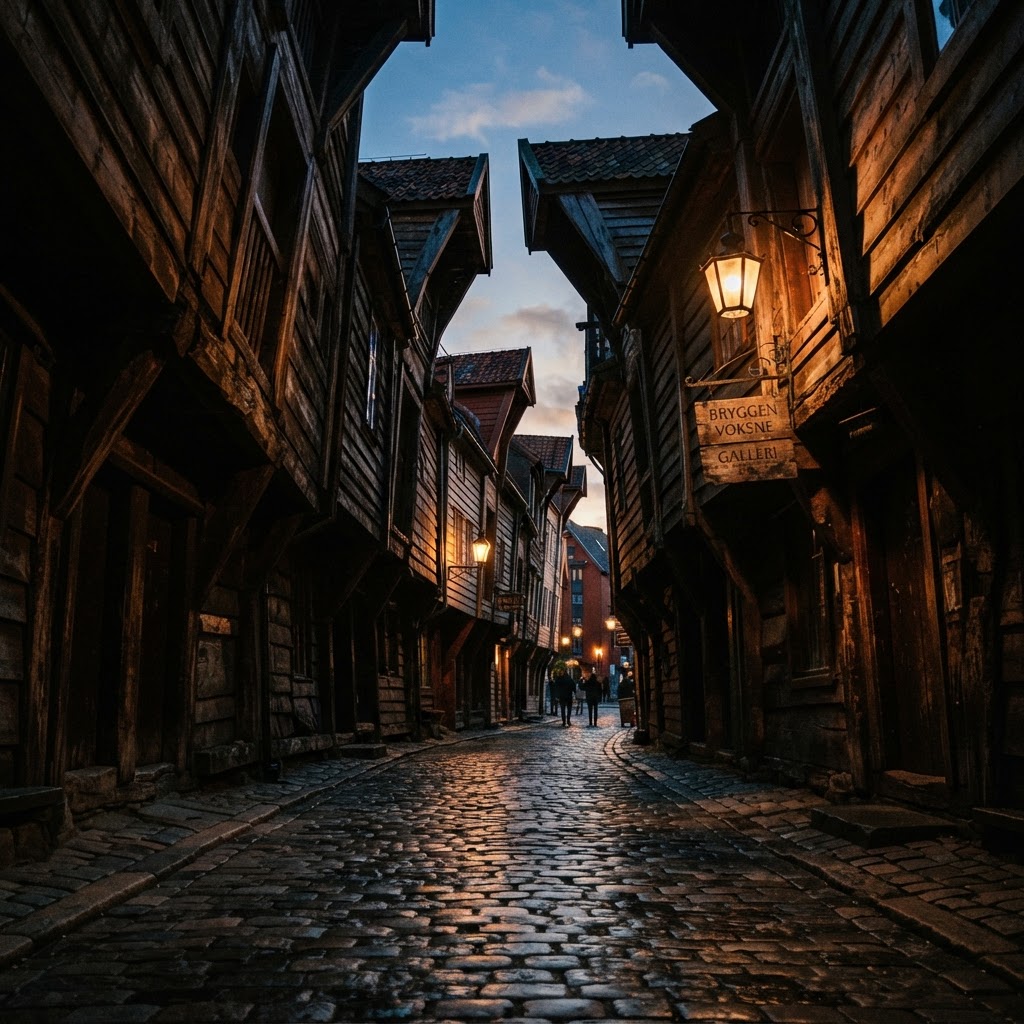
Walking along the docks after dark reveals the architectural ingenuity of these tilted, timber-framed structures. The narrow alleyways, known as smau, create a dramatic play of shadow and light as the evening fades. Historical records indicate that these buildings have survived over 30 major fires, with the current iteration reflecting a blend of reconstruction efforts that honor the traditional 12th-century craftsmanship. The historical weight of the site becomes palpable when the evening light hits the centuries-old timber, allowing modern visitors to connect deeply with the maritime merchants who historically navigated these same docks.
Why Dusk is the Best Time to Visit
Many tourists flock to the harbor during the bright afternoon hours, but the true magic happens when the crowds disperse. At dusk, the temperature cools, the wind often dies down, and the harbor lights begin to flicker on, creating a mirror effect on the water. This is the perfect time for a leisurely stroll without the distraction of daytime bustling.
Capturing the Perfect Shot
For photography enthusiasts, Bergen’s colorful harbor at dusk is a playground of light and texture where the deep blue twilight contrasts sharply with the ochre, red, and yellow painted wooden facades. To maximize your capture, plan to arrive at the Vågen bay waterfront precisely 30 minutes before the official sunset time to utilize the high-contrast blue hour. The ambient light at this time helps avoid the harsh shadows associated with midday, providing a soft, uniform illumination that highlights the intricate wood grain of the historic wharf. Using a wide-angle lens (16-35mm) is standard practice here to capture the entire row of merchant houses against the backdrop of Mount Fløyen.
Essential Photography Tips
- Use a tripod: A stable base is crucial for long-exposure shots that make the water look silky smooth.
- Adjust your white balance: Set your camera to ‘Cloudy’ or ‘Shade’ to emphasize the warm tones of the buildings.
- Look for reflections: The still waters of the bay are ideal for capturing symmetrical reflections of the historic facades.
- Bring a wide-angle lens: You will need it to capture the entire row of buildings along the wharf.
The Atmosphere of Vågen Bay
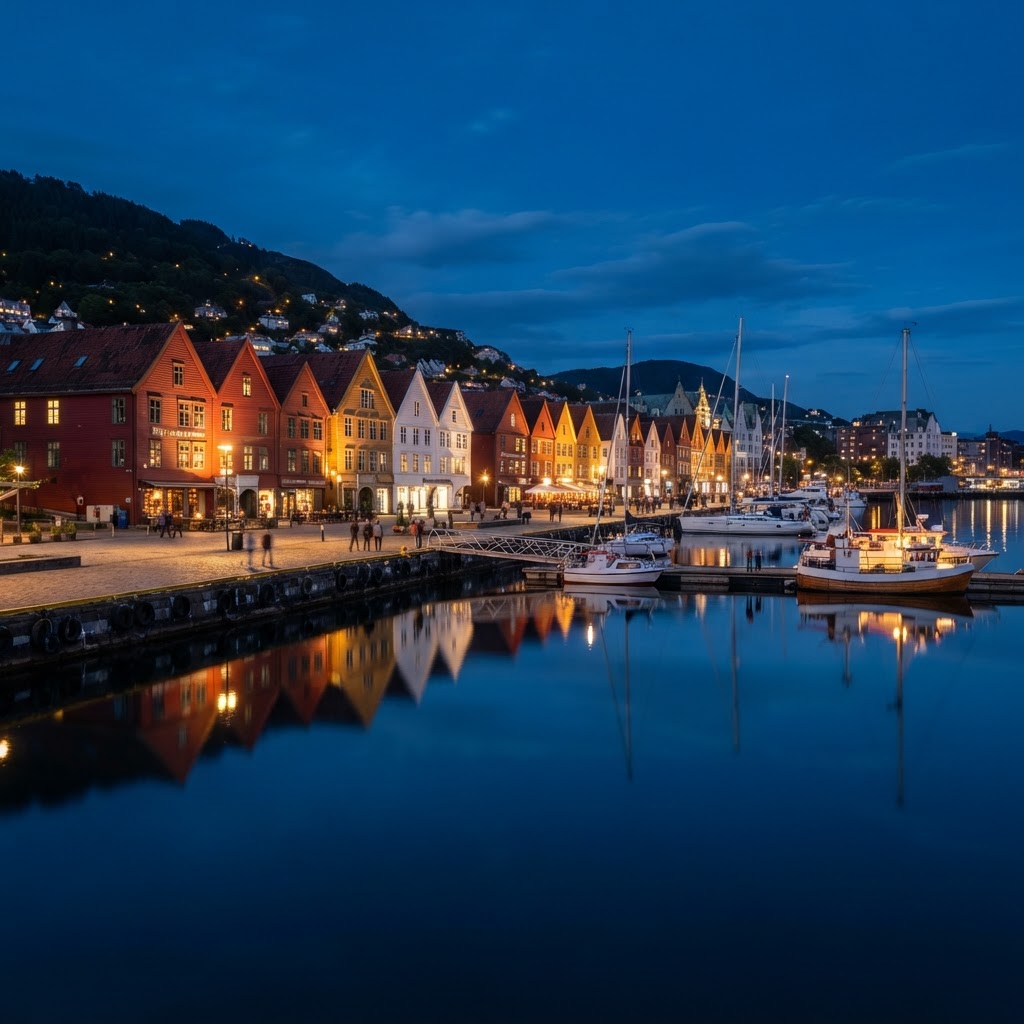
Beyond the architecture, the atmosphere of Vågen bay during the evening is tranquil and contemplative. You can hear the gentle lapping of the tide against the ancient wooden piles and the distant hum of the city beginning to settle down. This is an ideal time for reflection, observation, and soaking in the unique maritime culture that defines Bergen. During the summer months—specifically from May to August—the sun sets very late, often after 10:00 PM, providing a long “golden window” for evening exploration and photography. Locals often utilize the wooden piers as a social space during this time, creating a communal peace that reinforces Bergen’s reputation as the Gateway to the Fjords.
Nearby Attractions to Explore at Twilight
While the harbor is the main event, the surrounding areas offer their own unique charms at twilight. A short walk from the harbor takes you into the heart of the city, where the cobblestone streets gain a cozy, illuminated glow. The Fish Market, while often closed by evening, provides a beautiful view of the harbor entrance that is worth the walk. Navigating this area requires approximately 45 minutes to one hour of dedicated walking time to fully appreciate the transition from the bustling market square to the serene, illuminated silence of the historic district near St. Mary’s Church, one of the oldest stone buildings in Bergen dating back to the 12th century.
Recommended Evening Walking Route
- Start at the Bryggen wharf to catch the sunset glow.
- Walk through the narrow, historic alleyways between the wooden buildings.
- Head toward the St. Mary’s Church, which looks magnificent against a darkening sky.
- Finish at the Fløibanen funicular base to see the city lights begin to sparkle from above.
Practical Tips for Your Evening Visit
Visiting Bergen requires some preparation, especially when it comes to the weather. Bergen is known as one of the rainiest cities in Europe, so always come prepared with a high-quality raincoat or umbrella. Fortunately, even on rainy nights, the wet cobblestones and reflection-filled puddles can make for incredibly artistic and moody photography. Average annual precipitation is roughly 2,250 millimeters, so keep your camera gear in a waterproof bag during your evening transit. Safety is also a factor; while the main tourist areas are well-lit, the narrow, unlit wooden alleyways require caution and sturdy, waterproof footwear to navigate safely on slippery planks.
What to Wear
- Layering is key: The temperature drops significantly once the sun goes down.
- Waterproof footwear: Sturdy boots will keep your feet dry while exploring the docks.
- Reflective gear: If you are walking near the road, ensure you have some visibility, as Norwegian streets can get quite dark.
Essential Facts About Bergen’s Harbor
To help you plan your visit, here are some quick facts about the area. These details provide context to the visual beauty you will experience during your evening visit.
FAQ
Is it safe to walk through Bryggen at night?
Yes, the Bryggen wharf and surrounding areas are generally very safe and well-lit for tourists during the evening hours. It remains a popular public space where locals and visitors walk, though you should exercise normal caution in the darker, narrow alleyways between the wooden buildings.
What time does the sun set in Bergen during summer?
During the peak of summer in June and July, the sun sets late, often between 10:30 PM and 11:00 PM. This extended twilight creates a long window for evening photography, often referred to as the “midnight sun” effect in northern regions, providing hours of soft, golden light.
Can you enter the historic buildings at Bryggen?
While the facades are the main attraction, many of the buildings house shops, galleries, and restaurants that are open during the day. Most private areas and upper galleries of the historic structures are closed to the public at night to preserve the integrity of the wooden architecture.
Does it rain often in Bergen in the evening?
Bergen experiences high levels of precipitation year-round, averaging over 200 rainy days per year. Even on clear summer days, light showers can occur in the evening, so carrying a high-quality, lightweight raincoat or waterproof gear is essential for any nighttime excursion.
Is there an admission fee to visit the harbor?
No, the Bryggen wharf is a public street and open-air historic district, meaning there is no admission fee to walk along the harbor or explore the public alleyways. You can enjoy the views and take photographs at any time of the day or night for free.
Practical Tips for the Bergen Evening Experience
Bergen is famous for its rain, so check the Yr.no app before you head out. If the sky is clear, go straight to the waterfront because conditions change quickly. Wear sturdy, waterproof shoes as the wooden docks and narrow alleyways are often slippery and uneven. Bring a light windbreaker even in midsummer, as the harbor breeze feels significantly colder once the sun dips below the horizon.
The Best Vantage Points
- The Nordnes Peninsula: Walk across from Bryggen to the tip of Nordnes for a panoramic view of the wharf lit up across the bay.
- The Floating Docks: Look for the small, low-profile docks near the fish market to get a water-level perspective of the reflections.
- Fløibanen Observation Deck: If you have time, take the funicular up just before dusk to watch the city lights flicker on from above.
Strategic Planning: A Timeline for Your Evening
Do not try to rush your visit during the day. Spend your daylight hours exploring the Bergenhus Fortress or the local museums nearby. Save your arrival at the harbor for exactly one hour before sunset. This gives you time to find your footing and scout your angles before the light gets too dim.
Stay for at least 90 minutes after the sun vanishes. The ‘blue hour’ provides the most dramatic, saturated colors on the wooden facades. Once your photography session is done, walk five minutes into the backstreets to find local restaurants that cater to residents rather than day-trippers.
Common Mistakes to Avoid
Many visitors make the mistake of staying only on the main wooden platform. You will miss the charm of the ‘smau’—the narrow, dark alleyways that run between the buildings. These are the heart of the wharf, but they are easy to overlook if you stick to the harbor front. Always walk deep into the passages to see the hidden courtyards and residential balconies.
Another error is waiting too long to eat. Many of the authentic, higher-quality eateries near the harbor close their kitchens by 9:00 PM. Make a reservation if you have your heart set on a specific seafood spot. Do not rely on walking into popular places without checking their closing times in advance.
Budgeting for Your Harbor Visit
Walking the wharf and taking photos costs nothing. This is the ultimate budget-friendly activity in a city that is otherwise quite expensive. Budget around 300 to 500 NOK per person if you plan to sit down for a glass of wine or a meal with a harbor view. Keep your gear light; you do not need a tripod for most shots if you have a camera with a decent stabilizer.
Frequently Asked Questions
Is it safe to walk around the harbor at night?
Yes, the area is extremely safe and well-lit. You will see locals jogging and couples walking throughout the evening hours. Just remain aware of your surroundings near the water, as there are few railings on the older docks.
Should I book a boat tour at night?
Avoid standard tourist boat tours after sunset. They are often crowded and the glass reflections make it difficult to get good photos. You are better off staying on land where you can control your own movement and timing.
When is the best season for the harbor?
Late May to early August offers the longest twilight periods. You get a much longer ‘magic hour’ during these months compared to the abrupt sunsets of winter. June is arguably the best month, as the sky often never gets fully dark, giving you an endless window for moody shots.
Leave a Reply