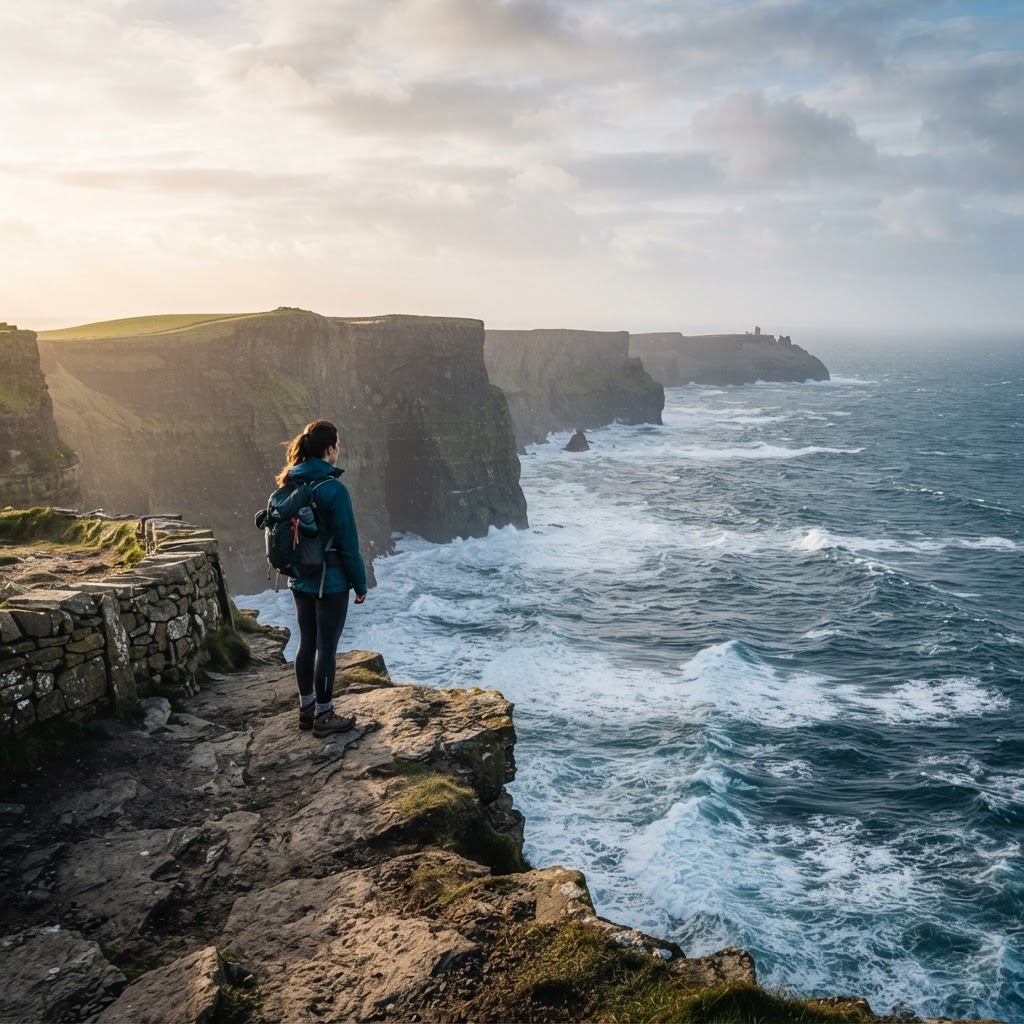
An active 7-day Ireland hiking and scenic driving itinerary is best achieved by flying into Shannon Airport and focusing on the Wild Atlantic Way. By dedicating mornings to coastal treks and afternoons to scenic routes, travelers maximize exposure to dramatic geography while maintaining a flexible, manageable pace across the rugged west coast.
Planning Your Seven-Day Ireland Adventure
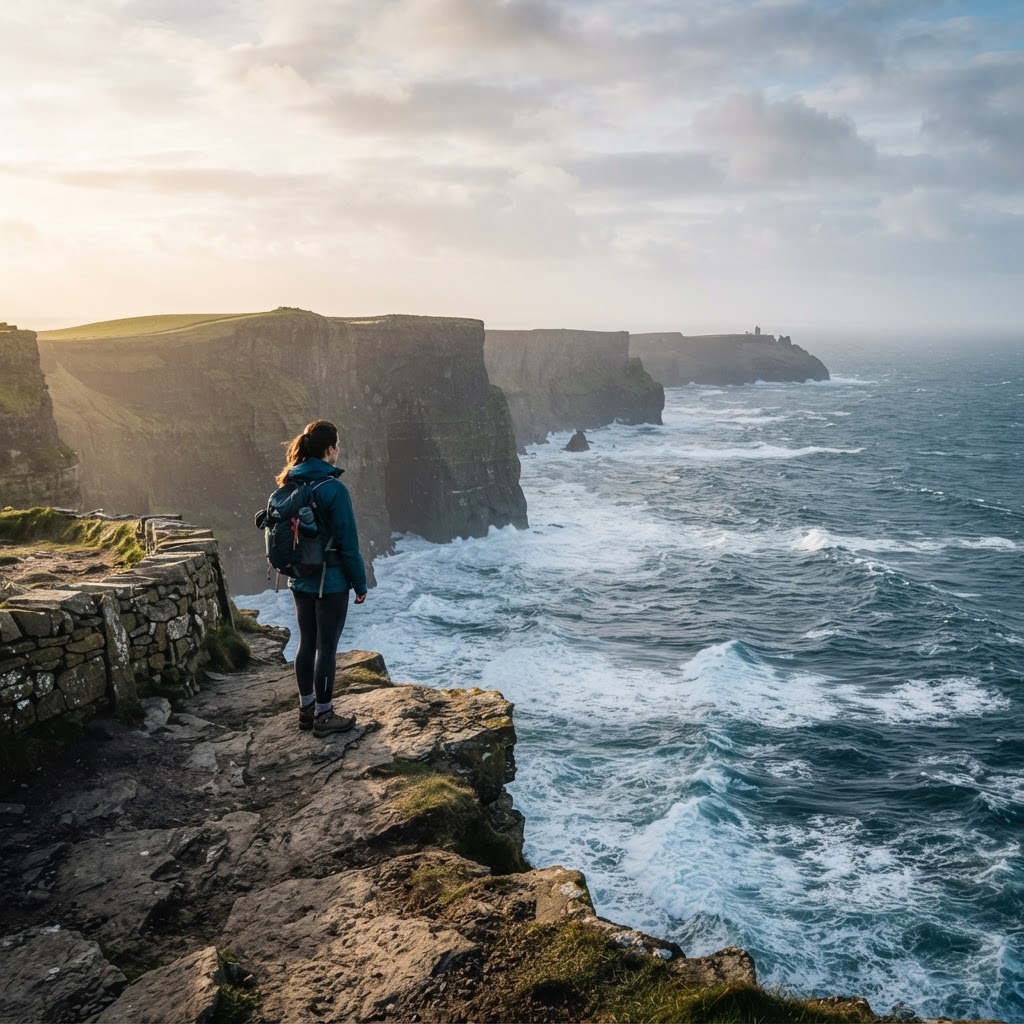
Planning a successful Ireland trip requires balancing travel time with outdoor activity to ensure you do not spend your entire vacation in a car. Start by flying into Shannon Airport to bypass Dublin’s urban congestion, placing you immediately within reach of County Clare’s dramatic cliffs. Renting a compact car is essential for navigating narrow rural roads where stone walls often restrict lane width to under 2.5 meters. To maintain your 7-day schedule, prioritize accommodation in “hub” towns like Doolin, Clifden, and Killarney, which minimizes repetitive packing. Most trails are free to access, though parking at major sites like the Cliffs of Moher typically costs between €10 and €15 per vehicle. Always carry physical Ordnance Survey maps alongside digital GPS, as cellular signals often drop in the remote valleys of Connemara and Kerry.
Essential Gear for Irish Weather
Ireland is famous for having four seasons in a single day, making proper preparation essential for every hiker. Regardless of the season, you should always pack waterproof hiking boots, a high-quality rain shell, and moisture-wicking base layers that can be easily added or removed as conditions change rapidly across the hills and coastal cliffs. Essential items include a 20-30 liter daypack with a waterproof cover, Merino wool socks to prevent blisters, and trekking poles, which provide stability on the boggy, uneven terrain found on trails like Diamond Hill or the Kerry Way. Avoid cotton fabrics, as they absorb moisture and lose heat rapidly when wet.
Days 1-2: The Burren and The Cliffs of Moher
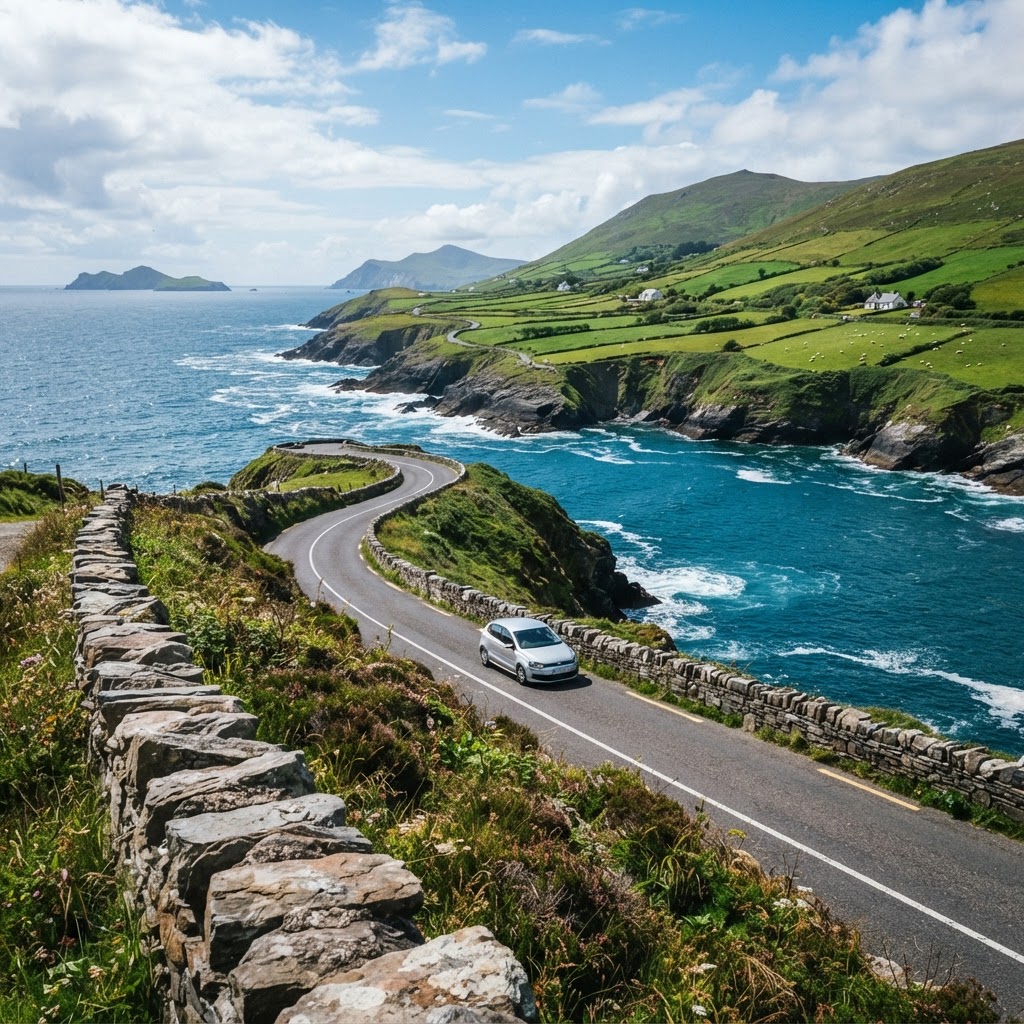
Your journey begins in County Clare, home to the unique limestone landscape of The Burren and the world-famous Cliffs of Moher. This region offers a surreal hiking experience, where flat, karst pavements meet the crashing Atlantic, providing a stark contrast to the verdant green fields found elsewhere in the country. Hiking the cliff path from Doolin to the visitor center is a 5-mile (8km) route that offers far better views than staying near the main viewing platforms. In the afternoon, drive the coast road through Ballyvaughan, where the scenic drives Ireland is known for provide a perfect introduction to the winding, stone-walled lanes of the west coast. For the best photography, aim for the “Golden Hour” at the Cliffs of Moher, usually occurring after 7 PM in the summer months, which helps avoid the peak tour bus congestion that arrives between 11 AM and 3 PM.
Days 3-4: Connemara National Park
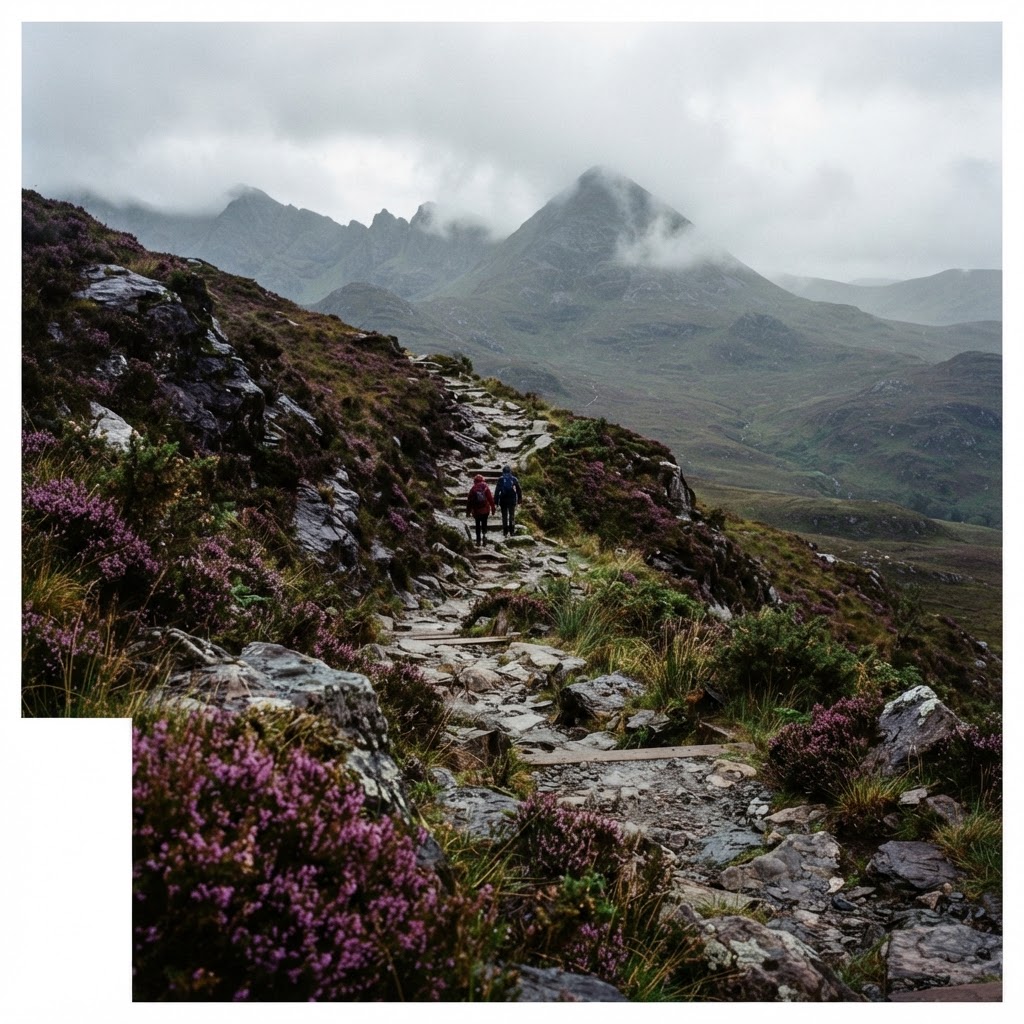
Heading north into County Galway, Connemara National Park offers some of the most challenging and rewarding peaks for enthusiasts of Ireland hiking. The Diamond Hill Loop is a mandatory 4-mile trek, providing a 360-degree view of the Atlantic islands, deep boglands, and the surrounding Twelve Bens mountain range. After your morning hike, take the Sky Road near Clifden for a spectacular scenic drive that showcases the rugged nature of the Connemara coastline. This area feels truly remote, with sheep roaming the roads and the scent of peat smoke lingering in the crisp, salt-tinged air of the Atlantic seaboard. When driving in Connemara, anticipate an average speed of 40 km/h due to the winding roads, and always yield to livestock, which have the right of way by local tradition.
Days 5-6: The Dingle Peninsula and Ring of Kerry
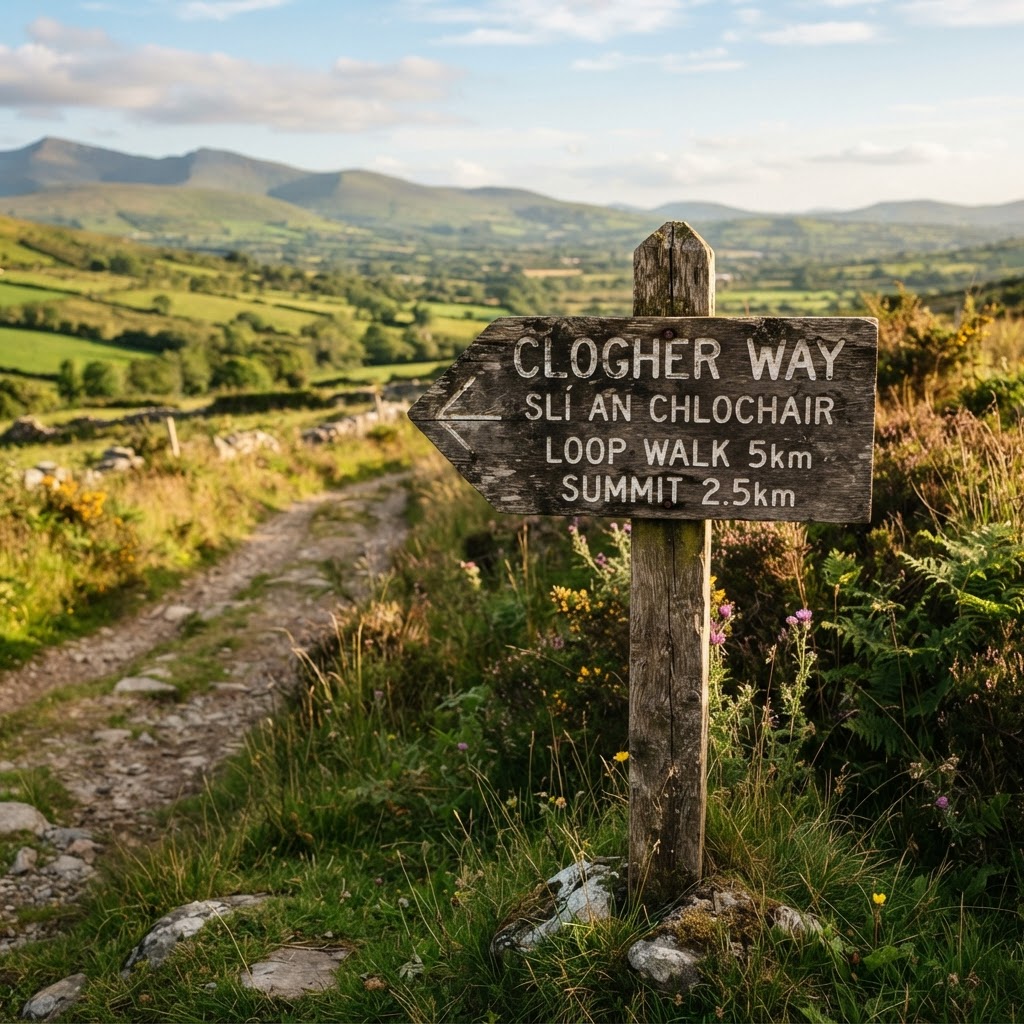
Transitioning south to County Kerry, you will encounter the most iconic section of your Ireland hiking and scenic drives experience. The Dingle Peninsula is a treasure trove of ancient ruins, hidden beaches, and narrow mountain passes that demand slow, careful driving but reward you with unparalleled coastal beauty. Mount Brandon provides the ultimate challenge for seasoned hikers, serving as one of the highest peaks in Ireland outside the MacGillycuddy’s Reeks, reaching 952 meters in altitude. If you prefer a coastal stroll, the Slea Head Drive is a legendary 47km scenic route that winds around the tip of the peninsula, offering views of the Blasket Islands that are simply unforgettable. Allow at least 3-4 hours for Slea Head to accommodate frequent stops at archaeological sites like the Gallarus Oratory.
Day 7: Killarney National Park and Departure
On your final day, explore Killarney National Park to witness the perfect marriage of glacial lakes and dense woodland. Hiking to Torc Waterfall or trekking through the Gap of Dunloe provides an active conclusion to your week, leaving you with lasting memories of the lush, mountainous heart of the Kerry region. The Gap of Dunloe is a glaciated valley that offers a 10km route perfect for a final morning hike; however, be mindful of the horse-drawn “jaunting cars” that share this narrow pass. When calculating your driving times for the return to the airport, always add an extra thirty percent for stops, photo opportunities, and the reality of navigating narrow rural lanes. Because the scenery is constantly evolving, you will inevitably want to pull over to document the landscape, so build that flexibility into your daily schedule to avoid stress.
FAQ
Q: What is the best month for Ireland hiking?
The best months for hiking in Ireland are May, June, and September because these periods offer the longest daylight hours and relatively drier weather. While July and August are warmer, the shoulder season (May/September) provides significantly fewer crowds on popular trails and better availability for accommodation.
Q: Do I need a professional guide for hiking in Ireland?
You do not strictly need a professional guide for well-marked trails like the Waymarked Ways or popular loops such as Diamond Hill. However, if you plan on attempting remote mountain summits or off-trail navigation, hiring a local mountain leader is highly recommended for safety and navigational expertise.
Q: How difficult are the scenic drives in Ireland?
Scenic drives in Ireland are generally manageable but can be challenging due to extremely narrow, winding roads and stone walls that leave little margin for error. It is vital to rent a smaller vehicle, drive slowly, and exercise patience when encountering agricultural traffic or livestock on the road.
Q: Can I complete this route via public transport?
You cannot effectively complete this specific hiking and scenic driving route using only public transport because it is designed for maximum flexibility in remote regions. While trains and buses reach main towns like Galway or Killarney, the best trails and coastal vistas remain largely inaccessible without a rental car.
Q: What should I do if I encounter livestock on the road?
Always slow down, come to a complete stop if necessary, and wait patiently for the animals to move or be moved by the farmer. Never attempt to drive through a herd of sheep or cattle, as this can cause panic and potential injury to the animals or your vehicle.
Leave a Reply