
This 7-day culinary road trip through Ireland takes you from the modern gastro-pubs of Dublin to the rugged, seafood-rich shores of the Wild Atlantic Way. You will explore historic markets, sample artisan farmhouse cheeses, and witness the evolution of traditional Irish ingredients into modern gourmet masterpieces. Prepare for an immersive journey that celebrates the rich, land-to-plate connection found across the emerald isle.
Dublin: The Culinary Epicenter
Dublin is no longer just about the pint of stout. Today, it serves as the beating heart of a modern Irish food revolution. Start your journey at George’s Street Arcade, where independent stalls offer an array of local farmhouse cheeses, craft chocolates, and artisanal breads. Focus your attention on the intersection of history and innovation. Many historic gastro-pubs have rebranded themselves by focusing on locally sourced proteins, such as slow-cooked Wicklow lamb paired with seasonal root vegetables.
Skip the tourist traps along the main thoroughfares and head instead to the neighborhoods of Stoneybatter and Portobello. Here, you will find independent bakeries and sourdough cafes that are redefining the Irish morning routine. Practical tip: Visit these neighborhoods during the weekday morning rush to see the local food culture in its most authentic state. The trend is moving away from heavy, deep-fried options toward nutrient-dense, locally grown produce that reflects the shifting tastes of the Dublin population. When dining out, look for menus that specifically mention the names of local farms or suppliers. This level of transparency is your best indicator of a high-quality, sustainable establishment. If a menu lacks these details, it is often a sign that you are dining at a generic tourist location rather than an authentic culinary gem.
The Midlands and Provenance
Leaving Dublin behind, head toward the Midlands to understand the true source of high-quality Irish produce. This region is the engine room of the country’s agricultural sector. It is dotted with boutique farms that supply the island’s most prestigious fine-dining restaurants. Arrange a tour of a local artisan dairy to see how raw, grass-fed milk is transformed into award-winning farmhouse cheese. This experience is essential for understanding the relationship between the land and the final plate.
Understanding ingredient provenance is the key to mastering Irish cuisine. The temperate maritime climate and unique, peat-filled soil create the perfect conditions for grass-fed livestock. This is what gives Irish butter its distinct golden color and high fat content. When you eat a simple slice of sourdough topped with this butter, you are tasting the terroir of the Irish landscape. Many farm-to-table stops in this region offer lunch menus where you can consume butter, bread, and greens harvested just yards from your seat. This is the most authentic way to experience Irish flavors. Avoiding mass-produced goods in favor of these small-batch, local ingredients ensures you are supporting local farmers while enjoying superior quality. Look for the “Bord Bia” Quality Mark when shopping at local stores, as it helps identify products that meet specific, high-standard Irish origin criteria.
Galway: Gateway to the Coast
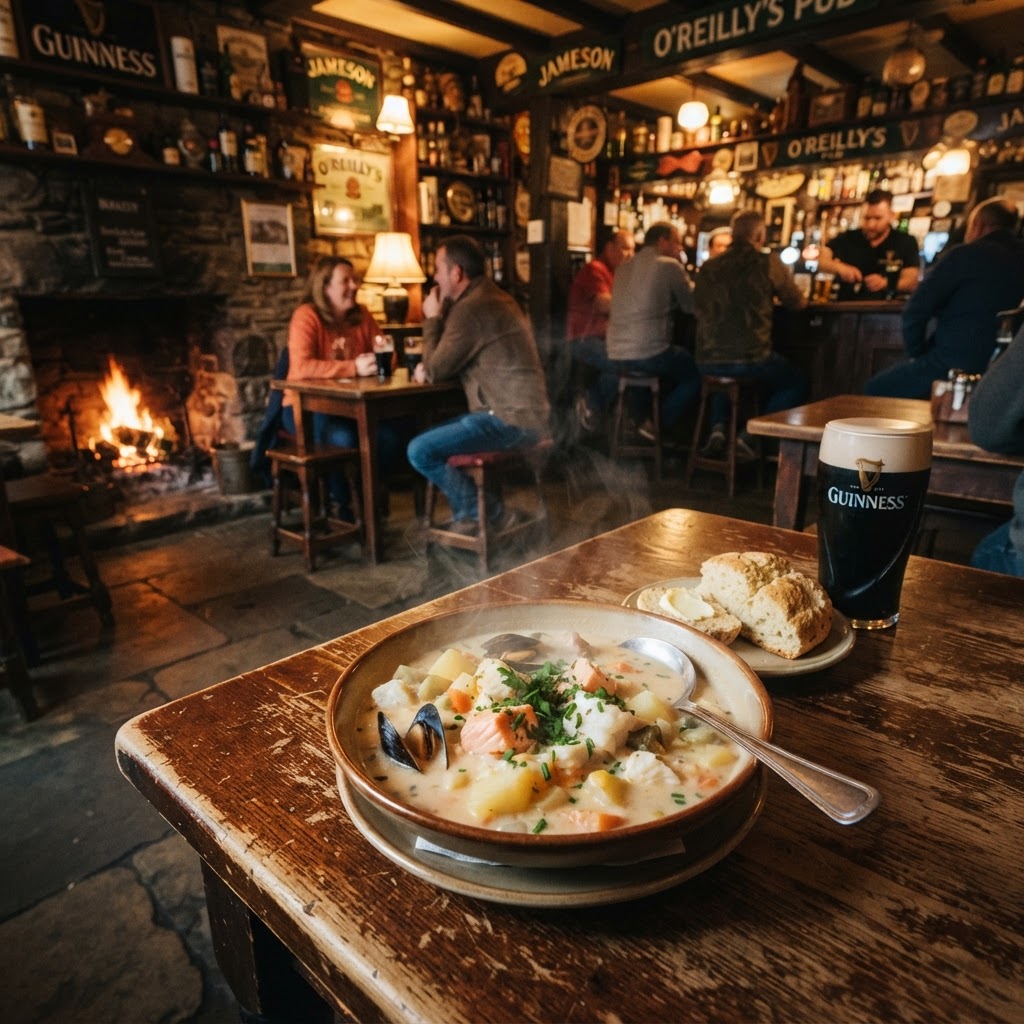
Galway serves as the primary gateway to the West Coast, acting as a vibrant hub for coastal gastronomy. Here, you will find the best Irish pub food, defined by fresh Atlantic mussels, Galway Bay oysters, and thick, creamy seafood chowder. Spend your afternoon wandering the narrow streets of the Latin Quarter. Pop into pubs that have been serving pints and hearty meals for generations. The atmosphere is just as critical as the flavor. Live traditional music provides an organic backdrop to your meal, creating an environment that feels untouched by time.
When ordering, focus on the “catch of the day.” Galway’s proximity to the Atlantic ensures that the seafood is often caught within twenty-four hours of reaching your plate. If you are a seafood lover, prioritize small, owner-operated pubs over larger, chain-affiliated restaurants. The staff in these smaller venues are usually more knowledgeable about the daily catch and can provide recommendations on how best to pair your meal with local craft ales or traditional stouts. Common mistake: Do not overlook the daily specials board. Often, the most exciting culinary creations are not on the printed menu but are written on a blackboard, based on what the local fishing boats brought into the harbor that particular morning. Always ask your server about the provenance of the catch.
The Wild Atlantic Way
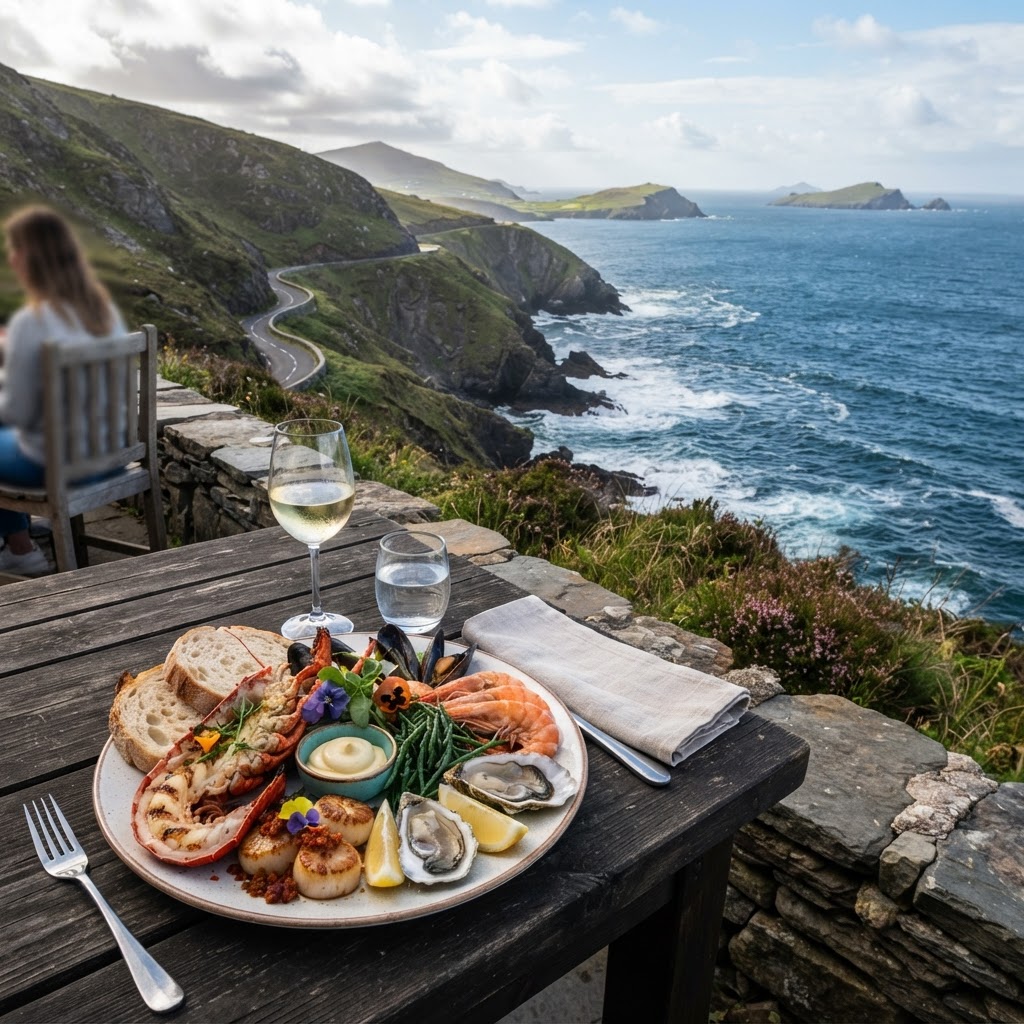
Driving along the Wild Atlantic Way offers unparalleled access to remote seafood shacks and Michelin-recommended spots. The West Coast dining experience is defined by simplicity and brutal freshness. You will find that a standard menu changes based on what local boats hauled in that very morning. Use this time to explore coastal villages where you can engage directly with local fishermen and chefs who prioritize ocean sustainability above all else.
This leg of the journey requires flexibility. Because the menus are dictated by the weather and the catch, you must be willing to try whatever is available. In towns like Doolin or Kenmare, the dining culture is quiet and unassuming. You might find a world-class meal served in a simple, wooden building overlooking the cliffs. Do not let the lack of formal decor deceive you; these are some of the most respected kitchens in the country.
- Kenmare: Renowned for its artisan cheeses and upscale fine dining.
- Doolin: The best place to experience traditional seafood chowder in a rustic setting.
- Galway: Perfect for high-energy nights filled with oysters and live music.
These coastal regions are best navigated by car, giving you the freedom to pull over when you spot a roadside stall selling local mussels or smoked salmon.
Cork and the English Market
Your final day brings you to Cork, arguably the food capital of the island. The English Market is an essential stop, providing a sensory overload of local spices, cured meats, and fresh seasonal produce. This historic indoor market has been the center of Cork’s food culture for over two centuries. Take the time to talk to the traders who have been running these stalls for decades; they are often happy to share stories about the history of their craft or give you a taste of their latest products.
It is the perfect place to pick up edible souvenirs like artisanal honey, cured meats, or local cheeses to bring home before your flight. Celebrate the end of your 7-day journey with a farewell dinner that highlights the modern evolution of traditional Irish ingredients. Many of Cork’s top restaurants focus on the “farm-to-fork” philosophy, utilizing the bounty found within the market just hours before service. If you are looking for a high-end experience, book your table for a multi-course tasting menu that showcases Irish heritage ingredients reimagined with modern culinary techniques. It is the perfect conclusion to a week of discovering the diverse, evolving flavors of Ireland. Be sure to check the market’s opening hours, as they can vary significantly on Sundays and public holidays.
Budgeting and Practical Tips
Managing your finances during a food-focused trip requires a balanced approach. While it is easy to splurge on fine dining, the true soul of Irish food is often found in local, mid-range establishments. Expect to spend between 50 and 90 euros per day to enjoy a mix of casual lunches and high-end evening dining experiences. If you choose to sample expensive local wines or rare whiskeys, you should budget for the upper end of this range.
Advance bookings are critical for success. In popular hubs like Galway and Cork, top-tier restaurants often fill up weeks ahead of time, particularly on weekends. If you have your heart set on a specific Michelin-recommended spot, book it as soon as your travel dates are confirmed. Strategy: If a place is booked out for dinner, try calling during the late morning to ask if they have had any last-minute cancellations. Many pubs and restaurants hold a few tables for walk-ins, but you should not rely on this during peak tourist season. For those seeking vegetarian options, the landscape has improved significantly. Most modern pubs now offer creative meat-free alternatives, such as roasted root vegetable salads or plant-based versions of traditional soups. Do not hesitate to ask for modifications, as Irish chefs are becoming increasingly adept at catering to diverse dietary needs.
Navigating Irish Culinary Seasons
The best time to visit for a food lover is late summer through early autumn. During this window, you gain the best access to seasonal produce like blackberries, apples, and the freshest catch of Atlantic fish. This period also coincides with various food festivals across the island, where you can sample local goods and meet the producers directly. Traveling during this time allows you to align your journey with the natural harvest cycle, which is fundamental to the Irish food experience.
If you visit during the winter months, your experience will change. The focus shifts toward heartier comfort foods like stews and root vegetables. While you lose access to certain summer crops, you gain a more authentic look at the “wintering” diet of the Irish, which is just as flavorful and culturally significant. Regardless of when you travel, always remain flexible. The weather on the West Coast can influence fishing patterns, which in turn changes the menu. By staying adaptable and following the local rhythm, you will have a much more meaningful and delicious culinary adventure across Ireland. Use this itinerary as a starting point, but always leave room for spontaneous discoveries at roadside stalls and local community markets along the way.
Frequently Asked Questions
What is the best season to visit for food?
Late summer and early autumn provide the best access to seasonal produce like blackberries, apples, and the freshest catch of Atlantic fish. This window also offers the best weather for traveling between the different culinary regions.
Is it necessary to book restaurants in advance?
Yes, especially in popular spots like Galway and Cork. Top-tier restaurants often fill up weeks ahead, particularly on weekends and during the summer peak season.
Can I find vegetarian options in Irish pubs?
Absolutely. While traditional dishes like stew and fish-and-chips remain popular, most modern pubs now offer creative vegetarian and vegan alternatives for guests.
How much should I budget for meals daily?
Expect to spend between 50 and 90 euros per day. This amount covers a mix of casual, high-quality lunches and more upscale evening dining experiences.
What makes Irish ingredients unique?
The temperate maritime climate and rich, peat-filled soil create unique growing conditions. This environment is largely responsible for the high fat content and distinct flavor profile of Irish grass-fed butter and dairy products.
Leave a Reply