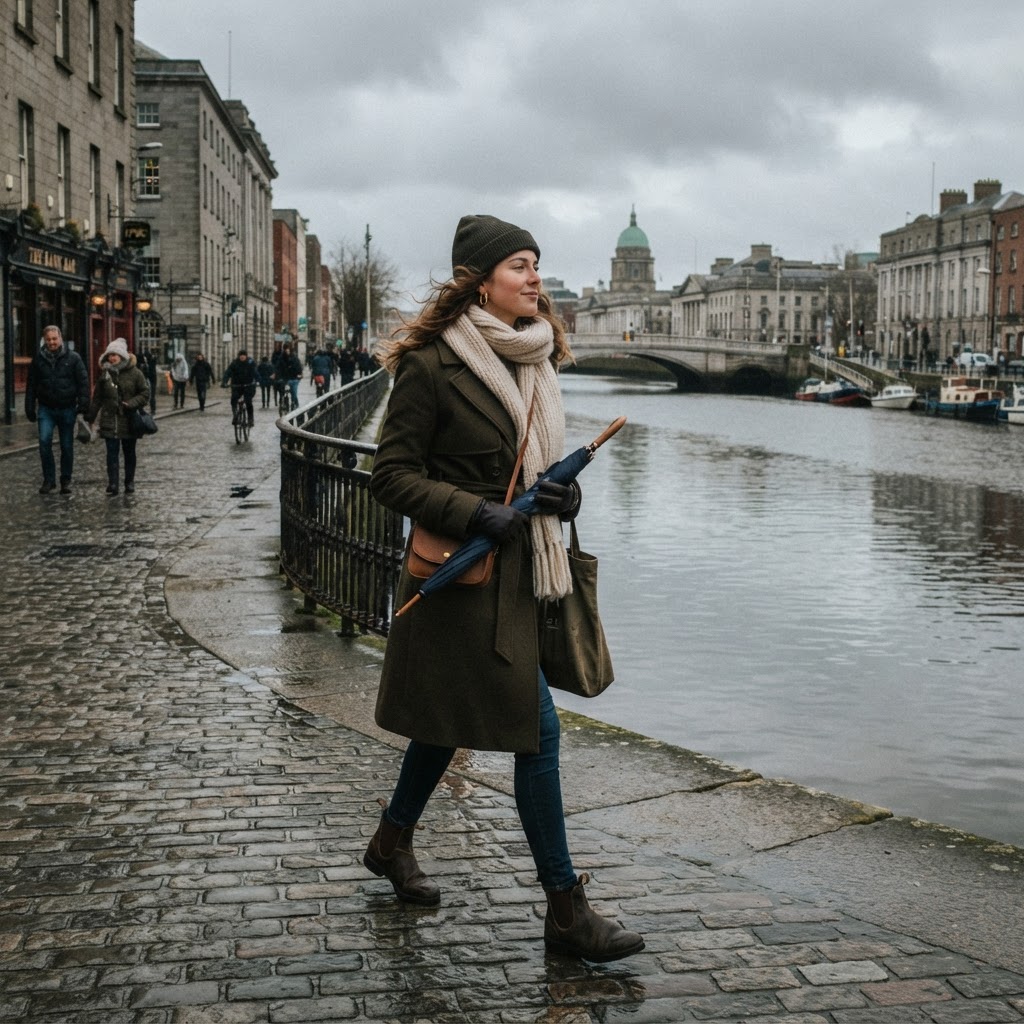
Ireland Outfits Winter: How to Layer Stylishly for Dublin
To master winter style in Dublin, prioritize a technical three-layer system consisting of a moisture-wicking merino wool base, an insulating mid-layer, and a waterproof, wind-resistant outer shell. Pair these with sturdy, leather-soled boots and minimal accessories to stay warm, dry, and stylish while navigating the city’s notoriously unpredictable, damp, and windy winter climate.
Understanding Dublin’s Unique Winter Climate
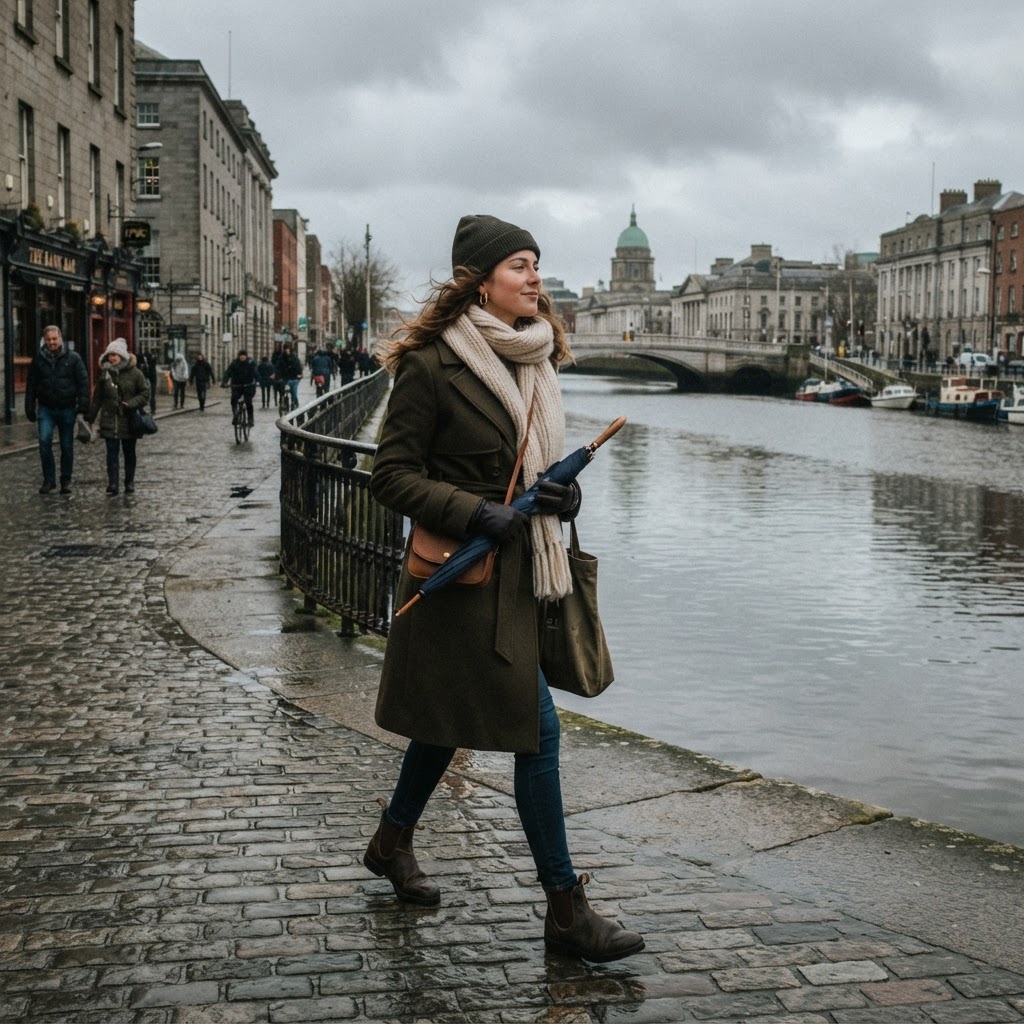
Dublin winters are defined by persistent dampness and gusty coastal winds rather than extreme sub-zero temperatures, with average daily highs hovering between 7°C and 9°C (45°F–48°F) from December to February. Because the weather fluctuates rapidly—often shifting from sunshine to drizzle within an hour—dressing in “layered modularity” is essential for maintaining core warmth. Unlike the heavy parkas required in alpine regions, Dublin fashion prioritizes technical performance hidden behind a sophisticated, urban aesthetic. By avoiding bulky silhouettes and focusing on moisture-wicking capabilities, you can transition seamlessly from brisk morning walks to heated indoor settings like museums or pubs without feeling clammy or overheated. Understanding the local climate helps you pack smarter; moisture management is your greatest defense against the chill. Focusing on materials that dry quickly and regulate body heat ensures that you remain comfortable throughout the day, regardless of whether you are trekking across the Ha’penny Bridge or touring Trinity College. This approach allows you to maintain a polished look that fits in with the city’s smart-casual dress code while providing the practical protection needed for an Irish winter.
The Importance of Breathable Fabrics
Choosing the right fabrics is the foundation of any successful Ireland winter outfit, as natural fibers like merino wool outperform synthetic alternatives by regulating temperature across varying environments. While cotton absorbs water and stays cold against the skin, merino wool retains warmth even when slightly damp and possesses natural antimicrobial properties that prevent odors during long days of travel. This is particularly vital when moving between the 8°C outdoor air and the 20°C interiors of traditional pubs or cafes. When shopping, prioritize high-density knits that offer thermal resistance without excessive weight. For those seeking sustainable options, local Irish wool suppliers offer garments that are naturally lanolin-rich, providing a light, water-repellent finish that is perfect for light showers. Investing in these performance materials means you need fewer layers overall, which helps you avoid looking like a walking closet while still achieving maximum protection from the Irish elements.
The Three-Layer Rule for Irish Weather
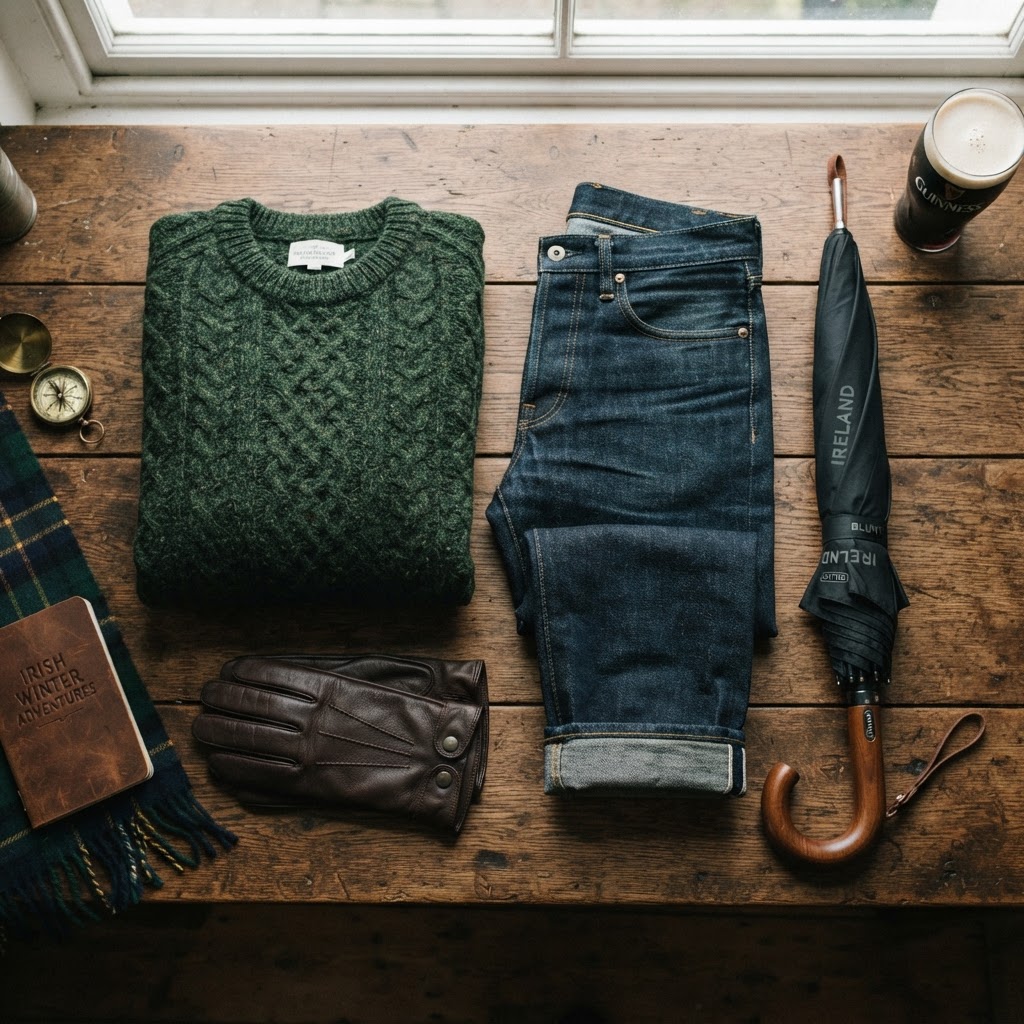
Implementing the three-layer rule ensures your body heat is trapped efficiently while preventing rain and wind from penetrating your protective shell. Your base layer should be a slim-fitting, moisture-wicking material such as thermal silk or merino wool that sits directly against the skin to draw away perspiration. The middle layer acts as your primary insulator; a high-quality cashmere or wool sweater is the gold standard here, providing dense heat retention that is breathable enough to wear indoors. Finally, the outer shell serves as your shield against the horizontal rain and wind gusts frequently experienced in Dublin. By following this structure, you can remove layers as needed when you move indoors. This modularity is key to surviving the winter in Dublin, where the temperature differential between a windy street and a crowded pub can be significant. Each layer serves a specific purpose, allowing you to manipulate your comfort level throughout the day without sacrificing the structured, smart-casual silhouette that defines Dublin fashion.
Choosing Your Outer Shell
An effective outer shell for Dublin must prioritize wind-resistance and water-repellency while maintaining an aesthetic that fits within a metropolitan environment. A classic trench coat with a removable thermal lining is a versatile choice, as it provides a professional look for evening dining while offering length to keep your core dry during rain. If you prefer a more technical piece, look for parkas with a minimum waterproof rating of 10,000mm, which is sufficient to withstand the persistent, light-to-moderate rain typical of Ireland. Avoid excessively bright colors or overtly technical hiking branding, as locals tend to favor navy, black, charcoal, and forest green tones. Ensure your coat features a deep, adjustable hood, as coastal wind gusts in the city center often exceed 40 km/h, making umbrellas difficult and impractical to manage. A well-fitted coat that hits mid-thigh or lower is the most reliable way to remain dry and stylish, regardless of the intensity of the winter weather.
Footwear That Withstands the Elements
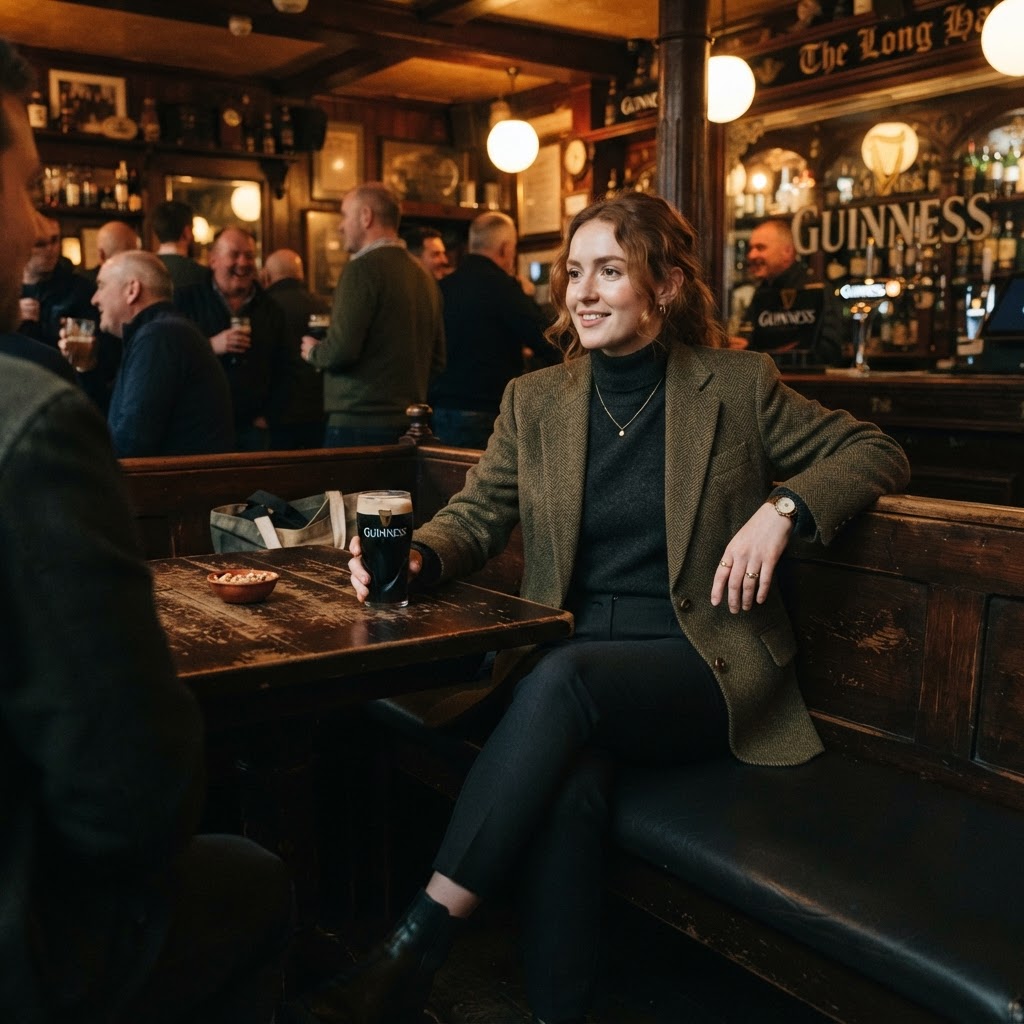
Selecting the right footwear is non-negotiable in Dublin, where slick cobblestones and constant sidewalk puddles can quickly ruin your comfort if your feet are not protected. You need a shoe that features a high-traction rubber sole, as smooth leather or hard plastic bottoms provide little to no grip on wet surfaces. Leather boots are the superior choice, provided they are treated with a high-quality, long-lasting waterproofing spray every 2–3 weeks during your stay. Chelsea boots remain the quintessential Dublin choice because they offer a sleek, ankle-high silhouette that works well with dark denim or tailored trousers while providing enough coverage to keep your ankles dry. For extended walking tours, ensure your boots have enough room for a thick, wool-blend sock, which provides extra cushioning and thermal protection. By choosing versatile, waterproof leather, you bridge the gap between functional outdoor gear and city-appropriate fashion, ensuring you are prepared for everything from an afternoon at a museum to an evening in a bustling city-center pub.
Styling for Dublin’s Social Scene
Dublin’s social scene is characterized by a relaxed but refined smart-casual dress code that favors darker, neutral palettes and subtle textures. To dress like a local, focus on building your outfit around a monochromatic base—such as a charcoal sweater and black slim-fit trousers—and then add a layer of depth through a high-quality scarf or a structured leather bag. Avoid the “tourist aesthetic” by steering clear of overly bright neon colors, excessive logos, or bulky synthetic outdoor gear that screams “hiker” in a city setting. Texture is your best friend when wearing neutrals; consider mixing a chunky wool knit with a smooth leather jacket or suede boots to create visual interest without needing flashy accessories. Because Dublin pubs often have drafty corners and varying temperatures, wearing a scarf indoors is common and can be used as a stylistic accent. By prioritizing high-quality materials and muted, sophisticated tones, you will feel perfectly at home in the city’s many upscale eateries and boutique bars.
Accessories That Make the Outfit
Accessories in Dublin serve as critical functional tools that simultaneously elevate your overall travel ensemble into something more intentional. A thick, oversized wool scarf is the most essential item you will pack; it acts as an emergency layer when the temperature drops and protects your neck from the biting damp air. Gloves should be thin enough to allow for dexterity but insulated enough to provide warmth; look for models with touchscreen-compatible fingertips to avoid the constant frustration of exposing your hands to the elements while navigating. A compact leather crossbody bag is also a strategic choice, as it stays close to your body under your coat for added security and avoids the bulk of a large backpack. When selecting these items, opt for pieces that complement your outer shell’s color palette, as they will be a visible part of your outfit for most of your trip. These small, practical choices distinguish a traveler who is struggling with the weather from one who is prepared and stylishly composed.
Transitioning from Day to Night
Transitioning from daytime sightseeing to an evening in a cozy Dublin pub requires minimal effort if you have structured your initial outfit correctly. You can keep your base layers and jeans for the duration of the day, but swap your heavy, technical daytime parka for a sleek, tailored wool coat before dinner to instantly transition your look. If you have been walking in robust leather boots, switching to a cleaner, more minimalist leather ankle boot can provide a more polished appearance for a nicer restaurant. If the weather is particularly harsh, keeping your knitwear constant but adding a high-quality brooch or changing your scarf to a brighter, silk-blend fabric can signal a shift to an evening aesthetic. The goal is to move from “functional explorer” to “city local” by focusing on one or two key pieces that soften the technical edges of your daywear. This strategy allows you to pack lighter, carrying only a small change of accessories in your bag, while ensuring you remain appropriately dressed for every setting you encounter in the city.
The Role of Knitwear
Ireland is globally renowned for its wool, and wearing a locally sourced Aran sweater is both a nod to tradition and a highly practical choice for surviving the winter climate. These sweaters are traditionally knitted with dense patterns that provide excellent insulation and are naturally water-repellent due to the residual lanolin in the wool. For a classic Irish look, pair a cream-colored chunky Aran sweater with dark denim and leather boots; this combination is both rugged and elegant, fitting in perfectly at both a casual pub session and a relaxed brunch. When shopping for these in Dublin, look for “100% pure new wool” labels, which indicate higher quality and better durability than synthetic-wool blends. These sweaters are thick, so be aware of how they fit under your outer shell—choose a coat with enough room in the shoulders to accommodate the knit comfortably. Owning a piece of authentic Irish knitwear is one of the most rewarding additions you can make to your wardrobe, serving as a functional garment during your trip and a lasting souvenir after you return home.
FAQ
What type of coat is best for Dublin in winter?
A waterproof, wind-resistant coat with an adjustable hood is essential for Dublin’s damp winter conditions. You should look for a length that extends to at least mid-thigh to ensure your core remains dry even when rain is blown sideways by the city’s intense coastal winds.
Should I bring an umbrella to Dublin?
You should generally avoid bringing an umbrella to Dublin because the city’s strong, gusty winds render them mostly useless and difficult to manage on crowded sidewalks. Instead, invest in a high-quality waterproof jacket with a deep, fitted hood to ensure you stay dry while navigating the streets.
What kind of shoes do locals wear in winter?
Locals in Dublin typically prefer sturdy leather Chelsea boots or fashion-forward, water-resistant ankle boots that provide excellent grip on slick cobblestones. These footwear choices strike the perfect balance between urban style and the functional protection needed to navigate wet, uneven city surfaces throughout the winter months.
Can I wear jeans in Dublin in the winter?
Yes, you can wear jeans in Dublin, but opt for darker washes and thicker, high-quality denim fabrics that offer better wind protection. Avoid distressed or ripped denim, as exposed skin will quickly become uncomfortably cold and wet in the face of Dublin’s constant winter dampness.
How cold does Dublin get in the winter?
Dublin’s winter temperatures are generally mild, with daily highs averaging between 7°C and 9°C (45°F–48°F) and lows rarely dropping much below 2°C (36°F). However, the high humidity and constant wind chill make the air feel significantly colder, which is why layering is more important than heavy, single-piece winter coats.
Leave a Reply