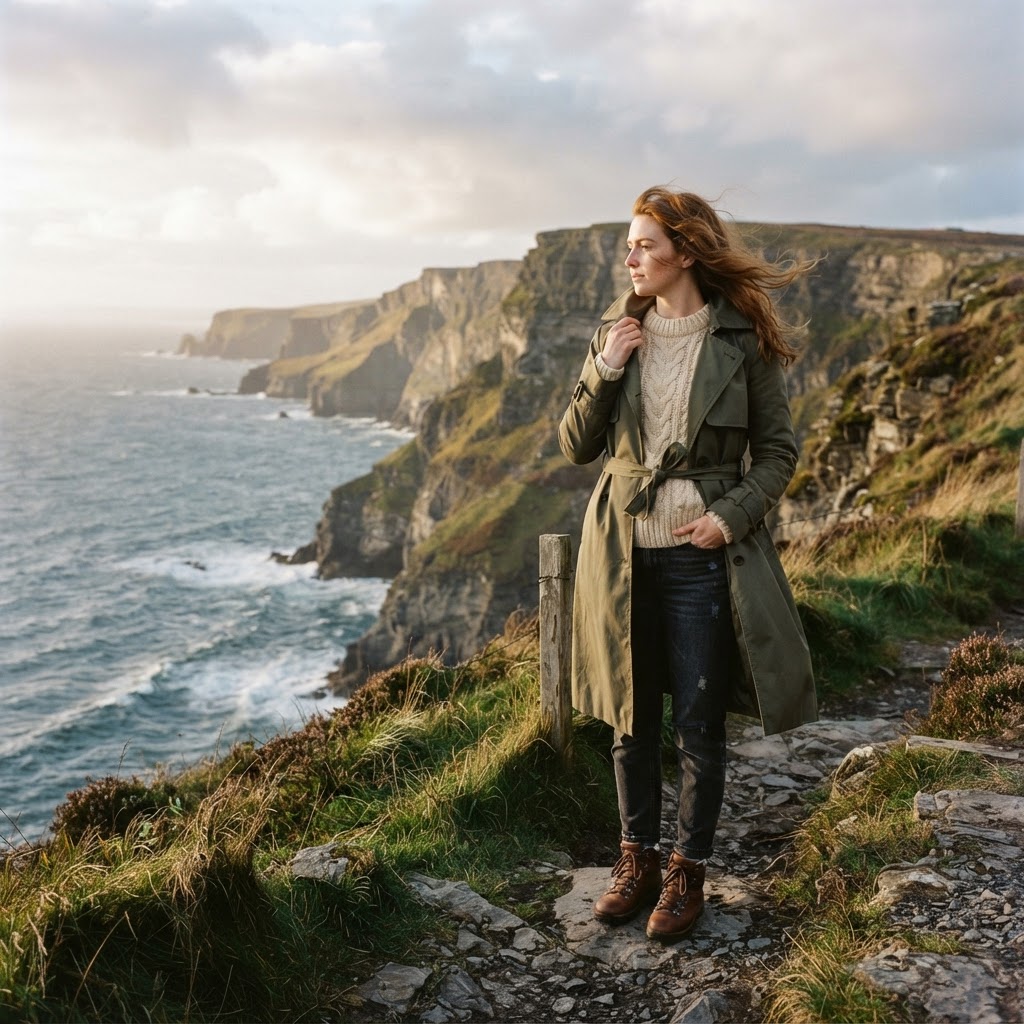
The ideal Ireland fall outfit for women consists of a three-layer system: a moisture-wicking merino wool base layer, an insulating mid-layer like a cable-knit sweater, and a high-quality, breathable waterproof shell. This combination provides the versatility to handle temperatures between 8°C and 16°C (46°F-61°F) and unpredictable Atlantic weather shifts.
Understanding Irish Autumn Weather Patterns
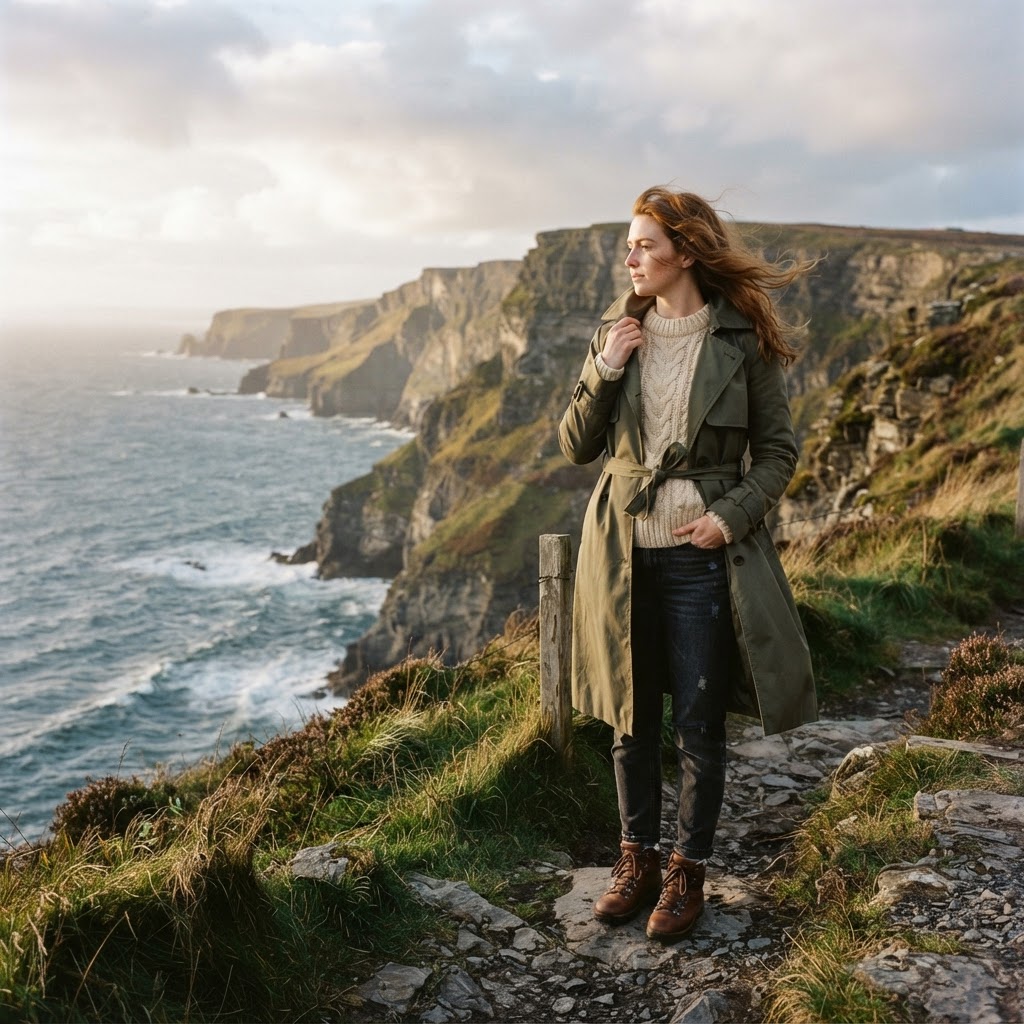
Ireland in the fall is defined by high humidity and frequent, localized rain showers, requiring a modular approach to clothing. Between September and November, daylight hours decrease from roughly 14 hours in early autumn to 8 hours by late November, impacting both your wardrobe and your daily excursion planning. Because the Atlantic climate generates “four seasons in one hour,” you must dress for rapid changes. Average precipitation levels spike to 80-120mm per month during this season, meaning your clothing must be capable of rapid drying to remain comfortable for subsequent outings. Understanding these patterns is critical; you aren’t just dressing for the temperature on the thermometer, but for the wind chill factor which can drop the effective temperature by 3-5°C (5-9°F) near coastal regions like the Wild Atlantic Way.
Comparison: Fall Weather Impacts by Region
The Golden Rule of Irish Layering
The ‘three-layer system’ is the gold standard for Irish travel, providing a mechanical way to regulate body temperature without needing to change outfits throughout the day. Your base layer is the most critical for moisture control; synthetic fabrics or merino wool are superior to cotton, as cotton absorbs moisture and keeps it against the skin, leading to rapid cooling. Your middle layer serves as an insulating air pocket, capturing your body heat effectively, while the outer shell must be seam-sealed to prevent water ingress. By mastering this structure, you remain comfortable moving from 10°C windy outdoor sites to 20°C heated interiors. This system is essential for travelers visiting multiple sites daily, such as moving from the Cliffs of Moher to an indoor museum.
Essential Base Layers for Comfort
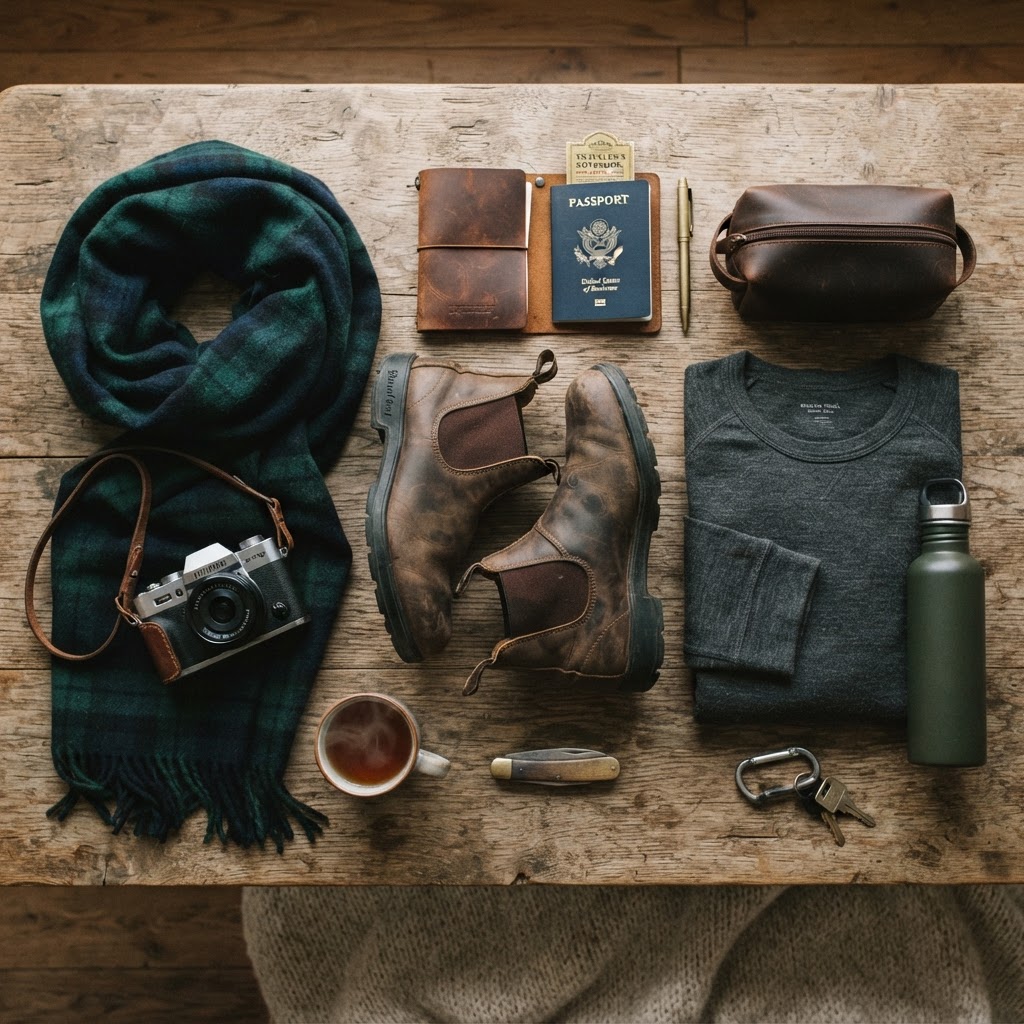
High-quality base layers should be selected based on their “GSM” (grams per square meter) weight; a light 150-200 GSM merino wool top is perfect for layering without excessive bulk. Unlike cotton, which loses insulation when wet, merino wool retains warmth even when damp, making it the most reliable fabric for the Irish climate. These layers act as a “second skin” that regulates your core temperature. When shopping, prioritize seamless constructions to prevent chafing during long walks at historic sites. Because these items are odor-resistant, you can pack only two or three, rinse them in a sink, and dry them overnight, saving significant luggage space. This layer is the most important for avoiding the “damp-chill” effect that occurs when walking through light mist or coastal spray.
Cozy Mid-Layers: Sweaters and Fleece

Mid-layers are where travelers can balance local style with high-performance insulation, focusing on materials that trap heat without restricting movement. A traditional 100% Irish wool sweater is inherently water-repellent due to the natural lanolin in the fibers, making it an excellent choice for a mid-layer. However, for those seeking a more packable option, synthetic fleece (polyester) is superior because it dries much faster if you get caught in a heavy rain shower. A mid-layer should be fitted enough to allow a waterproof shell to sit over it comfortably without restricting arm movement. Aim for pieces with a full-zip front, which provides easier ventilation than a pullover when you suddenly transition from a chilly outdoor hike into a warm, crowded cafe or pub.
The Outer Shell: Surviving the Irish Elements
The outer shell must be a dedicated, technical waterproof garment rated for at least 10,000mm of water pressure to be considered truly effective against Irish rain. Many “water-resistant” fashion coats will soak through within 20 minutes in a standard Atlantic shower, so verify the labeling for “waterproof” vs “water-resistant.” A high-quality shell should feature a fully adjustable hood with a stiffened brim to keep rain off your face, allowing you to forgo an umbrella entirely. Coastal winds in Ireland frequently reach 30-50 km/h, which often renders umbrellas useless. Prioritize jackets with pit zips for ventilation during periods of activity, as these allow moisture to escape without letting rain in, keeping you dry from the inside out.
Bottoms and Footwear for Road Trips
Bottoms and footwear should be chosen primarily for water resistance and traction, as Ireland’s terrain—ranging from muddy cliff paths to slick, mossy stone—is unforgiving. While denim is fashionable, wet cotton jeans take hours to dry and are notoriously uncomfortable; instead, opt for “technical denim” or stretch-woven hiking trousers that look professional but contain DWR (Durable Water Repellent) coatings. For footwear, ensure your boots are specifically marked as “waterproof” (using membranes like Gore-Tex or similar). A standard leather boot often requires a waterproofing wax treatment before travel to remain effective. Avoid high heels or smooth-soled fashion boots, as they provide zero grip on wet, uneven cobblestones common in heritage towns like Kinsale or Doolin.
Accessories That Elevate Your Look
Accessories in Ireland serve a dual purpose: they function as critical warmth regulators and personal styling tools. A wide, oversized wool or cashmere scarf can be tucked into your jacket collar to seal out wind, or draped over your shoulders like a blanket during a damp boat trip to the Skellig Islands. For photography, touch-screen compatible gloves are non-negotiable; removing your gloves to operate a phone in 10°C wind will lead to numb fingers within minutes. Finally, a snug-fitting beanie made of synthetic wool is essential; it stays put in high winds, unlike brimmed hats, and provides the necessary insulation to keep your head warm during long, damp walks.
Curating Your 12-Piece Packing List
Focusing on a 12-piece capsule wardrobe allows you to rotate outfits for a week or more while remaining under airline carry-on weight limits, typically 7-10kg. Your checklist should prioritize: 2 thermal base layers, 2 mid-layer sweaters (1 wool, 1 fleece), 1 technical waterproof shell, 2 pairs of trousers (1 hiking, 1 dark jean), 1 pair of waterproof walking boots, 1 pair of versatile flats/sneakers, and 3 essential accessories (scarf, beanie, gloves). This modular approach ensures every top matches every bottom, keeping your luggage streamlined. By selecting items in a neutral color palette like navy, forest green, or charcoal, you ensure that your clothing hides dirt effectively, which is common during damp Irish autumn outings, while still looking sophisticated for city dining.
FAQ
Do I really need a heavy coat in Ireland during the fall?
No, you do not need a heavy, bulky winter coat. A medium-weight, waterproof rain shell layered over a warm sweater is far more effective for the Irish climate, as the weather is rarely freezing, but high winds and moisture make layering more practical than a single, heavy parka.
Are jeans appropriate for travel in Ireland?
Jeans are acceptable for city dining and shopping, but they are not suitable for outdoor hikes. They absorb water quickly and take hours to dry, so pack water-resistant hiking pants for any day trips involving cliffs, forests, or coastal walks.
What type of shoes should I bring for a road trip?
You should bring two pairs: a durable, waterproof walking boot with deep treads for uneven terrain, and a clean, comfortable sneaker for evenings. Ensure your boots have been broken in before you travel to avoid blisters during your daily sightseeing.
Can I wear light colors during an Irish autumn?
While you can wear light colors, be aware that the Irish countryside is frequently muddy, especially from September to November. Darker tones, earth colors, and patterns are more practical for hiding splashes or mud while keeping you looking clean throughout your trip.
Should I pack an umbrella or a rain jacket?
Always pack a high-quality, hooded rain jacket instead of an umbrella. Coastal winds in Ireland are often too strong for umbrellas, and keeping your hands free is essential for navigating narrow streets, taking photos, and handling bags while moving between transport hubs.
Footwear Strategy: Navigating Cobblestones and Mud
Your shoes are the most important part of your packing list. Irish towns feature uneven medieval limestone streets that become incredibly slick when wet. Avoid sneakers with flat, thin soles as you will feel every cold, hard pebble through the material.
Opt for ankle boots with a rugged rubber lug sole for better grip. If you plan to hike the Cliffs of Moher or wander through Killarney National Park, pack a dedicated pair of waterproof light hikers. Ensure they are broken in at least two weeks before you leave home. Blisters will ruin your trip faster than a downpour ever could.
Common Mistakes to Avoid
Do not pack umbrellas. The coastal wind will snap the frame of a standard umbrella within ten minutes. Stick to a high-quality raincoat with a deep, adjustable hood that stays up in strong gusts.
Skip the denim jeans. Wet denim is heavy, cold, and takes over 24 hours to dry. Choose tech-fabric trousers that repel water or wool-blend slacks that keep you warm even if they get slightly damp. Avoid bulky oversized coats that make climbing into small rental cars or navigating tight pub doorways difficult.
The “Pub-to-Path” Transition
Irish social life happens in cozy, overheated pubs after hours in the bracing air. Your layering strategy must account for this extreme shift. A zip-front mid-layer is superior to a pullover sweater because you can vent heat instantly upon entering a room.
Avoid heavy turtlenecks that you cannot remove. Instead, bring a warm scarf that you can wrap or remove as needed. Keep your outer shell on the back of your chair, and you will stay comfortable while others are overheating in their heavy parkas.
Essential Packing Checklist
- Two moisture-wicking merino long-sleeve base layers.
- One lightweight, breathable fleece zip-up jacket.
- One pair of water-resistant trousers with deep pockets.
- Ankle boots with aggressive tread patterns.
- Five pairs of wool socks to prevent cold feet.
- A wide, knit headband to protect ears from windburn.
Frequently Asked Questions
Do I really need a waterproof shell if I have a water-resistant jacket?
Yes. A water-resistant jacket will soak through after fifteen minutes of steady Irish rain. You need a dedicated waterproof shell with taped seams to ensure you stay dry during a full day of sightseeing.
Are jeans acceptable for a dinner out in Dublin?
Dark, tailored jeans are perfectly acceptable in almost every casual restaurant or pub in Ireland. Just make sure they are a darker wash and look neat. Avoid ripped or distressed denim if you want to blend in with the locals.
Is it worth buying clothes in Ireland instead of packing them?
Only if you want high-end Irish wool sweaters. These make excellent souvenirs and are genuinely warm, but they are expensive. It is cheaper to pack your basic base layers and shell from home so you have money left for local crafts.
Leave a Reply