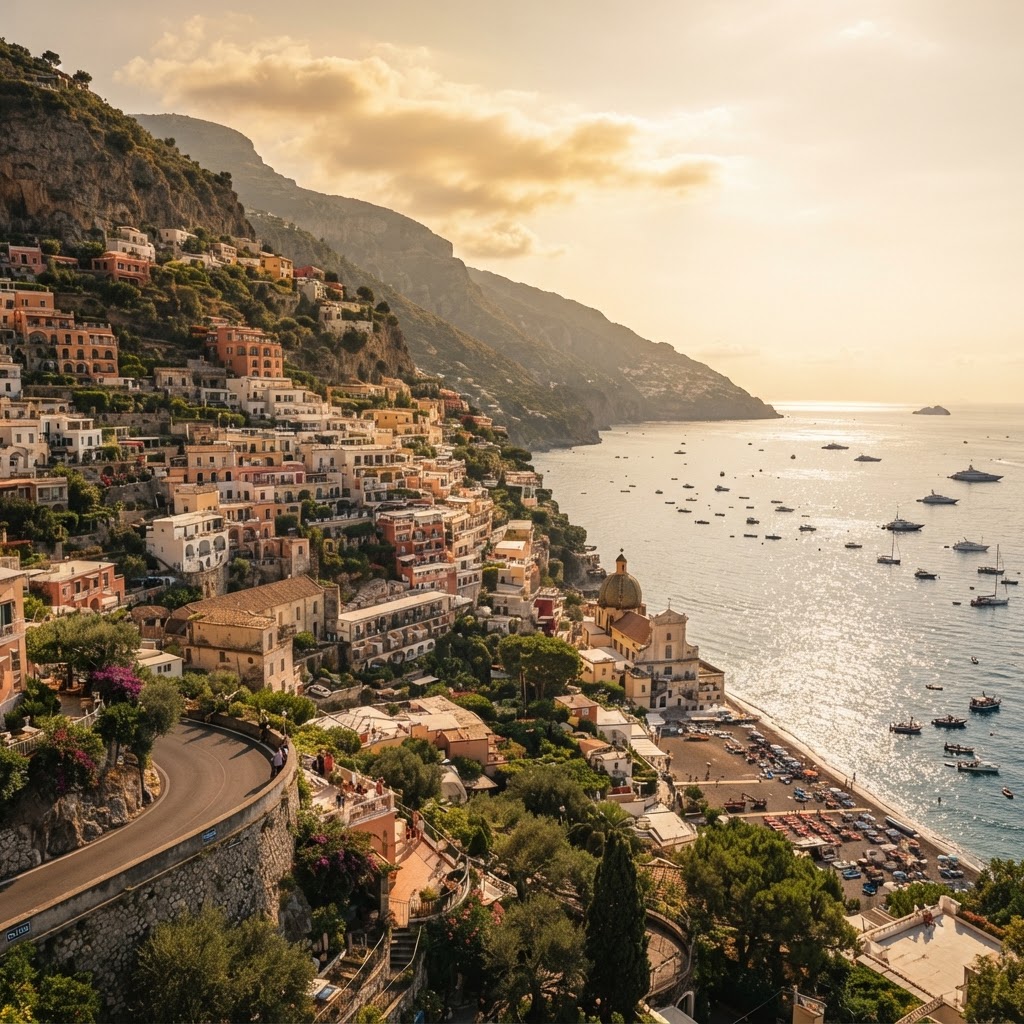
Amalfi Coast towns are renowned for their vertical architecture, where colorful buildings are stacked directly into rugged limestone cliffs overlooking the Tyrrhenian Sea. The most iconic destinations include Positano, famous for its beach-to-peak density; the historic maritime center of Amalfi; and the tranquil, elevated village of Ravello, each offering unique perspectives on this UNESCO World Heritage site.
The Magic of Vertical Architecture
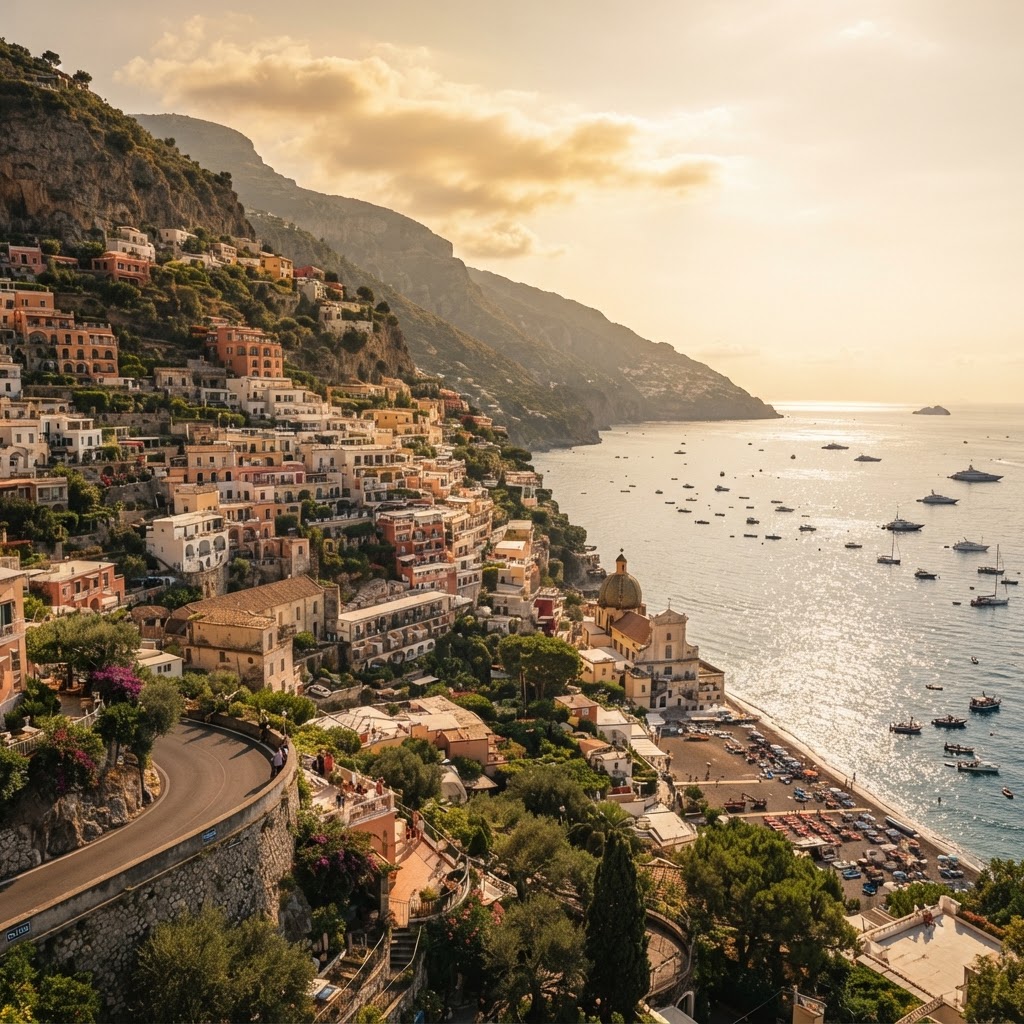
What makes the Amalfi Coast towns stacked on the cliffs so unique is their absolute integration with the terrain, requiring engineering ingenuity to thrive in a vertical environment. Unlike flat coastal cities that sprawl outwards, these settlements had to build upwards, creating a complex web of staircases, hidden alleys, and suspended terraces carved directly into the rock. This architectural style maximizes the limited footprint of the limestone cliffs, ensuring that almost every residence provides a panoramic, unobstructed view of the azure horizon.
Navigating these towns requires physical endurance because most “streets” are actually steep, winding stone staircases. Travelers often find that the traditional concept of a road is absent, replaced by a vertical network that connects homes to the sea. The historic engineering—dating back centuries—has transformed humble fishing villages into world-class destinations. For travelers, this means prioritizing comfortable footwear and accepting that the “climb” is an essential part of the Mediterranean experience. Modern visitors should expect to traverse hundreds of steps daily to move between the coast-level shops and the residential heights, but these paths offer the most authentic, crowd-free glimpses of local daily life.
Positano: The Jewel of the Coast
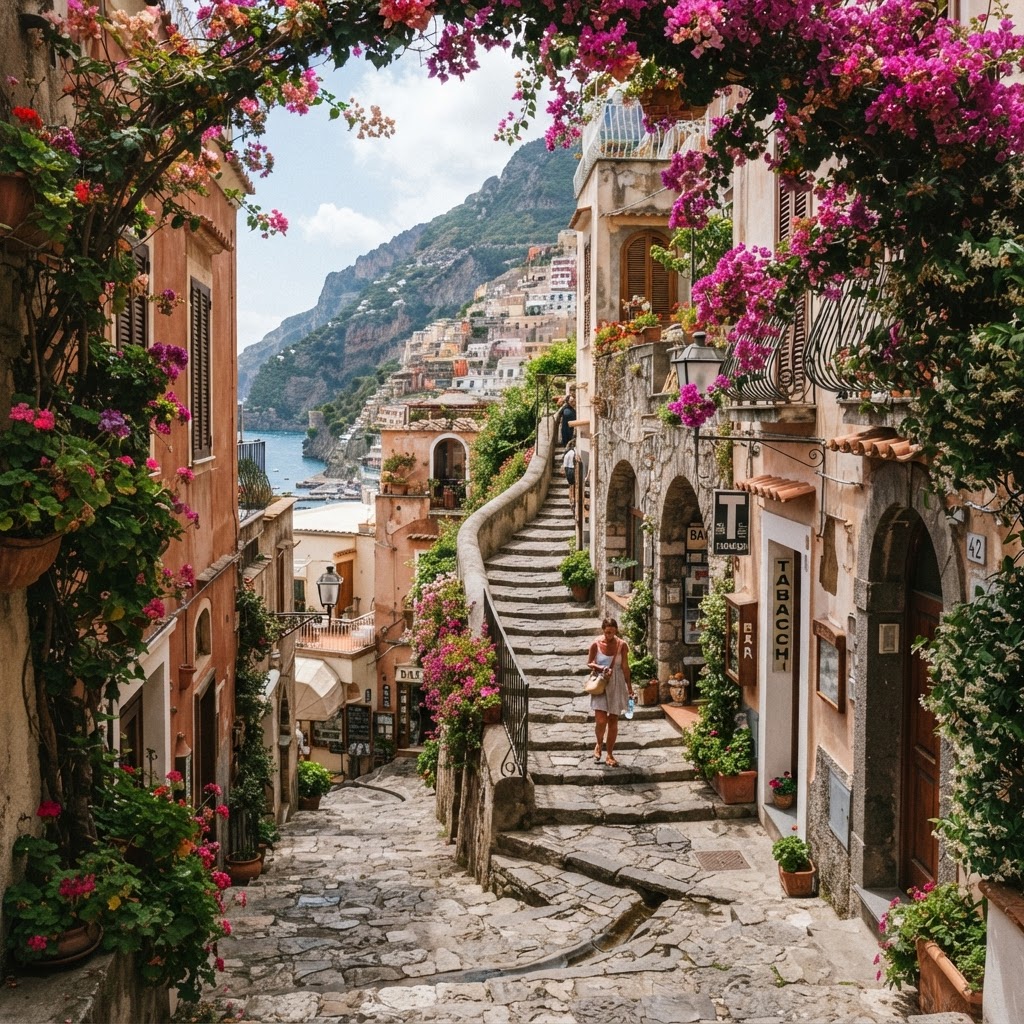
Positano is the premier example of a vertical village, defined by its dense collection of peach, terracotta, and pink houses that cascade down a steep mountainside toward the Spiaggia Grande. This town acts as the social and aesthetic heart of the coastline, packing luxury boutiques, art galleries, and high-end ceramic workshops into narrow, zig-zagging alleys that defy conventional city planning.
The Beach Experience
The Spiaggia Grande serves as the central hub of Positano, where beach clubs offer sunbed rentals ranging from €25 to €60 per day depending on the season and proximity to the water. While small, this pebble-strewn beach provides the perfect vantage point to admire the colorful architecture rising above you. For a quieter escape, water taxis are available to transport visitors to private, hidden coves like Arienzo or Laurito, which are reachable only by sea. The rhythm of the waves paired with the bustling activity above creates a sensory experience that defines the Italian luxury lifestyle.
Navigating the Vertical Paths
To see the true Positano, you must be prepared to climb thousands of stone steps that link the upper residential districts to the shore. These stairs often host hidden trattorias and local workshops that are invisible from the main coastal highway. If you are staying at a high-elevation hotel, consider using local porter services for luggage, as many properties are accessible only by pedestrian paths. The sunset views from your balcony at these higher altitudes are unparalleled and well worth the physical effort required for navigation.
The Town of Amalfi: History on the Edge
Amalfi stands as the historic soul of the coastline, serving as a powerful maritime republic in the 10th century and now acting as the primary transportation hub for the region. Nestled at the mouth of the deep Valle dei Mulini, the town is protected by steep cliffs and features a unique architectural blend of Arab-Norman styles, most prominently displayed in the 9th-century Duomo di Amalfi. Visitors can explore the cathedral’s striped facade and grand staircase, which dominate the central piazza.
Unlike the strictly residential feel of other cliffside villages, Amalfi functions as a bustling urban center. It is the transit headquarters, offering ferry connections to Capri, Salerno, and Positano, and SITA bus routes that traverse the winding Amalfi Drive. Its streets are a fascinating labyrinth of ancient tunnels and covered passages, originally designed for defense against pirate raids. Today, these passages host shops selling handmade Amalfi paper—a tradition dating back to the 12th century—and vibrant lemon-themed markets. Spending time here allows for a deeper historical dive, including a visit to the Museo della Carta, where you can see historical water-powered paper mills still in operation.
Ravello: The Balcony of the Coast
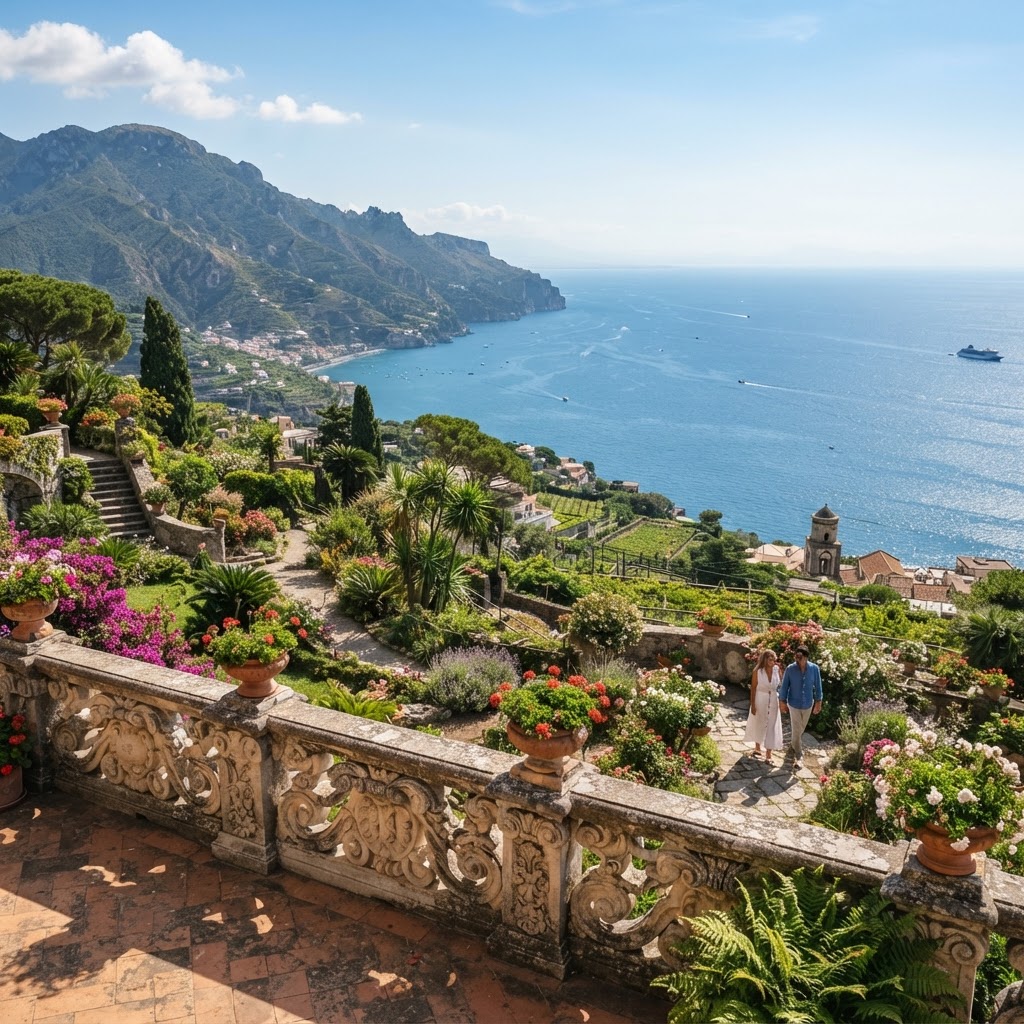
Ravello is the sophisticated, serene counterpart to the busy seaside towns, perched at 365 meters above sea level without direct access to a beach. This lack of water-level access creates a secluded atmosphere, attracting those looking for high-culture, lush gardens, and quiet Mediterranean views. The town is most famous for the 13th-century Villa Rufolo and the stunning Belvedere of Infinity at Villa Cimbrone, which offers arguably the most iconic panoramic vistas in all of Italy.
Visiting Ravello feels like stepping into a private, exclusive sanctuary compared to the frenetic energy of the lower coast. The town is world-renowned for the Ravello Festival, a summer-long series of classical music concerts that utilize a stage cantilevered over the cliffside, making it appear as if the performers are floating above the Tyrrhenian Sea. Because it sits high in the mountains, the climate is slightly cooler, providing a welcome respite during the intense heat of July and August. Travelers usually reach Ravello via a 20-minute bus or taxi ride from Amalfi, making it a perfect day trip for those wanting to experience the drama of the cliffs without the beach-day crowds.
Practical Tips for Your Amalfi Journey
Navigating these vertical towns requires careful planning. First, consider how you will move between the villages. The SITA bus system is affordable, with tickets usually costing around €2-€5 per ride, but it can be extremely crowded during the peak season from June to August. Ferries are a faster, more scenic, and far more comfortable way to travel between towns, allowing you to see the cliffside architecture from the best perspective: the water.
Travel Seasonality
Where to Stay
When booking your accommodation, check exactly how many steps you have to climb to reach your front door. Some “cliffside” hotels require guests to navigate hundreds of stone stairs with their luggage, so look for properties that offer luggage transport services or are located near the main bus stops. Staying in the mid-range heights of a town often offers the best balance of view and accessibility.
Hidden Gems and Off-the-Beaten-Path Spots
Beyond the major towns, there are smaller, less visited villages that capture the same cliffside magic. Praiano, for example, is often overlooked by tourists rushing to Positano. It offers some of the longest hours of sunlight on the coast and a much more authentic, laid-back local atmosphere. Furore, known for its tiny fiord tucked between massive cliffs, is another architectural marvel that shouldn’t be missed.
Exploring these lesser-known areas is the best way to escape the “Instagram crowds” and find a piece of the coast that feels all your own. Whether it’s a tiny trattoria hidden in a mountain crevice or a small cliff-side chapel overlooking the sea, the Amalfi Coast rewards those who are willing to venture away from the main plazas.
FAQ
Q: What is the best month to visit the Amalfi Coast?
May, June, and September are widely considered the best months to visit for a balance of warm, swimmable weather and manageable crowds. July and August are peak months with extreme temperatures and heavy tourist traffic that can make navigation significantly more difficult.
Q: Is the Amalfi Coast expensive?
Yes, the Amalfi Coast is one of Italy’s most expensive destinations, with luxury hotels often exceeding €500 per night and dining prices reflecting its global popularity. However, budget-conscious travelers can save by staying in smaller towns like Minori or Praiano and utilizing public ferries.
Q: Do I need a car on the Amalfi Coast?
No, renting a car is generally discouraged due to extremely narrow, winding roads and a severe lack of affordable parking. Most experienced travelers rely on the extensive, reliable ferry network and the SITA bus system to travel between the various coastal villages.
Q: How many days do I need to see the Amalfi Coast?
Ideally, you should plan for at least 4 to 5 days to see the major towns of Positano, Amalfi, and Ravello without feeling rushed. This timeframe allows you to account for travel logistics and provides time for boat trips to explore the coastline’s hidden coves.
Q: Are there many stairs in Amalfi Coast towns?
Yes, most towns are built vertically into the cliffs, meaning you will encounter thousands of stone steps between the beach and the residential areas. Travelers with mobility issues should prioritize booking hotels with elevator access or properties located near the main thoroughfares.
Practical Strategies for Your Amalfi Trip
Planning a trip to the Amalfi Coast requires more logistical precision than a standard Italian vacation. Transportation is the biggest hurdle because the sole road, the SS163, is a narrow ribbon of asphalt clinging to the cliffs. Avoid renting a car at all costs. Parking is virtually non-existent, and the stress of navigating hairpin turns alongside crowded SITA buses will ruin your holiday. Use the frequent ferry services between towns during the high season for the best views and the fastest travel times.
When to Go and How Long to Stay
The sweet spot for visiting is late May or late September. You get warm swimming weather without the suffocating heat and crushing crowds of August. Spend at least five days here to truly absorb the pace of life. Trying to cram the coast into a weekend trip leads to exhaustion, not relaxation. If you have fewer than three days, skip the smaller villages and pick one base town like Amalfi to save time on transit.
The Cost of Coastal Luxury
Budgeting for the Amalfi Coast is tricky because prices inflate significantly between May and August. A standard espresso in a quiet town costs €1.50, but expect to pay €5.00 for the same drink in a Positano piazza. Dinner for two with local house wine rarely drops below €80 at a decent mid-range restaurant. Factor in a daily budget of at least €150 per person if you plan on taking water taxis and enjoying beach club amenities.
Common Mistakes to Avoid
- Overpacking: Leave the roller suitcase at home. You cannot drag wheels over thousands of vertical stairs. Bring a sturdy backpack to keep your hands free for railings.
- Ignoring Local Transit schedules: Never rely on the last bus of the night. If you miss it, you might be stuck paying €100 for a private taxi back to your hotel.
- Booking the Wrong Location: If you have limited mobility, avoid booking accommodation in the upper reaches of Praiano or Positano. You will spend your entire budget on taxi transfers just to reach your front door.
A Quick Pre-Departure Checklist
Use this list to ensure your preparation is solid before you land in Naples:
- Download the ferry schedule app to track real-time changes based on sea conditions.
- Pack broken-in walking shoes with high-grip soles.
- Book your boat tours at least two weeks in advance during summer months.
- Carry small denominations of cash for bus tickets and small shop purchases.
- Print your hotel address clearly, as phone signal can be spotty in deep ravines.
Frequently Asked Questions
Is it possible to visit the Amalfi Coast on a budget?
Yes, but you must stay away from the main coastal hubs. Look for accommodation in Salerno or Meta, which connect to the main attractions via cheap, reliable public transit. You can still experience the grandeur of the cliffs without paying the ‘Positano premium’ for your bed and breakfast.
Which town offers the best hiking access?
Bomerano, a hamlet above the coast, is the ultimate choice for hikers. It serves as the starting point for the Path of the Gods, arguably the most famous trail in the region. Staying here provides a cooler, quieter environment with immediate access to the best mountain views on the peninsula.
Leave a Reply