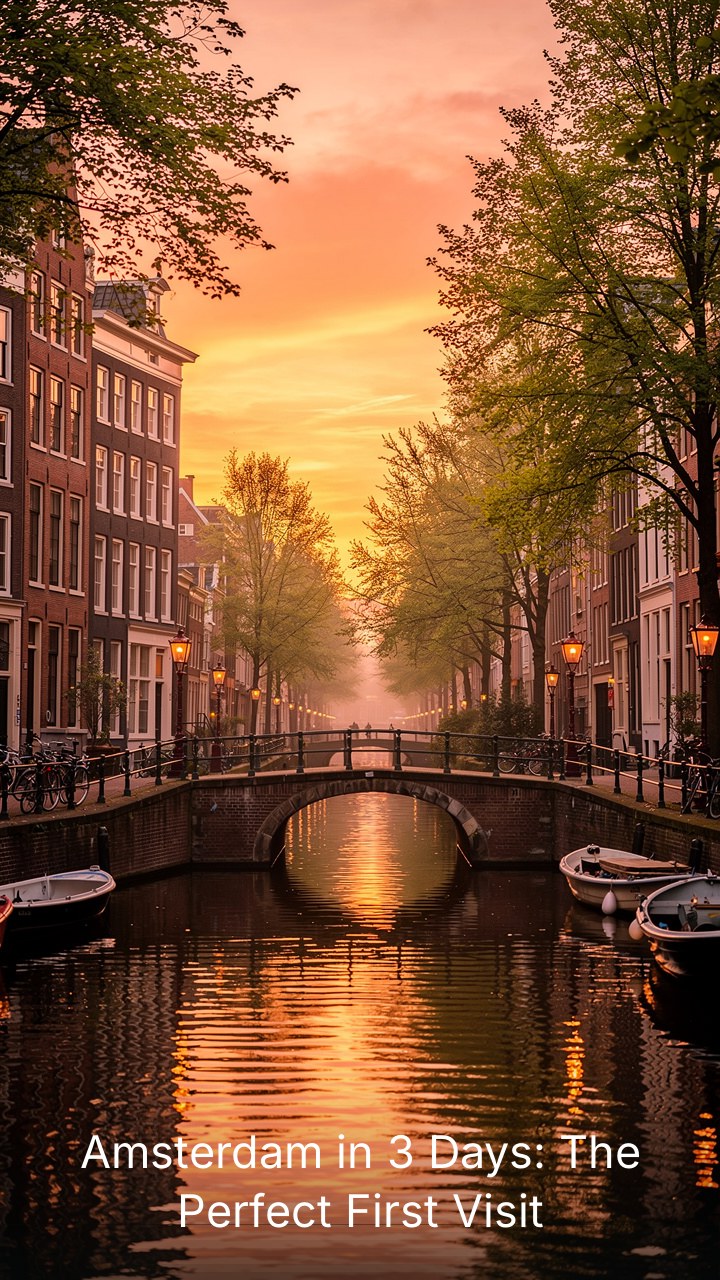
Amsterdam in 3 Days:

To experience Amsterdam in 3 days, start with the historic Canal Ring and Jordaan district on day one, dedicate your second day to Museumplein culture, and spend your third day exploring the local atmosphere in Amsterdam-Noord and De Pijp. This itinerary balances iconic sights with hidden gems to provide a truly authentic Dutch experience.
Mastering Public Transit and Cycling
Most visitors waste time walking when they should cycle or tram. The GVB public transport system covers everything via buses, trams, and metros. The most efficient way to pay is by using OV-pay; simply tap your contactless debit or credit card, or smartphone, on the reader when entering and exiting any vehicle. A daily GVB pass costs approximately 9 euros, which becomes cost-effective after three individual trips, whereas single paper tickets are significantly more expensive.

When cycling, avoid rental shops near Central Station, which often charge premium “tourist tax” prices for inferior equipment. Instead, seek out shops in residential neighborhoods like De Pijp or Oud-West, which offer better-maintained bikes and transparent pricing. Always use two separate locks—one for the frame and one for the wheel—to deter the city’s persistent bike theft. If you feel uncomfortable navigating dense traffic, stick to the tram; the network is extensive and reaches every major tourist destination efficiently.
Common Mistakes and How to Avoid Them
The biggest mistake visitors make is eating at restaurants on Damrak or Leidseplein, where you will encounter overpriced, low-quality tourist menus. A golden rule for dining in Amsterdam is to walk at least three blocks away from these high-traffic hubs to discover authentic cafes where you will pay roughly 50% less for superior quality. Furthermore, museum planning is non-negotiable; the Anne Frank House releases tickets precisely 6 weeks in advance and sells out within minutes. The Rijksmuseum also requires pre-booked time slots, and attempting to buy a ticket at the door often results in disappointment.
Avoid third-party “skip-the-line” ticket resellers, which frequently charge double or are outright scams; always book via official museum websites. Finally, maintain the distinction between a “Koffiehuis” and a “Coffeeshop.” A Koffiehuis is a traditional establishment for coffee and snacks, while a Coffeeshop is a licensed venue for cannabis. Confusing these two will lead to a very unexpected and likely unwanted experience.
Practical Tips for First-Timers
Cash is rarely used in Amsterdam, and almost every shop, cafe, and market stall is card-only. Ensure your credit card has a chip and PIN code, as some older terminals still reject signature-only cards. Tipping is not mandatory, but rounding up the bill or adding 5-10% for exceptional table service is standard practice. Never tip for simple coffee or beer service at a bar counter.
Respect the bike lanes, which are clearly marked as red paths on the street. Never stand in or walk across them; local cyclists will not stop, and their loud bell ringing is a warning that you are at risk of a collision. Instead, always use the dedicated sidewalk. Additionally, carry a reusable water bottle, as the city’s tap water is high-quality and free, allowing you to save money while reducing plastic waste.
Navigating Amsterdam-Noord and De Pijp
Many tourists never leave the Canal Ring, missing out on the vibrant northern and southern districts. Take the free GVB ferry from behind Central Station to Buiksloterweg to reach Amsterdam-Noord in just five minutes. Here, you can visit the A’DAM Lookout for a panoramic view or explore the contemporary Eye Film Museum. After returning to the city center, head south to the De Pijp neighborhood to visit the Albert Cuyp Market, the largest outdoor market in Europe.

De Pijp provides a much more authentic look at local life than the overcrowded historic center, featuring independent bars, world-class brunch spots, and the iconic fresh stroopwafel stands. Spending an afternoon here allows you to escape the intense foot traffic of the city center while enjoying higher-quality food and a more relaxed, neighborhood-centric atmosphere.
Quick Checklist for Your Trip
- Book Anne Frank House tickets exactly 6 weeks in advance.
- Download the 9292 app for real-time public transit schedules.
- Pack a reliable waterproof jacket. Rain is unpredictable here.
- Bring a comfortable pair of walking shoes. Cobblestones are unforgiving.
- Check the opening hours of small museums before heading out.
- Carry a power bank for your phone map usage.
- Learn to say “Dank je wel” for polite interactions.
FAQ
Is the I Amsterdam City Card worth the money?
It is worth the investment only if you plan to visit at least three high-entry-fee attractions per day. If you prefer a slow-paced itinerary of walking and window shopping, you will save more money by paying for individual museum entries as you go.
When is the best time of year to visit?
May and September offer the ideal balance of mild weather and manageable crowd sizes. July and August can be excessively hot and congested with tourists, while late April is only recommended if you intend to participate in the massive King’s Day celebrations.
Can I use US dollars or credit cards for payment?
No, you cannot use US dollars, as the Euro is the only accepted currency. Amsterdam is a card-first city, so ensure your credit card is chip-enabled, though having a small amount of Euro coins for public toilets or occasional street performers is helpful.
What should I do if I get lost in the city?
Use the 9292 app or Google Maps, which are highly accurate for tram and bus routes. If your battery dies, look for the nearest tram stop, as most lines eventually loop back toward the Central Station area, which serves as the main transit hub.
Is it safe to cycle as a tourist?
It is safe if you are comfortable riding in dense, fast-paced traffic and understand the rules of the road. If you are not an experienced cyclist, the city’s complex bike-lane system can be overwhelming; in that case, stick to the tram network.
Leave a Reply