
Bergen in the Golden Hour: A Photographer’s Guide
To capture Bergen in the golden hour, head to Mount Fløyen or the Bryggen harbor between 10:00 PM and 11:00 PM during summer, or around 3:00 PM in winter. The unique low-angle light in this Norwegian city creates dramatic shadows and radiant amber hues across its UNESCO-listed wooden architecture and surrounding fjords.
The Magic of Light in Bergen
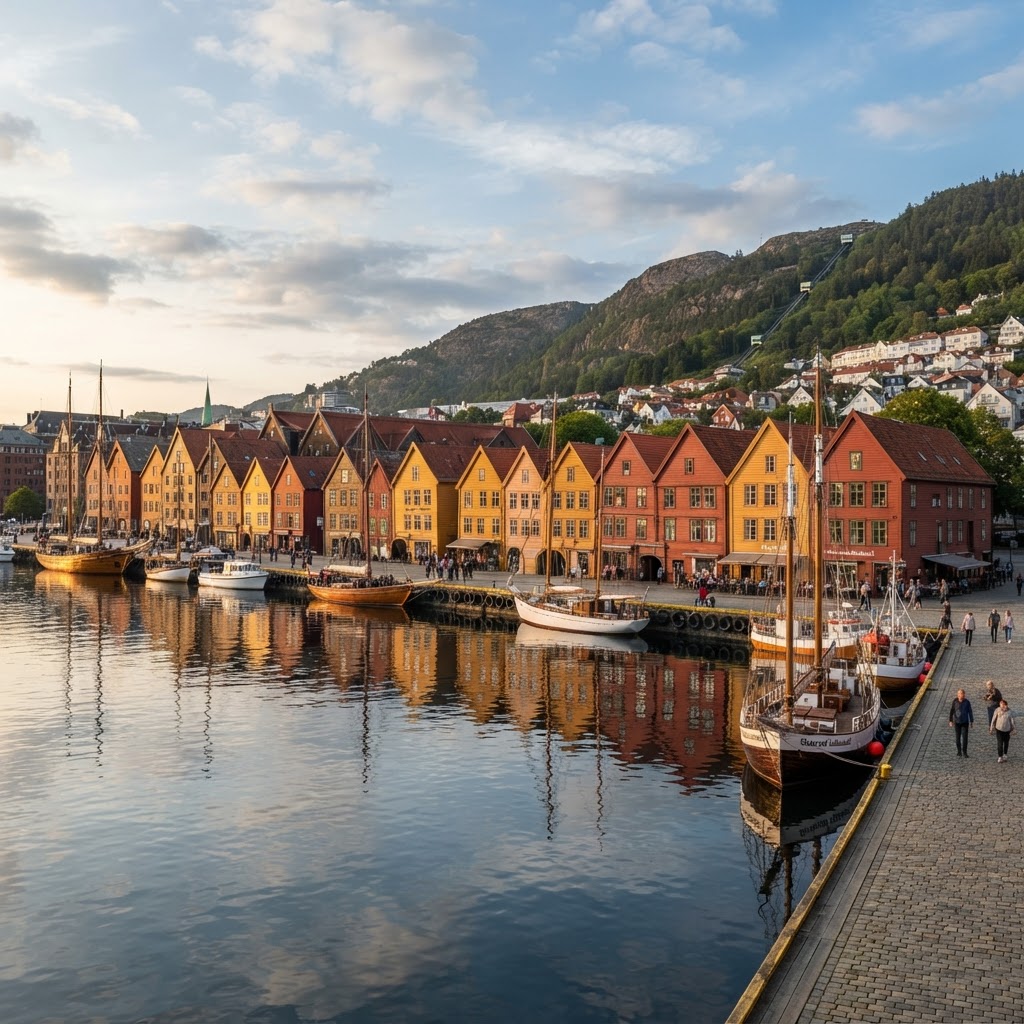
The golden hour in Norway is uniquely long and potent due to the country’s high latitude, which forces the sun to trace a lower arc across the horizon. This extended period of soft light allows photographers to capture images with significantly more dynamic range and visual depth than in southern latitudes. In Bergen, the interaction between moisture-rich coastal air and the dramatic topography of the seven surrounding mountains causes the sun to refract into spectacular displays of light. When clouds are present, this produces a “glow” that illuminates the historic Bryggen wharf in deep, saturated tones of ochre and burnt umber. This light creates a stark, ethereal contrast against the brooding, deep-blue shadows of the mountain base, providing a three-dimensional quality to landscape images that is distinctively Scandinavian. Because the sun remains low for an extended duration, you are afforded a larger window to adjust your composition, check your exposure, and wait for the perfect interplay of light on the wooden facades. Unlike the harsh, overhead sun of midday, golden hour light in Bergen softens the texture of the aged timber, making it the premier time for architectural photography and dramatic wide-angle landscape shots.
Why Bergen is Unique
Unlike southern European cities, the light in Bergen has a crisp, ethereal quality. When combined with the moisture-rich air of the west coast, the sun often refracts into spectacular displays, especially when clouds are present. The contrast between the dark, brooding mountains surrounding the city and the vibrant, warm sunlight creates a visual depth that is hard to replicate anywhere else in the world.
Top Vantage Points for Sunset Photography
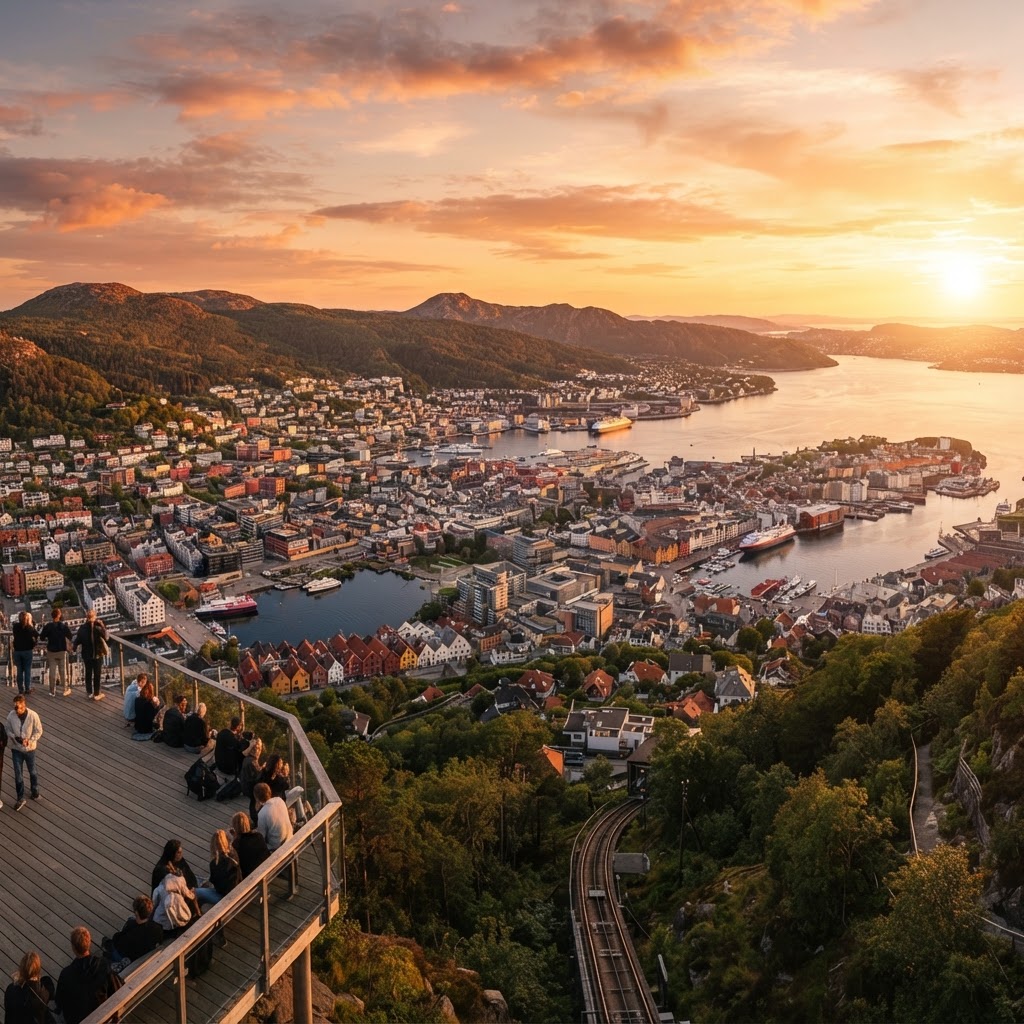
Selecting the right elevation is critical for golden hour photography in Bergen, as the city’s complex geography of inlets and hills requires a bird’s-eye perspective to fully capture the changing light. Mount Fløyen, reachable via the Fløibanen funicular, remains the most accessible and iconic location for sunset shots. A round-trip ticket currently costs approximately 160 NOK, and the viewing platform provides an unobstructed vantage point overlooking the Vågen harbor and the city peninsula. For the best results, arrive 30 minutes before the golden hour to secure a spot at the railing, as this location becomes crowded during peak tourist months. The view from Fløyen allows you to capture the city grid transitioning from day to dusk, with the warm light hitting the red-tiled roofs before the harbor lights flicker on. Alternatively, for those seeking a less urban and more rugged aesthetic, Mount Ulriken offers a 360-degree perspective from 643 meters above sea level. You can reach the summit via the Ulriken643 cable car. The light here hits the surrounding mountain ridges much earlier than in the city center, providing a dramatic, high-contrast look that defines the raw, untamed beauty of the Norwegian fjords. Whether choosing the urban charm of Fløyen or the wild expanse of Ulriken, ensure you carry a headlamp for the descent, as the transition into the blue hour occurs rapidly once the sun dips below the horizon.
Scaling Mount Ulriken
If you prefer a more rugged experience, take the cable car to the summit of Mount Ulriken. At over 600 meters, this is the highest of the seven mountains surrounding Bergen. During the golden hour, the panoramic view provides a 360-degree spectacle, allowing you to photograph both the urban landscape and the distant, rugged fjords as they catch the final rays of the day.
Capturing Bryggen at Dusk
Bryggen, a UNESCO World Heritage site, provides the quintessential Bergen photography experience, best captured when the evening light flattens the contrast on the historic, multi-colored timber structures. As the crowds dissipate during the late evening, the wharf becomes a quiet gallery of texture and color, with the deep reds and ochres appearing to vibrate against the cooling blue of the surrounding sky. To capture the best images, position yourself on the opposite side of the Vågen harbor. This distance allows you to include the reflections of the wooden buildings in the calm harbor waters, creating a symmetrical composition that is highly effective in long-exposure photography. Using a 3-stop or 6-stop Neutral Density filter at this time allows you to keep your shutter open for 2–4 seconds, which smooths out the water surface and turns the reflections into a glassy, mirror-like surface. Pay attention to the “gap” between the buildings; as the sun sets, light will often stream through these narrow alleyways, creating a “god-ray” effect if there is any mist or atmospheric haze. It is advisable to use a focal length between 24mm and 35mm to include both the scale of the wharf and the context of the harbor surroundings. Avoid overexposing the highlights on the wooden walls, as the detail in the wood grain is what gives these photos their historical character.
Tips for Architectural Shots
When photographing the historic wooden houses of Bryggen, look for reflections in the Vågen harbor. If the water is calm, the golden light bouncing off the architecture creates a perfect symmetry that looks stunning in long-exposure shots. Use a wide-angle lens to capture the scale, and don’t be afraid to underexpose slightly to preserve the rich, saturated colors of the wood.
The Fjords in Transition
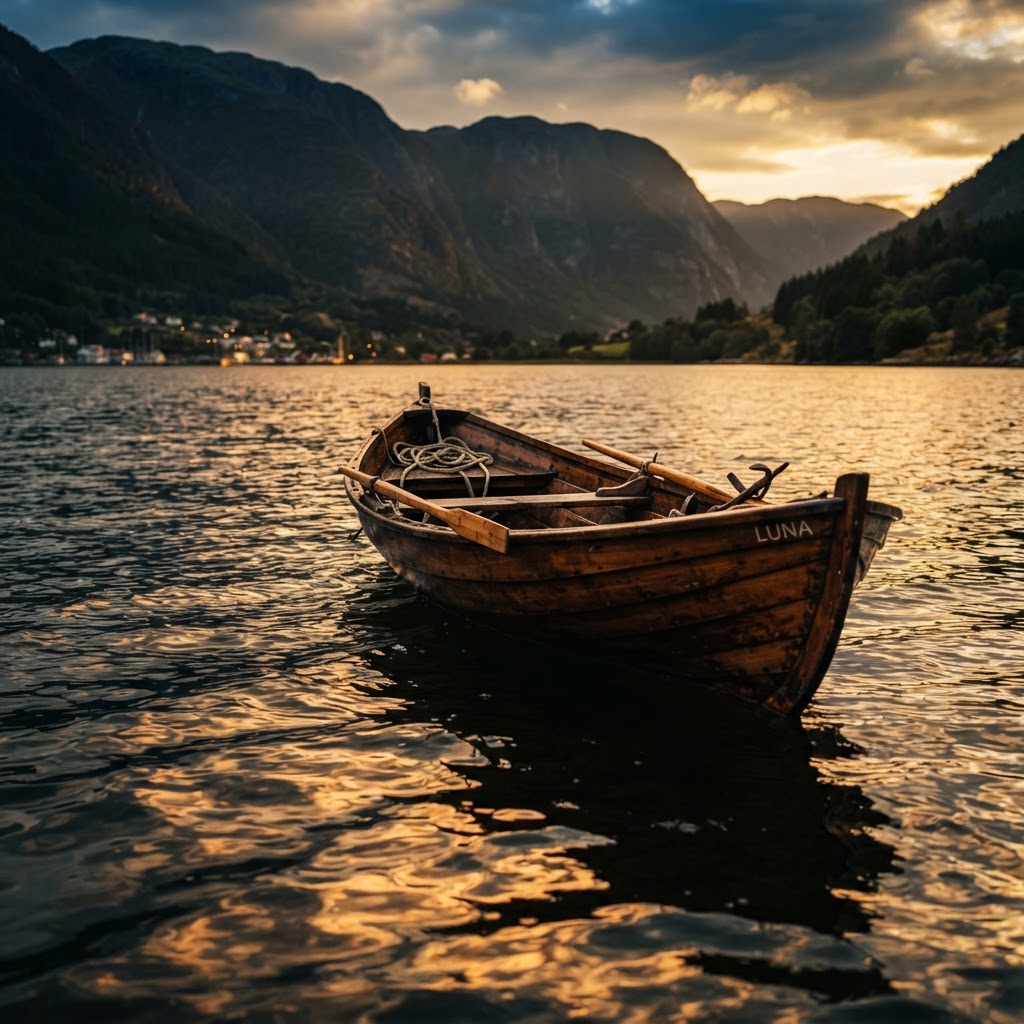
Capturing the fjords during the golden hour requires careful planning to leverage the dramatic interplay of light and deep shadows cast by the steep valley walls. Because the mountains flanking the fjords often exceed 1,000 meters in height, the golden hour starts on the water and the peaks significantly earlier than it does in the city. Booking a sunset boat tour is the most effective way to gain access to these unique angles. Most fjord cruises from the Bergen harbor depart in the late afternoon, with private tours offering more flexibility for photographers to request stops at specific bays. When shooting from a moving vessel, use a high shutter speed—at least 1/500th of a second—to negate the boat’s vibration and motion. The golden light hitting the water creates a brilliant “path of gold” leading toward the horizon, which serves as a powerful leading line for your compositions. For black-and-white photography, the high-contrast lighting is ideal; the bright, sun-drenched granite peaks create a stark, almost monochromatic look against the deep, dark reflection of the water. If you are shooting in color, look for the subtle purples and blues that start to mix with the golden light as the sun approaches the waterline, signaling the transition to the blue hour.
Playing with Light and Shadow
In the fjords, the golden hour is characterized by dramatic silhouettes. The steep walls of the mountains cast long shadows across the water, creating a stark contrast with the sun-drenched peaks above. This play of light is perfect for black-and-white photography, but the warmth of the sunset also offers incredible opportunities for color shots that emphasize the majesty of the Norwegian landscape.
Essential Gear for Golden Hour Photography
To successfully capture the rapidly changing light in Bergen, you must prioritize equipment that manages both low light and the high contrast typical of mountainous coastal regions. A heavy-duty, carbon-fiber tripod is the single most important piece of gear, as the drop in light levels during the golden-to-blue hour transition necessitates exposures lasting several seconds to maintain a low ISO and high image quality. Pack a circular polarizer to cut the glare from the Vågen harbor; this will allow you to see through the surface of the water to the reflections of the wooden buildings below. A 6-stop ND filter is essential for smoothing out the movement of the clouds over the mountain peaks, which adds a sense of motion and serenity to your landscape shots. For lenses, a 24-70mm f/2.8 zoom is the most versatile choice for capturing both the grand scale of the fjords and the intimate architectural details of Bryggen. Because the humidity in Bergen can be high, even on clear days, keep a dedicated microfiber lens cloth and a rocket blower in your bag to remove mist and spray. Finally, ensure you carry two extra batteries; the cold temperatures—even in spring or autumn—can drain your lithium-ion cells up to 30% faster than they would in warmer climates.
Filters and Lenses
Pack a circular polarizer to manage the glare on the harbor water and a neutral density (ND) filter to smooth out the movement of the clouds or water. A prime lens with a wide aperture, such as a 35mm or 50mm, will help you capture the soft, dreamy bokeh that is synonymous with professional-grade sunset imagery. Always keep a lens cloth handy, as the mist from the harbor can quickly accumulate on your glass.
Planning Your Itinerary
Effective golden hour planning in Bergen relies on utilizing solar position apps, such as PhotoPills, which account for the specific obstruction of the horizon caused by the seven mountains. In summer (June to August), the sun sets very late, often between 10:30 PM and 11:30 PM, making it easy to schedule a “photo walk” that follows a sunset dinner. A recommended route is starting at the Fish Market at 9:00 PM to capture the activity, moving toward the Bryggen wharf to catch the light hitting the wood, and then taking the Funicular at 10:15 PM to the top of Mount Fløyen. This allows you to experience the transition from golden hour into the “blue hour,” which provides a cooler, moodier color palette that is excellent for capturing the city lights beginning to glow. In winter, the window is much smaller—often only 45 minutes of usable golden light around 3:00 PM. During these months, you must be stationary at your chosen spot by 2:30 PM, as the sun moves behind the mountains earlier than the “official” sunset time. Always check the local cloud cover forecast via the YR.no app, which is the most accurate weather source for Norwegian micro-climates.
Creating a Photo Walk
Start your session at the Fish Market, working your way toward the Bryggen harbor. Once the light gets really low, head to the funicular station to reach Mount Fløyen. Ending your shoot at the summit allows you to watch the city lights begin to twinkle as the golden hour fades into the “blue hour,” providing a secondary set of conditions for incredible landscape photography.
Seasonal Variations
Bergen’s light changes drastically between the summer “midnight sun” period and the short, intense winter days, requiring photographers to adjust their expectations accordingly. Autumn is arguably the best time for clear, crisp golden light; as the humidity drops, the air clarity increases, allowing for sharper images of the distant fjords. The autumn colors on the hillsides provide a complementary color contrast to the blue sky, making it the most photogenic time of year. Conversely, winter offers a unique aesthetic characterized by high-contrast lighting and snow-capped peaks. The light in January and February is low and soft, lingering throughout the entire short day, which creates a muted color palette of pastels, soft blues, and muted pinks. This is the optimal time for moody, high-contrast landscape work. However, winter photographers must be prepared for extreme conditions, including wind chill and slippery surfaces at summit lookouts. Using gloves with conductive fingertips is essential so you can operate your camera settings without exposing your skin to the cold. Regardless of the season, Bergen’s light is never static; the key is to embrace the mood of the current weather pattern rather than waiting for a “perfect” clear sky.
Why Winter Light is Exceptional
If you are a fan of dramatic landscape photography, winter is the best time to visit Bergen. The combination of snow-capped peaks and the low, golden sun provides a high-contrast environment that is visually arresting. Just be sure to wear warm layers, as standing still for long-exposure photography in the Norwegian winter can lead to frozen fingers and batteries draining faster than usual.
FAQ
Q: What time does the golden hour start in Bergen?
In summer, the golden hour typically begins around 10:00 PM and lasts until nearly midnight. In the winter months, the golden hour occurs significantly earlier, usually peaking between 2:30 PM and 3:30 PM before the sun disappears behind the surrounding mountains.
Q: Do I need a professional camera for Bergen photography?
No, modern smartphones are capable of capturing high-quality golden hour shots, but a camera with manual exposure settings is recommended to prevent overexposing the bright reflections on the harbor water. Using a tripod is more important than the specific camera brand or model for long-exposure shots.
Q: Is Mount Fløyen or Mount Ulriken better for photography?
Mount Fløyen is better for cityscapes and capturing the iconic harbor views, while Mount Ulriken is superior for rugged, 360-degree fjord landscapes. If you are short on time, choose Fløyen for its ease of access via the funicular and closer proximity to the historic city center.
Q: Should I use a filter for golden hour shots?
Yes, a circular polarizer is highly recommended to manage water reflections at the harbor. Additionally, a 6-stop neutral density (ND) filter will allow for longer shutter speeds, helping you smooth out the water and create a more professional, cinematic look for your sunset images.
Q: Can I photograph the fjords in the rain?
Yes, rain and low clouds often provide a unique, moody aesthetic known as the “Norwegian look.” The clouds can act as a massive softbox, diffusing the golden hour light to create very flattering, shadow-free portraits and landscape images, provided you keep your gear protected with a rain cover.
Leave a Reply