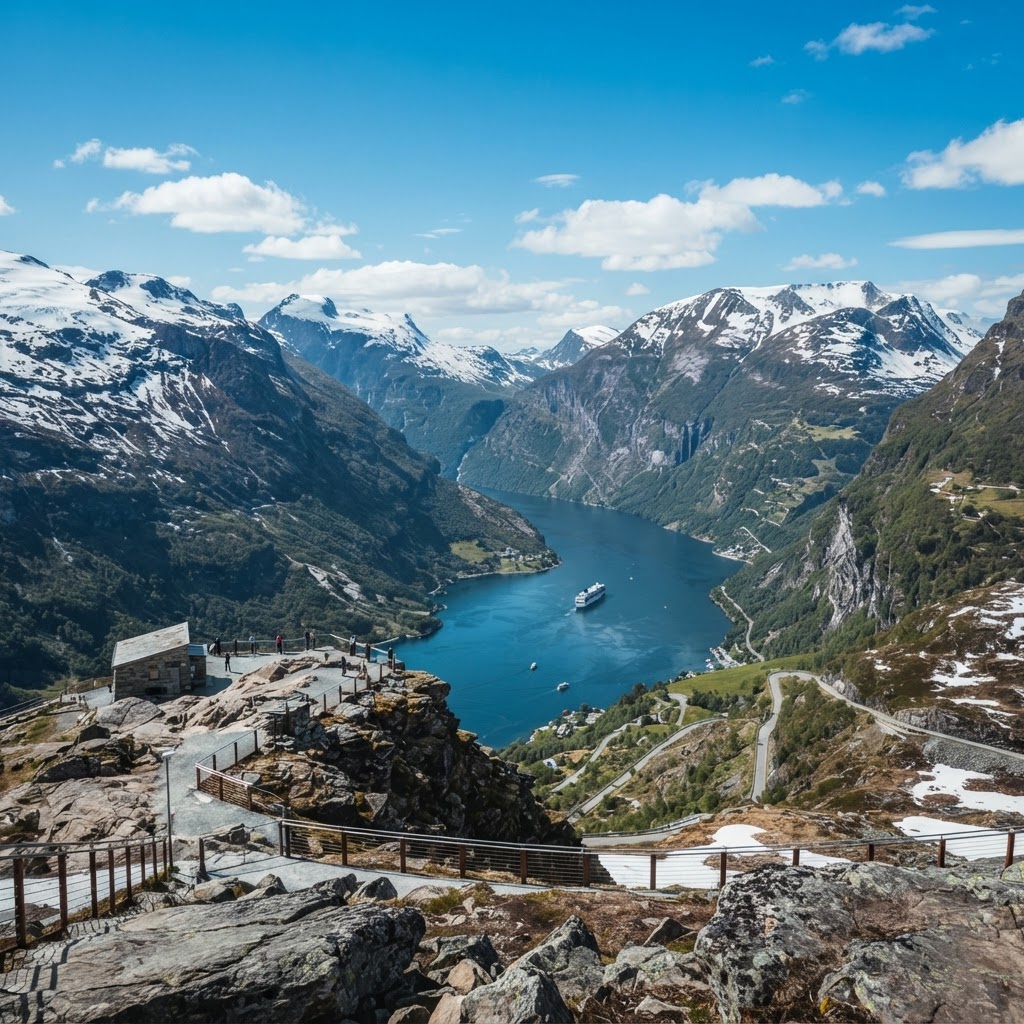
Geirangerfjord From Above: A Guide to the Best Viewpoints
The best viewpoints to see Geirangerfjord from above are Dalsnibba for extreme altitude, Flydalsjuvet for the iconic postcard perspective, and Ørnesvingen for direct, dramatic views of the Seven Sisters waterfall. These accessible locations provide the most striking panoramas of the UNESCO-listed fjord from heights ranging between 330 and 1,500 meters.
The Allure of the Geiranger Landscape
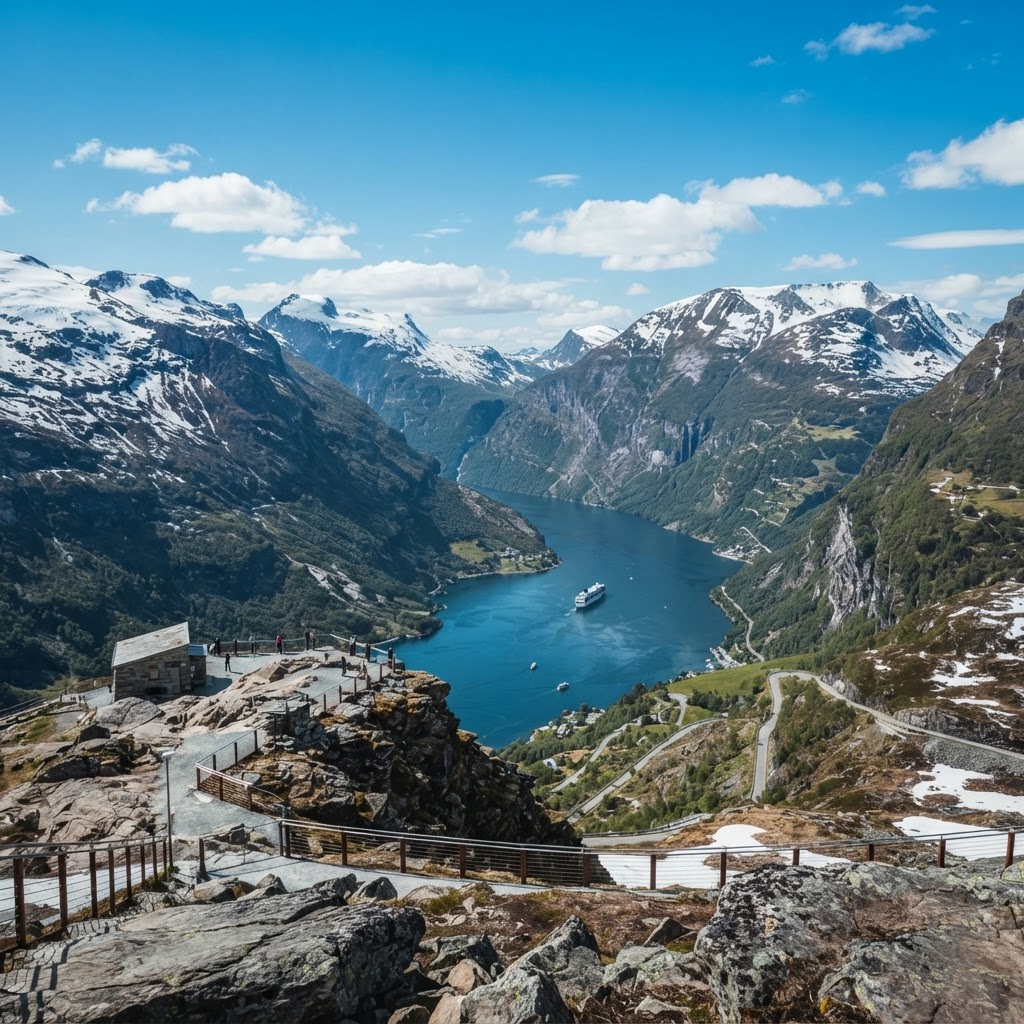
Geirangerfjord’s unique U-shaped geography was carved by glaciers, creating deep, vertical cliffs that reach nearly 1,500 meters above the sea. Viewing this landscape from high-altitude vantage points is essential for understanding the geological formation of the North Sea’s most famous fjord, as it reveals the sheer scale of the glacial erosion that left behind narrow valleys and towering rock walls. The interplay between the dark, metamorphic rock, lush hanging vegetation, and the characteristic turquoise water creates a distinct color palette only fully observable from above.
By gaining elevation, travelers can spot the “fjord farms” clinging to cliffsides—historical settlements abandoned in the 20th century—that are impossible to fully appreciate from the deck of a ferry. High-altitude viewing turns the fjord into a living map, showcasing how the mountains “lock” the water in place. Whether you are using a drone to map the topography or a telephoto lens to compress the layers of mountains, the high-altitude perspective is the primary way to capture the dramatic contrast between the snow-capped peaks and the deep, cold fjord water below.
Dalsnibba: The Roof of the Fjord
Standing at 1,500 meters above sea level, Dalsnibba is the highest fjord-viewing point in Europe accessible by road, providing a literal bird’s-eye view of the Geirangerfjord. The Geiranger Skywalk is a modern, glass-railed observation platform that juts out over the precipice, offering 360-degree views that extend from the frozen peaks of the Jotunheimen mountains to the tiny cruise ships navigating the fjord far below. Because of its extreme elevation, it is often the only viewpoint that offers a perspective above the cloud line, giving visitors a sense of hovering over the Norwegian wilderness.
Access is via the toll-road Geirangervegen (Route 63), which charges approximately 250 NOK for passenger cars. Unlike lower viewpoints, Dalsnibba remains subject to arctic conditions; it is common to find snow on the ground here even in mid-July. The platform is fully accessible and includes a small service building, making it the most comfortable high-altitude experience. Travelers should note that the road to the summit typically opens in May and closes in October depending on snowfall, so checking local road status is mandatory for spring or autumn travelers.
Practical Tips for Dalsnibba
- Arrive before 10:00 AM or after 5:00 PM to avoid the heaviest concentration of cruise ship tour buses.
- Wear windproof, insulated clothing, as the temperature at 1,500m is often 10-15 degrees Celsius colder than at sea level.
- Check the official Dalsnibba webcam to confirm visibility before paying the toll; if the clouds are low, you will see nothing but white mist.
- Bring a 200mm+ lens to capture the fine details of the fjord water and the winding road below.
Flydalsjuvet: The Classic Postcard View
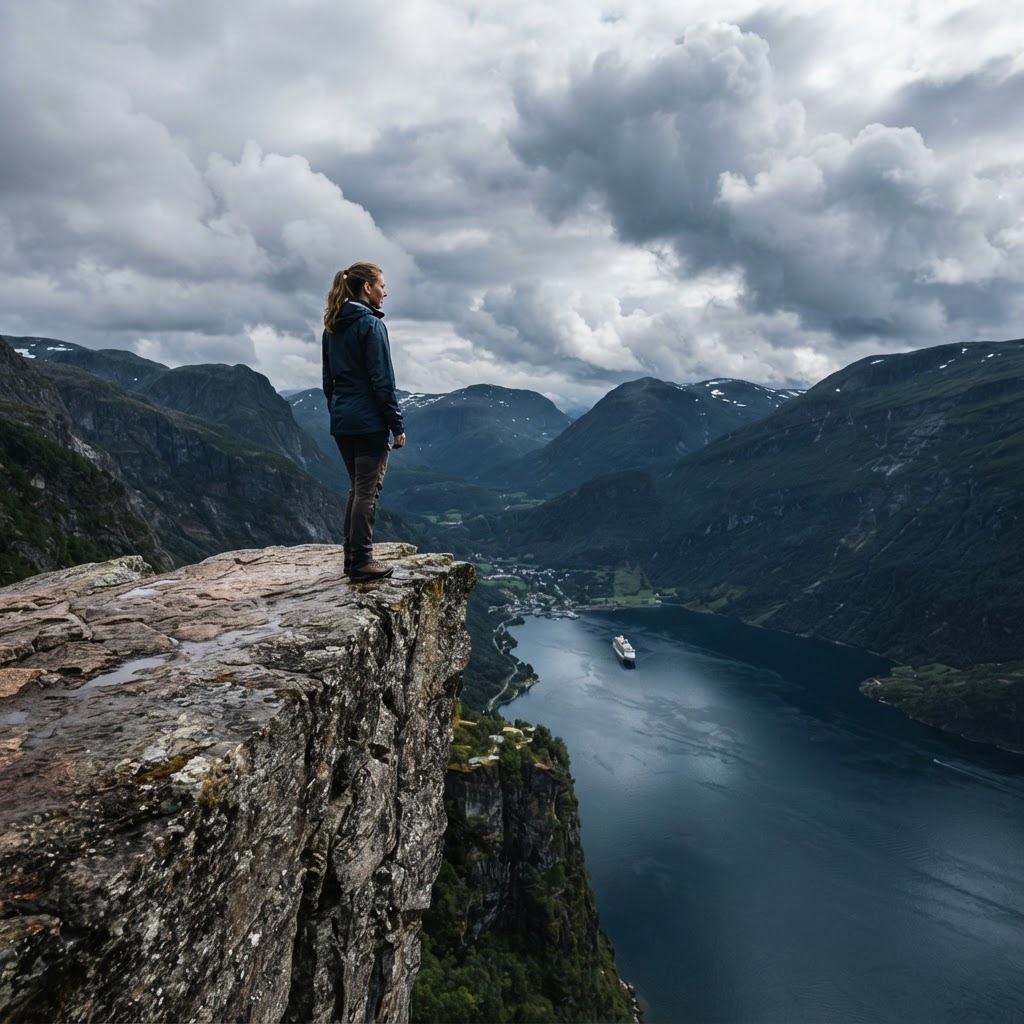
Flydalsjuvet provides the most recognizable composition of Geirangerfjord, featuring the famous rock ledge that appears in nearly all promotional travel photography of Norway. This viewpoint sits roughly 330 meters above the village, offering a perfect focal compression that aligns the village of Geiranger, the cruise ships, and the deep, sweeping “S” curve of the fjord. The area is split into two sections: an upper viewing area with paved paths and a lower, more rugged plateau that requires caution but offers the best vantage point for portrait-style photography.
Safety is the highest priority at Flydalsjuvet; while the rock ledge is iconic, it is narrow and lacks modern safety fencing at the very edge. During peak season months (July and August), visitor numbers can exceed 1,000 per hour, so patience is required to reach the “ledge” spot. We recommend visiting during the “Golden Hour”—typically between 7:00 PM and 9:00 PM in summer—when the shadows of the mountains create depth and the light hits the fjord water with a brilliant, saturated blue.
Hiking to Vesterasfjellet
For those seeking a more active, quiet experience, the hike to Vesterasfjellet provides an elevated perspective that escapes the noise of the main tourist roads. The hike begins at the Vesteras farm, where you can park for a small fee; the trail is well-marked and takes approximately 30 to 45 minutes to reach the primary lookout points. As you climb the mountain path, you move through authentic mountain pastures where local farmers keep goats, offering a unique glimpse into the traditional Norwegian agricultural lifestyle that still exists alongside modern tourism.
Unlike the drive-up points, Vesterasfjellet provides a side-on view of the Seven Sisters waterfall from a distance, allowing you to see the waterfall’s placement within the broader scale of the cliff face. The hike is classified as moderate; while not technically difficult, the elevation gain is around 300 meters over a relatively short distance, so sturdy hiking shoes are recommended. Once at the plateau, the solitude allows for long-exposure photography without the interference of crowds. It is a fantastic location for a picnic, as the vantage point offers a wide, open view of the fjord mouth that feels much more intimate than the “tourist-heavy” platforms.
Ørnesvingen: The Eagle Road Vantage
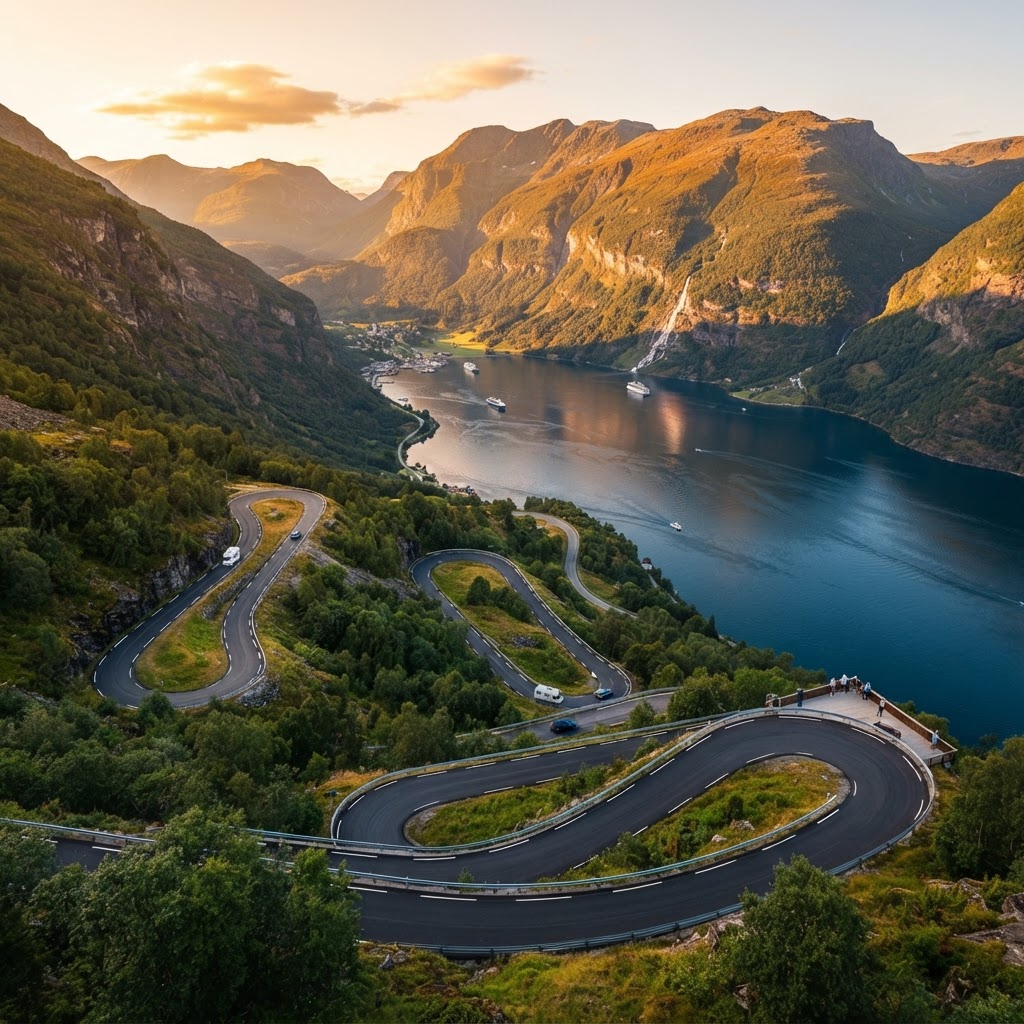
Ørnesvingen, known as “The Eagle Road,” is one of the most structurally impressive viewpoints in Norway, featuring a concrete balcony that cantilevered out over the fjord at 620 meters of elevation. The road itself is an engineering marvel, featuring 11 steep hairpin bends that connect the fjord level to the mountain pass. Because of its location on the northern shore, this viewpoint provides the absolute best “head-on” look at the Seven Sisters waterfall, which cascades down the opposite cliffside in seven distinct streams.
Why Ørnesvingen is Unique
This spot is essential for late-afternoon photographers because the light hits the southern wall of the fjord directly, illuminating the water and the waterfalls. At 620 meters, you are low enough to see the texture of the water and the spray of the falls, yet high enough to appreciate the verticality of the peaks.
Photography Tips for High-Altitude Shots
Capturing the Geirangerfjord requires balancing high contrast and dynamic weather. Because the mountains cast long, deep shadows, shooting at high noon often results in flat, uninteresting images. Instead, utilize the long summer sunsets of Western Norway; the light remains “soft” for several hours in the evening, providing the ideal conditions for highlighting the craggy textures of the mountain faces. When shooting with a smartphone, enable HDR mode to ensure that the bright sky doesn’t wash out the darker details of the valley.
For professional compositions, incorporate a foreground element—such as a weathered rock or a person—to establish scale, which prevents the fjord from appearing like a flat painting. Follow the ‘Rule of Thirds’ by placing the horizon line on the lower third if the sky is dramatic, or the upper third if you want to emphasize the water. Always carry a microfiber cloth, as the mist at higher altitudes like Dalsnibba can leave micro-droplets on your lens that ruin image sharpness.
When to Visit for the Best Views
Strategic timing is critical due to Norway’s extreme seasonal shifts. The tourist season runs from late May, when the mountain roads finally clear of snow, through early September. June is optimal for photography due to the Midnight Sun, which provides near-constant, soft light. However, August and September offer a quieter experience and the chance to witness the early autumn colors, which turn the hillsides into shades of orange and gold. Always be prepared for weather volatility; the mountain peaks can experience fog even on clear days in the village.
FAQ
Q: What is the best viewpoint for a “classic” Instagram photo?
Flydalsjuvet is the best location for the classic shot, specifically the lower ledge area that frames the entire bend of the fjord and the village of Geiranger.
Q: How much does it cost to visit Dalsnibba?
Accessing the Dalsnibba Skywalk requires a toll fee of approximately 250 NOK for a private car, which supports the maintenance of the Geirangervegen mountain road.
Q: Can I reach all these viewpoints by public transport?
While private cars offer the most freedom, a seasonal “Hop-on Hop-off” sightseeing bus operates from Geiranger center and stops at both Flydalsjuvet and Ørnesvingen.
Q: Are these viewpoints accessible during winter?
Most viewpoints are inaccessible during the winter; the mountain roads like Geirangervegen and the Eagle Road often close between October and May due to high avalanche risk and heavy snowfall.
Q: Is there a hike that doesn’t require a car?
Yes, you can hike from Geiranger village center to Vesterasfjellet on a marked trail, which provides a great alternative to the drive-up viewpoints.
Leave a Reply