
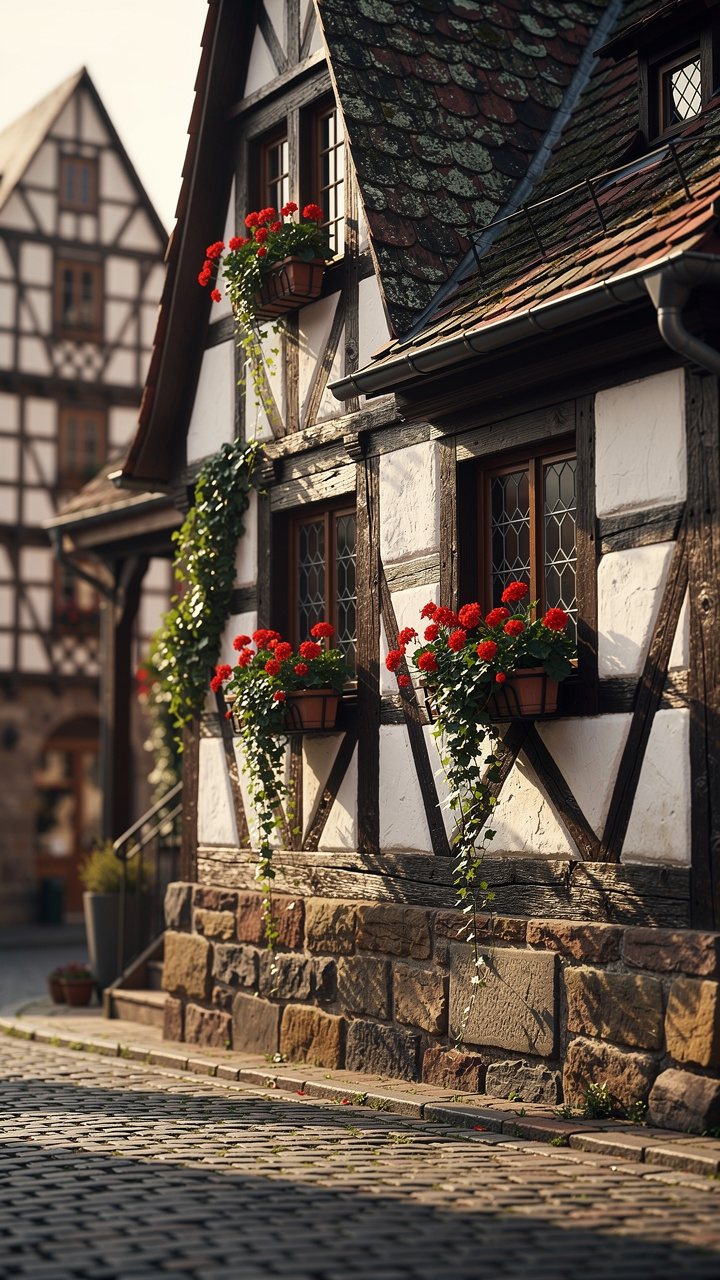
Driving from Hamburg to Munich doesn’t have to be a blur of highway concrete. By choosing Bundesstraßen—the historic B-roads—over the congested A7, you trade travel speed for the soul of the German landscape. This slow-travel approach transforms a six-hour transit into a three-day journey through medieval timber towns, dense, silent forests, and authentic local culture that the autobahn completely bypasses.
The Autobahn Trap
The A7 autobahn is arguably the most monotonous stretch of road in Northern Germany. It is a sterile corridor defined by endless construction zones, restless freight trucks, and grey concrete barriers. You will spend hours staring at the back of a refrigerated lorry while inching along near Kassel. The sheer volume of traffic and the persistent need for vigilance leave most travelers exhausted upon arrival, having seen absolutely nothing of the country they just crossed.
To escape this, simply leave the highway entirely. Focus your navigation on the B-roads, also known as Bundesstraßen. These roads are maintained to a high standard but follow older, more scenic routes that weave through the heart of the countryside. You will save your sanity and discover charming medieval towns that maps often overlook. While this adds significant time to your journey, the trade-off is essential for anyone who values experience over pure efficiency. Choosing the road less traveled is the only way to actually enjoy the distance.
Three Distinct Travel Zones
Divide your three-day journey into three clear geographic segments. This makes the vast distance manageable and gives you distinct checkpoints. First, traverse the flat, windswept plains of the north. Second, climb into the rolling hills and deep, dark forests of the central German highlands. Third, savor the dramatic, widening approach into the Bavarian foothills.
Day one should center around Goslar, located at the foot of the Harz Mountains. This UNESCO World Heritage site features thousands of timber-framed houses that look like a movie set. Skip the tourist-heavy cafes in the main square. Instead, walk the narrow, quiet alleys behind the Marktkirche to find local bakeries. Day two moves deeper into the central highlands, where you can explore small village life and forest clearings. By the third day, you will transition into the rolling terrain of southern Germany, where the architecture shifts from northern brick to alpine-style woodwork. Each zone offers a shift in dialect, food, and tradition, turning a simple drive into a profound tour of German diversity.
Avoiding Commuter Gridlock
One of the biggest mistakes travelers make is underestimating the density of traffic near metropolitan hubs. If you leave Hamburg at 7:00 AM on a Friday, you will sit in massive gridlock for over an hour. This is the peak time for the weekly commuter migration, and the highways around major cities grind to a complete halt.
To avoid this, plan your departures for off-peak windows. Leaving on a Thursday afternoon or a Saturday morning allows you to bypass the worst of the professional traffic. Another common mistake is over-scheduling your daily progress. Do not plan for more than four hours of actual driving time per day. Aim to reach your next destination by 3:00 PM at the latest. This gives you ample time to explore before the afternoon light fades and the local shops close. If you push your driving until 7:00 PM, you will be far too exhausted to appreciate the local charm of your destination. Keep the schedule loose, prioritize your energy, and remember that arriving early is a luxury you should build into every day of your trip.
Essential Road Trip Gear
You need a physical road atlas, not just a smartphone, to survive the slow route. When you dive deep into the Spessart forest, your signal will drop to zero. A physical map prevents the sudden panic of finding a detour on the fly when the GPS fails. Pair this with a high-quality thermos. The service stations on German B-roads are vastly different from the glossy, commercial plazas on the highway. Good, drinkable coffee is a rare find in rural gas stations, so brew a fresh pot at your hotel before you set off.
Also, pack a dedicated pair of comfortable walking shoes in the front seat. You will inevitably see an interesting trailhead, a mountain overlook, or a castle ruin that begs to be explored. You do not want to waste time digging through your trunk to find your sneakers.
- Carry a high-quality physical atlas for backup.
- Keep a thermos filled with high-quality coffee.
- Store walking shoes within easy reach in the passenger cabin.
- Bring extra water and snacks to avoid relying on small, unstocked village shops.
The Harz Mountain Detour
On a trip last October, I decided to take a deliberate detour through the Harz National Park instead of skirting the edge as most commuters do. I navigated the B242 toward Braunlage. The road winds through dense spruce forests that smell deeply of damp earth and cooling pine needles. It is a sensory experience that the high-speed highway could never replicate.
I stopped in a tiny, quiet village called Herzberg am Harz specifically to visit the castle. It was nearly empty of tourists. I spent two hours wandering the courtyard with nobody else around, simply listening to the wind and the history of the stone walls. That single experience provided more value than the entirety of the A7 would have. The A7 would have offered me nothing but road fatigue and a sense of disconnection from the land. By embracing the detour, I found the heart of the region. Be prepared to lose your way intentionally; in Germany, some of the most memorable sights are found on the roads that don’t lead directly to your final destination.
Autobahn Myths vs Reality
Many travelers cling to the belief that the Autobahn is the fastest way to get anywhere in Germany. While this might be technically true for raw distance, it is largely false for your actual quality of life. The myth of the German autobahn as an unlimited-speed paradise is mostly dead. Between endless traffic, persistent road work, and intense density, you rarely reach top speeds for long periods.
In reality, the B-roads offer a very consistent 80-100 km/h cruising speed. You avoid the adrenaline spikes of sudden braking in heavy highway traffic. You also see the country rather than just the metal guardrails and noise barriers. The fact is that you arrive at your destination feeling rested, not drained. You have seen villages, forests, and fields instead of just exhaust fumes and tail lights. If you value your well-being, the speed of the autobahn is a deceptive comfort. The quality of the journey is significantly higher when you take the slower path through the provinces.
Preparation Checklist
Preparation is the difference between a frustrating trip and a smooth one. Before you leave, check your tire pressure the night before your departure. You will be dealing with variable road surfaces ranging from smooth asphalt to older, uneven pavings in rural villages. Proper inflation is crucial for safety and fuel efficiency.
- Download Offline Maps: Use your phone’s offline maps for both Lower Saxony and Bavaria so you never get lost in the mountains.
- Carry Cash: Keep plenty of cash in small denominations. Many of the best rural cafes and guest houses still refuse credit cards.
- Book Accommodations Early: If traveling in the summer months, always book your stays in advance. Small towns have limited guest houses and they fill up quickly with locals and hikers.
- Check Road Signs: Pay attention to local traffic signs, as rural speed limits change frequently when entering small villages.
By following these steps, you minimize the risk of mechanical issues or social awkwardness, allowing you to focus entirely on the scenery unfolding outside your window.
Frequently Asked Questions
Should I rent an electric car for this trip?
It depends on your patience. While fast-charging stations are common on highways, they are scarce in the rural backcountry, and you may struggle to find compatible chargers in tiny villages.
Is the speed limit strictly enforced on rural roads?
Yes, it is strictly enforced. German police use mobile speed traps even on remote country roads, and the fines can be steep and easily mailed to your rental agency.
What is the best time of year to drive this route?
Autumn is arguably the best season because the forests in the Harz and Spessart regions change colors, and the heavy summer tourist traffic has largely vanished.
Are credit cards widely accepted in rural Germany?
No, they are not. Many small-town cafes and family-run gas stations in rural areas operate exclusively on cash, so always keep euros on hand.
Can I complete this journey in two days instead of three?
You can, but it will significantly increase your daily driving time and reduce the time available for exploring villages and trailheads, which defeats the purpose of the trip.
Leave a Reply