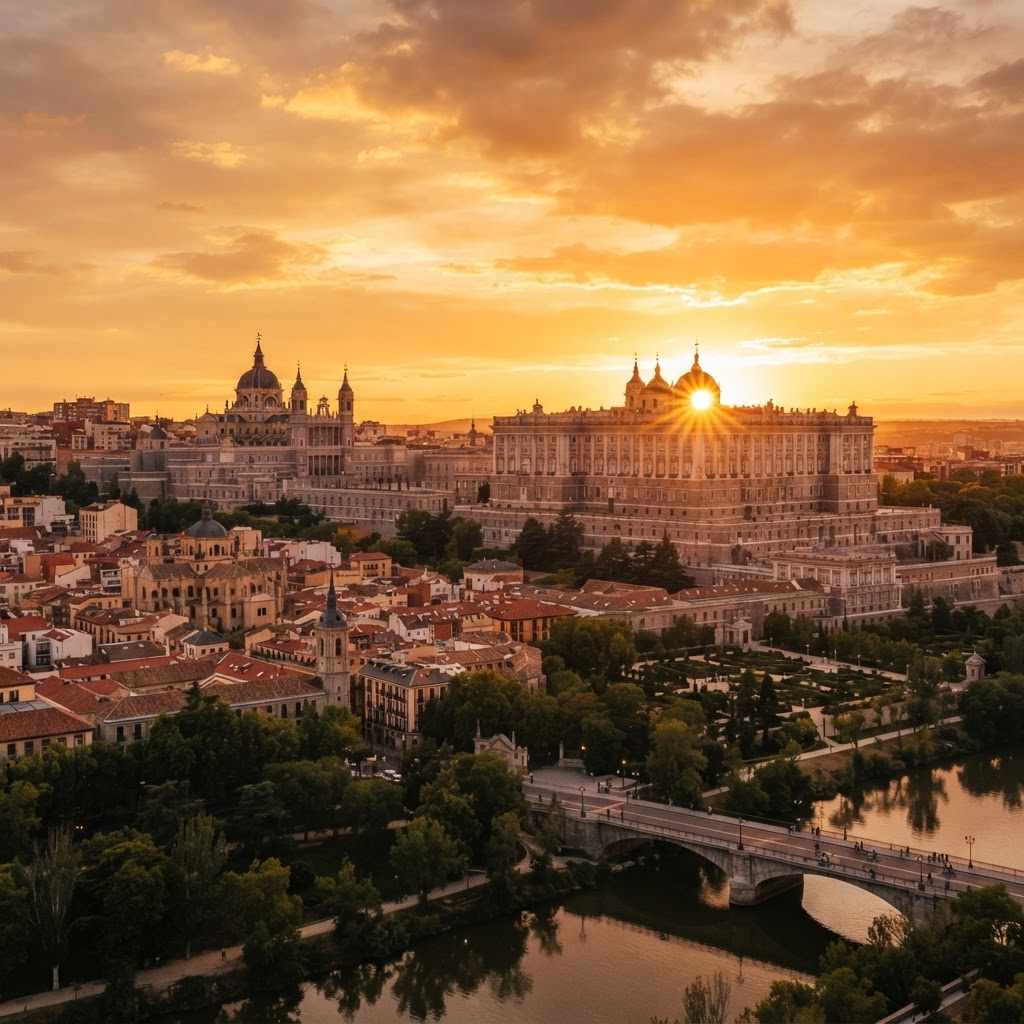
Madrid at golden hour—typically occurring between 7:00 PM and 9:00 PM depending on the season—is when the Spanish capital glows with amber light, making it the optimal time for photography, rooftop cocktails, and the traditional ‘paseo’ through historic plazas. This daily transition reveals the city’s vibrant social energy and architectural grandeur.
The Anatomy of a Madrid Sunset
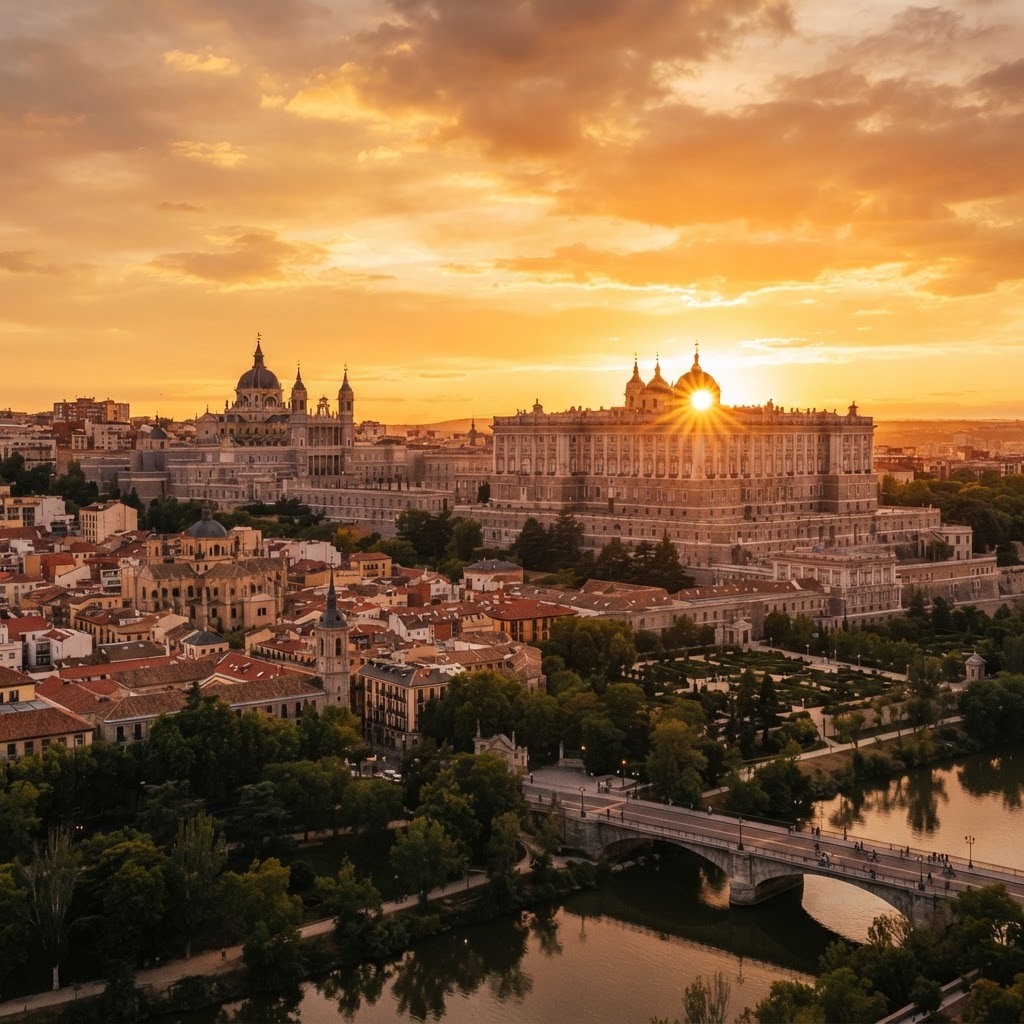
To truly grasp the magic of Madrid at golden hour, one must first understand the unique geography and culture of the city. Madrid sits on a high central plateau (the Meseta) at an elevation of approximately 667 meters, which grants the sky a vast, dramatic expanse rarely seen in lowland cities. As the sun begins its descent, the light catches the city’s architectural details—the ornate balconies of the Gran Via, the regal spires of the Almudena Cathedral, and the manicured greenery of the city’s expansive parks. Because the sun reflects off the light-colored sandstone facades common in historic neighborhoods, the city appears to radiate its own warmth, intensifying the ‘golden’ effect. Understanding the timing is crucial: in summer (June/July), the golden hour begins as late as 8:45 PM, whereas in winter (December/January), it hits its peak around 5:30 PM. This period is more than a photography trend; it is the official start of the local evening ritual known as ‘paseo,’ where locals stroll through plazas to enjoy the cooling air. The light creates long, dramatic shadows and bathes the city in a honeyed hue that transforms everyday street corners into cinematic scenes.
| Feature | Summer Golden Hour | Winter Golden Hour |
|---|---|---|
| Typical Timing | 8:30 PM – 9:30 PM | 5:00 PM – 6:00 PM |
| Average Temp | 25°C – 30°C | 5°C – 10°C |
| Best Activity | Rooftop cocktails | Sunset park walks |
| Sunset Color | Vibrant pinks/oranges | Deep gold/copper |
Iconic Locations for Golden Hour Views
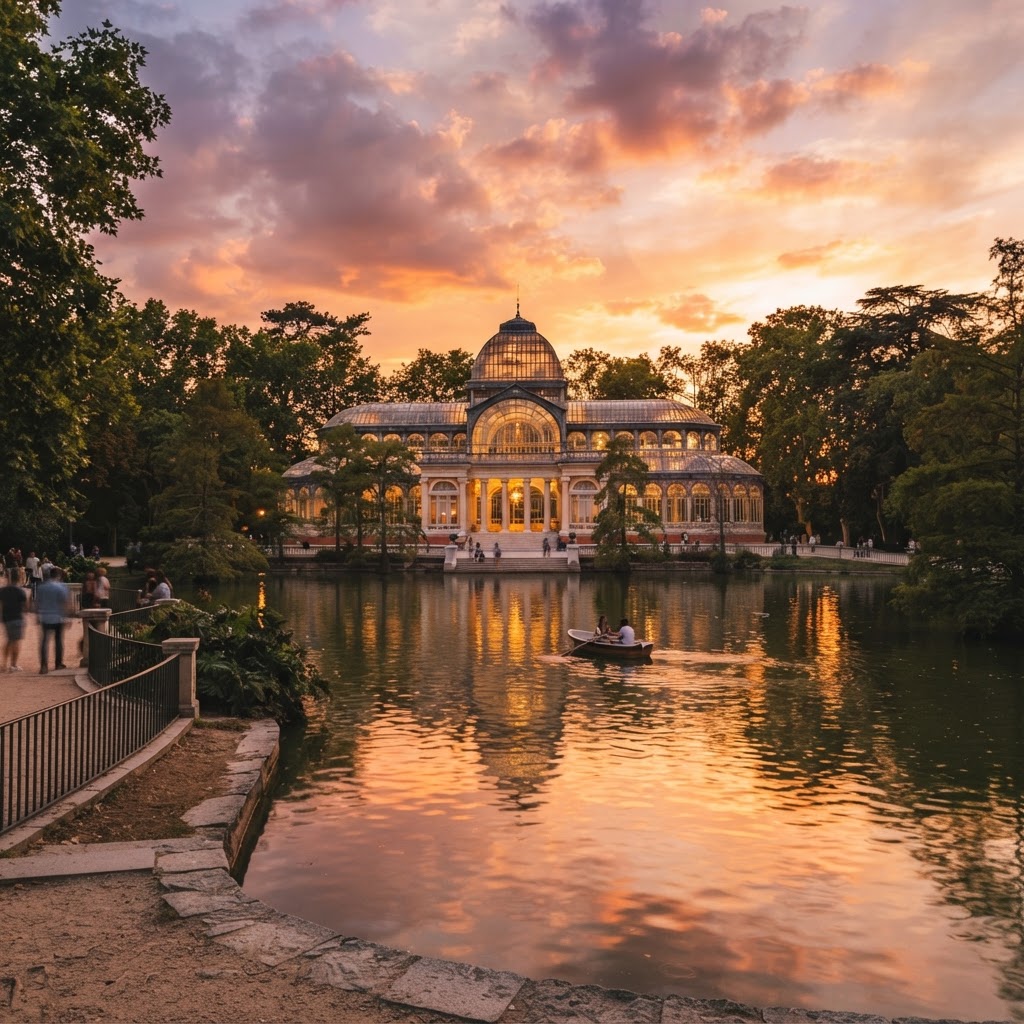
While any street in the city offers a slice of beauty, certain locations elevate the experience through unique vantage points and historical context. Plaza Mayor, the historic heart of the city, takes on a different persona as the light shifts; the deep red walls of the 17th-century square seem to catch fire in the setting sun, providing a backdrop that is both intimate and grand. It is a place where history feels alive, echoing with the footsteps of those who have gathered here since the 1600s. Visitors should aim to position themselves on the western side of the square to catch the final rays hitting the frescoes on the Casa de la Panadería. Beyond the squares, El Retiro Park is a non-negotiable stop for nature lovers. As the light dims, the Great Pond reflects the changing sky, turning the water into a shimmering sheet of gold. Many locals rent small rowboats (roughly €6-€10 for 45 minutes) to drift across the water, watching as the Crystal Palace becomes illuminated by the final rays of the day. This park provides a serene, natural counterpoint to the chaotic, vibrant energy found in the city center. Whether you are observing the sunset from the water or the stone benches near the Alfonso XII monument, the transition at Retiro offers an unparalleled perspective on Madrid’s relationship with light.
Retiro Park: Nature in the Glow
For those seeking a more tranquil setting, El Retiro Park is a non-negotiable stop. As the light dims, the Great Pond reflects the changing sky, turning the water into a shimmering sheet of gold. Many locals rent small rowboats to drift across the water, watching as the Crystal Palace becomes illuminated by the final rays of the day. It is an exercise in serenity that balances the chaotic, vibrant energy found in the city center.
The Rooftop Culture of Madrid
If you want to see Madrid at golden hour from a different perspective, you must head for the clouds at one of the city’s iconic rooftop bars. The city is famous for its vertical social scene, which offers unobstructed, 360-degree views of the sunset over the sprawling Spanish capital. From these heights, you can watch the entire cityscape change color while sipping a glass of local vermouth (typically €4-€7) or a classic sangria. It is the ultimate way to appreciate the sheer scale of the city’s architecture and the mountain ranges (the Sierra de Guadarrama) visible on clear days. To ensure a spot during peak sunset hours, it is highly recommended to book a table at least 48 hours in advance, especially during the high season of May through September.
Popular Rooftop Spots
- Círculo de Bellas Artes: Perhaps the most famous view in the city, offering a 360-degree panorama for a small entrance fee (approx. €5).
- Hotel Riu Plaza España: A vertigo-inducing glass balcony walk that puts the horizon at your feet; expect crowds during the final hour of light.
- Picalagartos Sky Bar: Excellent for a cocktail with a side of historical perspective on the Gran Vía, offering a view of the iconic Metropolis building.
[![[4K] MADRID – Sunset Glow Over the Capital | Deep House Chill](https://img.youtube.com/vi/coOcKxPX2lk/hqdefault.jpg)](https://www.youtube.com/watch?v=coOcKxPX2lk)
Street Life and Social Energy
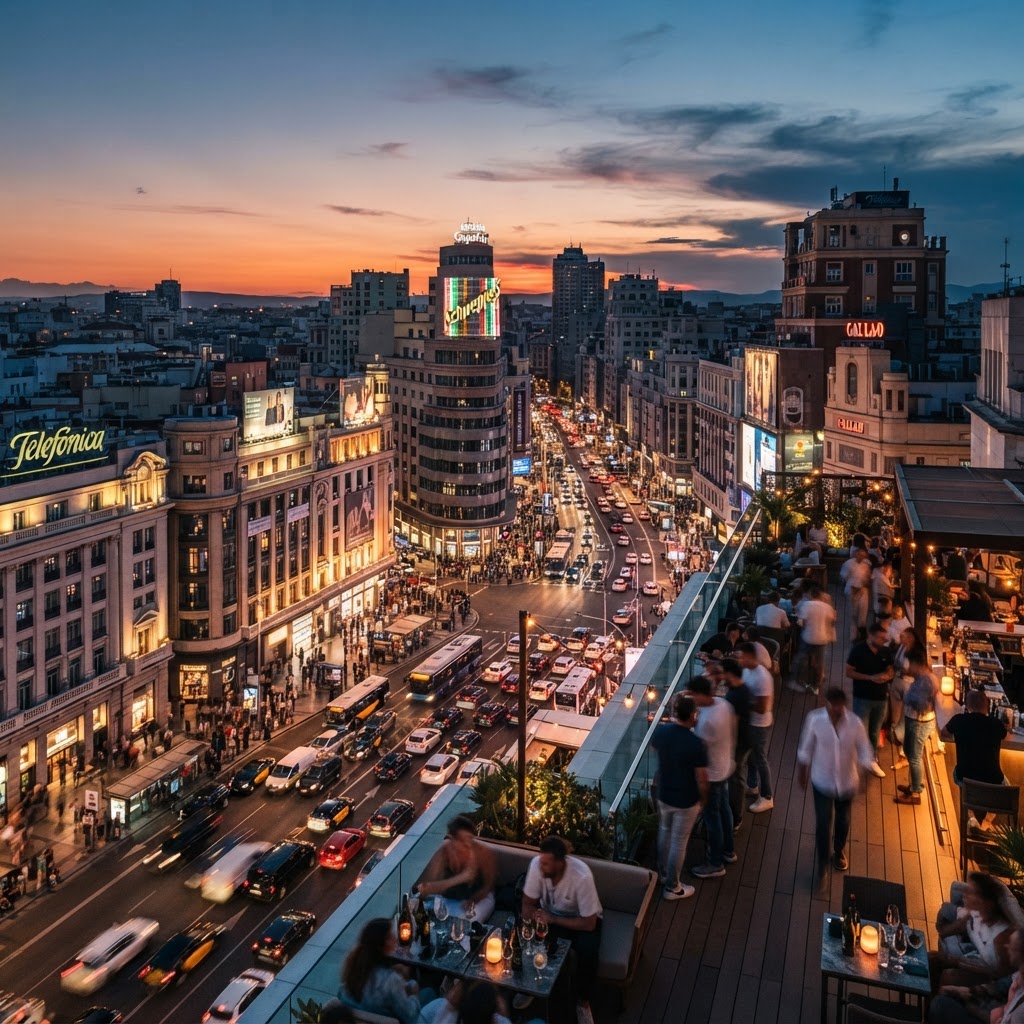
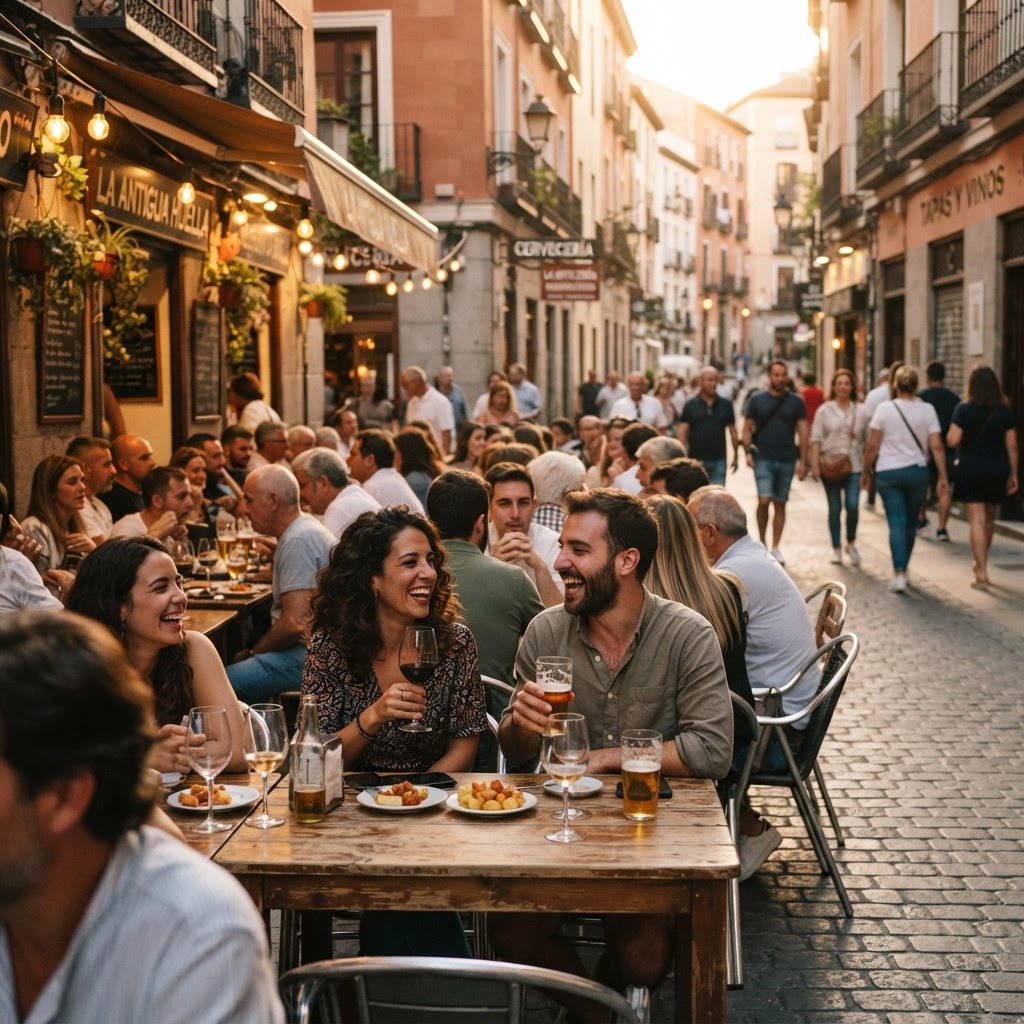
As the sun dips below the horizon, the ‘pure energy’ of the city does not dissipate; it evolves into a social ritual that defines Madrid’s unique lifestyle. This is when the tapas bars begin to fill up and the chatter on the streets reaches a crescendo, marking the transition between the professional day and the festive night. Madrid at golden hour serves as a vital social bridge where the pace of life actually quickens, as people leave offices and homes to socialize. The tradition of the ‘aperitivo’ is sacred here. During golden hour, cafes and bars spill out onto the sidewalks, filled with people laughing, debating, and celebrating the day’s end. Ordering a ‘vermut de grifo’ (tap vermouth) is an authentic way to blend in; it is rarely served alone, usually accompanied by ‘aceitunas’ (olives) or ‘patatas fritas’. This period is less about the consumption of alcohol and more about the communal atmosphere that characterizes life in the Spanish capital. When you see a sidewalk terrace fully packed at 8:00 PM, you are witnessing the heartbeat of the city, where the golden light acts as a catalyst for human connection.
The Ritual of the Aperitivo
The tradition of having a pre-dinner drink is sacred in Madrid. During golden hour, cafes and bars spill out onto the sidewalks, filled with people laughing, debating, and celebrating the end of the day. Ordering a vermut de grifo (tap vermouth) is an authentic way to blend in. It is not just about the drink; it is about the communal atmosphere that characterizes life in the Spanish capital.
Photography Tips for Madrid
Capturing the essence of this city during its most photogenic hour requires specific technical adjustments because the light shifts rapidly. You typically have a window of about 45 to 60 minutes to achieve the perfect balance between warm light and cool shadows. A common mistake is underexposing the shots; focus on the highlights hitting the limestone buildings to maintain the ‘golden’ glow. Use a wide-angle lens (16-35mm) to capture the grandeur of plazas like Plaza de Oriente, but don’t overlook the micro-details, such as the way light illuminates the intricate wrought-iron balconies on the buildings of the Barrio de las Letras.
Recommended Camera Settings
- Aperture: Use f/8 to f/11 to ensure deep focus and keep the city architecture sharp from foreground to horizon.
- ISO: Keep your ISO as low as possible (ISO 100-200) to avoid digital noise as the light drops, utilizing a tripod if necessary.
- White Balance: Set your camera to ‘Cloudy’ or ‘Shade’ (or manually adjust to 6500K) to exaggerate the warm gold tones of the sunlight.
Nightfall: The Transition to Magic
Once the sun has finally set, the city enters its ‘blue hour,’ where the sky turns a deep, bruised purple and the streetlights flicker to life. Madrid at golden hour leads naturally into this phase, where the architectural highlights are illuminated with precision. This is the optimal time for long-exposure photography of the Royal Palace or the Cibeles Palace. As the sky darkens, the golden glow of the architecture becomes more pronounced against the navy backdrop. Visitors should walk from the Plaza de Oriente toward the Royal Palace, which stands majestic and glowing against the dark sky, providing a perfect contrast that signals the end of the sunset period and the beginning of Madrid’s world-famous nightlife. This transition is when the city feels most regal and expansive, offering a sense of history that is illuminated in the true sense of the word.
A Culinary Journey at Sunset
No guide to the evening hours in Madrid would be complete without mentioning the food scene that defines the sunset transition. As the sky turns orange, the scent of fresh churros and hot chocolate, or savory bocadillos de calamares (calamari sandwiches), begins to permeate the air. You should aim to be near the Mercado de San Miguel or the bustling streets of La Latina as the light starts to fade. The bustle of the market mixed with the soft sunset lighting creates an atmosphere that is uniquely Madrileño, offering a sensory experience that complements the visual beauty of the golden hour.
Dining Recommendations
- Tapas Crawls: Start at Plaza de la Paja and move toward La Latina; this area is famous for ‘Calle Cava Baja,’ which is most vibrant just as the sun sets.
- Late Dining: Remember that dinner in Madrid rarely happens before 9:00 PM; golden hour is truly just the warm-up, so avoid arriving at restaurants for dinner before the sunset ends.
- Local Specialties: Look for places serving ‘tortilla de patata’ (potato omelet) or ‘croquetas’ as the sun sets; these are quintessential pre-dinner snacks that define the local palate.
FAQ
Q: What is the best time for golden hour in Madrid?
Golden hour in Madrid varies by season, generally occurring between 5:30 PM and 6:30 PM in the winter and 8:30 PM and 9:30 PM during the summer months. It is best to check a local weather app for the exact sunset time on your specific travel date.
Q: Are reservations required for rooftop bars at sunset?
Yes, for popular spots like Círculo de Bellas Artes or Riu Plaza España, reservations are highly recommended during the sunset window. Booking at least 48 hours in advance ensures you get a table with a direct view of the horizon rather than being relegated to the back.
Q: Is there an entrance fee for the best sunset viewpoints?
Many rooftop bars charge an entry fee ranging from €5 to €15, which often includes your first drink. Public spaces like El Retiro Park and Plaza Mayor are entirely free to enter and provide some of the best unobstructed sunset views in the city.
Q: What should I wear for an evening in Madrid?
Madrid has a ‘smart casual’ culture; even in the evenings, locals tend to dress polished and refined. If you are visiting a rooftop bar, avoid overly athletic wear or beach sandals to ensure you adhere to the dress codes of more upscale venues.
Q: Is it safe to walk around Madrid during sunset?
Madrid is exceptionally safe for pedestrians, even during the transition from golden hour to nightfall. The streets remain densely populated with locals and tourists, making the city center very secure for evening strolls and photo opportunities in popular tourist hubs.
Leave a Reply