
Montmartre’s cobblestone streets and the Sacré-Cœur Basilica create the quintessential Parisian aesthetic, characterized by 19th-century village architecture, winding alleyways, and hilltop panoramic city views. Visitors can experience this historic artistic hub by exploring its preserved medieval layout, avoiding tourist crowds during sunrise, and discovering hidden local gems like the Clos Montmartre vineyard.
The History of the Artistic Hill
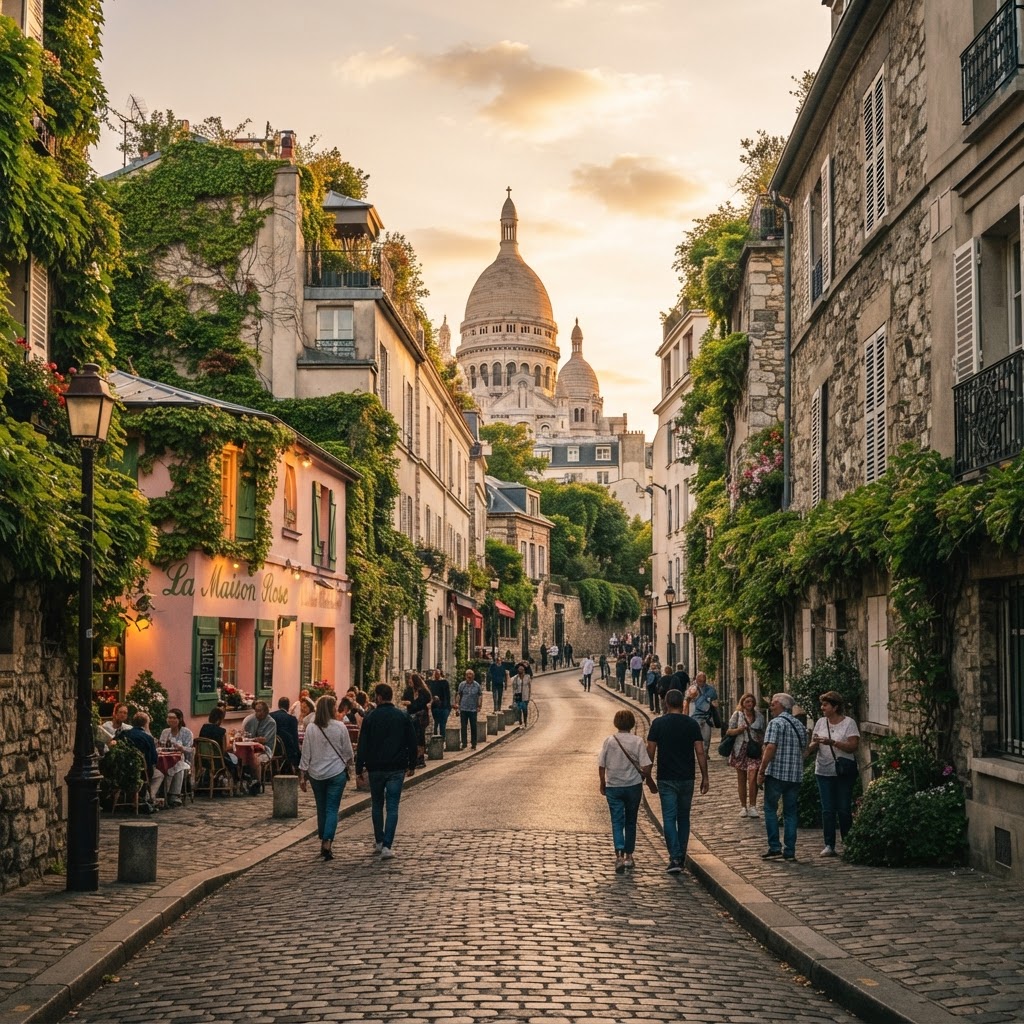
Montmartre serves as the historic creative heartbeat of Paris, having functioned as a bohemian sanctuary for legendary artists like Pablo Picasso, Salvador Dalí, and Claude Monet between 1880 and 1920. The neighborhood’s unique aesthetic was forged by its deliberate resistance to Baron Haussmann’s 19th-century urban renewal project, which flattened much of Paris into wide, symmetrical boulevards. Because Montmartre remained an independent village until its annexation in 1860, it retained an irregular, intimate street plan that fostered artistic experimentation and the birth of radical movements like Cubism.
Today, the architectural preservation of these winding paths allows visitors to step back in time. The juxtaposition of the modern city below with the steep, narrow alleys above provides a tangible connection to the past. Travelers should note that the historic layout is maintained specifically to protect the village atmosphere, which distinguishes it from the rigid, Haussmann-style architecture found in the rest of the 18th arrondissement. Whether you are examining the crumbling plaster of 100-year-old studios or walking the same stone paths as the Impressionists, the area remains a living museum of early 20th-century Parisian life.
Navigating the Montmartre Cobblestone Streets
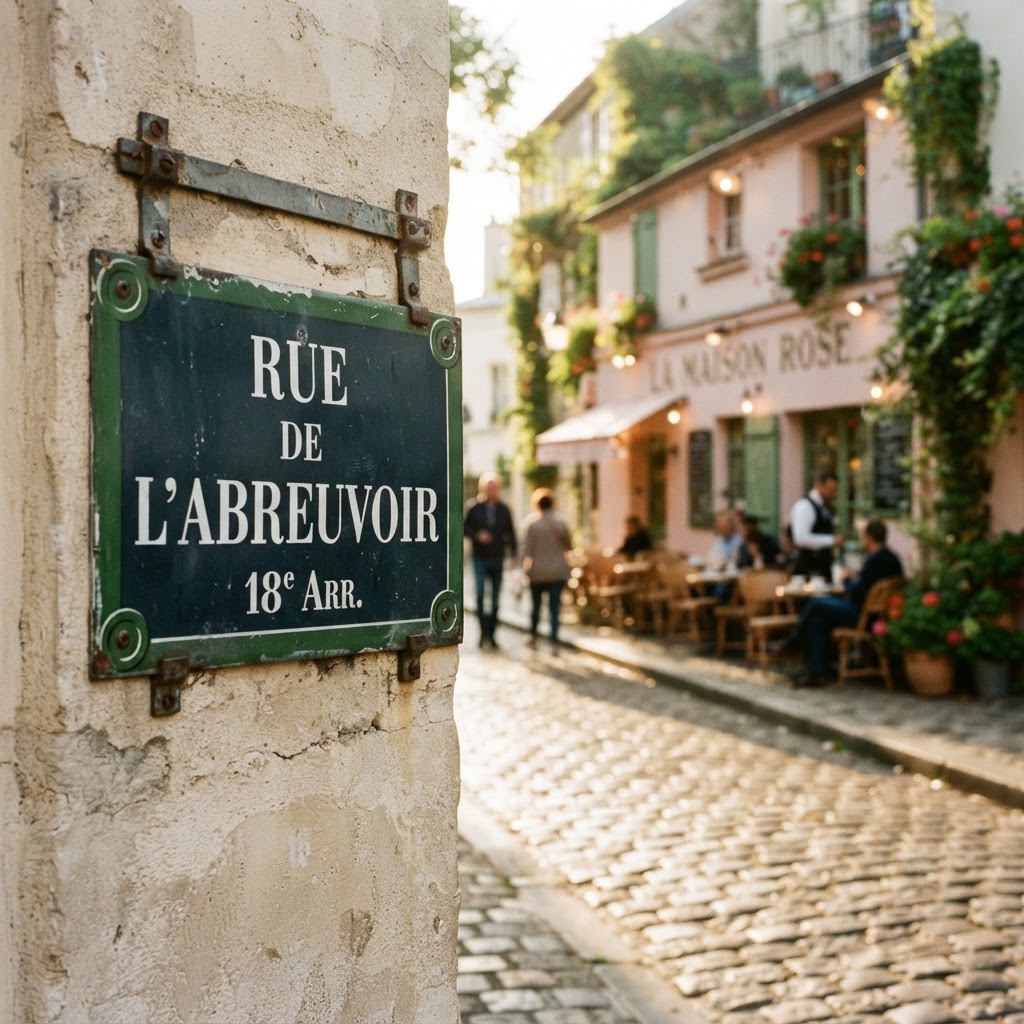
Navigating Montmartre requires a strategic approach to terrain, as the neighborhood features over 200 distinct staircases and steep inclines that define its vertical geography. To capture the true aesthetic of the village, move away from the Place du Tertre and prioritize walking routes along residential streets where the original 19th-century paving remains undisturbed. Rue de l’Abreuvoir is widely considered the most beautiful street in the neighborhood, famously lined with ivy-covered facades that evoke a quintessential romantic Paris, while Rue Saint-Rustique provides a direct, low-traffic sightline to the basilica’s dome.
Comparison: Navigating the Hill
The Best Time for Photography
If you want to capture the streets without the crowds, timing is everything. The early morning light hits the white stone of the Sacré-Cœur and the surrounding buildings in a way that feels ethereal. Aim for sunrise; you will find that the local bakers are the only ones stirring, providing you with a silent, cinematic experience of the village.
The Sacré-Cœur Aesthetic
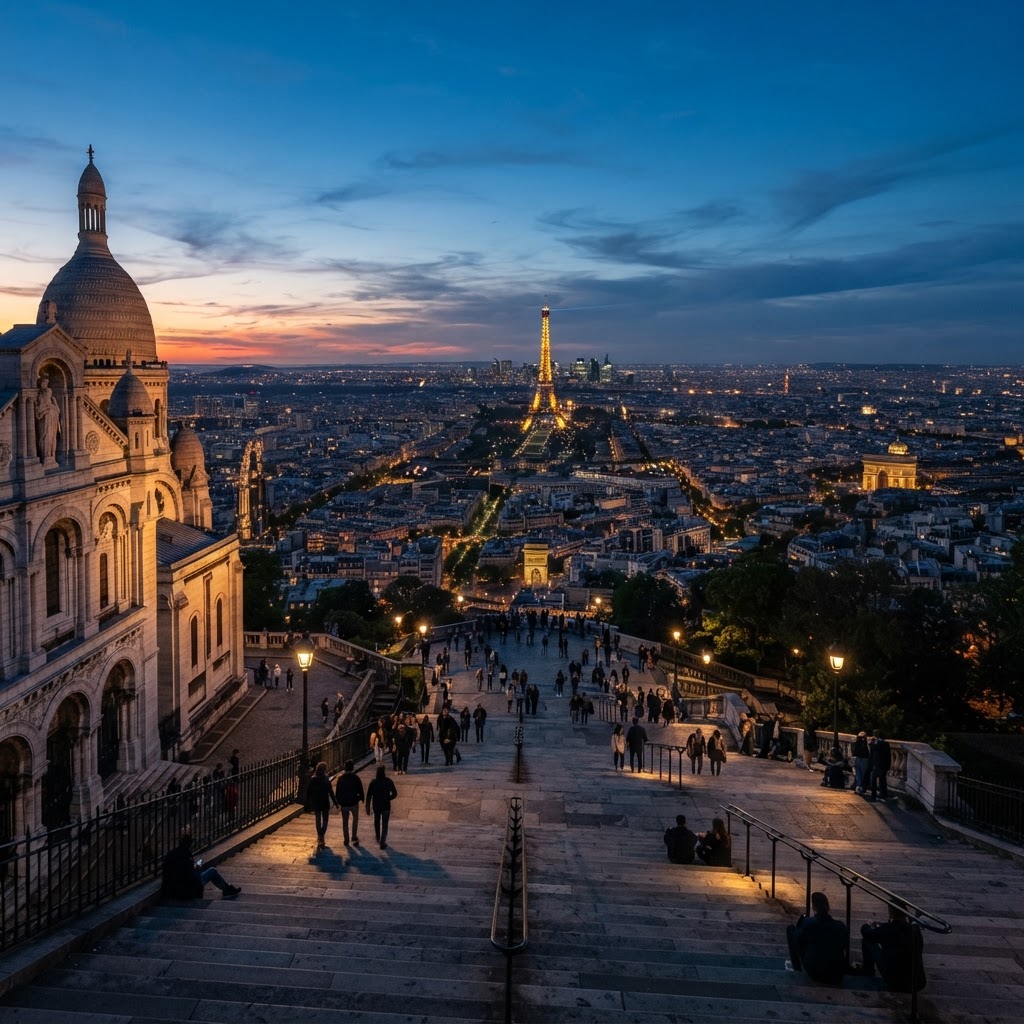
Standing at the highest point in Paris at 130 meters above the city, the Sacré-Cœur Basilica is a masterpiece of Romanesque-Byzantine architecture constructed from travertine stone that naturally self-cleans in rain. The basilica’s unique aesthetic is defined by its chalky white, limestone-based exterior, which is designed to reflect light and remain visible against the often gray Parisian sky. Its architectural footprint serves as a spiritual anchor for the entire 18th arrondissement and offers one of the most significant vantage points in the city.
Key Architectural Details
- The Domes: Resembling a wedding cake, the central dome is a triumph of design that offers 360-degree views of the city.
- The Mosaic: The Christ in Majesty mosaic inside is one of the largest in the world, radiating gold hues.
- The Steps: The vast tiered plaza in front of the basilica acts as an open-air theater where locals and tourists gather to watch the sunset.
Hidden Gems and Secret Corners
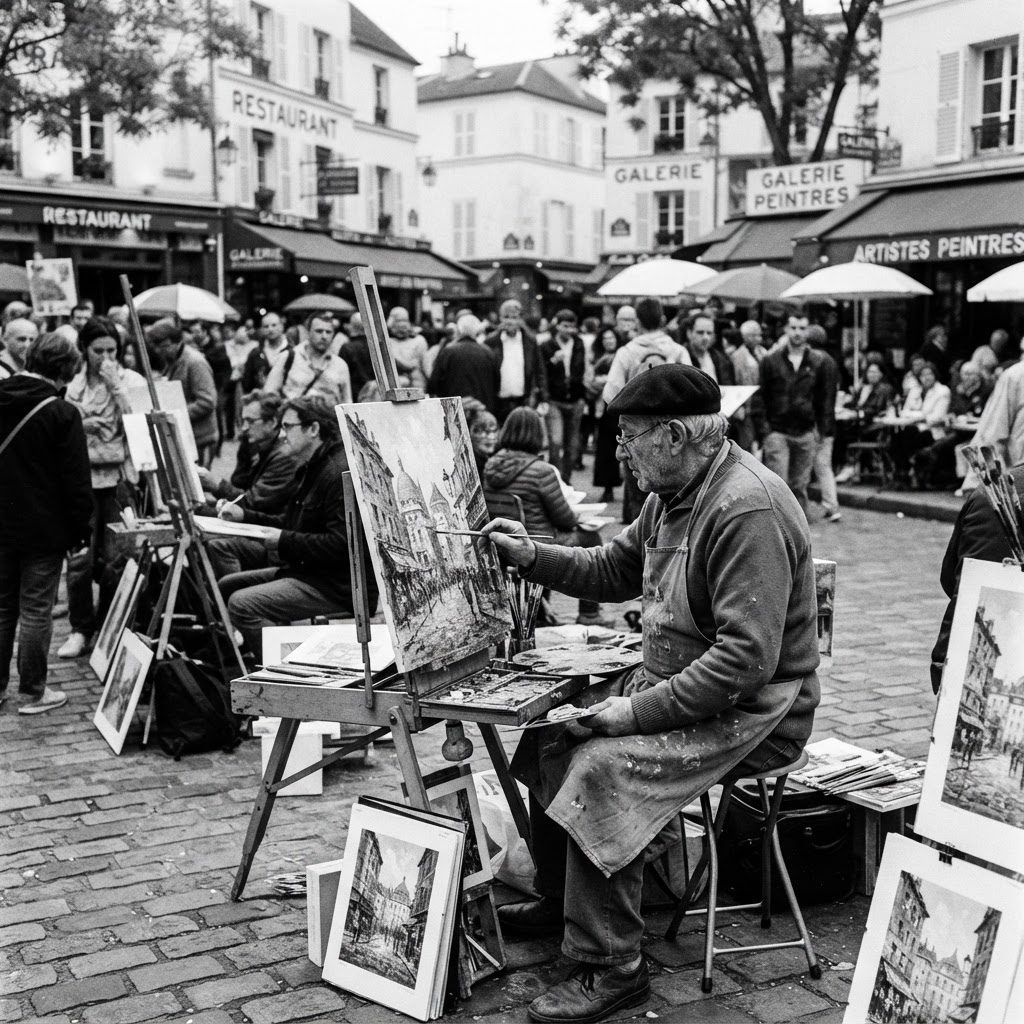
Real magic in Montmartre exists in the quiet pockets hidden just a few streets away from the central tourist hubs. The most famous secret spot is the “Le Passe-Muraille” statue, a tribute to author Marcel Aymé, which depicts a man emerging from a stone wall, symbolizing the neighborhood’s surrealist history. Additionally, the Clos Montmartre vineyard stands as the last remaining agricultural plot in the city, covering 1,500 square meters and producing roughly 500 liters of wine annually, proving that the rural spirit of the village still persists amidst urban development.
Creating Your Own Visual Narrative
To document your trip like a professional, look for leading lines created by the historic cobblestone patterns that naturally direct the eye toward the Sacré-Cœur. Use the textured walls of the old residential buildings as a backdrop for portraits, as the neutral, aged stone works beautifully with any color palette. For the best lighting, aim to shoot during the ‘Golden Hour,’ usually 60 minutes before sunset, when the light casts long shadows that highlight the uneven, tactile texture of the streets.
Essential Travel Tips for Visitors
When visiting, keep in mind that the streets are steep and can be taxing on those with limited mobility. Utilize the Funiculaire de Montmartre if you have a valid Navigo transit pass to save your energy for walking the upper reaches of the hill. Avoid eating at the restaurants directly on Place du Tertre, which are often priced 30-40% higher than average; instead, walk 10 minutes toward the Lamarck-Caulaincourt area for authentic bistros.
[![Beautiful Montmartre Evening Walk Paris Cafés to Sacré-Cœur [4K]](https://img.youtube.com/vi/wR0Z8W-pNdw/hqdefault.jpg)](https://www.youtube.com/watch?v=wR0Z8W-pNdw)
Respecting the Neighborhood
Remember that while Montmartre is a tourist hotspot, it is also a living, breathing neighborhood. Keep noise levels down, especially in the early hours, and always be mindful of private residences. By traveling with respect, you ensure that the charm of this historic village remains preserved for generations to come.
FAQ
Q: What is the best way to get to Montmartre?
Take Metro Line 12 to Abbesses station, which is the deepest in Paris, or use Line 2 to Anvers station to walk up from the bottom of the hill. Using the Funicular is the most efficient way to reach the summit if you have a transit pass.
Q: Can you walk up to the top of the Sacré-Cœur?
Yes, visitors can climb the 300 steps to the top of the basilica dome for a panoramic view of the Paris skyline. There is an entrance fee for the dome climb, typically around €7, and it is usually open daily until 8:00 PM.
Q: Are the cobblestone streets safe for walking?
While historic and charming, the streets are uneven, steep, and can be slippery in the rain, so comfortable walking shoes with good traction are essential. Always watch your footing on the old stone paths, particularly when descending the hill.
Q: Is Montmartre worth visiting at night?
Montmartre is incredibly scenic at night, with the Sacré-Cœur illuminated and the city lights sparkling below, though you should remain aware of your surroundings as in any major tourist area. It offers a romantic and quiet atmosphere compared to the daytime crowds.
Q: When is the best time to avoid the crowds?
Visit between 6:00 AM and 8:00 AM on a weekday to experience the streets nearly empty. Most tourist groups and shops do not start operating until after 10:00 AM, providing a two-hour window for undisturbed photography.
Leave a Reply