
Mountain Reflections in Still Water: A Guide to Serenity
Mountain reflections in still water occur when calm lake conditions allow light to bounce off the surface at a specular angle, creating a perfect mirror image of peaks. To achieve this, photographers must seek low-wind environments during dawn or dusk, when atmospheric stability is highest and thermal turbulence is at its minimum.
The Science Behind the Mirror Effect
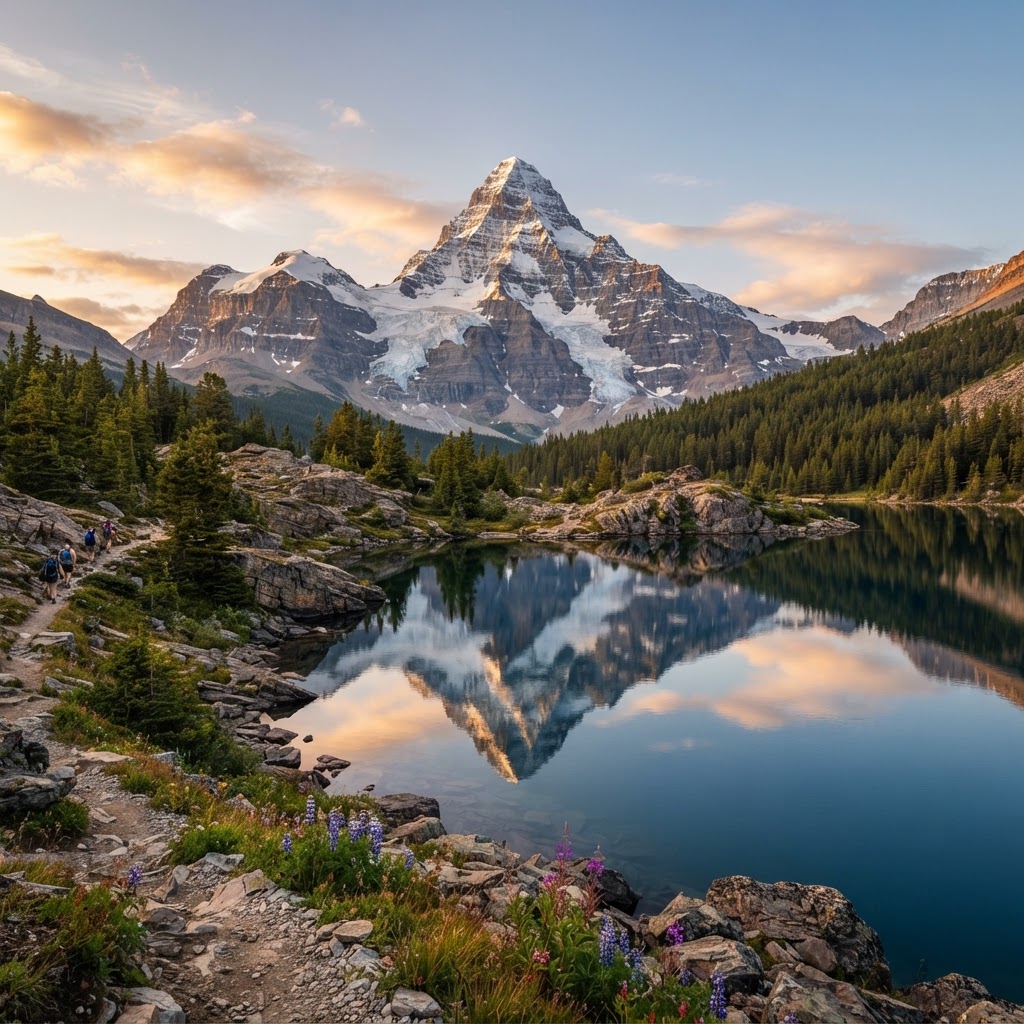
At its core, the reflection of a mountain in water is a fascinating interplay of light, optics, and environmental conditions. For a perfect reflection to occur, the water must be exceptionally still. Even a slight breeze can create ripples on the surface, which act as a prism and scatter the light, breaking the crisp image of the peaks above. When sunlight strikes the water at an angle of 10 to 20 degrees, it creates a specular reflection that acts as a mirror rather than a translucent window. During the golden hour—the period shortly after sunrise and before sunset—the low sun position intensifies this effect. Atmospheric stability is the primary physical requirement; calm water is most frequent when air temperatures are near-freezing, which reduces the density of local thermal winds. Observers should track the ‘wind speed’ metric on weather apps, targeting conditions below 5 mph to ensure the surface remains glassy. When the air remains cooler than the water surface, as is common in early alpine mornings, the atmosphere lacks the buoyancy needed to create surface ripples, providing the perfect canvas for a mountain’s reflection.
The Role of Light and Angle
Light behaves predictably, but its interaction with water is delicate. When sunlight strikes the surface of a lake at a shallow angle, the water acts more like a mirror than a window. This is known as specular reflection. During the golden hour—just after sunrise or just before sunset—the low angle of the sun enhances this effect, making the colors of the mountains appear richer and more vibrant against the water’s surface.
Atmospheric Stability
Still water is often found in the early morning hours, long before the sun has had a chance to heat the air and generate thermal winds. These morning hours are critical for photographers and observers alike. When the air is cool and the atmosphere is stable, the water maintains a glass-like state, providing the perfect canvas for the mountain’s reflection.
Choosing the Perfect Location
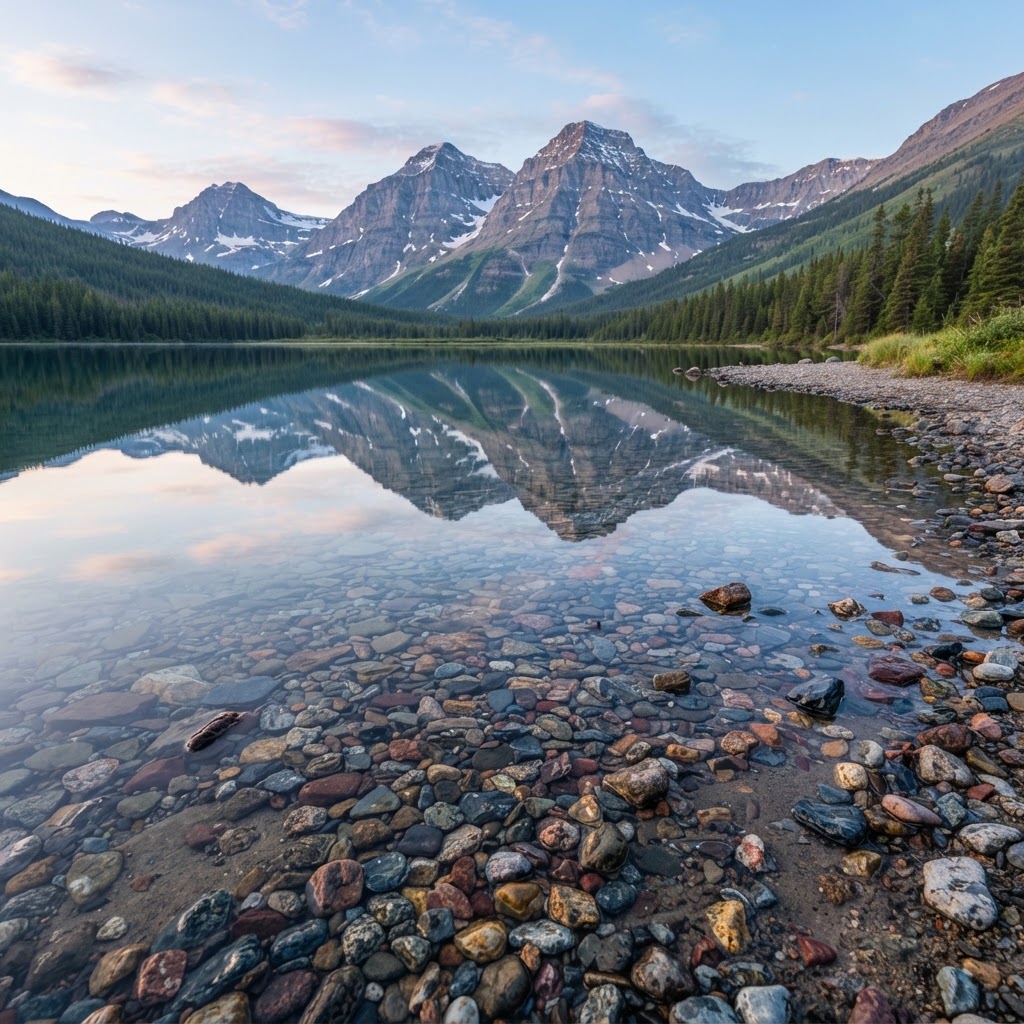
Identifying the ideal location for mountain reflections requires scouting for high-altitude glacial lakes, which are naturally protected from prevailing winds by surrounding topography. Smaller alpine tarns are statistically more likely to provide mirror-like surfaces compared to large reservoirs, as smaller surface areas prevent the accumulation of wind-driven energy. When searching for locations, use topographical maps to identify basins shielded on at least three sides by ridges or peaks, which effectively block surface-level gusts. Darker, deep-water lakes are superior because they increase light absorption, reducing the amount of light reflecting from the lake bed and allowing the mountain reflection to dominate the viewer’s visual field. Glacial lakes, often fed by snowmelt, are the gold standard because their lower water temperatures create a consistent surface tension. For example, lakes like Moraine Lake in Canada or the various tarns of England’s Lake District benefit from these exact geological protections. Always aim for locations accessible during the ‘shoulder’ seasons when wind patterns are generally more predictable and the contrast between snow-capped peaks and clear water is at its maximum peak.
Characteristics of Ideal Reflection Spots
When scouting for locations, look for lakes with dark, calm water. Darker water beds are better at absorbing light, which results in a deeper, more contrast-rich reflection of the mountain peaks. Smaller alpine ponds are often superior to massive lakes because they have less surface area for the wind to agitate.
Global Gems for Reflection Seekers
Places like Moraine Lake in Canada or the tarns of the Lake District in England are world-famous for their mirror-like quality. However, even local ponds can offer stunning reflections if you visit at the right time. The key is to find bodies of water that are naturally protected by geography.
Photography Tips for Capturing Reflections
Successful reflection photography hinges on a technical workflow that stabilizes the camera while manipulating incoming light to emphasize symmetry. A circular polarizing filter is your most critical tool; by rotating it 90 degrees relative to the sun, you can selectively cut glare or intensify the reflection of the mountain peaks. Beyond filtration, a sturdy carbon-fiber tripod is non-negotiable, as even micro-vibrations from wind or a shutter press can degrade image sharpness during longer exposures. Aim for a narrow aperture (between f/8 and f/11) to maximize depth of field, ensuring both the reflected mountain and the foreground elements remain in focus. If the water surface is slightly choppy, increase your shutter speed to freeze individual ripples; conversely, for a silky, dream-like effect, use a 2-second to 5-second long exposure to effectively ‘average out’ the water’s movement into a flat plane. Always shoot in RAW format to preserve the high dynamic range present when balancing the bright mountain peaks against the darker reflections in the water.
Using Polarizing Filters
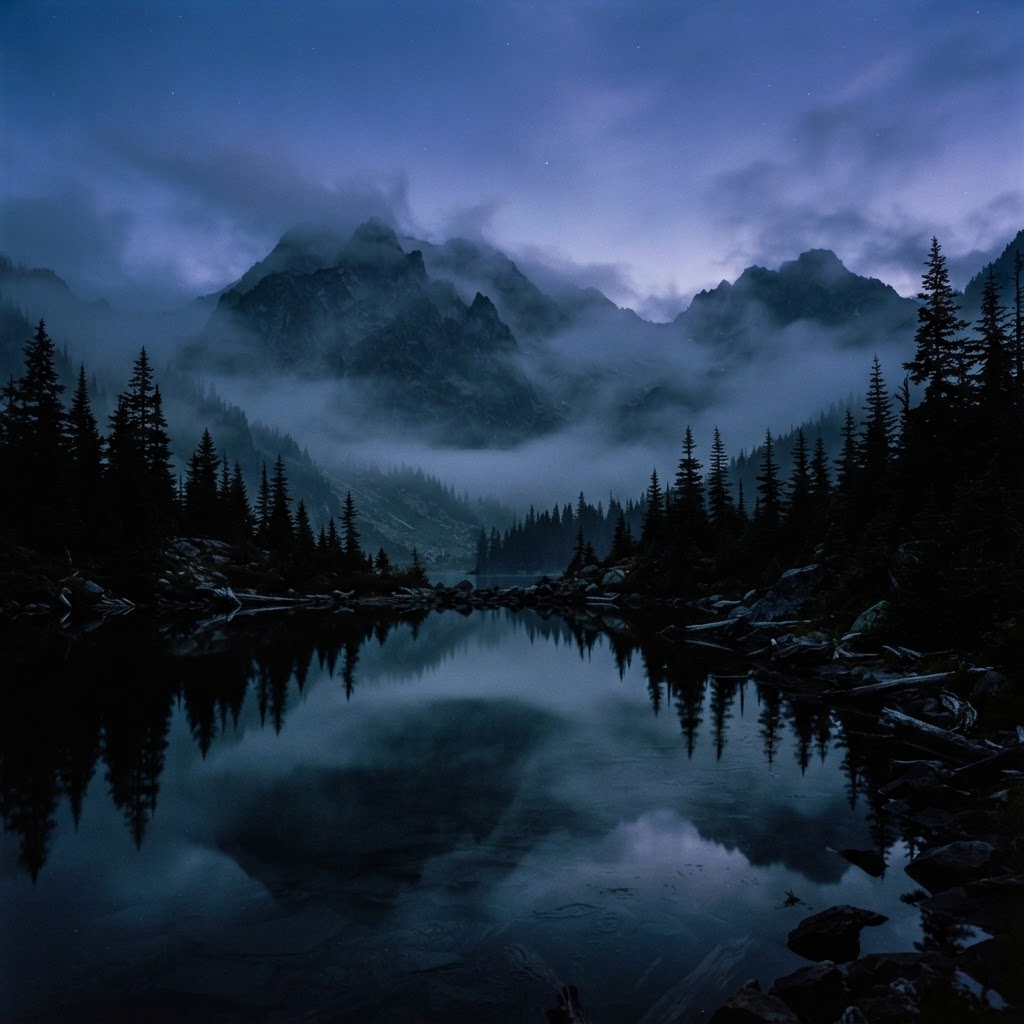
A circular polarizer is an essential tool for any landscape photographer. By rotating the filter, you can control how much glare you see on the water. If you want to see through the water to the rocks below, you remove the reflection; if you want to emphasize the mirror effect, you adjust the filter to intensify the reflection of the mountain.
Camera Stability and Long Exposure
Even if the water seems perfectly still, micro-vibrations can ruin a long-exposure shot. Using a sturdy tripod is non-negotiable. By keeping your ISO low and your aperture narrow, you can capture the sharpness of the mountain while allowing the water to appear as a flawless, silky mirror.
The Psychological Benefits of Still Waters
Observing still water triggers a physiological response known as ‘soft fascination,’ which effectively lowers cortisol levels and aids in cognitive restoration. This effect is grounded in the symmetry of the environment; the human brain is evolutionarily hardwired to find balance and order in nature, and the near-perfect symmetry of a mountain reflection provides a predictable visual pattern that reduces mental fatigue. Research in environmental psychology suggests that ‘blue space’ (areas near water) is more effective at promoting relaxation than ‘green space’ alone, particularly when the water is motionless. This stillness creates a sense of spatial infinity, forcing the brain to slow its processing speed as it observes a scene that lacks movement or threat. By aligning one’s focus with the horizontal plane of the horizon and its reflection, observers report a state of ‘flow,’ where the distinction between the self and the environment blurs. This experience acts as a natural reset for the human nervous system, providing a break from the high-frequency stimuli of modern, tech-centric environments.
Finding Zen in Symmetry
Symmetry is often associated with balance and peace. When we look at a reflection that is so perfect that we cannot distinguish between the real mountain and the reflection, our minds are forced to slow down and process the visual data. This state of ‘soft fascination’ is a powerful antidote to the constant cognitive load of modern life.
Connecting with Nature’s Rhythms
By waiting for the wind to die down and the water to become still, you are aligning yourself with the natural rhythm of the environment. This practice encourages patience, a quality that is often lacking in our fast-paced society. You learn to listen to the wind, observe the temperature shifts, and wait for the perfect moment to arrive.
Common Challenges and How to Overcome Them
Nature is inherently unpredictable, and mastering the conditions requires adaptive strategies that prioritize flexibility over rigid planning. If heavy wind appears, move to a lower elevation point near the bank; wind speed at ground level can be 50% lower than at eye level. If clouds obscure the direct light, lean into the moodiness by using a longer exposure to smooth out the water and emphasize the dark, dramatic shapes of the reflected peaks. It is important to remember that weather patterns in mountainous regions often shift significantly between 6 AM and 8 AM; waiting for the ‘lull’ between thermals is often the difference between a blurry water shot and a pristine mirror. If your reflection remains broken, try incorporating the ripples as a foreground texture; using a wide-angle lens, you can compose the image so that the ripples lead the eye into the center of the frame, turning a ‘failed’ mirror shot into a successful artistic study of texture and depth.
Managing Wind and Weather
If the wind is picking up, try finding a sheltered cove or a smaller pool near the main lake. Sometimes, moving just a few feet lower to the ground can change your perspective and protect your shot from the worst of the gusts. Don’t be afraid to embrace ripples as well—sometimes a slightly distorted reflection adds a sense of movement and artistry to an image.
The Best Times of Day
While sunrise and sunset are the classic times, don’t ignore the “blue hour” just before sunrise. The soft, cool light during this period can create a surreal, ethereal atmosphere that makes the mountains look like they are floating in space.
Essential Gear for Your Reflection Journey
FAQ
Q: What is the best time of day for mountain reflections?
Early morning, specifically 30 minutes before sunrise, is the best time for mountain reflections because the air is cooler and wind speeds are typically at their daily minimum. This creates the optimal conditions for the calm, glass-like water necessary for a clear reflection.
Q: Why do ripples ruin a mountain reflection?
Ripples act as thousands of tiny prisms that scatter light in different directions instead of reflecting it uniformly. This breaks up the specular reflection, preventing the mountain’s shape from forming a coherent, crisp image on the water’s surface.
Q: How do I find lakes with still water?
Look for high-altitude tarns shielded by ridges or deep valleys, as these geographic features naturally act as windbreaks. Using topographical maps to identify basins protected from the prevailing wind direction can significantly increase your chances of finding mirror-calm water.
Q: Do I need a filter to photograph reflections?
While not strictly required, a circular polarizing filter is highly recommended to control the intensity of the reflection on the water’s surface. It allows you to toggle between seeing through the water or maximizing the mirror effect for more dramatic results.
Q: How does altitude affect reflection quality?
Higher altitudes often provide better reflection quality due to thinner, cooler air and less atmospheric haze. Additionally, alpine lakes are frequently fed by snowmelt, resulting in lower water temperatures that help maintain the calm, stable surface required for a reflection.
Leave a Reply