
There is a fleeting moment in the Arctic North where the sun seems to hesitate before it sets, painting the landscape in shades of liquid gold, honey, and soft violet. Norway in golden hour is not just a visual spectacle; it is a transformative experience for anyone lucky enough to stand amidst its dramatic fjords and towering mountains. As the light stretches, the harshness of the daylight dissipates, replaced by a warm, diffused radiance that turns every jagged rock and mirror-still water surface into a masterpiece of natural art.
The Magic of Arctic Light
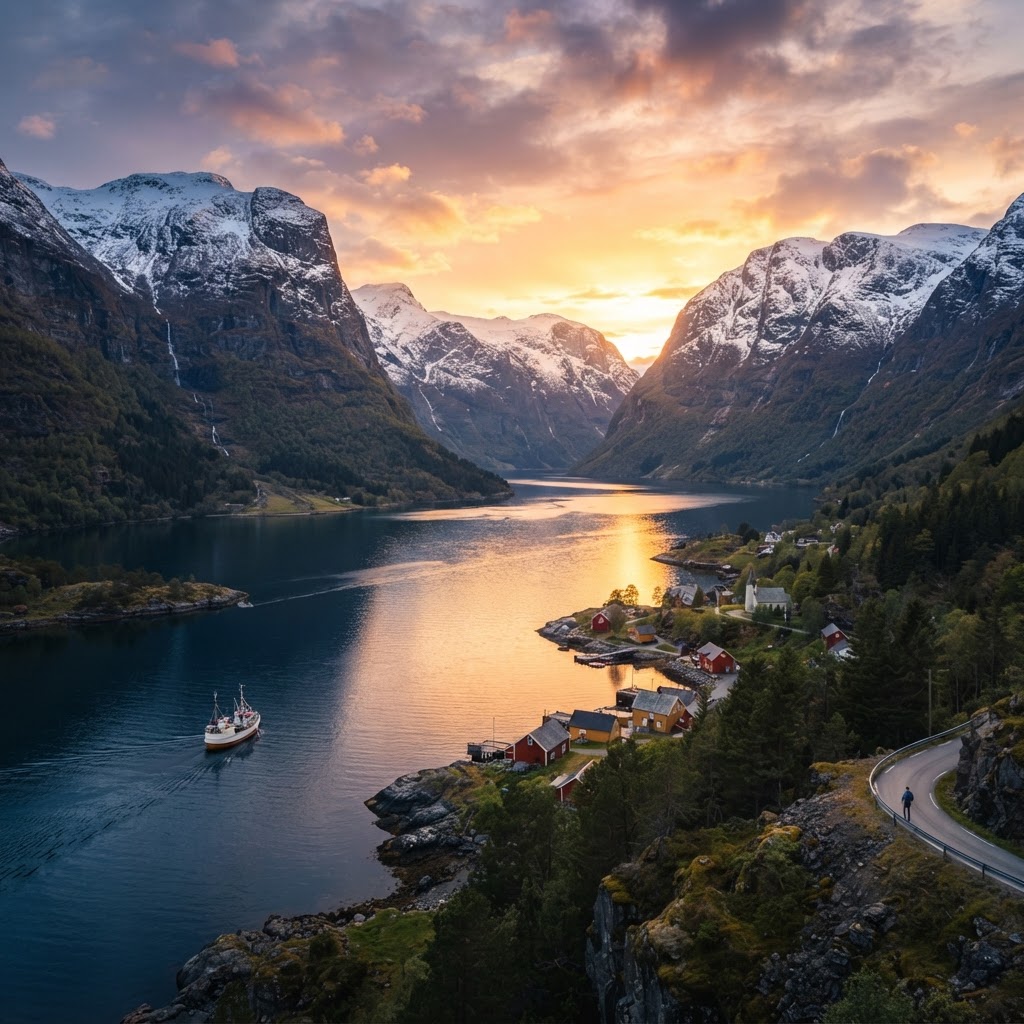
Unlike lower latitudes where golden hour arrives and vanishes in a brisk sixty minutes, Norway offers a protracted display of this ethereal lighting. Because of the Earth’s axial tilt and Norway’s high northern latitude, the sun travels across the horizon at a much shallower angle. This results in a prolonged transition period, giving photographers and travelers alike a generous window of time to witness the landscape bathed in a glowing, cinematic quality.
During the summer months, particularly near the Arctic Circle, this “golden” state can seemingly last for hours. The light softens the deep shadows of the deep valleys and highlights the textures of the glaciers. Whether you are trekking near Lofoten or cruising through the Geirangerfjord, the interplay of light and shadow during this time creates a depth that is difficult to capture at any other time of day.
Understanding the Golden Hour Phenomenon
Golden hour occurs twice daily, shortly after sunrise and just before sunset. In Norway, however, the phenomenon is distinct due to the clarity of the air and the dramatic topography. The crisp, clean atmosphere allows for high-contrast imagery, where the golden light cuts through the mist and illuminates the spray of waterfalls with unparalleled brilliance.
Best Locations to Experience the Glow
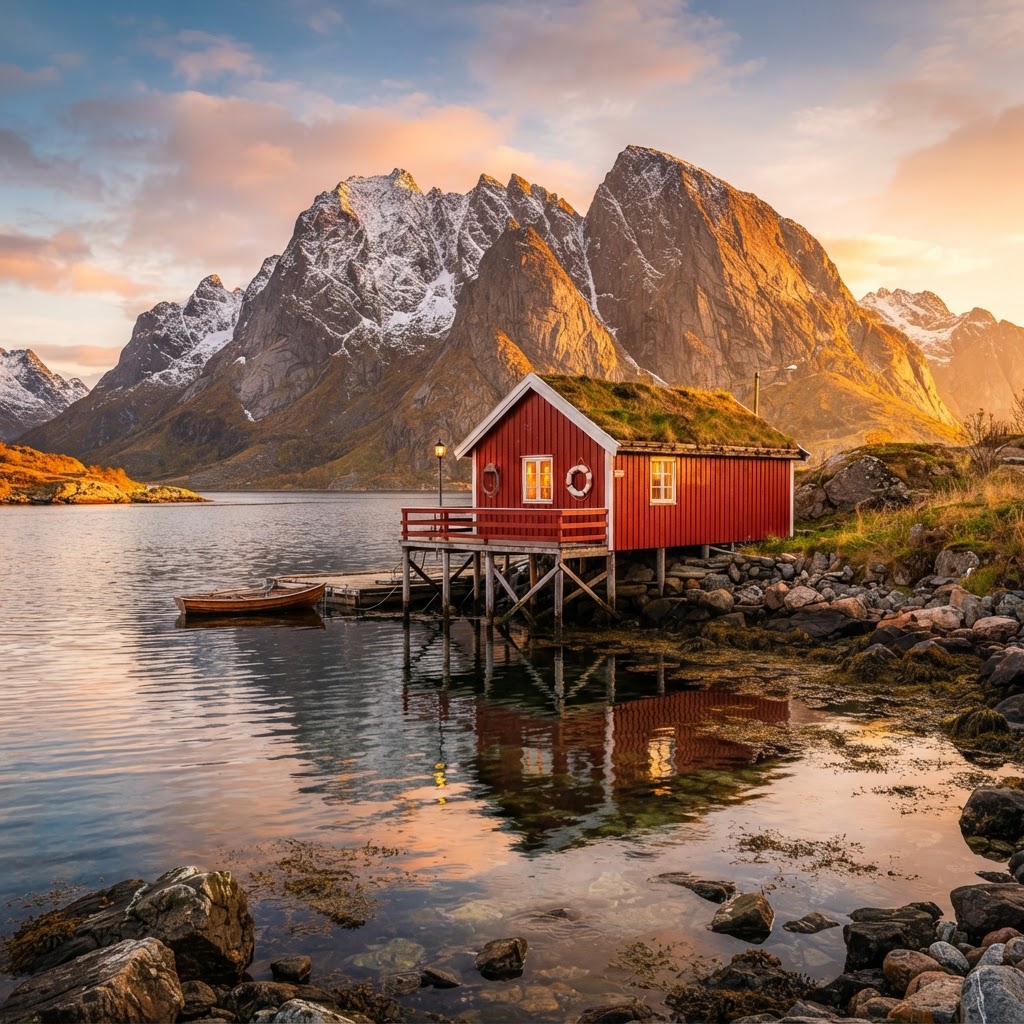
While every corner of Norway has its charm, certain regions elevate the golden hour experience to a spiritual level. The Lofoten Islands, with their dramatic mountain ridges rising directly from the sea, are perhaps the most iconic spots. The way the light catches the traditional red “rorbuer” cabins against the backdrop of a flaming sky is a sight that defines Norwegian travel photography.
Another spectacular destination is the Geirangerfjord. As the sun moves, the steep walls of the fjord act as natural reflectors, bouncing the golden light deep into the water. This creates an effect where the fjord looks like it is filled with liquid gold, perfect for wide-angle landscape compositions that demand a sense of scale and wonder.
Technical Tips for Capturing Norway
To truly document Norway in golden hour, your technical approach must evolve with the shifting light. The most important rule is to shoot in RAW format. The dynamic range of a high-contrast mountain scene is immense, and you will need the extra data in your files to recover details in the deep shadows of the crags and the bright highlights of the clouds.
Using a circular polarizer is another essential technique. While many photographers avoid polarizers for landscape, using one here can help you manage the reflections on the surface of the fjords or the wet rocks near waterfalls. It allows you to dial in the perfect amount of sheen, ensuring the water looks like glass while the surrounding granite retains its rich, earthy tones.
Essential Gear Checklist
| Item | Why It Is Essential |
| — | — |
| Sturdy Tripod | Critical for long exposures in low light |
| Wide-Angle Lens | Captures the vast scale of the fjords |
| Neutral Density Filter | Allows for motion blur in waterfalls |
| Extra Batteries | Cold temperatures drain power faster |
| Microfiber Cloth | Keeps lenses clear from fjord mist |
Composing Your Shot
Composition during the golden hour in Norway requires patience. Instead of snapping away, wait for the light to hit specific textures. For instance, focus on the way the light grazes the side of a mountain, highlighting the layers of sediment or the texture of the moss. This is called side-lighting, and it adds immense dimension to your photos, turning a flat landscape into a three-dimensional image.
Don’t forget to incorporate human elements. Including a person in a brightly colored jacket provides a sense of scale and contrast against the massive, golden-lit environment. It creates a narrative, showing not just the beauty of Norway, but the human connection to such a grand, untamed wilderness.
The Role of Weather in Light Quality
In Norway, weather is a fickle companion. However, bad weather is often a photographer’s best friend during the golden hour. A sky filled with broken, heavy clouds is far more interesting than a clear, featureless blue sky. When the sun dips below these clouds, it casts “god rays” or crepuscular rays, which can turn a dark, moody fjord into a cathedral of light.
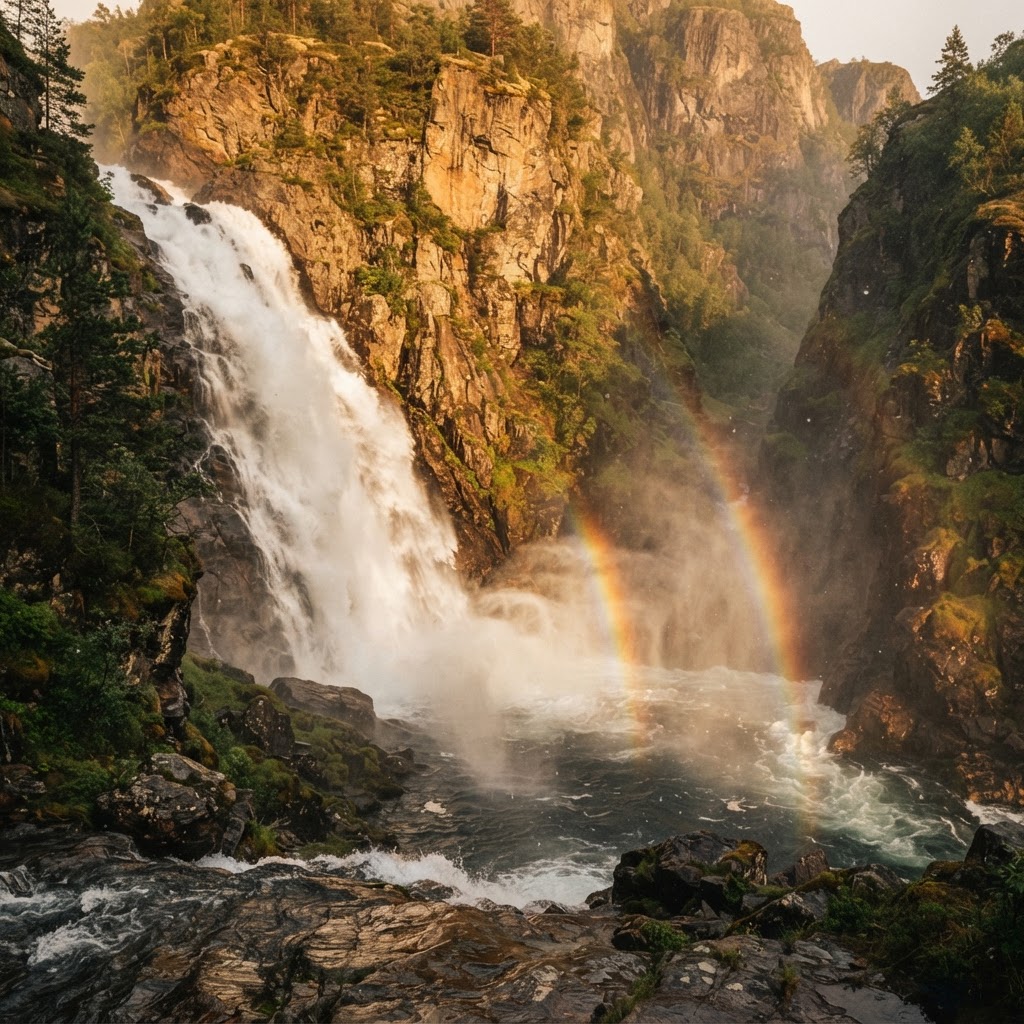
If you find yourself in the middle of a light drizzle, do not retreat to your hotel. The mix of moisture in the air and the setting sun often results in intense, saturated rainbows. These rainbows, combined with the golden light reflected off the peaks, create a high-drama environment that is arguably the peak of Norwegian landscape photography.
Planning Your Golden Hour Itinerary
Planning your trip around the golden hour requires checking the sun’s azimuth for your specific location. Use apps like PhotoPills to map out exactly where the sun will be relative to your desired mountain peaks or fjord bends. This level of preparation ensures you are not stuck in the shadow of a mountain when the best light is happening on the opposite ridge.
Consider staying in small, remote villages rather than the larger cities. Remote locations offer unobstructed horizons. In places like Reine or Hamnøy, the golden hour light filters through the mountain gaps, creating a spotlight effect on the small fishing villages that is both quiet and profound.
Seasonal Considerations
It is important to remember that the timing of the golden hour shifts drastically with the seasons. In winter, the sun barely crests the horizon, creating an “all-day” golden hour that is soft, blue, and incredibly long. In contrast, summer golden hours are rapid but brilliant, characterized by high-energy colors and long, lingering sunsets that stretch into the early hours of the morning.
Safety and Sustainability
When chasing the perfect light in Norway, always prioritize safety. The terrain can be treacherous, especially when you are distracted by a beautiful view. Wear sturdy hiking boots, bring a headlamp for the hike back after the sun has set, and always tell someone where you are going. The beauty of Norway is wild and unpredictable, and it should be treated with the utmost respect.
Furthermore, practice leave-no-trace principles. Many of the best golden hour spots are fragile ecosystems. By staying on marked trails and respecting the local environment, you ensure that future generations can witness the same magical glow you experienced. Sustainable travel is about preserving the wonder, not just documenting it.
Conclusion
Norway in golden hour is a testament to the power of light to shape our perception of the world. From the deep, silent fjords to the rugged, snow-dusted peaks, the landscape undergoes a nightly metamorphosis that captures the heart of every traveler. Whether you are a professional photographer looking for the perfect shot or a wanderer seeking peace in nature, this country offers an unparalleled opportunity to connect with the elements.
If you are planning your next adventure, make sure to carve out time to just stand still and watch the light change. Don’t rush from one viewpoint to the next. Give yourself the space to breathe in the crisp Arctic air and watch as the sun paints the horizon. Are you ready to see the world in a different light? Start planning your trip to Norway today and experience the golden hour for yourself.
Leave a Reply