Notting Hill Colourful Streets: A Complete Photo Guide
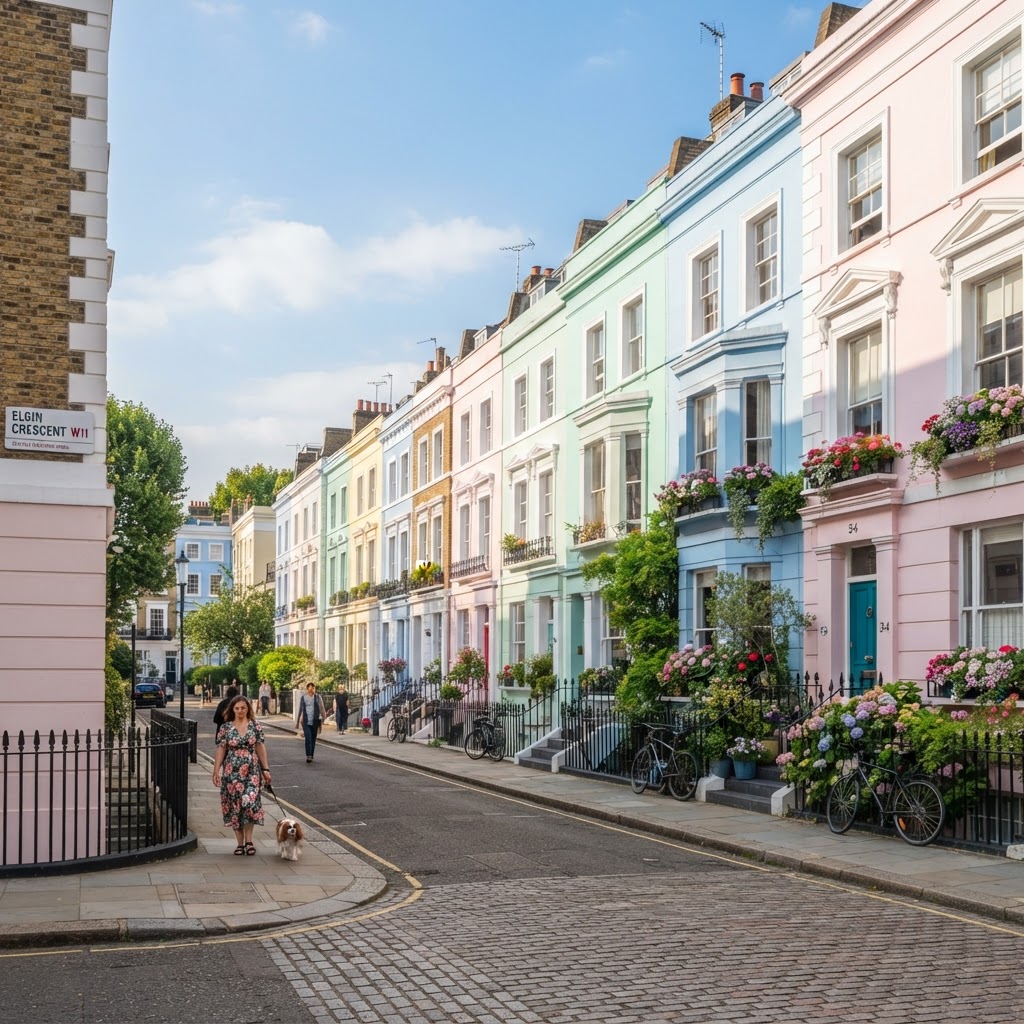
The most photogenic colourful streets in Notting Hill are Lancaster Road, Denbigh Terrace, and St Luke’s Mews, known for their vibrant Victorian pastel facades. For the best photography, visit these locations before 9:00 AM on weekdays to avoid crowds and capture the soft, natural morning light against the iconic candy-coloured architecture.
The Charm of Pastel Houses in London
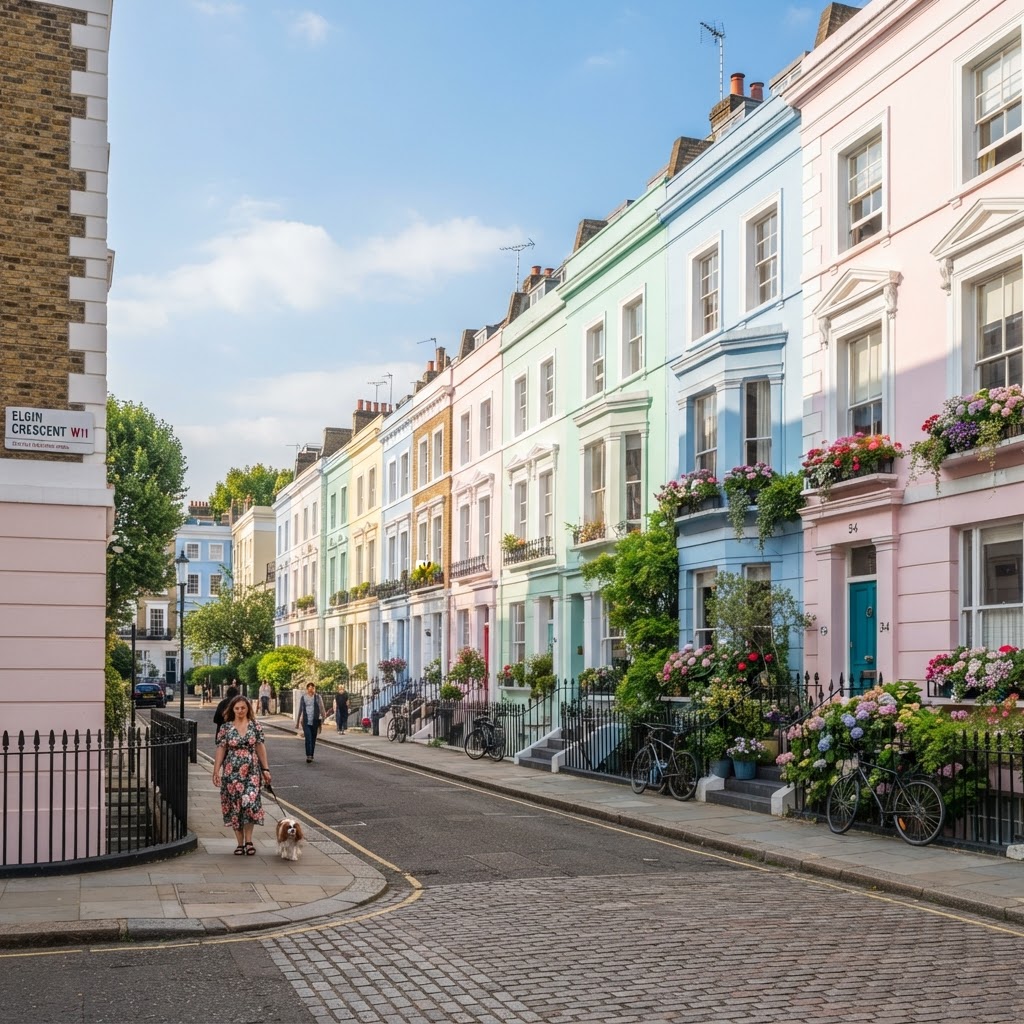
There is something uniquely uplifting about walking through rows of pastel houses in London. The history of these buildings dates back to the mid-19th century when the area began its transition from rural farmland to the affluent residential hub it is today. Today, these houses are maintained with pride, often painted in shades of mint green, soft pink, canary yellow, and powder blue. The contrast between these vibrant walls and the deep green foliage of hanging baskets creates a visual texture that is hard to replicate anywhere else in the city.
To capture these homes at their best, you must consider the time of day. Morning light is generally softer and prevents harsh shadows from falling across the narrow streets. During the summer, the abundance of wisteria and roses adds an extra layer of charm, making these Notting Hill colourful streets feel like a fairytale village nestled in a bustling metropolis. When planning your shoot, note that the sun hits the east-facing sides of streets like Lancaster Road best during early morning hours, creating high-contrast, professional-grade imagery.
Essential Photography Spots in Portobello
When most people think of West London sightseeing, their minds immediately drift toward the world-famous Portobello Road Market, but the residential side streets hold the true photographic value. Streets like Lancaster Road and Denbigh Terrace are famous for their bold, vibrant colors that look like they were lifted straight from a postcard. While Portobello Road is packed with over 1,000 dealers during the Saturday market, these residential side streets remain relatively quiet, allowing for unhurried composition and creative framing without interference from heavy foot traffic.
Capturing the Perfect Mews Shot
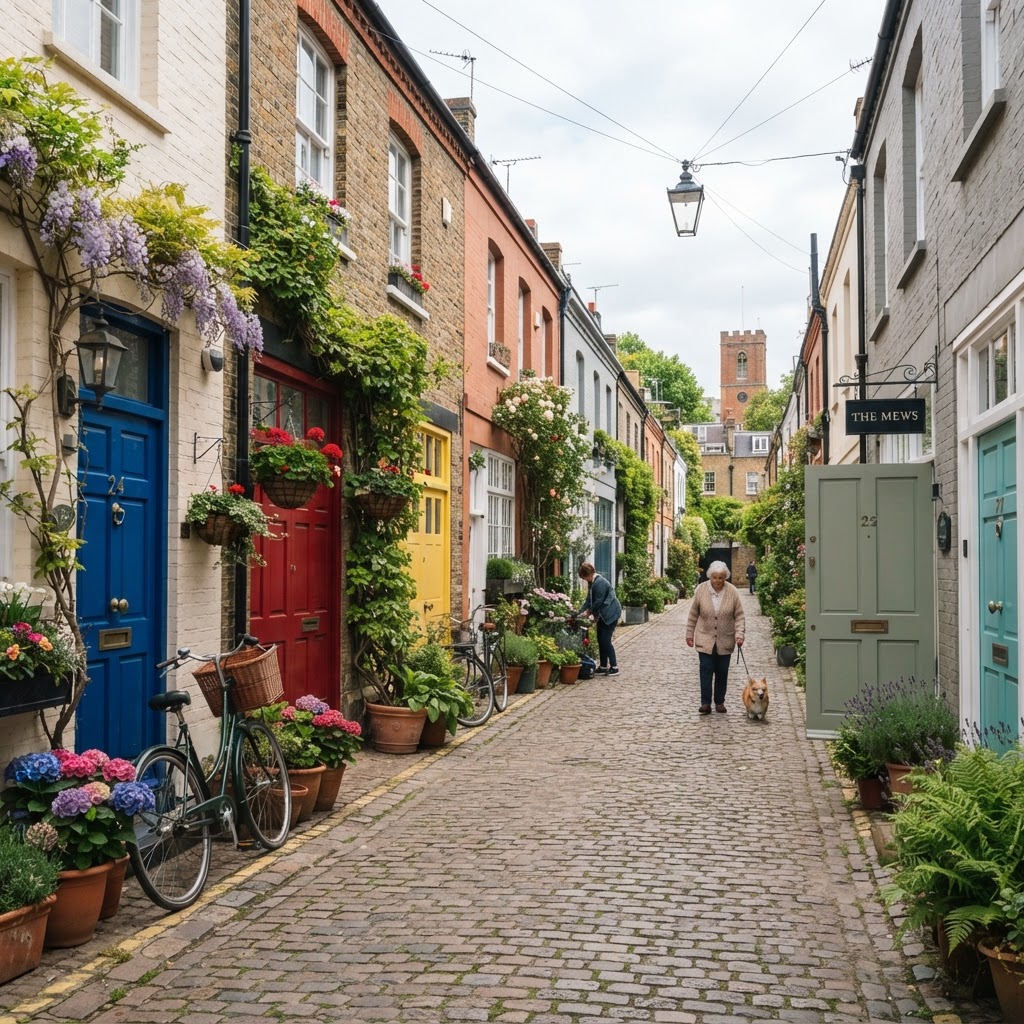
Beyond the main roads, you will find hidden mews that offer a more intimate setting for photography. St Luke’s Mews is arguably the most “Instagrammable” spot in the entire area, famously featured in movies and known for its exceptionally well-kept pastel residences. When shooting in these narrow spaces, use a wide-angle lens (16-35mm) to capture the full length of the street, or a prime lens (50mm f/1.8) to isolate specific architectural details like unique door knockers or ornate window frames. Focus on the interplay between the painted brickwork and the seasonal greenery to maximize visual storytelling.
Navigating the Best Routes for Photographers
Planning your walking route is crucial for maximizing your time and ensuring you beat the market crowds. Start your journey at Notting Hill Gate station and head north toward the colorful clusters near Elgin Crescent. By focusing your attention on these blocks, you can efficiently hit the highest concentration of Notting Hill colourful streets without getting lost in the maze of residential side roads.
This circuit allows you to experience the variety of the architecture while ensuring you have ample time to set up your tripod or phone for those perfect, crowd-free shots before the market crowds arrive. Grab a coffee at a local boutique café near Westbourne Park afterward to rest.
Tips for Mastering Instagrammable London
If you want your content to stand out, you need to go beyond the basic snapshot and leverage advanced composition techniques. Use leading lines created by the rows of houses to draw the viewer’s eye toward a specific point, such as a floral arrangement or a colorful bicycle propped against a wall. The beauty of the colourful architecture London prides itself on is that it provides a natural frame for any subject, which is essential for achieving a balanced, aesthetic feed.
Don’t be afraid to experiment with your editing style as well. Professional photographers often recommend a saturation increase of +10 to +15 in post-production to make the pastel colors pop without looking artificial. Some prefer high-contrast, saturated looks, while others might opt for a muted, “vintage film” aesthetic that leans into the historical charm of the Victorian masonry. Both approaches work beautifully when applied to the right lighting conditions; keep your highlights in check to avoid blowing out the white window frames.
Ethical Considerations and Local Respect
It is important to remember that these vibrant streets are, first and foremost, people’s private homes. As the popularity of these spots grows, so does the need for respectful tourism. Always avoid blocking driveways, stepping onto private property, or lingering too long in front of one doorway if residents are trying to leave their homes. Most residents appreciate photography, but maintain a respectful distance of at least 5 feet from doorways to ensure you don’t infringe on their privacy. By being mindful and quiet, we ensure that the local community remains welcoming to visitors who want to document the beauty of their neighborhood.
FAQ
What is the best time of day to photograph Notting Hill?
The best time is early morning, ideally between 7:00 AM and 9:00 AM, to capture the soft light and avoid the large crowds of tourists and market shoppers. Early hours ensure you get clean, unobstructed shots of the facades without needing to remove people in post-processing.
Are the colourful houses in Notting Hill public property?
No, the houses in Notting Hill are private residences, so visitors must respect boundaries. Avoid standing on private stoops, blocking walkways, or taking photos that look directly into interior living spaces to remain respectful of the residents who live there.
Which streets have the most colorful houses?
Lancaster Road, Denbigh Terrace, and St Luke’s Mews are widely considered the most colorful and photogenic streets in the area. These specific locations offer the highest concentration of bright, well-maintained pastel buildings in the Notting Hill district.
Do I need a professional camera for these shots?
Modern smartphones are perfectly capable of capturing high-quality images of the colourful streets, provided you use good composition and natural light. Using a wide-angle lens mode or a portrait mode (to blur the background) can help your photos stand out and mimic a professional aesthetic.
Is photography allowed on Portobello Road?
Yes, photography is permitted on Portobello Road and its surrounding streets as it is a public thoroughfare. However, always be mindful of shopkeepers and market stall owners; it is polite to ask for permission before taking close-up shots of their merchandise or stalls.
Practical Logistics: Planning Your Notting Hill Route
Mapping out your walk requires careful thought to avoid backtracking through heavy crowds. Start your day at Notting Hill Gate station by 7:30 AM to beat the market-bound commuters. Walk west towards Pembridge Road before looping into the smaller residential streets. You should allocate at least three hours if you intend to capture high-quality shots without feeling rushed by the mid-morning sun.
Wear comfortable, broken-in sneakers because the historic pavements are uneven and often slick from morning dew. You will be walking roughly four to five miles if you cover the major streets and the hidden mews. Bring a portable charger, as the cold temperatures during winter months or heavy use of camera apps will drain your phone battery faster than expected.
The Golden Hour Trade-off
Many visitors obsess over sunrise, but the real magic happens exactly forty-five minutes after the sun clears the rooftops. The early morning shade creates flat, uninspiring images if you arrive too early. Wait for the light to hit the pastel walls at a low angle to bring out the subtle textures of the Victorian brickwork. If you arrive by 8:15 AM, you hit the perfect balance between clear streets and vibrant, light-filled facades.
Common Pitfalls to Avoid
The most frequent error is blocking access to private residents’ driveways or front stairs. These streets are genuine homes, not movie sets, and local residents often post signs asking for privacy. Stay on the public pavement at all times and avoid setting up tripods that take up the entire width of the narrow sidewalks. If a resident is trying to leave their home, step aside immediately and offer a polite smile.
Do not visit on a Saturday if your primary goal is clean, empty-street photography. The Portobello Road Market spills into the residential areas, bringing thousands of people who fill every frame. If you must visit on a weekend, plan for a 6:00 AM start, but be prepared for limited opportunities to get shots without people in the background.
Budgeting for Your Photography Walk
The best part about these photo walks is the price: it costs absolutely nothing to explore these streets. You do not need to pay entrance fees or booking deposits to see the architectural highlights of the neighborhood. Save your budget for a well-deserved coffee or pastry at one of the independent cafes on Westbourne Grove after your shoot.
Budget around 15 GBP for a high-quality breakfast or brunch at a nearby spot like Farm Girl or The Farm Girl Café. Avoid the tourist traps directly on Portobello Road with long lines and inflated prices for average coffee. Look for the quieter storefronts tucked away on the side streets where the locals actually spend their time.
Photography Gear Checklist
- Wide-angle lens (16mm or 24mm) for those narrow mews where you cannot step back far enough.
- Circular polarizer filter to reduce glare on windows and enhance the saturation of the painted houses.
- A lightweight microfiber cloth to clean your lens frequently during spring, when pollen and dust are common.
- A small notebook for marking which street corners offer the best light for your return visit.
- Extra SD cards; you will likely take twice as many photos as you initially planned.
Frequently Asked Questions
Which season offers the best weather for photography?
May is the absolute peak because the wisteria is in full bloom against the pastel walls. September is a close second, offering milder temperatures and a softer, golden light that lasts for more hours throughout the day.
Are drones permitted for street photography?
No, drones are strictly prohibited throughout the Royal Borough of Kensington and Chelsea. You will face significant fines and immediate confiscation if you attempt to fly a drone to capture street-level angles. Stick to handheld gear to ensure you remain compliant with local regulations.
Is it safe to carry expensive camera gear here?
Notting Hill is generally very safe, but common sense is essential at all times. Keep your camera bag zipped and cross-body, rather than leaving it on the ground while you frame a shot. Never leave your tripod or camera bag unattended, even for a few seconds, when you focus on a specific house.
Leave a Reply