
Stepping into the Plaza de España in Seville feels like walking onto a film set. With its sweeping semi-circular canal, ornate bridges, and stunning ceramic tiles, it is widely considered the most beautiful square in Spain. Located within the lush Maria Luisa Park, this architectural marvel is a testament to the city’s rich history and artistic ambition. Whether you are a photography enthusiast, a history buff, or a traveler looking for the heart of Andalusia, this square offers an unforgettable experience. This guide will walk you through everything you need to know to make the most of your visit to this breathtaking landmark.
A Masterpiece of Regionalist Architecture
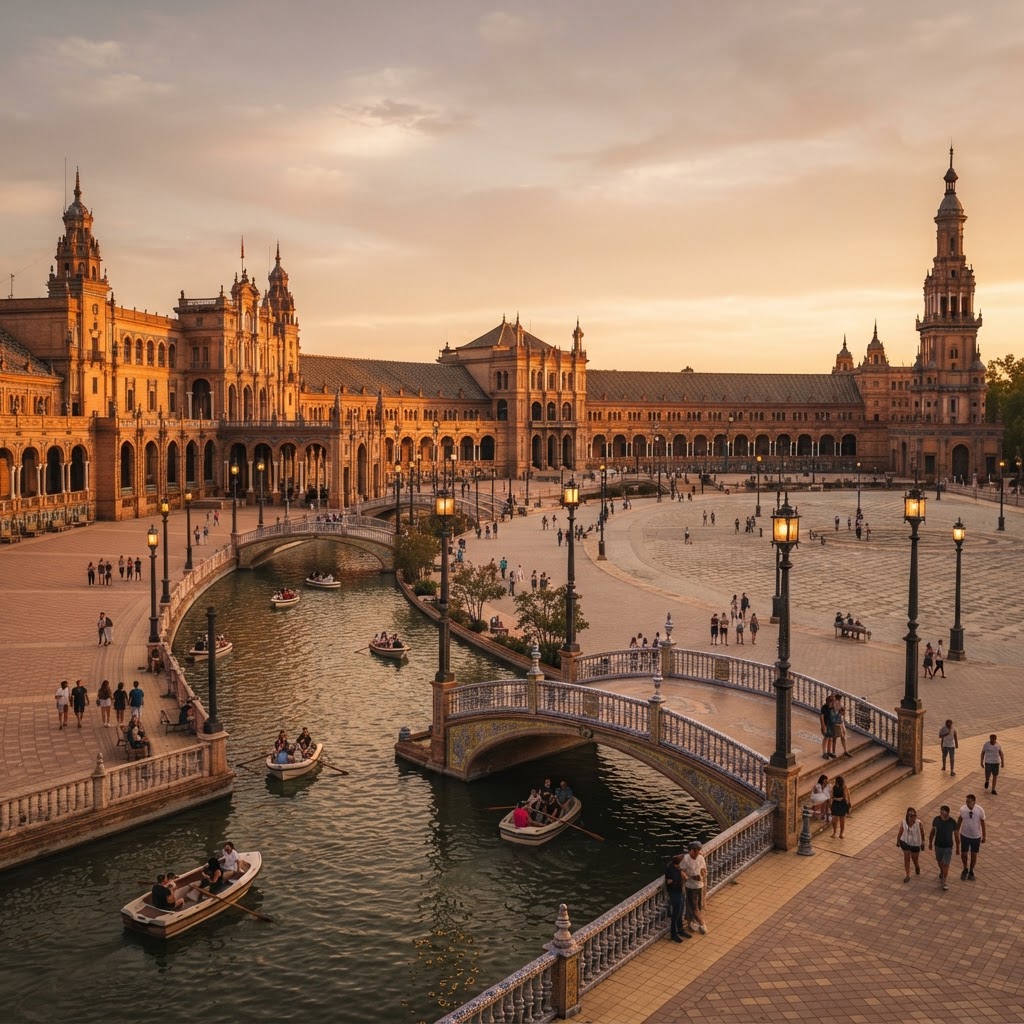
Designed by the visionary architect Aníbal González, the Plaza de España was built for the Ibero-American Exposition of 1929. The square is a bold blend of Renaissance Revival and Neo-Mudéjar styles, incorporating elements of the city’s Moorish past. Its grand scale—spanning nearly 50,000 square meters—is intended to represent Spain welcoming its former colonies, a message conveyed through the grand architecture that embraces the central fountain and canal.
The Iconic Ceramic Tiles
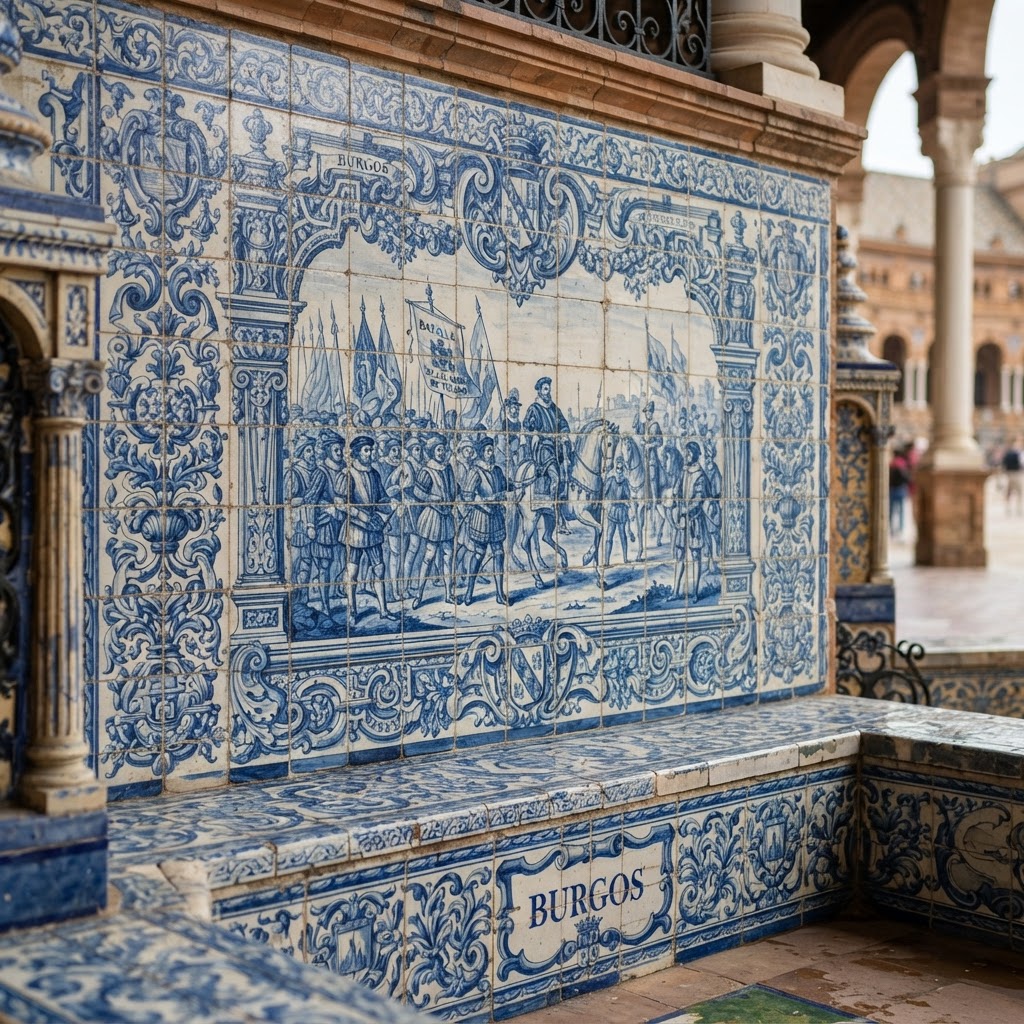
One of the most striking features of the Plaza de España is its extensive use of azulejos, the famous glazed ceramic tiles of Spain. Along the walls of the semi-circular building, you will find intricate alcoves representing each of the 48 Spanish provinces. Each alcove is decorated with detailed maps and historical scenes, making it a favorite spot for visitors to snap photos of their home region or places they dream of visiting.
Exploring the Canals and Bridges
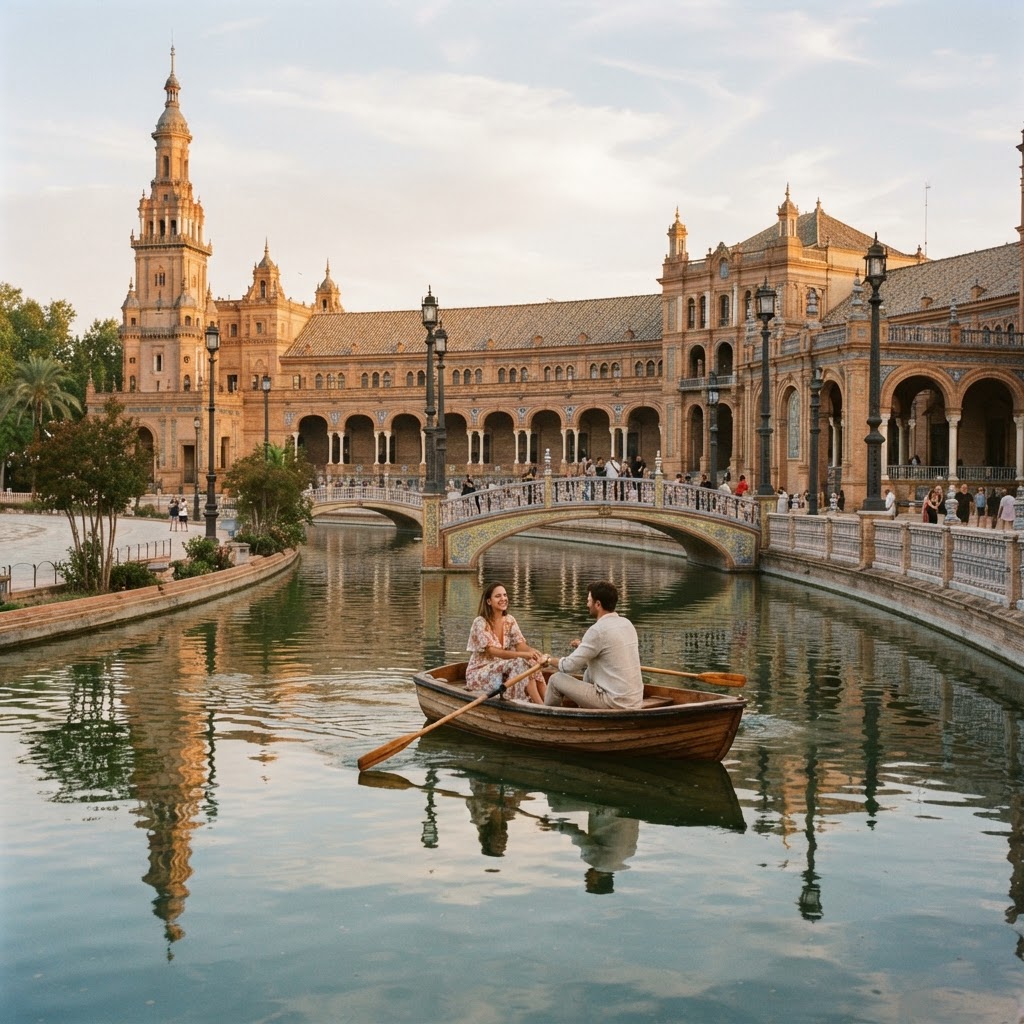
A defining characteristic of the square is the 500-meter-long canal that traces the perimeter of the plaza. Often referred to as the ‘Venice of Seville,’ the canal is spanned by four magnificent bridges, each representing the ancient kingdoms of Spain: Castile, Leon, Aragon, and Navarre. Renting a rowboat is one of the most popular activities here, allowing you to view the elaborate balconies and towers from the peaceful perspective of the water.
Practical Tips for Boating
Boating is available year-round, weather permitting. During peak tourist season, expect a short wait, so consider arriving early in the morning or during the late afternoon to catch the golden hour light. The experience is especially romantic at sunset when the light reflects beautifully off the water and the terracotta structures glow in the evening sun.
The Heart of Maria Luisa Park
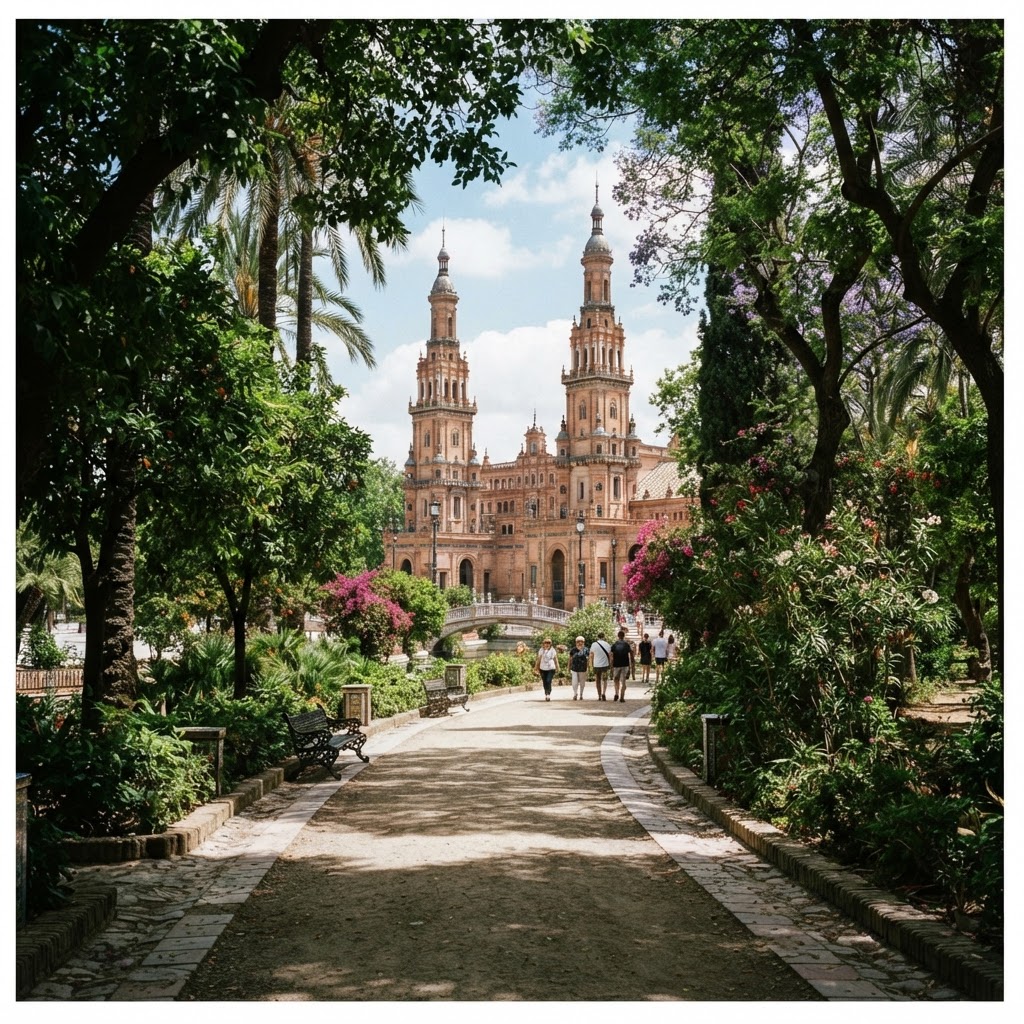
The Plaza de España is nestled within the sprawling Maria Luisa Park (Parque de María Luisa), Seville’s most famous green space. Once the private gardens of the Infanta María Luisa Fernanda, the park was gifted to the city and later redesigned for the 1929 Expo. Walking from the Plaza into the shaded alleys of the park provides a welcome respite from the intense Andalusian heat.
Hidden Gems in the Park
While the square is the star attraction, take the time to explore the rest of the park. You will discover bubbling fountains, hidden statues, and exotic plants that turn the area into an urban oasis. Look out for the Fountain of Lions and the duck pond, which are perfect spots for a quiet picnic after your tour of the main plaza.
Why It Is Famous in Pop Culture
You might recognize the Plaza de España from your favorite films without even realizing it. Its grand aesthetic has attracted countless filmmakers over the years. Most famously, it served as the set for Theed in Star Wars: Episode II – Attack of the Clones. The square also appeared in the classic film Lawrence of Arabia, standing in for the British military headquarters in Cairo. Walking through the corridors, you will easily see why Hollywood producers choose this location for epic scenes.
Planning Your Perfect Visit
To ensure a seamless trip, keep a few logistical tips in mind. The site is free to enter, which is rare for such a major tourist attraction. However, it can get crowded, particularly on weekends and during the spring months. The best time to visit is during the shoulder seasons—spring or autumn—to avoid the extreme summer temperatures and the peak of the crowds.
Suggested Itinerary
- 09:00 AM: Arrive early to beat the crowds and enjoy the morning light.
- 10:00 AM: Take a rowing boat out on the canal for a unique perspective.
- 11:00 AM: Walk the perimeter to find your home province’s ceramic alcove.
- 12:00 PM: Stroll through Maria Luisa Park to discover hidden statues and flora.
- 01:30 PM: Head to nearby Barrio de Santa Cruz for traditional tapas.
Essential Facts for Every Traveler
| Feature | Information |
| — | — |
| Entrance Fee | Free |
| Opening Hours | 08:00 to 22:00 |
| Best Time to Visit | Spring or Autumn |
| Location | Parque de María Luisa |
| Activities | Rowboat rentals, photography, history walking tours |
A Cultural Icon of Seville
The Plaza de España is more than just a beautiful building; it is a symbol of Seville’s ability to combine history with modern beauty. It represents the pride of Andalusia and the artistic dedication of the early 20th century. As you stand in the center of the square, take a moment to look up at the soaring towers and notice the intricate details of the brickwork and stone. It is these small details that elevate the experience from a sightseeing stop to a profound encounter with Spanish culture.
Conclusion
There is no place quite like the Plaza de España in Seville. With its perfect blend of historical significance, architectural brilliance, and natural beauty, it is a mandatory stop on any Spanish itinerary. Whether you are gliding across the canal, admiring the detailed ceramic work, or simply sitting in the shade of a nearby tree, the square promises a memory you will cherish forever. Start planning your trip to Seville today, and prepare to be enchanted by one of the greatest architectural treasures in the world. Do not wait—add this spectacular destination to your travel bucket list now!
Leave a Reply