
Trolltunga at Sunset: Why It’s Worth Every Step
Hiking to Trolltunga at sunset is considered a life-changing experience because the golden hour light transforms the iconic rock formation into a glowing, ethereal landscape while avoiding the heavy crowds of midday. This challenging 27-kilometer round-trip hike offers unparalleled solitude and dramatic lighting that justifies the arduous physical effort required for the descent in twilight.
The Magic of the Trolltunga Sunset Experience
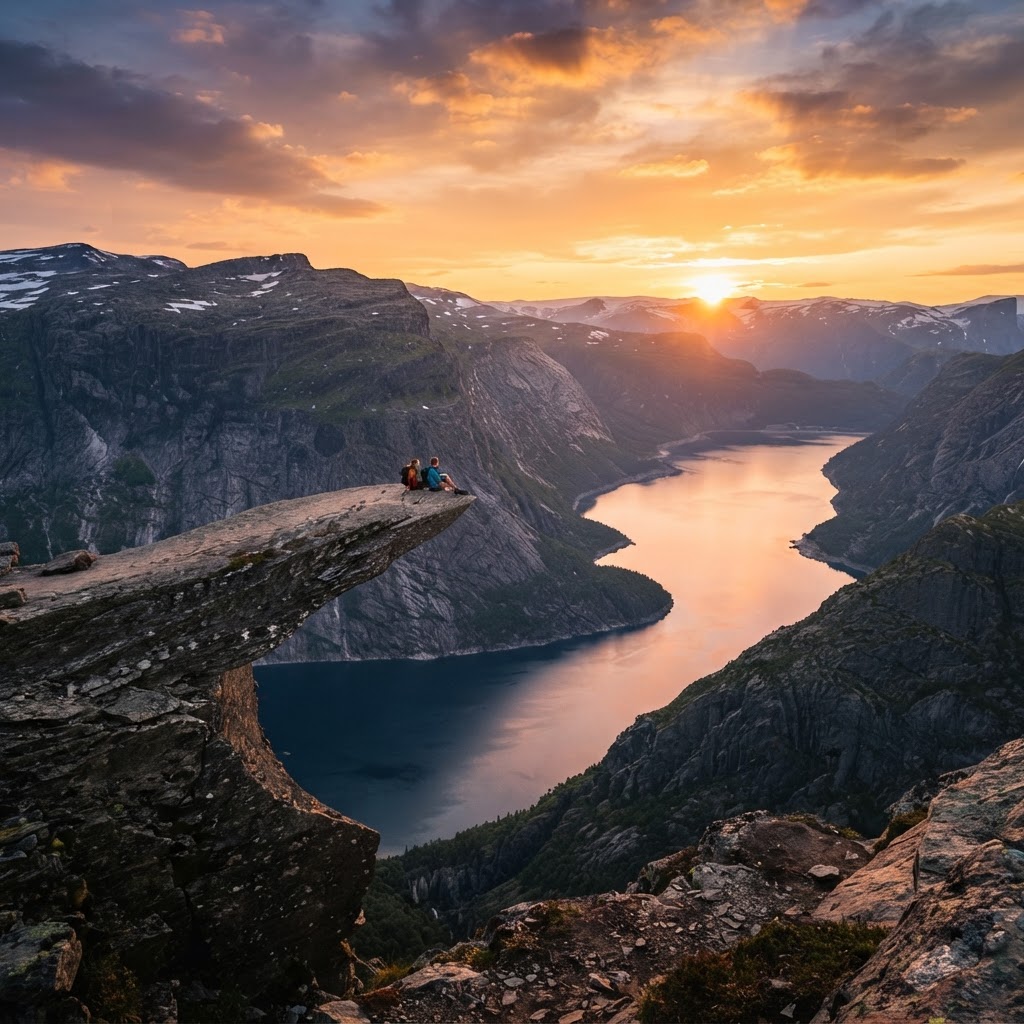
Choosing to witness Trolltunga at sunset transforms the entire adventure into an intimate encounter with the Norwegian wilderness, free from the typical peak-hour congestion. Most hikers aim to complete the 10-12 hour trek during the brightest daylight, resulting in long queues at the rock edge for photos. By arriving later in the day, you experience the profound silence of the Hardangervidda plateau as the masses depart, leaving the vast, ancient landscape to a select few. The shift in atmosphere is palpable; as the sun dips lower, the harsh shadows of midday vanish, revealing deep, saturated colors across the Ringedalsvatnet lake. This timing allows for a meditative connection with the terrain that is impossible to achieve during the rush of a standard daytime hike. Beyond the visual appeal, the solitude provides a unique opportunity to appreciate the sheer scale of the cliff without the pressure of waiting hikers, turning a simple photo opportunity into a transformative moment of peace. The transition from the warm, golden light of late afternoon to the cool, crisp hues of twilight provides the ultimate reward for the day’s long, demanding effort.
Why the Golden Hour Matters
The light during sunset in Norway is unique, characterized by long, soft rays that highlight the rugged texture of the lichen-covered granite. Because of Norway’s high latitude, the sunset can last for several hours during the summer months, effectively creating a prolonged “magic hour” that is perfect for professional-grade photography. Unlike the harsh, overhead lighting typical of midday, which flattens the appearance of the mountain range, the low-angle light during sunset casts deep, dramatic shadows that emphasize the sheer vertical drop of the cliff. This perspective is vital for capturing the true scale of the environment, making the 700-meter drop down to the Ringedalsvatnet lake look even more awe-inspiring. Furthermore, the interplay between the fading sun and the mist that often rolls off the fjord creates a ethereal glow, commonly referred to as ‘Alpenglow.’ This creates a unique opportunity to capture epic photographs that avoid the overexposed, flat look of typical tourist shots. The extended duration of this golden light at higher altitudes means that hikers have a wider window to compose their perfect shot, ensuring that even with the exhaustion of the climb, the visual payoff remains the primary highlight of the trip.
Preparing for the Long Haul
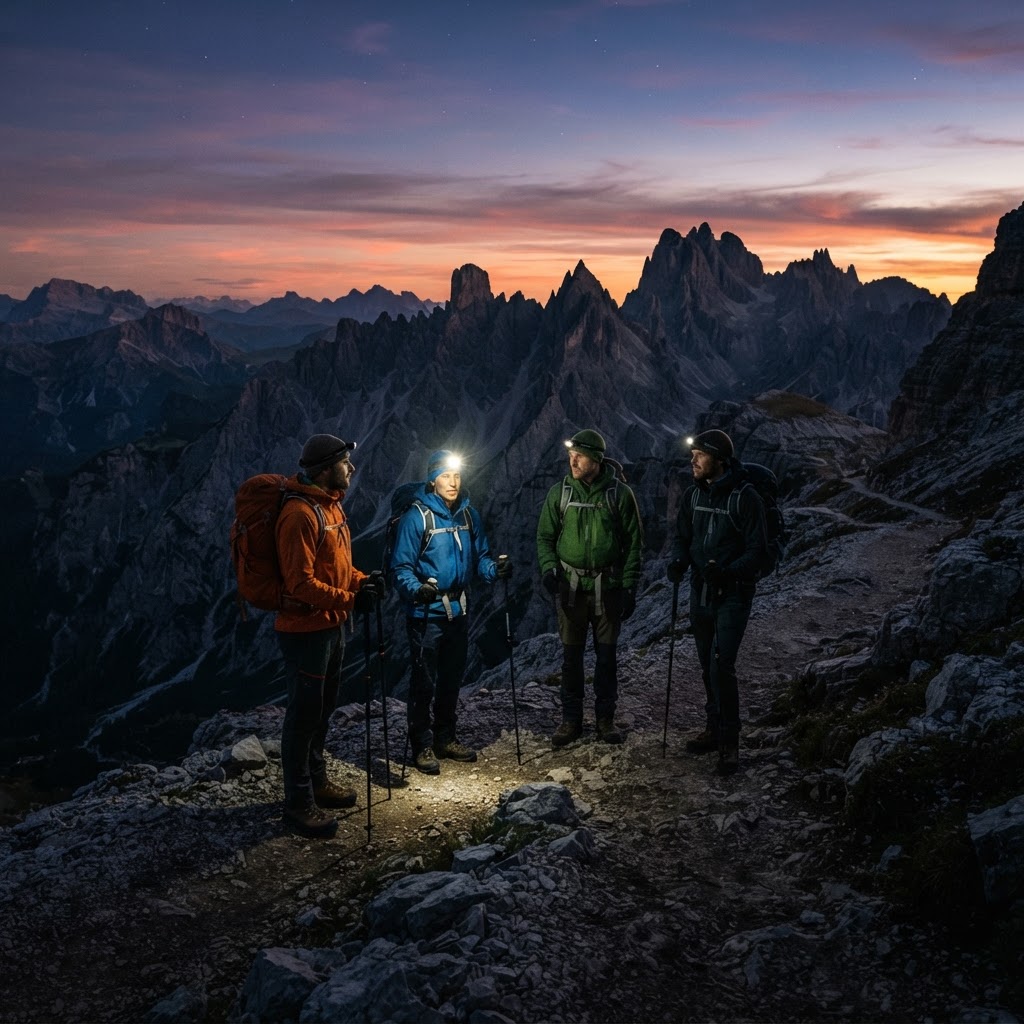
Proper preparation is the fundamental difference between a triumphant, life-changing adventure and a dangerous situation, especially considering the 27-kilometer round trip that requires significant physical conditioning. When you choose to time your arrival for sunset, you must account for the necessity of navigating the final 10+ kilometers in diminishing light or total darkness. A typical hiker needs roughly 10 to 12 hours for the full loop, but sunset hikers must carry an extra safety margin to avoid accidents on the steep sections. You should arrive at the trailhead by 6:00 AM if you plan to explore safely or consider camping overnight near the cliff to catch the sunset comfortably. Physical training should include at least 4-6 weeks of incline walking and cardiovascular endurance work. Without this, the return hike becomes a physical struggle rather than a scenic descent. Furthermore, the unpredictability of Norwegian mountain weather necessitates gear that can handle sudden temperature drops. Even on a clear, sunny morning, you must be equipped for fog, rain, and freezing temperatures once the sun disappears below the horizon, as the plateau’s weather patterns can shift without warning, leaving you exposed and vulnerable during your late-night trek back.
Essential Gear Checklist
To ensure your comfort and safety, your pack should be meticulously organized to handle both the physical strain and the environmental challenges of a late-day push.
- High-quality headlamp: Minimum 300 lumens with at least one set of spare batteries.
- Hiking boots: Sturdy, broken-in models with aggressive tread and solid ankle support.
- Layered clothing: Moisture-wicking wool base layers, a fleece mid-layer, and a waterproof shell.
- Hydration/Nutrition: 3 liters of water minimum and high-energy snacks like nuts or energy gels.
- Power bank: A 10,000mAh portable charger for your phone and camera gear.
- Navigation: A physical map and compass, as digital GPS can fail in cold, remote areas.
Navigating the Terrain Safely
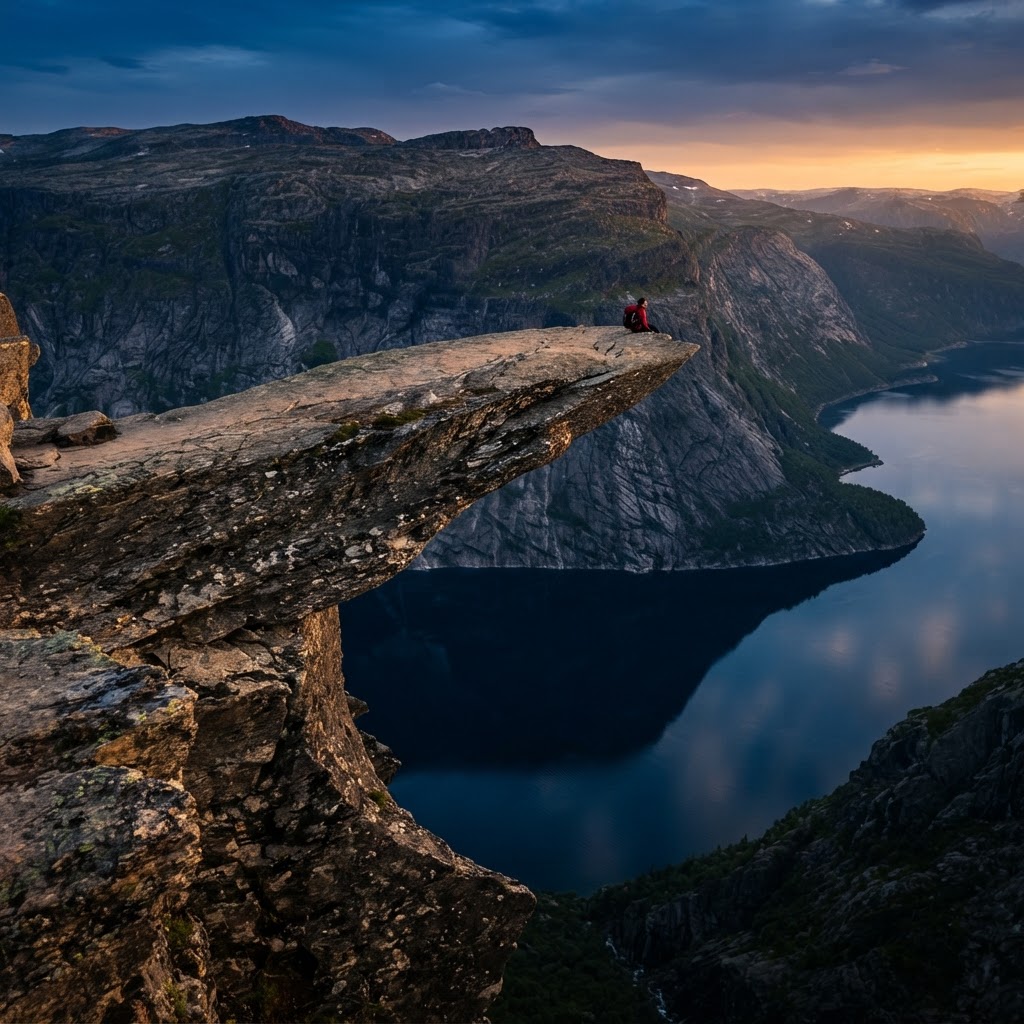
The path to Trolltunga has become significantly more accessible with modern trailhead parking, but the terrain remains rugged and inherently dangerous for those unprepared for darkness. As you climb higher, the weather can change in a matter of minutes, moving from bright sunshine to dense mountain fog that can obscure trail markers completely. Navigating the rocky sections while the light is failing requires intense focus, steady footing, and prior experience with mountain trail navigation. The T-markers are well-placed, but they are reflective-only in specific areas, meaning you will rely heavily on your own light source during the final descent. If you find yourself in the mountains during the late evening, your pace will naturally slow down due to fatigue and the reduced visibility of the terrain. This is when most accidents occur, so it is critical to keep a consistent rhythm and stay strictly on the trail. If you feel the onset of exhaustion or if visibility drops significantly due to fog, do not attempt to ‘power through’ blindly. It is safer to pause, hydrate, and wait for a slight clearing or rely on your GPS device to confirm your path. For those who lack experience in backcountry navigation, hiring a local, certified mountain guide is highly recommended to manage the risks associated with the return trek in low-light conditions.
Staying on Track
Follow the red ‘T’ marks painted on the rocks at regular intervals throughout the entire 27-kilometer route. During the late afternoon and evening, keep a constant watch for these markers, as they are your primary navigation aid when sunlight fades. If the fog rolls in, visibility can drop to nearly zero, and even experienced hikers can lose the trail in the maze of granite boulders. Do not rely solely on smartphones for navigation, as battery drain in cold mountain air is rapid; always carry a paper map and a high-quality headlamp. If you are inexperienced with mountain navigation, consider hiring a local guide who knows the nuances of the terrain and can manage the pace of the group to ensure everyone returns before the weather turns.
The Psychology of the Trek
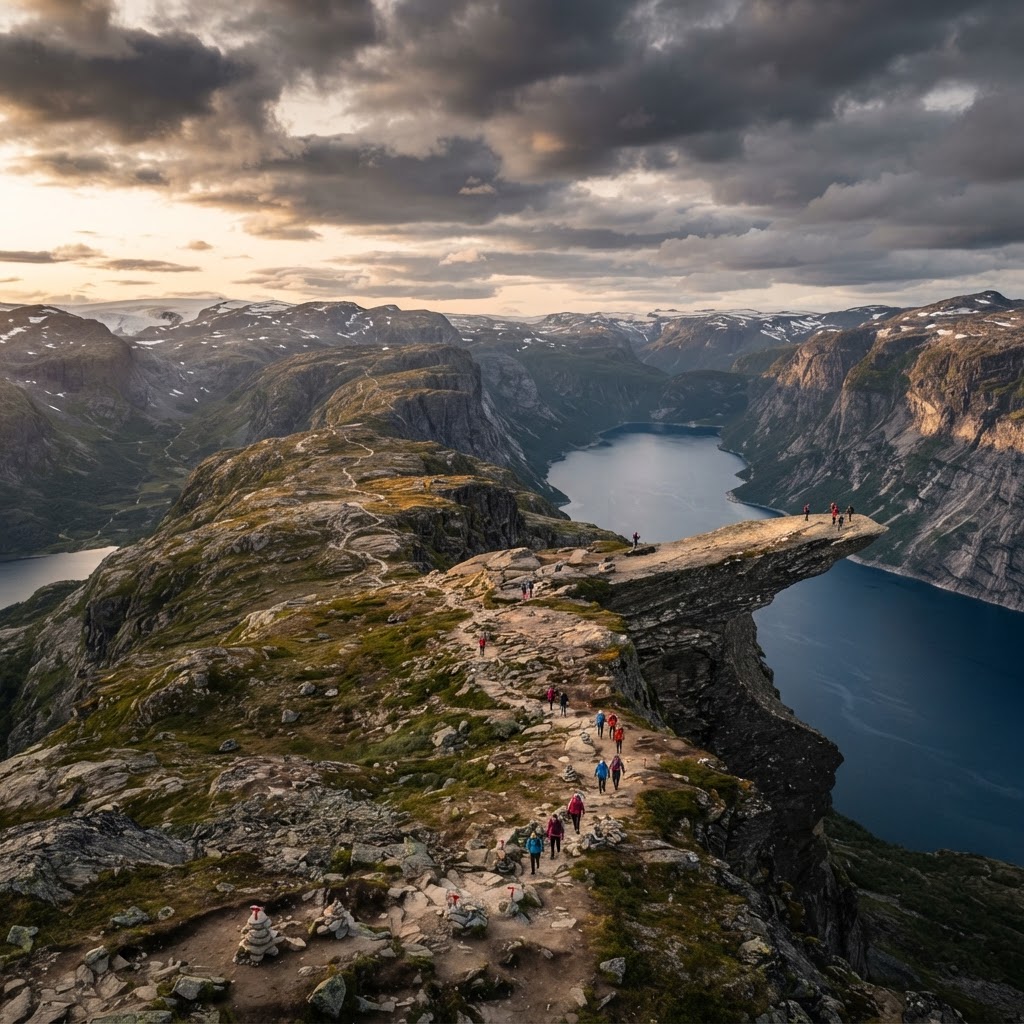
Many hikers report hitting a psychological ‘wall’ around the 15-kilometer mark, where physical fatigue begins to override the initial excitement of the journey. At this point, your legs feel heavy, and the adrenaline of the morning has long since faded, making the remaining distance seem insurmountable. Reaching the summit of Trolltunga at sunset requires a major shift in mindset; you are no longer racing to finish a task, but moving toward a rewarding, long-awaited climax. The key is to manage your energy levels by breaking the hike into micro-segments, focusing only on the next 1-2 kilometers rather than the total remaining distance. By setting small, achievable goals—like reaching the next stream or a specific plateau—you maintain a sense of forward momentum. This mental reframing is essential for keeping morale high during the final push. When you finally see the silhouette of the tongue against the vibrant, darkening sky, the physical fatigue often evaporates instantly, replaced by a deep sense of accomplishment. This psychological release is what makes the sunset experience so much more profound than a standard midday visit, as the reward feels earned through perseverance and mental discipline rather than just physical capacity.
Breaking Down the Journey
Break your hike into smaller, manageable psychological segments to avoid total fatigue. Focus on reaching specific checkpoints—such as the P3 parking lot, the marked mountain huts, or the next stream crossing—rather than the daunting 14-kilometer end goal. Keeping your morale high is just as important as physical endurance. When you eventually see the outline of the tongue against the twilight sky, the mental fatigue is usually replaced by a surge of accomplishment, confirming that the mental battle was just as necessary as the physical trek.
Photography Tips for Twilight Peaks
If your primary goal is capturing the perfect shot, you need more than just a good eye; you need a technical understanding of high-contrast, low-light photography. The vast difference between the dark, shadowed cliff faces and the fading light of the horizon creates a high dynamic range that challenges most modern cameras. To combat this, use a tripod for all your shots to enable longer exposures, which will help capture the soft movement of clouds and the mirror-like stillness of the lake below. This stability is critical when the light levels drop, as handheld shots will result in motion blur. For the best composition, include a human subject to provide scale against the immense, jagged landscape of the surrounding fjord. A wide-angle lens (16mm to 24mm) is ideal for showcasing the sheer vertical drop, but be aware that wide lenses can make the cliff edge appear distorted. Always prioritize safety; stay well back from the edge when framing your shot, as the wind speeds at the summit can be unpredictable. By taking the time to set up your tripod and adjust your settings for the changing light, you will produce images that truly capture the majesty of the Trolltunga sunset.
Capturing the Composition
Try to frame your subject to include the vastness of the fjord behind them, which highlights the scale of the surrounding mountains. A wide-angle lens is ideal for showcasing the sheer drop and the sheer magnitude of the landscape. Remember to respect the edge at all times; even if you want the perfect photo, safety should always be the priority when standing on the cliff’s edge.
Environmental Stewardship
As one of Norway’s most visited natural wonders, Trolltunga is a fragile ecosystem that requires active protection from every visitor. The significant increase in hiker traffic puts immense strain on the delicate mountain vegetation, which takes years to recover from a single trampling. You must always practice strict “Leave No Trace” principles to ensure the area remains pristine. This includes packing out every single piece of trash, including biodegradable items like orange peels or apple cores, which do not decompose quickly in high-altitude, cold climates. Furthermore, stay strictly on the marked paths to prevent soil erosion, which can lead to permanent damage to the mountain trails. Respect the quietude of the mountain by keeping noise levels low, allowing the natural landscape to remain a place of reflection rather than a loud tourist hotspot. By adhering to these practices, you ensure that the same spectacular views you enjoy are preserved for future hikers, maintaining the integrity of this geological site as a sacred space of history and natural beauty.
Why Responsible Tourism Matters
By keeping the trail clean and respectful, we ensure that future generations can witness the same spectacular sunset we enjoy today. The mountain is not just a backdrop for an Instagram photo; it is a sacred space of geological history. Your footprint—both literal and figurative—should be as light as possible, as the cumulative impact of thousands of visitors can rapidly degrade the very beauty that draws them to the cliff in the first place.
FAQ
How long is the hike to Trolltunga?
The hike to Trolltunga is a demanding 27-kilometer round-trip trek that typically takes between 10 and 12 hours to complete for the average hiker. It involves significant elevation gain and requires a high level of physical fitness and preparation for changing weather conditions.
Is it safe to hike Trolltunga at night?
Hiking at night is only safe for experienced mountain trekkers who possess proper navigation skills and the correct gear, including a high-lumen headlamp. You must be able to follow marked trails in the dark and be prepared for sudden, dangerous drops in temperature on the plateau.
Do I need a guide for the Trolltunga hike?
While a guide is not mandatory, hiring one is highly recommended if you are inexperienced with mountain navigation or plan to hike during sunset or sunrise. A professional guide ensures you stay on the path during low-visibility conditions and provides crucial safety support.
What is the best time of year to visit Trolltunga?
The best time to hike Trolltunga is between June and September when the weather is most stable and the snow has melted from the trail. Outside of these months, the hike is considered extremely dangerous and generally requires specialized winter mountaineering equipment.
Are there facilities at the top of Trolltunga?
There are no bathrooms, shelters, or permanent facilities at the cliff edge itself, so you must be entirely self-sufficient. You should pack everything you need for the day and be prepared to carry out all waste, following strict ‘Leave No Trace’ policies.
Leave a Reply