
Red Cabins and Mirror Water: A Guide to Lofoten
Lofoten’s iconic red cabins, known as rorbuer, are historic fisherman dwellings that today serve as unique waterfront accommodations. These cabins are best viewed in villages like Reine and Hamnøy, where calm weather conditions frequently transform fjord waters into a mirror-like surface, creating the archipelago’s most famous photographic reflection.
The History of Lofoten’s Iconic Red Cabins
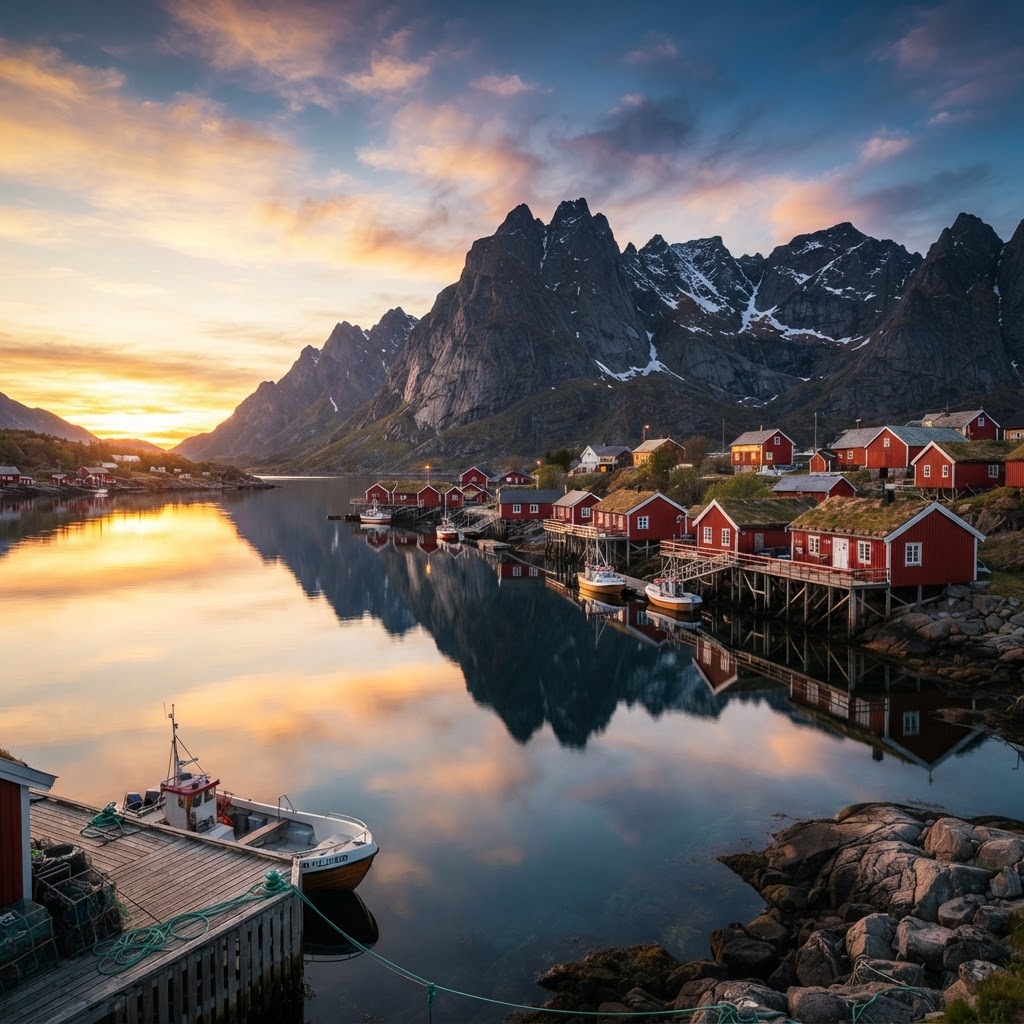
To understand the allure of the red cabins, one must understand their original purpose as seasonal shelters for cod fishermen. These structures, historically built on wooden stilts over the water, date back to the 12th century when the Lofoten fishery became the backbone of the Norwegian economy. The signature red color was chosen primarily due to cost-efficiency, as the paint was historically derived from a mixture of cod liver oil and iron oxide, a pigment that was widely available and affordable for local fishermen. Over centuries, these humble dwellings have evolved from simple, drafty bunkhouses into sought-after luxury accommodations, meticulously renovated to preserve their heritage while offering modern amenities like heated floors and Wi-Fi. Staying in a rorbu provides an authentic connection to Norway’s maritime history, allowing you to wake up to the sound of waves lapping against the wooden stilts directly beneath your bed. Today, the preservation of these cabins is strictly regulated by local cultural authorities, ensuring that the visual aesthetic of the villages remains consistent with the historical landscape that has attracted travelers for decades.
Why Rorbuer Remain Popular Today
Many of these historic structures have been meticulously renovated to provide a unique cultural experience. Staying in a red rorbu allows you to wake up to the sound of waves lapping against the wooden stilts. It is this authentic connection to the maritime history of Norway that makes them a central pillar of any Lofoten itinerary.
Capturing the Magic of Mirror Water
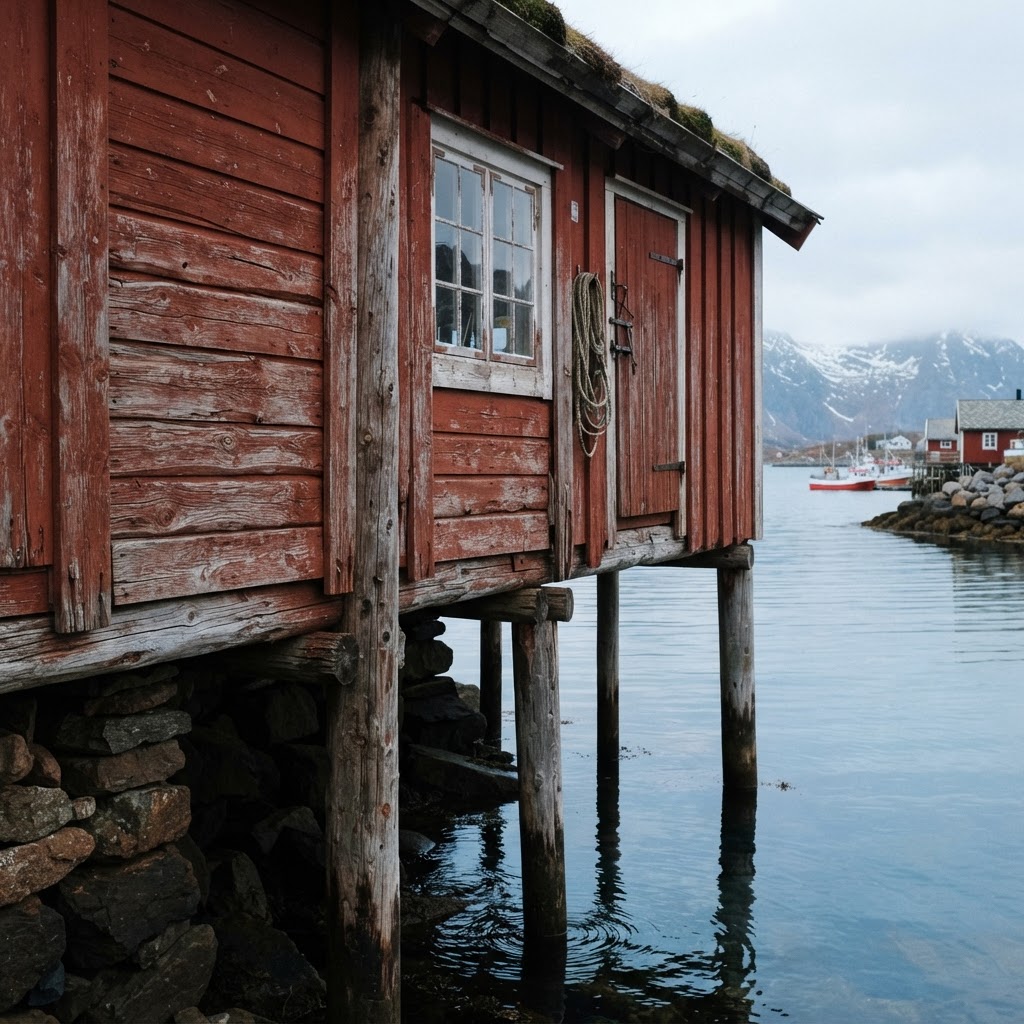
Achieving the perfect photograph of the mirror water in Lofoten requires more than just a camera; it requires patience, specific gear, and an understanding of local meteorology. Mirror water occurs when the wind speed drops to near-calm levels (ideally below 3 m/s), turning the surface of the harbor or fjord into a glass-like reflector. This phenomenon is most reliably observed during the “golden hour” or the “blue hour,” specifically between 1:00 AM and 3:00 AM during the summer months when the atmosphere is at its most stable. Photographers often congregate in Reine or Hamnøy, where the high concentration of red cabins provides a repeating color pattern against the dark mountain peaks. For optimal results, utilize a sturdy tripod to allow for long exposures, which can further smooth out any minor ripples on the water’s surface. Using a polarizing filter is generally discouraged when you want a clear reflection, as the filter will negate the very effect you are trying to capture. Instead, rely on a lower aperture (f/8 to f/11) to ensure depth of field and keep your ISO low (100) to minimize digital noise in the dark shadow areas of the mountainside.
Essential Tips for Reflection Photography
To maximize your success in capturing these reflections, you should use a tripod to keep your camera steady. A circular polarizer can help manage light reflections off the water, though you may want to dial it back to capture the perfect “mirror” effect. Always prioritize a low aperture, such as f/8 or f/11, to ensure your entire foreground and background remain in sharp focus.
Best Locations to Find Red Cabins
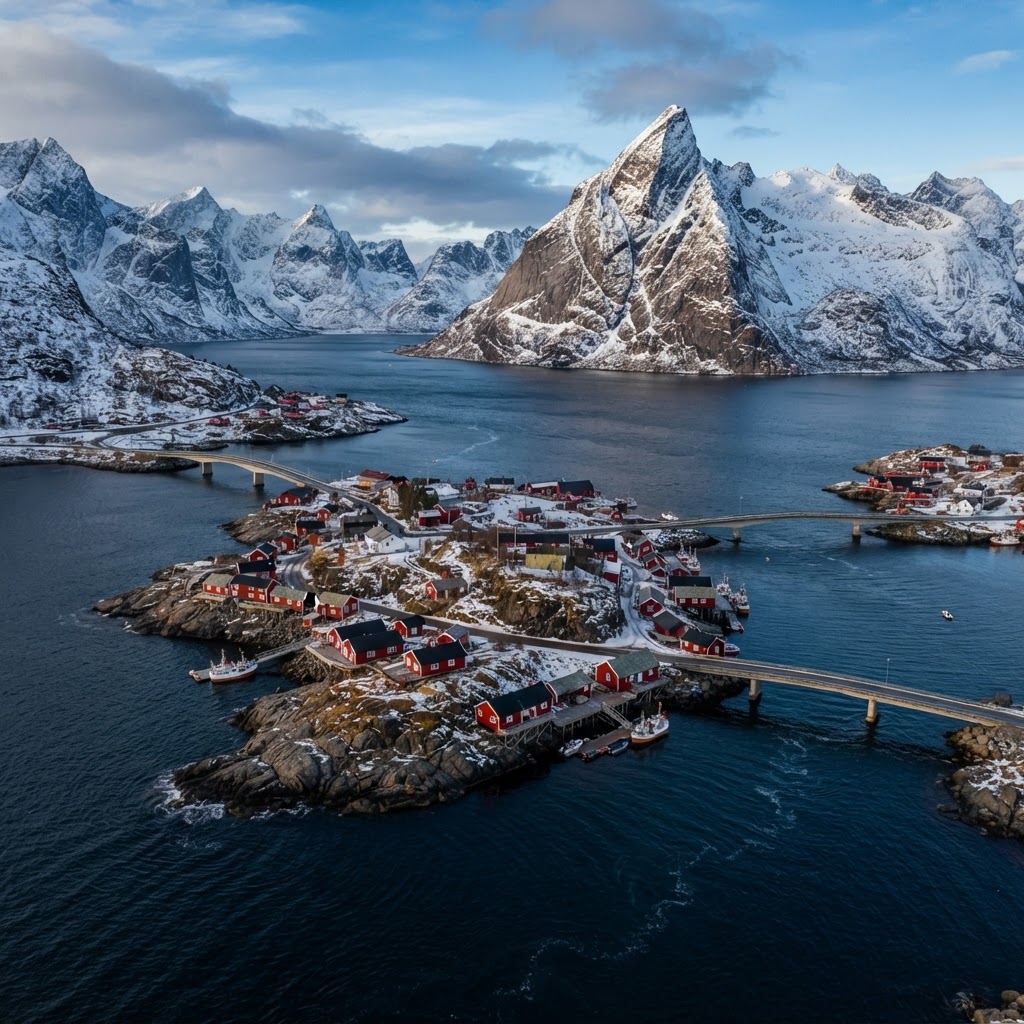
While red cabins are scattered throughout the archipelago, specific villages offer superior compositions due to the surrounding geography and village density. Reine is widely considered the most photogenic village in Norway, characterized by its dramatic mountain peaks that rise vertically from the harbor, providing a massive, dark backdrop that accentuates the vibrant red paint of the rorbuer. When visiting, aim to position yourself on the main bridge at the entrance of the village to capture the classic “Reine reflection” shot. Hamnøy, located just a short drive away, offers a more compact but equally intense visual experience. The bridge at Hamnøy is iconic for its high vantage point, which allows photographers to capture the cabins nestled at the base of the steep cliffs. Sakrisøy is another essential stop, famous specifically for its contrasting yellow and red cabins. The inclusion of yellow structures provides a unique color palette that breaks the monotony of the standard red-only compositions found elsewhere. Below is a comparison of these top photography spots to help you plan your route effectively.
Exploring Hamnøy and Sakrisøy
Hamnøy is slightly more compact than Reine but arguably even more dramatic. The bridge connecting the small islands offers a perfect vantage point to look down at the cabins. Nearby, Sakrisøy is famous for its yellow and red cabins, providing a vibrant color palette that stands out brilliantly against the winter snow or the lush green moss of summer.
Understanding the Seasonal Variations
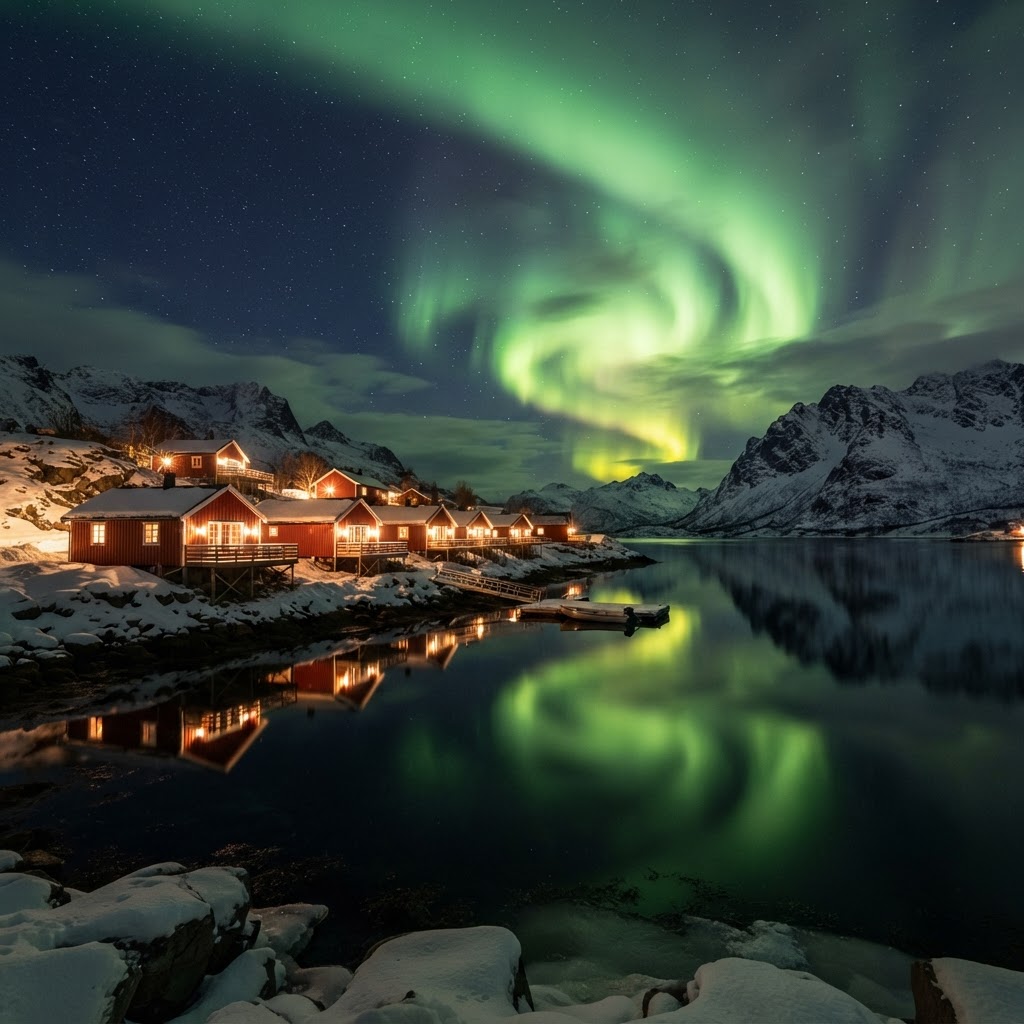
Lofoten experiences dramatic seasonal shifts that significantly dictate both travel logistics and the aesthetic of the environment. In the summer (late May to mid-July), the Midnight Sun provides 24 hours of daylight, which is ideal for photographers who want to chase the light without the stress of darkness. The water is typically at its calmest during these months due to reduced storm activity, making it the premier season for mirror-water reflections. Conversely, winter (December to March) offers the Aurora Borealis, which can be reflected in the water on clear, cold nights. While winter winds are stronger, the contrast of red cabins against heavy snowfall is unparalleled. Below is a summary of what to expect when planning your visit based on the season.
Winter Reflections and Northern Lights
Winter brings a different set of challenges and rewards. The water may not always be as calm due to frequent storms, but the contrast of red cabins against a heavy dusting of snow is breathtaking. Furthermore, the possibility of seeing the Aurora Borealis dancing over the mirrored fjords is a dream scenario for many travelers. If you visit in winter, ensure your gear is weather-sealed and you have plenty of spare batteries, as the cold will drain them quickly.
Preparing for Your Lofoten Adventure
Planning a trip to the Arctic Circle requires precise logistical preparation, primarily regarding unpredictable weather. The climate in Lofoten is dominated by the Gulf Stream, which prevents extreme sub-zero temperatures but brings rapid, volatile weather shifts that can change from sunshine to a heavy snowstorm within a single hour. When packing, you must strictly adhere to the layering principle: a merino wool base layer to wick moisture, an insulating mid-layer (fleece or down), and a high-quality GORE-TEX or equivalent waterproof shell. Do not rely on light jackets or cotton clothing, as they will not protect you from the Arctic winds. Regarding transportation, renting a vehicle is mandatory if you intend to visit multiple villages like Reine, Hamnøy, and Sakrisøy within a short timeframe. Public buses exist but are infrequent and lack the flexibility needed for photography trips where waiting for specific light or wind conditions is essential. If you are traveling between November and April, ensure your rental car is equipped with studded winter tires, as the coastal roads are prone to rapid icing. Always carry an emergency kit including extra wool socks, a headlamp, and high-energy snacks, as services in the smaller fishing villages can close early in the off-season.
Getting Around the Islands
While there is public transport, the most efficient way to explore the various spots featuring red cabins and mirror water is by renting a car. This provides the flexibility to wait for the wind to drop or to chase the best light as it moves across the archipelago. Ensure your rental has appropriate tires if you are traveling between November and April, as icy roads are common.
Sustainable Tourism in the Arctic
As the popularity of the Lofoten Islands grows, maintaining the environmental and cultural integrity of these fishing villages has become a critical priority. The Arctic ecosystem is highly fragile; the moss and lichen covering the landscape can take over 50 years to recover from a single footprint, so it is imperative to stay strictly on marked paths. Furthermore, many of the “iconic” cabins are located in active residential or commercial fishing areas. Please respect the property of locals by not trespassing on private docks or walking onto decks that are designated for guests only. Noise pollution is a significant concern for residents, especially during the early morning hours when photographers are most active. Always ask for explicit permission before taking close-up photographs of residents or their private fishing gear. By practicing “leave no trace” principles and prioritizing ethical photography, you contribute to the sustainability of the tourism model that supports these small island communities. Respecting the local culture means understanding that these villages are working ports, not just curated photography sets; keep your vehicle parked in designated areas and avoid blocking narrow access roads used by local fisherman.
Respecting Local Culture
These islands are not just a backdrop for photographs; they are home to vibrant, hard-working communities. Always ask for permission before photographing private property close up, and keep noise levels down when exploring residential areas early in the morning.
FAQ
Q: What is the best month to photograph red cabins in Lofoten?
June and July are widely considered the best months because of the Midnight Sun, which provides continuous, soft light for 24 hours. The calmest water conditions also typically occur during these summer months, ensuring optimal reflection conditions.
Q: Do I need a professional camera to get mirror reflections?
No, you can capture stunning reflections with a modern smartphone, provided the water is perfectly calm and you use a tripod or stabilize the device against a flat surface. Manual mode on a phone can help prevent overexposure of the bright red cabin paint.
Q: Is it expensive to stay in a red cabin?
Prices for rorbuer vary significantly based on the season and luxury level. Budget between $150 and $400 USD per night, with summer being the most expensive and winter providing better value for those looking for an authentic, cozy experience.
Q: Can I visit Lofoten without a car?
It is possible but highly discouraged for photographers and explorers. While the public bus system connects the main villages, it operates on a strict schedule, which limits your ability to wait for ideal lighting or to explore the more remote areas along the coastline.
Q: What should I wear in Lofoten regardless of the season?
Regardless of when you visit, you must prioritize the three-layer system: a merino wool base, an insulating mid-layer, and a high-quality windproof and waterproof outer shell. Even in summer, temperatures can drop quickly, and rain is a common occurrence in the archipelago.
Leave a Reply