Spanish Summer Nights: Soft Lights and Warm Air Magic
Spanish summer nights are a unique cultural phenomenon characterized by a shifted daily schedule where life peaks between 9:00 PM and midnight to avoid extreme daytime heat. This Mediterranean lifestyle prioritizes outdoor social gathering, late-night dining in local plazas, and a rhythmic, slow-paced atmosphere that fosters community connection.
The Anatomy of the Spanish Evening
In Spain, the day does not end when the sun sets; for many, it is only just beginning. Because of intense afternoon temperatures often exceeding 35°C (95°F), the Spanish schedule is shifted forward significantly to allow residents to reclaim the outdoors during comfortable twilight hours. While other parts of the world wind down, Spain enters its most active, vibrant phase after 8:00 PM.
The Importance of the Siesta
The concept of the siesta remains a vital engine that fuels the endurance required for these long evenings. By taking a structured rest, often between 2:00 PM and 5:00 PM, locals ensure they have the energy to participate in social life that extends well past midnight. This biological break is essential for maintaining the stamina needed to navigate the late-night Spanish social calendar.
Dining Under the Stars
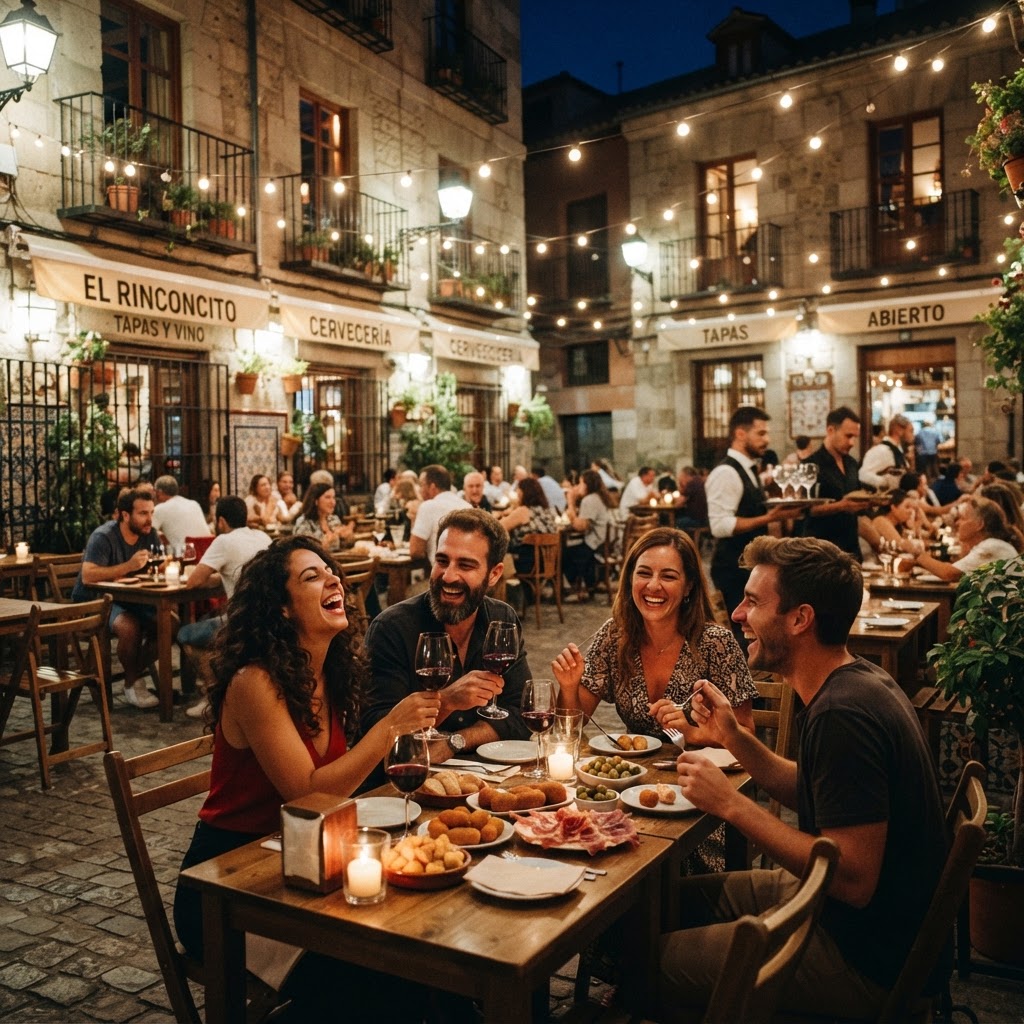
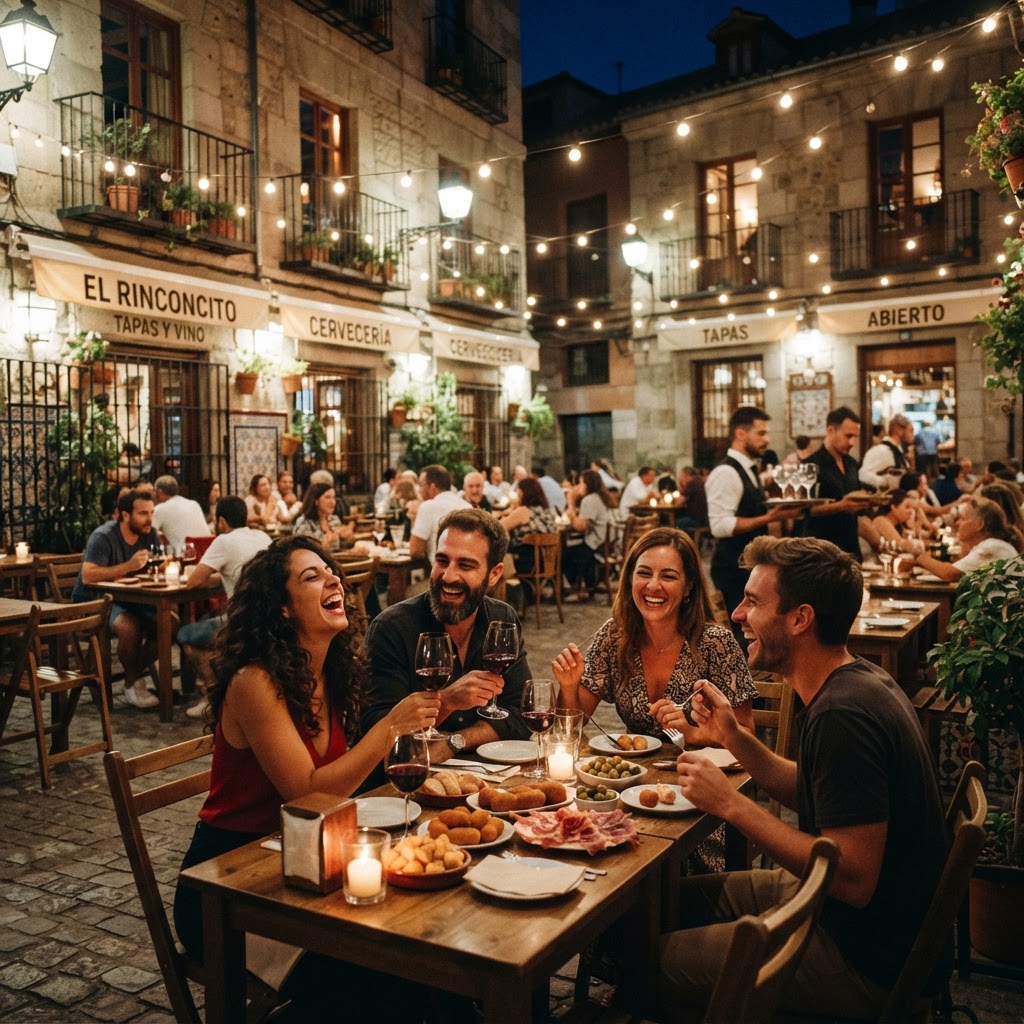
Dining in Spain is a slow, multi-course ritual that typically begins between 9:00 PM and 10:30 PM, serving as the social anchor of the summer night. The objective is to linger over conversation while enjoying al fresco dining, which transforms public spaces into communal eating areas. This transition is facilitated by a “tapear” culture where the atmosphere dictates the pace rather than a clock. If you enjoy the atmosphere of watching the day fade away, you might also appreciate the stunning sunset views from a private balcony in Oia, Santorini.
Tapas and Socializing
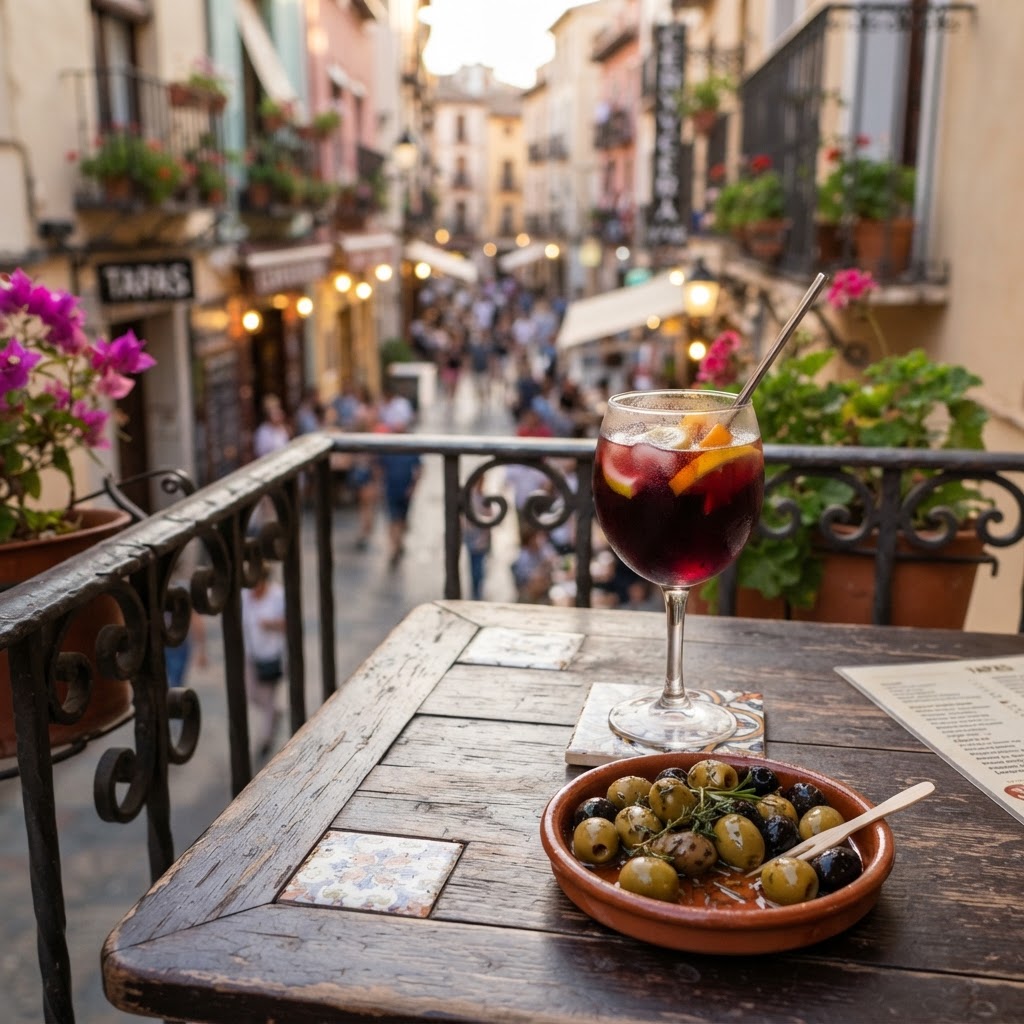
Traditional summer dining centers on sharing small, flavorful plates known as tapas. Because the air is finally cooling, locals move from bar to bar, consuming a single tapa and a glass of wine—typically costing between €3 and €7 per stop—before moving on. This migration fosters spontaneous encounters, ensuring no two evenings feel the same.
Popular Summer Refreshments
- Gazpacho: A cold, refreshing vegetable soup essential for rehydration.
- Tinto de Verano: A mixture of red wine and lemon soda, costing roughly €2-€4.
- Grilled Seafood: Fresh catch from the coast served with olive oil and garlic.
- Turrón: Often enjoyed as a sweet nut-based treat late in the evening.
The Plaza Culture
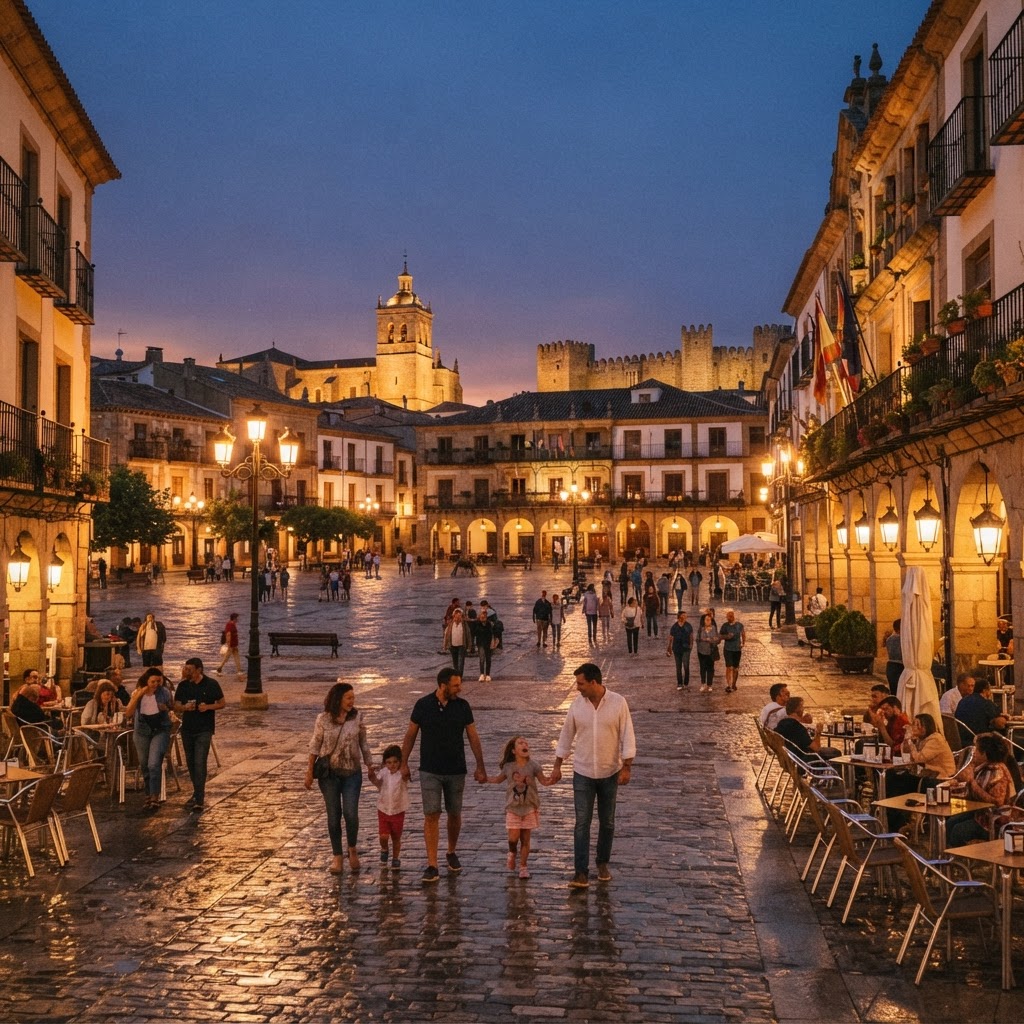
The central plaza, or town square, serves as the heart of the community where residents gather without the requirement of a restaurant reservation. During summer months, plazas become living rooms where children play and multi-generational families mingle in an inclusive space that costs nothing to enjoy. The architectural lighting against stone walls provides a cinematic environment for these gatherings.
A Community Hub
The magic of the plaza lies in its democratic nature. Whether in a rural village or a city like Madrid, the plaza provides a free, communal space where the social fabric of the neighborhood is woven nightly. These spots often host local events and impromptu performances, allowing visitors to experience authentic, un-staged cultural interactions.
Festivals and Open-Air Events
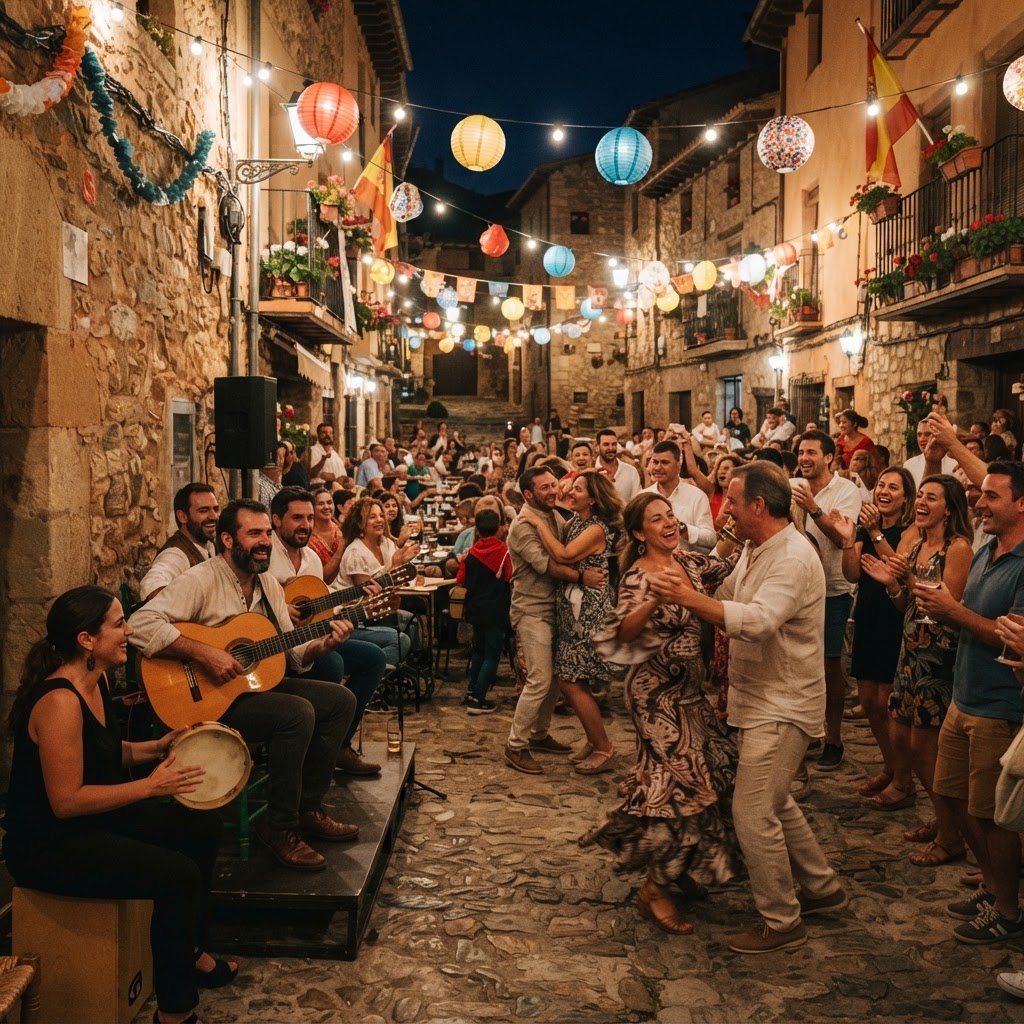
Spanish summer nights are synonymous with festivals that utilize the temperate night air as a natural stage for music and dance. From August patron saint celebrations to open-air concerts, the community calendar is packed with events that often start as late as 11:00 PM. Music, particularly flamenco and modern local sounds, acts as the primary catalyst for these vibrant communal celebrations.
Why Music Matters
Music is the ambient soundtrack that defines the Spanish evening. Because noise levels are socially accepted and integrated into town layouts, sound travels through stone-walled alleys, creating an immersive experience. These festivals reflect local identity rather than catering to tourists, making them the most authentic way to witness Spanish communal spirit.
Embracing the Slow Pace
One of the most valuable lessons for visitors is the adoption of “sobremesa,” the practice of lingering at the table after a meal to engage in conversation. This cultural habit highlights a rejection of the rush found in other international travel destinations, emphasizing mindfulness over efficiency. By removing the stress of a tight schedule, visitors find they can observe the natural rhythm of Spanish life more effectively.
Lessons in Mindfulness
- Put away your phone and observe the dynamics of the local crowd.
- Take time to savor your meal rather than rushing to the next activity.
- Engage in conversation with your servers or neighbors at the bar.
- Allow yourself to be aimless, wandering through side streets until you find a quiet corner.
Practical Tips for Travelers
For those planning a summer trip, logistical alignment is key to enjoying the experience. Pack breathable natural fabrics like linen or cotton to handle the residual masonry heat, and adjust your body clock to eat later in the evening to match the local schedule. Opting for coastal towns provides a natural cooling mechanism through the Mediterranean breeze, though major inland cities provide a more intense, historical cultural experience.
FAQ
Q: When is the best time to eat dinner in Spain during the summer?
Dinner in Spain during summer typically starts between 9:00 PM and 10:30 PM. Arriving before 8:30 PM often means dining in an empty restaurant, as the local population begins their evening social migration after sunset.
Q: Is the siesta still widely practiced in Spain?
While the traditional long afternoon nap is less common in professional city environments, the mid-day break remains a cultural staple in smaller towns and during peak summer heat. Many shops close between 2:00 PM and 5:00 PM to accommodate this rhythm.
Q: What is the average cost of a tapas bar hop?
A typical evening of tapas hopping costs between €15 and €30 per person. This includes 3-4 drinks (wine or beer) and several small plates, which are often priced between €3 and €7 each depending on the region.
Q: Do I need reservations for evening dining in Spain?
Reservations are highly recommended for popular terrace restaurants, especially on weekends or in tourist-heavy plazas. If you prefer a casual experience, you can easily walk into local bars for tapas without a prior booking.
Q: Why do Spanish streets get louder at night?
The streets are louder at night because of the “plaza culture” where social life moves outdoors. Because the daytime is too hot for social interaction, the entire community congregates in squares and streets after dark to socialize until well past midnight.
Leave a Reply