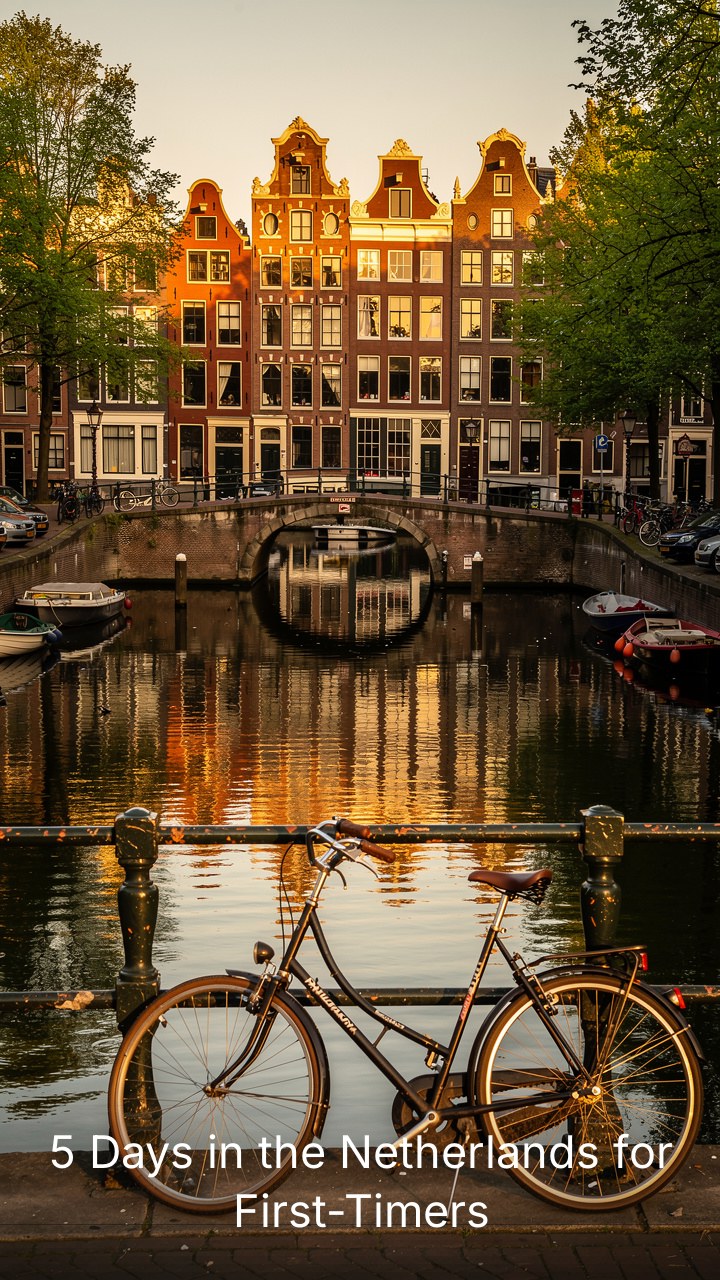
5 Days in the Netherlands for First-Timers (A Day-by-Day Plan)
Planning a 5-day itinerary in the Netherlands is best achieved by using Amsterdam as your central hub and utilizing the country’s efficient intercity train network for day trips. This duration allows you to balance iconic urban highlights like the Rijksmuseum with cultural experiences in Haarlem, the unique canals of Utrecht, and the modern architecture of Rotterdam.
Day 1:

Arrival in Amsterdam and Canal Immersion. Start your morning at Centraal Station, where you can store luggage in secure lockers before navigating the city. Walk toward the Jordaan district, a neighborhood celebrated for its historic 17th-century canal rings and curated local boutiques. No visit to this area is complete without stopping for a slice of Dutch apple pie at Winkel 43; it is widely considered the best in the city and frequently draws long lines of locals and tourists alike.
Spend your afternoon at the Anne Frank House to learn about the history of the Second World War. You must book tickets online exactly six weeks ahead on their official website, as they sell out in minutes. To conclude your day, experience a classic canal boat cruise. Opting for a smaller, open-air boat rather than a large glass-topped tour boat provides a more intimate perspective and better photography opportunities of the narrow canal houses.
Day 2:

Culture and Classics. Head to the Museumplein early, ideally by 9:00 AM, to beat the crowds at Amsterdam’s most prestigious institutions. Prioritize the Rijksmuseum to view Rembrandt’s masterpiece, ‘The Night Watch’, and other Dutch Golden Age treasures. If your interest leans toward Impressionism and emotive color palettes, the Van Gogh Museum is just steps away and houses the world’s largest collection of the artist’s work.
For lunch, immerse yourself in the authentic Dutch experience at a brown cafe like Cafe Welling, where traditional dishes are served in a cozy, wood-paneled atmosphere. Spend the afternoon wandering Vondelpark, the city’s largest green space. If the weather is dry, rent a bike to navigate the paths; it is the most authentic way to see local life. However, stay vigilant regarding tram tracks, as they are notoriously dangerous for inexperienced cyclists and can easily catch a tire.
Day 3:

Windmills and Dutch Heritage. Take a quick 20-minute train ride from Amsterdam to Zaanse Schans, which generally costs around 8 euros per ticket. This open-air museum offers a concentrated look at Dutch industrial history, featuring working windmills, traditional clog makers, and local cheese farms. While it is undeniably tourist-heavy, it remains the most convenient place to capture iconic Dutch imagery.
Upon returning to Amsterdam in the afternoon, visit the Bloemenmarkt (Flower Market), the world’s only floating flower market. If you have remaining energy, explore the De Pijp neighborhood, known for its vibrant international food scene and the bustling Albert Cuyp Market. This is the perfect spot to try a fresh, warm stroopwafel, a Dutch treat consisting of two thin waffles with a caramel syrup filling.
Day 4:

Utrecht – A Smaller Dutch Gem. Hop on a train to Utrecht, a city only 30 minutes from Amsterdam that offers a more intimate, less crowded alternative to the capital. Walking along the unique wharf-level canals is the highlight here, as many historic cellars have been converted into lively bars and restaurants with patios located right at the water’s edge.
Climb the Dom Tower for a panoramic view of the entire province, which is especially stunning on clear days. Afterward, visit the Museum Speelklok to see an incredible collection of self-playing musical instruments, ranging from small music boxes to massive street organs. It is a quirky, memorable stop that provides entertainment for both children and adults. Take an evening intercity train back to your Amsterdam base to conclude your day.
Day 5:
Modern Architecture and Departures. Spend your final morning in Rotterdam if you are interested in contemporary urban design and innovative architecture. Take the high-speed train, which connects the cities in less than 40 minutes, to see the iconic, yellow Cube Houses. They are located directly adjacent to the Markthal, an architectural landmark that serves as a massive food lover’s paradise featuring dozens of global cuisine stalls.
While at the Markthal, be adventurous and try fresh Dutch herring from a local stall, often served with onions and pickles. After your final exploration, head to Schiphol Airport at least three hours before your scheduled departure. The airport is well-connected by direct trains, but check your status on the NS app to ensure you arrive at your boarding gate with enough time to clear security.
Practical Tips for First-Timers.
The Netherlands operates almost exclusively on the OV-chipkaart or contactless payment systems (OVpay). You do not need to purchase physical paper tickets for trains, trams, or buses; simply tap your contactless credit card, debit card, or smartphone on the yellow scanners located at station gates or inside vehicles. This system covers all public transit nationwide.
For intercity travel, always download the NS app to view real-time platform changes and potential service delays. Although the Dutch rail network is punctual, track changes can occur during peak hours. Furthermore, practice proper escalator etiquette by standing on the right; the left lane is strictly reserved for commuters moving quickly. Being mindful of these small local norms makes your transit experience significantly smoother and more respectful to those traveling for work.
Common Mistakes to Avoid.
Many tourists purchase the ‘I Amsterdam’ City Card without verifying if it provides actual value. It is only cost-effective if you plan to visit three or more major museums or attractions per day; otherwise, it is cheaper to pay for individual tickets as you go. Another common mistake is failing to monitor weather forecasts, as the Netherlands experiences highly variable conditions where it may rain four times in a single afternoon. Always carry a compact, windproof umbrella or a lightweight waterproof shell.
Avoid renting a bicycle in the dense Amsterdam city center if you are an inexperienced rider. Local cyclists move at high speeds and operate with a degree of aggression that can be intimidating to tourists. Stick to walking or trams within the historic core and reserve cycling for Vondelpark or the quieter outer neighborhoods. Finally, avoid restaurants with photo-heavy menus translated into five languages; these are typically overpriced tourist traps. Instead, look for spots where local residents are seated, as this is the best indicator of quality and value.
My Personal Take on Dutch Transport.
The rail system is arguably the best in Europe for its reliability and reach. I strongly recommend staying in a single hotel for the duration of your trip and using the train for daily excursions; this prevents the hassle of moving heavy luggage. Choosing a hotel in cities like Utrecht can often be significantly cheaper than central Amsterdam, while still providing rapid access to the entire country. When booking train tickets, always check for group day tickets online, which can reduce costs by 30-50% for pairs or small groups. Always arrive at the station at least fifteen minutes before your departure to comfortably navigate the platform signage.
FAQ
Q: Should I carry cash in the Netherlands?
Rarely, as most shops, cafes, and even public transport are now entirely card-only or contactless. However, it is wise to keep a few one-euro or two-euro coins on your person, as they are sometimes required to pay for entry to public toilets in train stations or tourist hubs.
Q: Is English widely spoken throughout the country?
Yes, almost everyone in the Netherlands speaks excellent English, often with near-native fluency. While it is not strictly necessary for navigation, learning a few basic phrases like ‘Dank u wel’ (thank you) is considered polite and is highly appreciated by the locals.
Q: How does tipping work at restaurants?
In the Netherlands, tipping is not mandatory as service fees are included in the price. However, it is customary to round up the bill or leave a tip of approximately 5-10% of the total if you received exceptional service at a sit-down restaurant.
Q: Are there specific rail apps I should use?
Yes, the NS app is the essential tool for navigating the Dutch rail network. It provides real-time information regarding platform changes, train delays, and connections, ensuring you can manage your travel schedule efficiently without needing to rely on physical ticket offices.
Leave a Reply