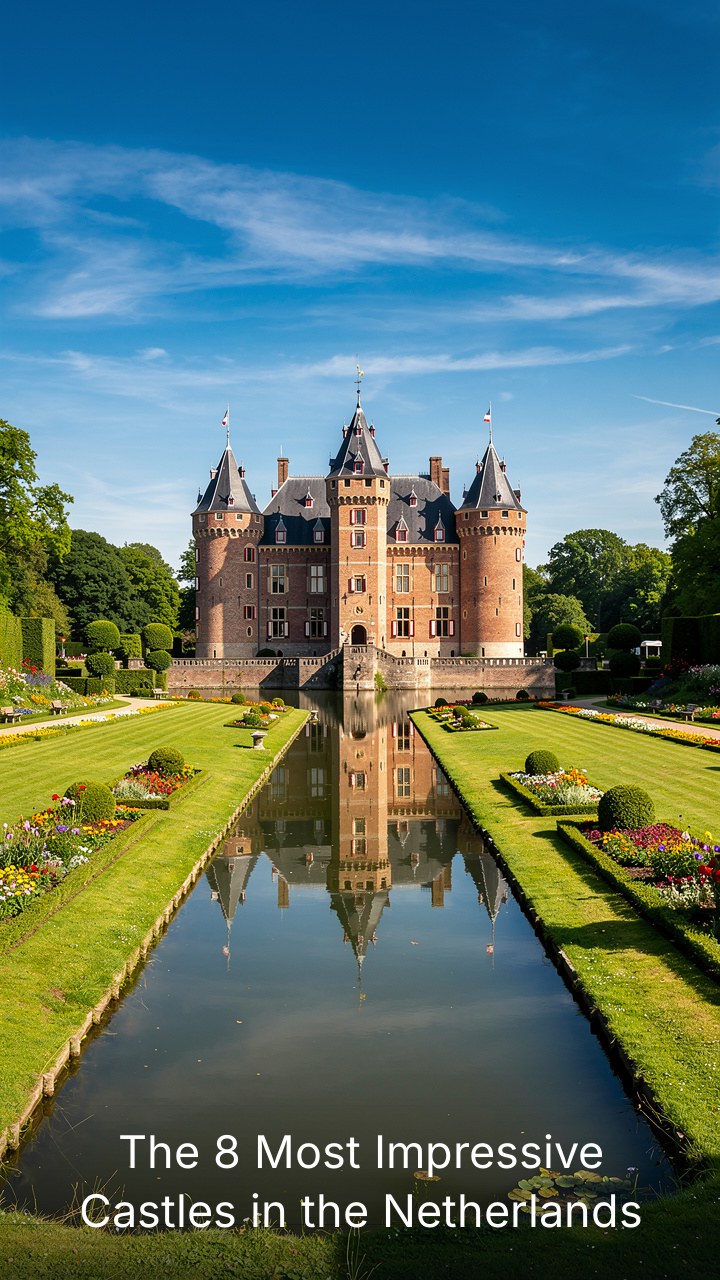
The 8 Most Impressive Castles in the Netherlands (Ranked)

- Kasteel de Haar (Utrecht) – The largest and most opulent estate.
- Muiderslot (Muiden) – A perfectly preserved 13th-century water castle.
- Kasteel Doorwerth (Doorwerth) – A rugged, historic river fortress.
- Kasteel Amerongen (Amerongen) – Famous for its exquisite 17th-century interior.
- Kasteel Radboud (Medemblik) – A strategic defense castle dating to 1288.
- Slot Loevestein (Poederoijen) – Known for its famous escape history and river views.
- Kasteel Rosendael (Rozendaal) – Celebrated for its unique shell gallery and fountains.
- Kasteel Duivenvoorde (Voorschoten) – A rare castle that was never sold but passed down through family lines.
Kasteel de Haar, Muiderslot, and Kasteel Doorwerth rank as the most impressive castles in the Netherlands due to their structural integrity, historical significance, and preserved artifacts. These sites offer the most authentic glimpse into the architectural evolution of Dutch defense and nobility, ranging from medieval fortifications to lavish 19th-century country estates.
Planning Your Dutch Castle Itinerary: Practical Tips

Visiting multiple castles requires strategic planning, especially when relying on public transport. I recommend grouping your visits by region to save at least 2-3 hours of travel time daily. For instance, Muiderslot is easily accessible from Amsterdam, while Kasteel de Haar is best reached via Utrecht. Always check the official website 24 hours before your trip; many Dutch castles close for private events or seasonal maintenance without much warning. Buying tickets online in advance is essential for Kasteel de Haar, as peak weekend slots often sell out days ahead. If you plan to visit more than five sites, look into the Museumkaart. This pass costs approximately 75 euros per year and provides free access to most major national monuments. It pays for itself within three to four visits. Avoid scheduling more than two large castle tours in one day. You will experience ‘palace fatigue’ by the second site, making the third one less enjoyable. Focus on quality over quantity to appreciate the architecture and specific historical context.
Common Pitfalls and How to Avoid Them

Many travelers assume that every castle allows free roaming of the grounds and interiors, but in reality, most Dutch castles strictly regulate access to interior rooms to protect antique furniture and tapestries. You will often find yourself restricted to guided tours or specific paths, so do not arrive expecting to wander freely through the bedrooms or private studies. Another common mistake is ignoring the dress code for weather. Many of these sites have drafty, stone corridors that remain chilly even in mid-July, so bring a light jacket or sweater even if it is sunny outside. Avoid visiting during major Dutch holidays like King’s Day, as local crowds swell significantly. Weekdays from Tuesday to Thursday offer the quietest experience for photography. If you are a photography enthusiast, check if the castle allows tripods inside. Most do not, so bring a fast lens for low-light interiors. Finally, do not overlook the castle gardens. Many visitors rush the house and skip the landscape design, which is often as historically significant as the building itself.
The Restoration Dilemma: Myths vs. Facts
There is a common myth that every castle you see has remained untouched for centuries, but the truth is that most Dutch ‘castles’ are heavily restored or rebuilt mansions. Kasteel de Haar, for example, underwent massive renovations in the late 19th century under architect Pierre Cuypers. While some critics argue these restorations are ‘fake,’ they actually preserve the original layout and spirit of the site, making it better to view them as living museums rather than pristine archeological ruins. Another fact: these buildings were rarely comfortable living spaces for their original inhabitants. They were built for defense and status, meaning thick walls, poor heating, and steep, narrow staircases. When you visit, look for the ‘hidden’ features like servant passages or thick defensive walls. You will start to understand the trade-off between luxury and survival. Don’t be disappointed by modern lighting or heating systems; they are necessary to keep the building standing for future generations.
What to Look for Before You Book
Before choosing your destination, analyze the accessibility requirements for your group. Many older fortresses feature uneven cobblestones and steep, winding staircases that lack elevator access. If you are traveling with young children or mobility issues, prioritize sites like Kasteel Amerongen. These locations have invested in modern facilities and accessible routes. Check the ‘Visitor Information’ section on the website for specific details on accessibility. Also, consider the type of experience you want: interactive or historical. Slot Loevestein offers a more hands-on, adventurous experience, which is perfect for families with older children. If you prefer quiet contemplation and detailed art history, stick to the larger, more formal estates. Lastly, check if the castle has an on-site cafe. Some of the more remote locations have limited dining options nearby. Packing a lunch is often the smartest move to maintain your schedule.
FAQ
Can I visit these castles using only public transport?
Yes, you can easily reach most Dutch castles via public transit. Most sites are within 20 minutes of a train station or bus stop; use the ‘9292’ app to plan your exact door-to-door journey to ensure efficient travel.
Are the interiors worth the extra admission price?
Yes, the interiors are highly recommended as they contain unique collections of Dutch Golden Age furniture and art. They provide essential historical context for the architecture that exterior viewing alone cannot offer.
Which castle is the best for children?
Muiderslot is widely considered the most family-friendly option. They offer specific scavenger hunts, dress-up areas, and knight-themed activities that keep children engaged for hours in an authentic medieval environment.
What is the best day of the week to visit?
Tuesday to Thursday are the best days to visit for a quiet experience. These mid-week days allow you to avoid the high weekend crowds and provide better opportunities for photography and personal space.
Should I buy tickets in advance?
Yes, buying tickets online is essential for popular sites like Kasteel de Haar, which frequently sell out on weekends. Booking in advance saves you from being turned away at the gate.
Leave a Reply