
Where to Find the Best Views in Madrid: A Local’s Guide
The best views in Madrid are found at the Círculo de Bellas Artes for 360-degree city panoramas, the Palacio de Cibeles for regal urban perspectives, and the Temple of Debod for iconic sunset vistas. These spots provide the most elevated, unobstructed outlooks across the Spanish capital’s historic and modern architectural skyline.
The Grandeur of Círculo de Bellas Artes
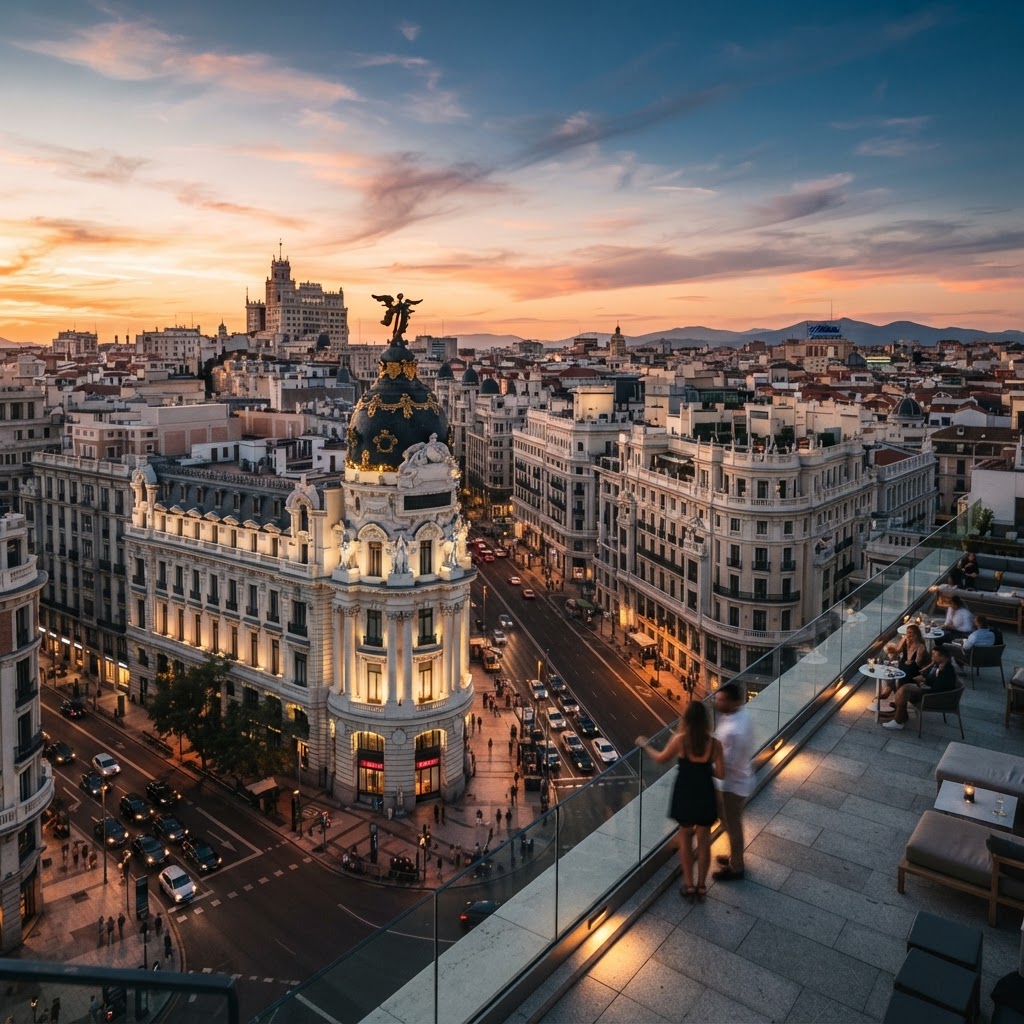
Círculo de Bellas Artes, located at the intersection of Calle de Alcalá and Gran Vía, stands as the premier cultural institution for 360-degree panoramas of Madrid’s city center. Ascending via the historic glass elevator transports visitors to an open-air observation deck that reveals the intricate urban tapestry of the capital. From this vantage point, the iconic Metropolis building—with its gold-leafed dome—dominates the foreground, while the pulse of Gran Vía flows beneath like a river of traffic and light. It is arguably the most photographed skyline in Madrid, especially during the golden hour when the Sierra de Guadarrama mountains are silhouetted against the horizon. Visitors should note that access to the roof costs approximately 5€, which is often bundled with gallery entry. To avoid the peak crowd times, which typically occur between 7:00 PM and 9:00 PM on weekends, aim for weekday afternoons. If you are serious about photography, bring a wide-angle lens (16-35mm) to capture the full breadth of the skyline without the obstruction of the perimeter glass. The rooftop bar, Azotea, serves premium cocktails starting at 12€, providing a sophisticated backdrop for sunset viewing.
Pro-tips for visitors
To avoid the longest lines, try to visit during the weekday afternoons. The rooftop bar serves excellent cocktails, but be prepared to pay a premium for the location and the view. If you are serious about photography, bring a wide-angle lens to capture the full breadth of the skyline.
Rooftop Elegance at Palacio de Cibeles
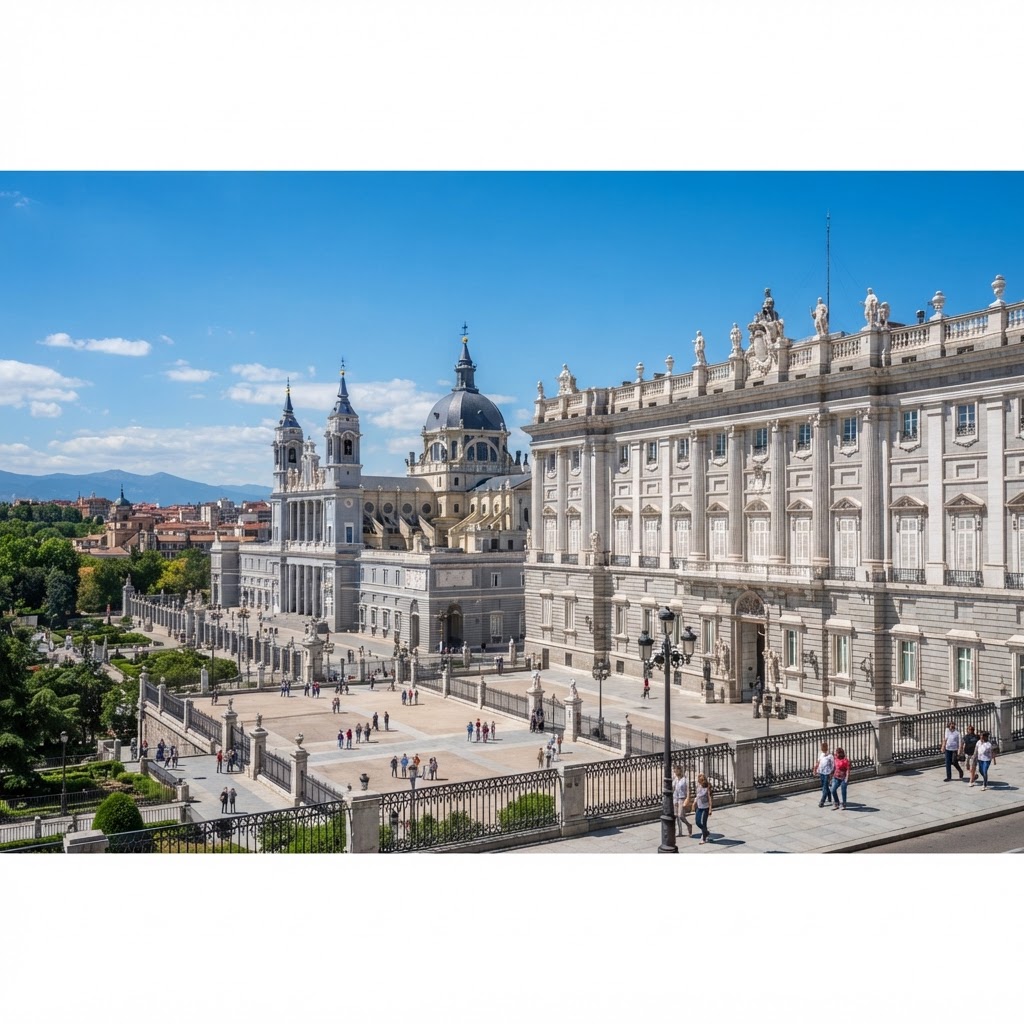
Palacio de Cibeles offers a regal, structured perspective of Madrid that feels more like the grand boulevards of Vienna or Paris than the chaotic charm of central Spain. As the former headquarters of the Spanish Post Office and current seat of Madrid City Hall, this neo-Plateresque masterpiece provides a symmetrical vantage point from its eighth-floor observation deck. Looking down onto the Plaza de Cibeles, you can observe the iconic Fountain of Cybele and the organized intersection of Paseo del Prado in high detail. Unlike the panoramic rooftops of Gran Vía, this location emphasizes the city’s monumental scale and architectural cohesion. Access to the deck is strictly managed through a timed-ticket system, which limits capacity to roughly 30 people per 30-minute slot to ensure an uncrowded experience. Tickets are priced at a nominal 3€ and must be reserved through the official website a few days in advance during the tourist high season. The deck is accessible via elevator, making it a highly inclusive spot for those with limited mobility. Because of its location in the heart of the Golden Triangle of Art, this viewpoint is an ideal stop before or after visiting the nearby Prado or Thyssen-Bornemisza museums.
Booking your visit
Access to the deck is managed through a timed-ticket system, which is very helpful for crowd control. We highly recommend booking your slot online a few days in advance to ensure you do not miss out on one of the best views in Madrid.
Sunset Magic at Temple of Debod
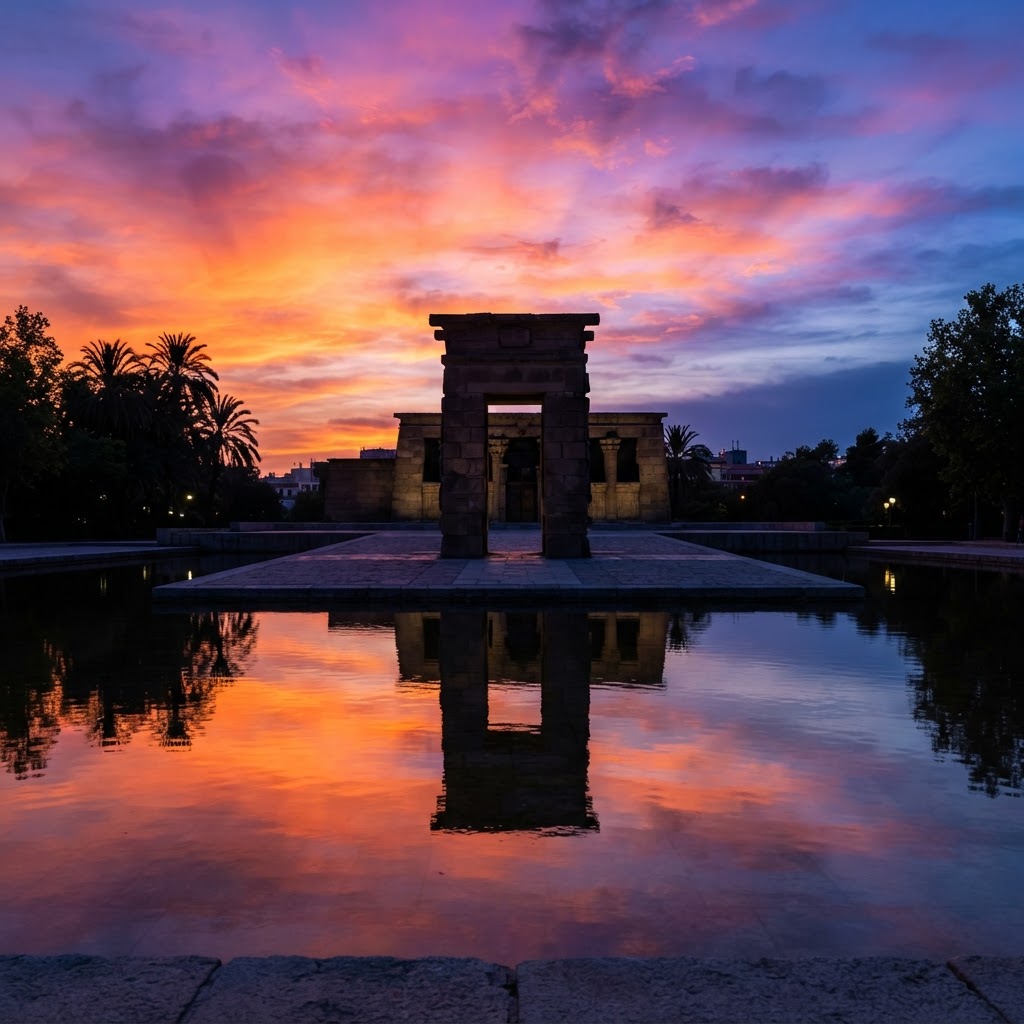
Temple of Debod is the finest location in Madrid for witnessing a natural, history-steeped sunset in a serene public environment. This authentic Egyptian temple, gifted to Spain in 1968, sits centrally within the Parque del Oeste and creates a dramatic silhouette against the changing sky. As the sun dips below the horizon, the temple reflects in the surrounding shallow water pools, mirroring the illuminated structure before the backdrop of the Almudena Cathedral and the Royal Palace. Because this is a public park, it is free to enter and remains open until late, making it a favorite for locals gathering with blankets and refreshments. The site is most crowded during the summer months when the sun sets after 9:30 PM. To capture the best images, arrive at least 45 minutes before sunset to secure a position along the water’s edge. The park offers plenty of green space for a casual picnic, which is common practice among Madrid residents. As the city lights begin to flicker on, the contrast between the ancient stone of the temple and the modern city skyline creates a unique, hauntingly beautiful photographic composition.
The Royal Palace and Almudena Cathedral
Stunning vistas of Madrid’s western horizon are best accessed from the area surrounding the Royal Palace, specifically the elevated paths along the Viaducto de Segovia. Standing at this vantage point, you gain a massive appreciation for the hilly terrain of the city, which was originally established as a defensive site. The palace walls, standing high above the Campo del Moro gardens, offer an imposing sense of history that contrasts sharply with the nearby modern city streets. The viaduct itself provides a clear line of sight toward the greenery of the western outskirts and the cathedral. For a more intimate experience, wander down into the Campo del Moro gardens; this lower perspective offers a view looking upward at the palace, framed by manicured hedges and century-old trees. It is a much quieter experience than the bustling Plaza de Oriente, allowing you to appreciate the sheer scale of the 135,000 square meter structure. The contrast between the formal palace gardens and the wilder forest zones of the park creates an ethereal, royal atmosphere rarely captured by casual tourists who only stay on the main street level.
Modern Perspectives at Madrid Río
Madrid Río serves as the premier destination for those seeking a view that balances modern urban design with natural riverfront tranquility. This massive project, which buried the M-30 motorway underground, created a six-mile-long park that offers refreshing, low-angle views of the city skyline. The Arganzuela footbridge, designed by Dominique Perrault, stands as the highlight of this area; its steel structure acts as a frame for the evolving architectural landscape of the city, including the Matadero cultural center. Unlike the cramped, stone-heavy streets of the city center, this riverside corridor provides a breezy, open perspective, making it ideal for cyclists and those avoiding the heat of the central concrete jungle. Because it spans such a large area, the park never feels overcrowded, even on weekends. Visitors can rent bikes or simply walk along the river to see historical stone bridges juxtaposed against futuristic architectural installations. It is the best place in the city to witness how Madrid is re-integrating its natural river environment into the modern 21st-century urban framework.
Exclusive Views from Hotel Terraces
Madrid possesses a unique culture of elevated nightlife centered on rooftop hotel bars that provide luxury perspectives of the urban density. The Hotel Riu Plaza at Plaza de España features a glass-floor balcony on the 27th floor that provides an intense, 360-degree bird’s-eye view of the city center. While the Riu is the most viral and popular, other venues offer distinct environments for different traveler profiles. For instance, the Dear Hotel is known for a chic pool-deck aesthetic, while The Hat serves a younger, bohemian crowd with its proximity to the Plaza Mayor. These terraces are not just about the view; they are central to Madrid’s evening lifestyle, where the transition from ‘atardecer’ (sunset) to nightlife is celebrated with tapas and mixed drinks. Note that the most popular rooftop bars often implement dress codes, especially after 8:00 PM, and may require a reservation or a minimum spend fee. Viewing the city from these heights reveals the dense, terracotta-tiled carpet of the city, highlighting the lack of skyscrapers compared to other European capitals and emphasizing the preservation of historic heights.
FAQ
Which Madrid viewpoint is free to enter?
The Temple of Debod is the most iconic free viewpoint in Madrid. As it is situated within the public Parque del Oeste, there is no admission fee to enjoy the sunset vistas of the Royal Palace and the cathedral throughout the year.
Do I need a reservation for the Palacio de Cibeles observation deck?
Yes, booking a reservation online is highly recommended to guarantee your spot. The observation deck operates on a strictly timed entry system to control crowds, and slots can sell out days in advance during peak travel seasons.
What time is best for photography in Madrid?
The best time for photography is during the ‘golden hour,’ which occurs roughly one hour before sunset. During this time, the soft light enhances the terracotta rooftops, and the ‘blue hour’ that follows is perfect for capturing the city’s artificial lights turning on.
Are rooftop bars in Madrid expensive?
Most rooftop bars in Madrid charge a premium for their location, with cocktails typically ranging from 12€ to 18€. Some locations, like the Círculo de Bellas Artes, may also charge a separate entry fee just to access the rooftop terrace, regardless of whether you purchase a drink.
Which view is best for families with children?
Madrid Río is the best option for families due to its extensive playground facilities and wide, safe paths for walking and cycling. Unlike the sophisticated rooftop bars which may be restricted to adults or maintain strict noise levels, the riverside park offers plenty of open space for children to play freely.
Leave a Reply