
Barcelona From Above: Top City and Sea Views
To experience the best panoramic views of Barcelona, visit the Bunkers del Carmel for 360-degree vistas, the Sagrada Familia towers for architectural perspectives, or the W Hotel for coastal horizons. These locations offer the most comprehensive vantage points to appreciate the city’s unique grid layout and stunning Mediterranean coastline from high above.
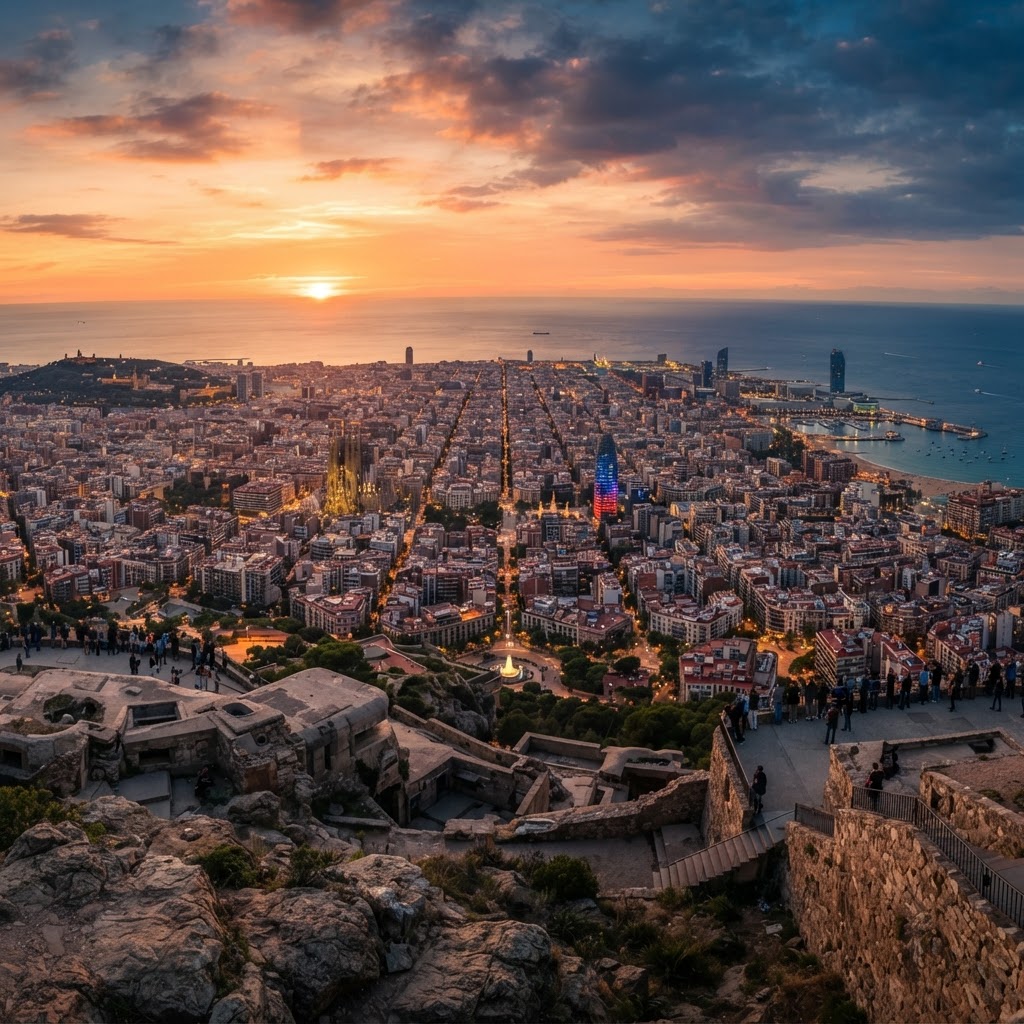
The Magic of the Bunkers del Carmel
The Bunkers del Carmel, located at the summit of Turó de la Rovira, offers the most authentic and unobstructed 360-degree panorama of Barcelona for free. Originally constructed as anti-aircraft defenses during the Spanish Civil War in 1937, this site has transitioned from a military fortification into the city’s premier sunset destination. To reach the site, travelers typically take the V17 bus or the Metro to El Carmel, followed by a 15-minute steep uphill walk. The elevation of 262 meters allows visitors to identify major landmarks, including the Sagrada Familia, the Agbar Tower, and the entire stretch of the coastline. Because the site is open 24 hours a day and lacks formal infrastructure, it is recommended to arrive at least 60 minutes before sunset to secure a prime spot on the concrete walls. Bring your own supplies, as there are no commercial vendors at the immediate summit. This location remains the preferred choice for locals looking to escape the tourist density of the city center.
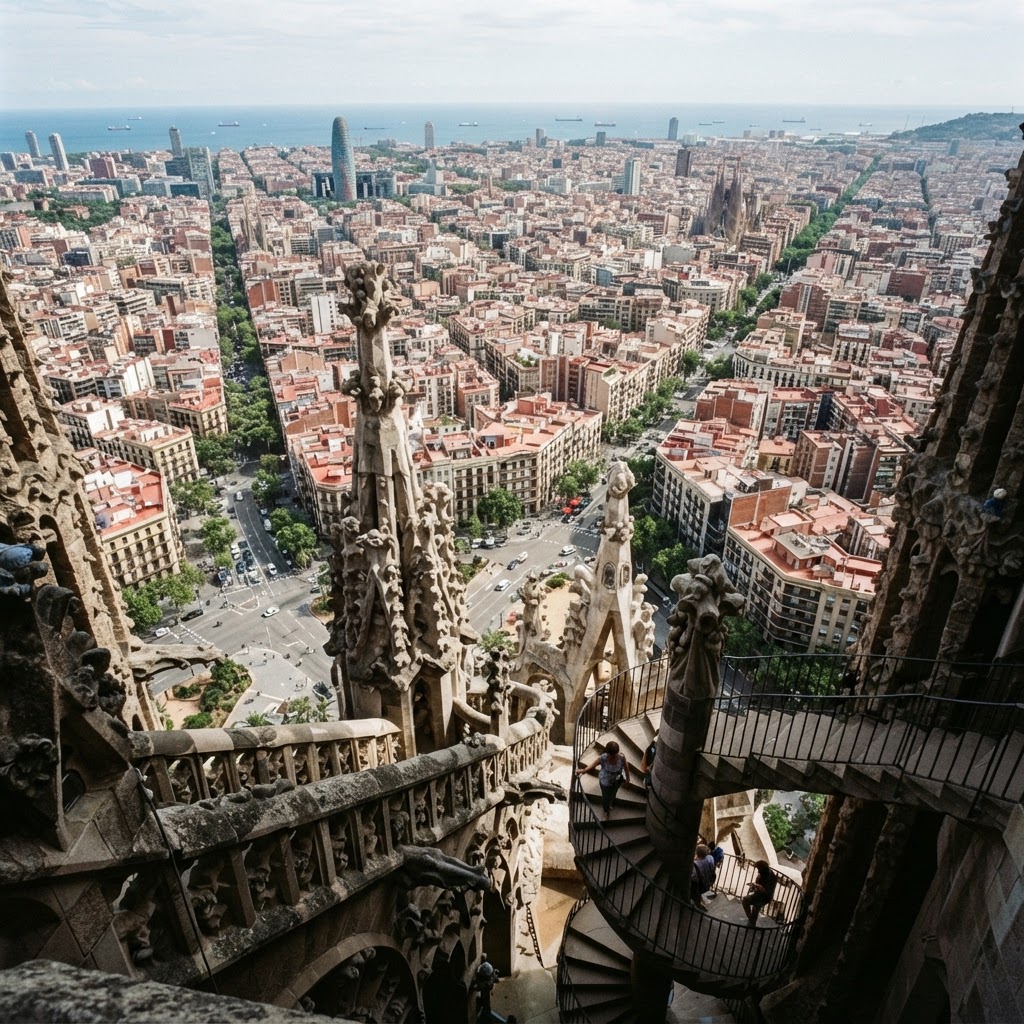
Ascending the Sagrada Familia Towers
Ascending the towers of the Sagrada Familia provides the most architecturally significant elevated view in Barcelona, offering a rare look at the intricate stonework of Antoni Gaudí’s masterpiece from heights reaching up to 75 meters. Visitors can choose between the Nativity Facade, which faces east toward the sea, or the Passion Facade, which faces west toward the mountains. The experience is highly structured, requiring a specific timed entry ticket that must be purchased online weeks in advance, as tower access is strictly limited to prevent overcrowding. From the top, the city’s Cerdà grid layout becomes visually apparent, illustrating the urban planning precision of the 19th century. Security is rigorous, so visitors should plan for at least 30 minutes of lead time before their scheduled ascent. Once at the summit, the narrow stone corridors and spiral staircases provide a claustrophobic yet thrilling contrast to the expansive city view waiting at the bridge between towers.
Practical Tips for Tower Access
- Book your tickets at least two weeks in advance to secure a time slot.
- Choose between the Nativity or Passion towers; both offer distinct visual angles.
- Arrive thirty minutes early to clear security protocols.
- Ensure your camera battery is charged; the photo opportunities are endless.
| Feature | Bunkers del Carmel | Sagrada Familia Towers |
|---|---|---|
| Cost | Free | Paid (€30+) |
| Difficulty | Steep Hike | Elevator Access |
| Availability | 24/7 | Timed Entry Only |
| Best For | Sunset / Locals | Architecture / History |
Skyline Views from Mount Montjuïc
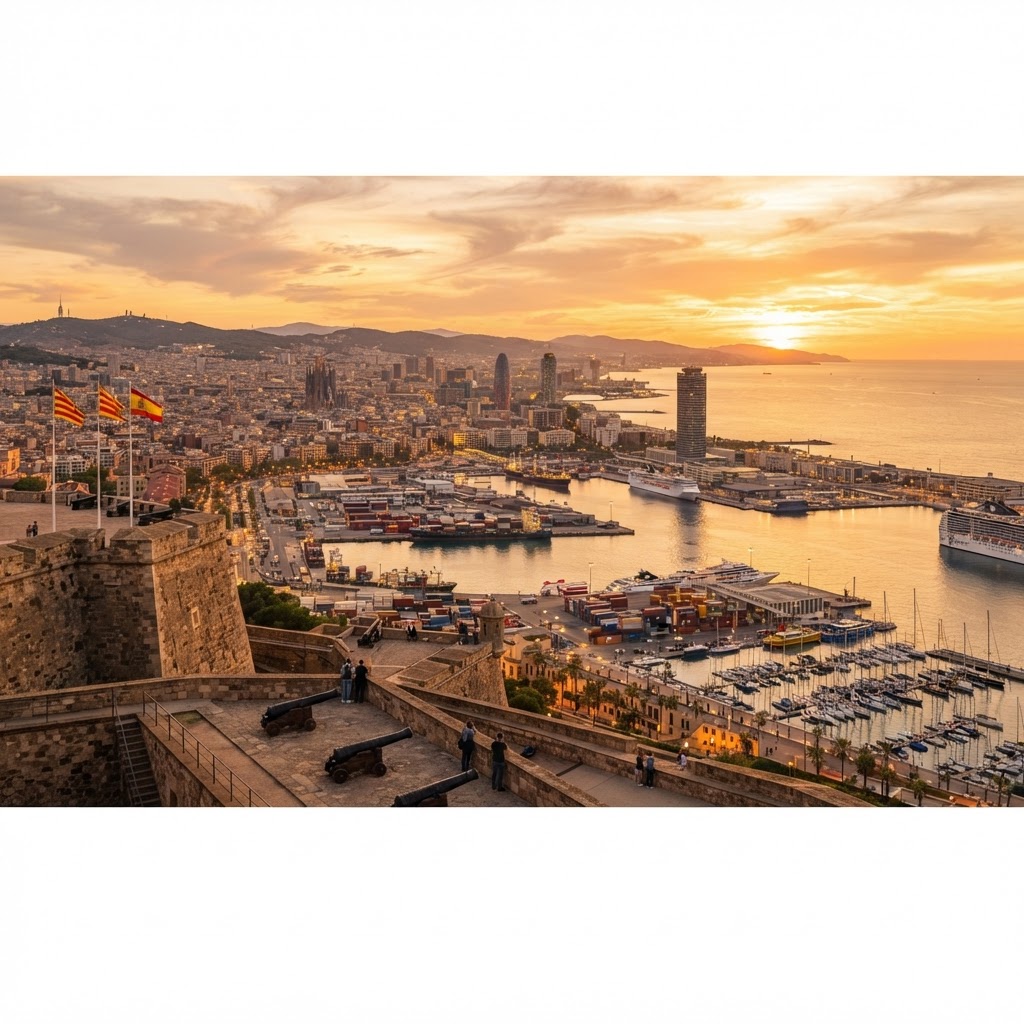
Montjuïc acts as a diverse cultural balcony for Barcelona, combining historical military architecture with modern cable car transport to provide views that span from the industrial port to the distant Tibidabo mountain. The most scenic approach involves the Transbordador Aeri, a cable car that travels from the Barceloneta port directly to the base of the Montjuïc Castle. Standing at 173 meters above sea level, the fortress walls provide a vantage point that frames the bustling Mediterranean shipping lanes against the backdrop of the city’s historic core. Visitors often spend hours exploring the surrounding Olympic Stadium, the MNAC museum, and the lush gardens that soften the industrial landscape below. Because of its massive scale, Montjuïc is ideal for photography enthusiasts who want to capture depth, as the layers of the harbor, the city sprawl, and the distant mountain ranges create a perfect natural composition in a single wide-angle shot.
Luxury at Barcelona Rooftop Bars
Rooftop bars provide the most sophisticated way to experience Barcelona from above, offering private, climate-controlled environments with high-end cocktail service. Primarily concentrated in the Eixample district, these terraces—such as those atop the Majestic or Hotel 1898—allow for a more intimate observation of modernist building facades that are otherwise missed from the ground. By visiting during the ‘golden hour,’ guests can witness the changing hues of the city’s light reflected off the terracotta roofs, providing a starkly different aesthetic from the rugged mountain tops. These venues often require reservations during the summer season (June through September) and maintain strict dress codes. Prices for cocktails in these premium locations typically range between €15 and €25, but the value lies in the unobstructed, quiet views that contrast sharply with the crowded, noisy pedestrian plazas located at street level.
Coastal Vistas and the Mediterranean Horizon
The Mediterranean coastline, best viewed from the W Hotel’s Eclipse bar or the nearby beach promenades, reveals the essential maritime character of Barcelona. Positioned at the extreme southern end of the Barceloneta coastline, this location provides a unique vantage point where the sea meets the sky in an uninterrupted blue gradient. Observing the horizon from this elevation highlights the city’s relationship with maritime trade and leisure, as tankers, cruise ships, and small sailboats cross the water continuously. This perspective is vital for understanding why Barcelona’s development was historically tied to its port access. For the most dramatic visual impact, visit during the early morning when the water is calm and the sun begins to rise behind the waves, creating a shimmering effect that illuminates the city’s eastern facade.
Park Güell and the Natural Elevation
Park Güell provides a whimsical and artistic elevation, where Antoni Gaudí’s organic design principles integrate seamlessly with the natural topography of the Carmel Hill. The main terrace, or ‘Plaça de la Natura,’ is famously enclosed by a serpentine bench covered in broken tile mosaics (trencadís), which frames the cityscape in a vibrant, colorful foreground. From this height, the Sagrada Familia appears as a monumental spike piercing the urban grid, creating one of the most photographed alignments in Spain. Because the park is a UNESCO World Heritage site, access to the Monumental Zone is restricted, and visitors must purchase tickets in advance. Despite the crowds, the elevation offers a unique sense of space where the greenery of the park’s Mediterranean flora blends into the densely packed architecture of the city below, perfectly capturing the harmony between Gaudí’s vision and the natural landscape.
FAQ
Q: Which view of Barcelona is the best for sunset?
The Bunkers del Carmel is widely considered the best sunset location due to its 360-degree views and lack of obstacles. It offers a panoramic perspective where you can watch the entire city transition from daylight into a sea of artificial lights.
Q: Do I need to book Sagrada Familia tower tickets in advance?
Yes, booking tower access at least two to four weeks in advance is essential. These tickets are limited daily and often sell out well ahead of time, especially during weekends and the peak tourist season from May to September.
Q: Are there free panoramic viewpoints in Barcelona?
Yes, the Bunkers del Carmel is entirely free to visit at any time of day. Other elevated parks like Park del Guinardó also provide beautiful, cost-free perspectives of the city without the entry fees associated with monuments or private rooftop bars.
Q: What is the best way to travel between viewpoints?
Barcelona is well-connected by public transport, but for high-elevation spots, the city bus (like the V17) or the Barcelona Cable Car are the most efficient methods. Taxis are also a viable option if you want to save time and energy on steep inclines.
Leave a Reply