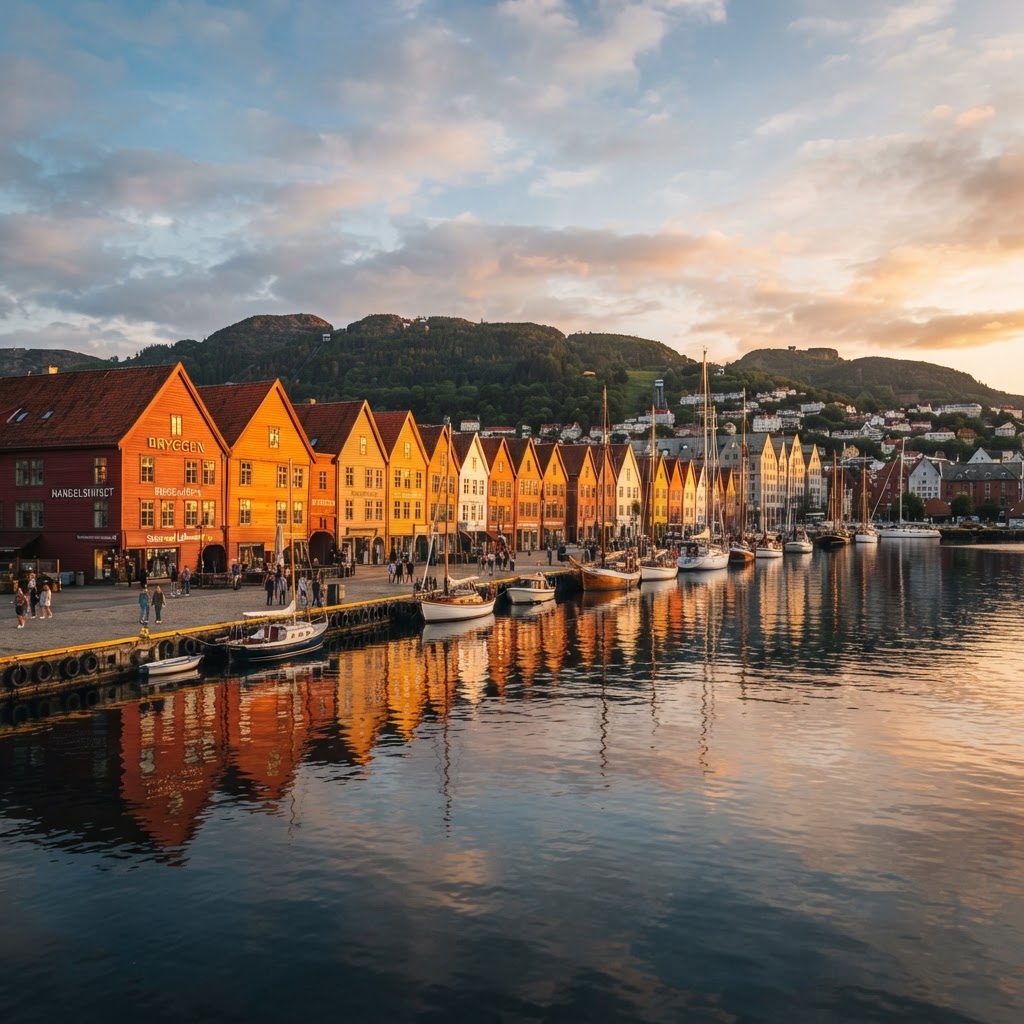
Bergen offers optimal golden hour photography conditions due to its high northern latitude, where the sun sits at a lower angle for longer durations than at the equator. The best time to photograph the city is typically 60 to 90 minutes before sunset, particularly between May and August when the twilight transition is most extended.
The Allure of Light in Northern Latitudes
Photography in Norway is heavily dictated by geography, and the golden hour in Bergen is unique due to its high latitude of 60.39° N. Unlike equatorial regions where the sun drops rapidly, the golden hour here can feel like it lasts for an eternity, particularly during the shoulder seasons. This extended twilight provides a soft, diffused light that eliminates harsh shadows and brings out the rich textures of Bergen’s centuries-old buildings. Because the sun remains at a lower angle, the directional light creates long, dramatic shadows that emphasize the architectural depth of the wooden structures. Understanding the light is your first step to capturing the city’s soul. Whether you are using a professional DSLR or a smartphone, the quality of natural light during this period is your greatest asset. It turns the mundane into the magical, casting a spotlight on the intricate details of the Hanseatic wharf and the shimmering surface of Vågen harbor.
Scouting the Best Vantage Points
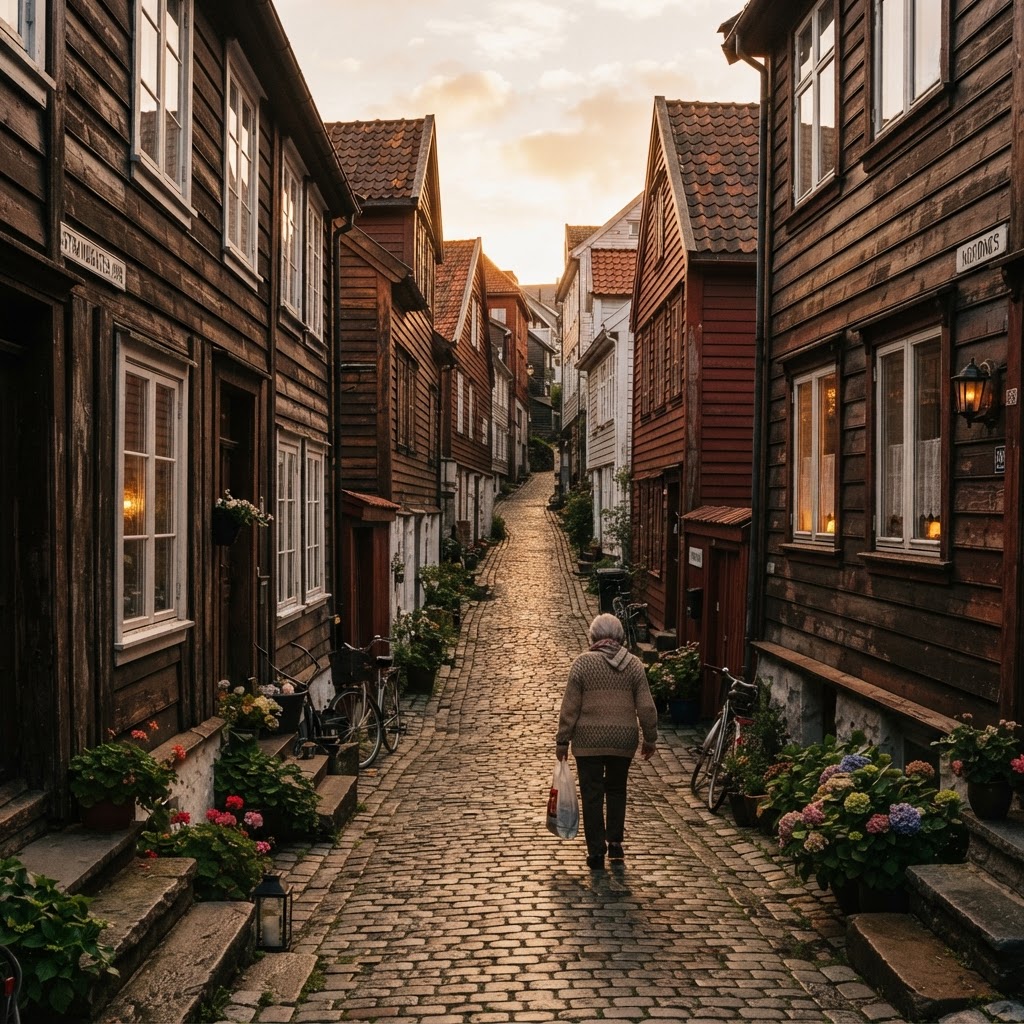
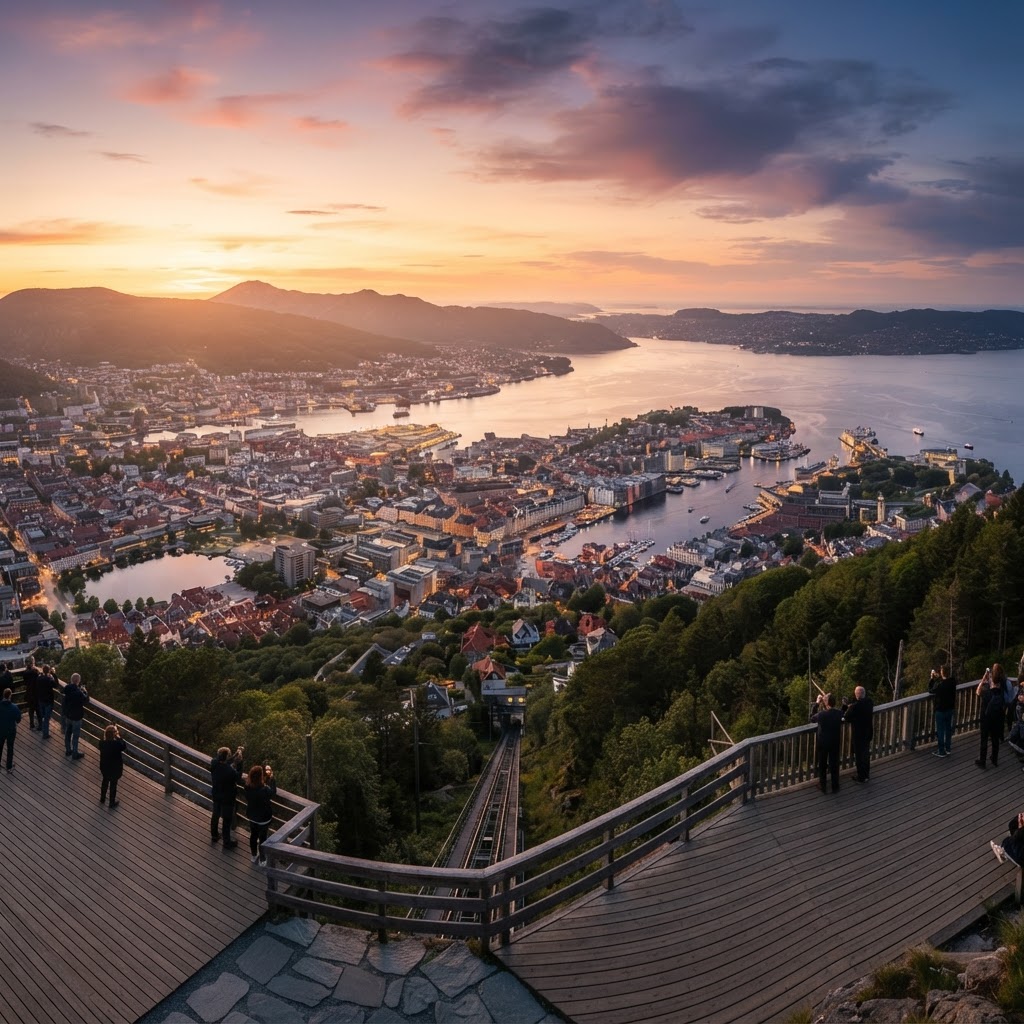
To truly experience Bergen in the golden hour, you must position yourself where the light interacts with the landscape. While the city center is beautiful, the surrounding peaks offer a panoramic perspective that is hard to beat. Mount Fløyen is the most accessible choice, providing a sweeping view of the city as it transitions from the bustle of the day to the tranquil stillness of the evening. To reach the summit, the Fløibanen funicular operates until midnight during summer, costing approximately 160 NOK for a round trip. If you prefer a ground-level perspective, head to the Nordnes peninsula. Here, the narrow, winding streets are lined with traditional white wooden houses. As the sun sets, the light creeps down these alleys, highlighting the colorful flower boxes and the weathered timber. It is a quiet, contemplative space that feels worlds away from the tourist-filled harbor. Photographers often find that the juxtaposition of the white-painted wood against the late-day amber glow creates a high-contrast aesthetic that is quintessentially Bergen.
Capturing the Iconic Bryggen at Sunset
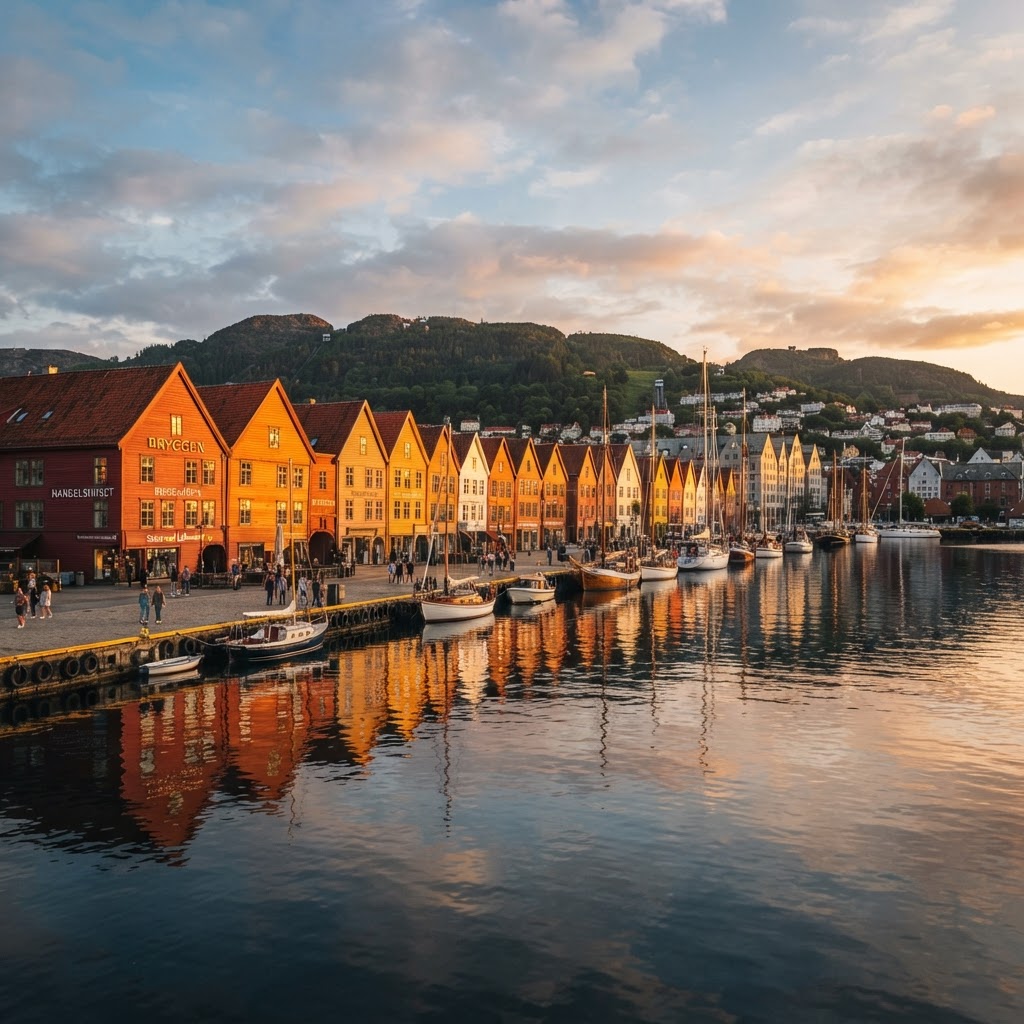
Bryggen is the crown jewel of Bergen, and there is no better time to photograph it than when the golden light strikes its wooden facades. The UNESCO World Heritage site is famous for its leaning, multi-colored buildings, and in the golden hour, these structures take on a warm, saturated hue that contrasts beautifully with the blue water of the harbor. To get the best shot, stand across the Vågen harbor near the Fish Market. Using a tripod is highly recommended here, as you will want to use a slightly longer exposure to capture the reflection of the colored buildings in the water. For optimal results, use an aperture between f/8 and f/11 to ensure maximum depth of field across the entire length of the wharf. The combination of the historic architecture, the calm harbor, and the golden sky creates a classic composition that is quintessentially Bergen. You should aim to arrive at the Fish Market at least 20 minutes before the golden hour begins to secure a stable spot for your tripod, as this is a high-traffic area for both locals and tourists.
Tips for Architectural Photography
- Focus on the textures of the old wood.
- Look for reflections in the windows of the Hanseatic buildings.
- Frame your shot to include the masts of ships for a sense of scale.
- Wait until the very end of the golden hour to capture the transition to blue hour.
Embracing the Blue Hour Transition
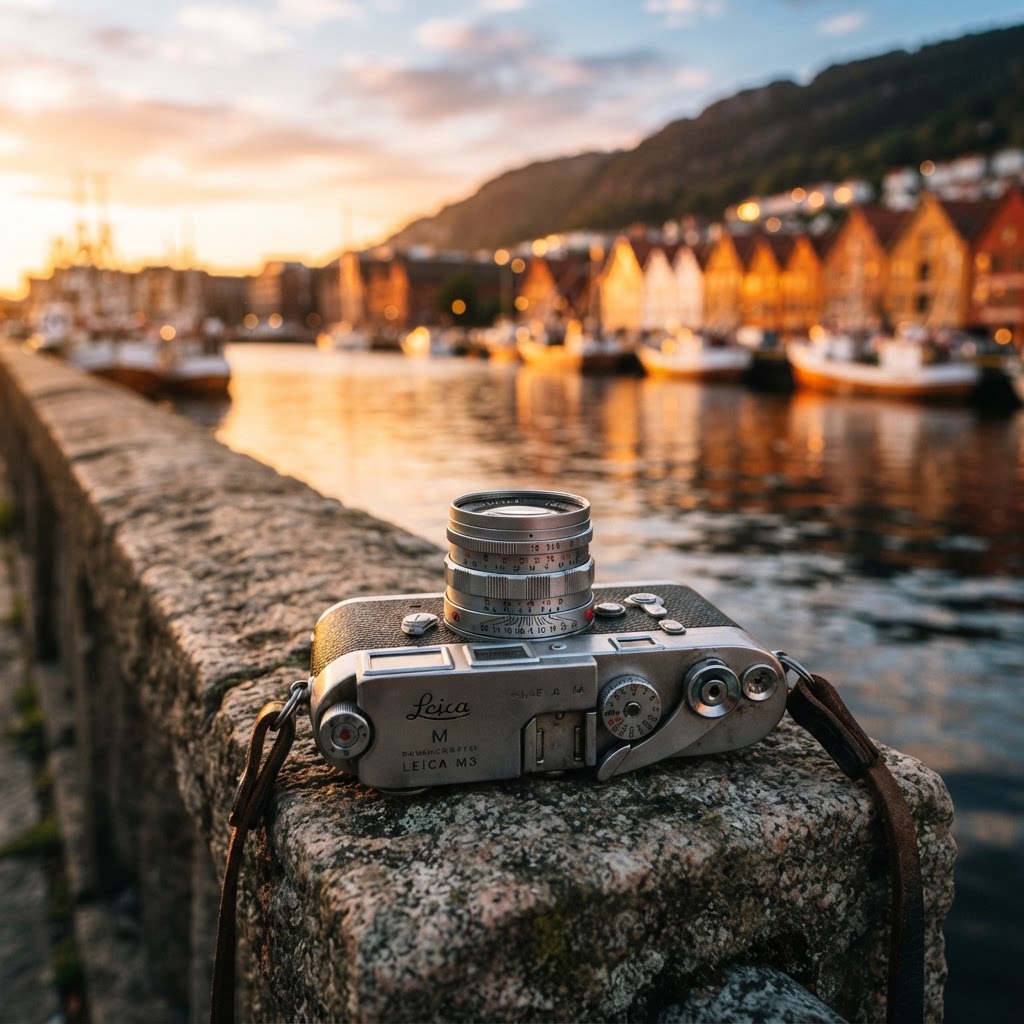
One of the most important aspects of photographing Bergen in the golden hour is knowing when to stay put as the sun fades. The transition from the golden, amber light of sunset into the deep, moody blues of the twilight hours is a spectacular show in itself. As the city lights flicker on, the contrast between the warm artificial glow and the cool evening sky creates a visual masterpiece. Many photographers make the mistake of leaving as soon as the sun dips below the horizon. However, the 20 to 30 minutes following sunset—often called the ‘blue hour’—is when the city truly comes alive. The soft glow allows you to capture long-exposure shots of the harbor lights, creating a perfect balance between the rugged mountains and the modern city life. Set your white balance to ‘Tungsten’ or around 3200K during this phase to emphasize the deep blues, and consider a 5-15 second shutter speed to create smooth, glassy reflections on the water’s surface.
Essential Gear for Your Bergen Expedition
While gear doesn’t make the photographer, it certainly makes capturing the golden hour easier. Because the weather in Bergen can be unpredictable—receiving over 2,000mm of rain annually—your equipment needs to be versatile. A weather-sealed camera body is a significant advantage, as is a high-quality lens that performs well in low-light conditions. Bring extra batteries, as lithium-ion cells discharge up to 30% faster in the crisp coastal temperatures common during Bergen evenings. A circular polarizer is essential for the harbor, as it allows you to remove unwanted reflections from the Vågen water or keep them intentionally to capture the vibrant colors of the wooden wharf.
Connecting with the Local Atmosphere
Beyond photography, the golden hour in Bergen is a cultural experience. It is when the locals finish their workday and head to the harbor or the mountain trails to unwind. By immersing yourself in this environment, you can capture candid moments of life in the city—people sharing coffee by the water, fishermen mooring their boats, or children playing in the park as the light fades. Engaging with the local rhythm adds depth to your story. Don’t be afraid to take a break from the camera, find a cozy spot at a local cafe, and simply watch the world go by. The light changes every second, and sometimes, the best ‘photograph’ is the memory you record in your own mind. Visiting cafes like those in the Bryggen area during the transition allows you to observe the shift in light from an indoor vantage point, providing a unique frame for your compositions.
[](https://www.youtube.com/watch?v=xeIF7__jiN0)
Planning Your Golden Hour Schedule
To maximize your experience, you need to check the sunset times well in advance. Norway experiences significant seasonal variance in daylight, meaning the ‘golden hour’ occurs at drastically different times depending on when you visit. If you are visiting in the summer, you might experience the ‘midnight sun’ phenomenon, where the golden hour seems to linger for hours. During the winter, the sun stays very low in the sky, creating a very short but intense golden window. Use apps like ‘Photopills’ or ‘The Photographer’s Ephemeris’ to calculate the exact sun position for your specific dates in Bergen. Specifically, check the ‘sun elevation’ feature; for the best golden hour quality, aim for the period when the sun is between 6 degrees above the horizon and 6 degrees below it. This specific alignment creates the most flattering light for Bergen’s rugged topography.
FAQ
Q: What is the best time of year to visit Bergen for golden hour photography?
Professional photographers recommend visiting between June and August. During these months, the sun remains at a lower angle for a longer duration, providing an extended golden hour that lasts for over 90 minutes compared to the quick sunset transitions found in southern latitudes.
Q: Do I need a tripod for golden hour shots in Bergen?
Yes, a tripod is essential for high-quality golden hour and blue hour photography. Because the light levels drop significantly as the sun sets, a tripod allows you to use lower ISO settings and longer shutter speeds to keep images sharp and free of noise.
Q: Is Mount Fløyen worth the trip for sunset?
Absolutely, Mount Fløyen offers the most iconic panoramic view of Bergen’s geography. It is the best location to capture the transition of the city lights against the dark silhouettes of the surrounding mountains and the glowing harbor below.
Q: How do I handle Bergen’s rainy weather when shooting?
Pack a high-quality weather cover for your camera and carry a microfiber cloth to wipe the lens frequently. Bergen receives significant rainfall throughout the year, so ensuring your gear is weather-sealed is critical for protecting your investment while capturing moody, atmospheric shots.
Q: What camera settings should I use for Bryggen at sunset?
Start with an aperture of f/8 to f/11 for optimal sharpness across the wooden facades. Keep your ISO at the lowest base setting (typically 100) and use a shutter speed dictated by your light meter, likely ranging from 1/30s to 5 seconds depending on the fading light.
Leave a Reply