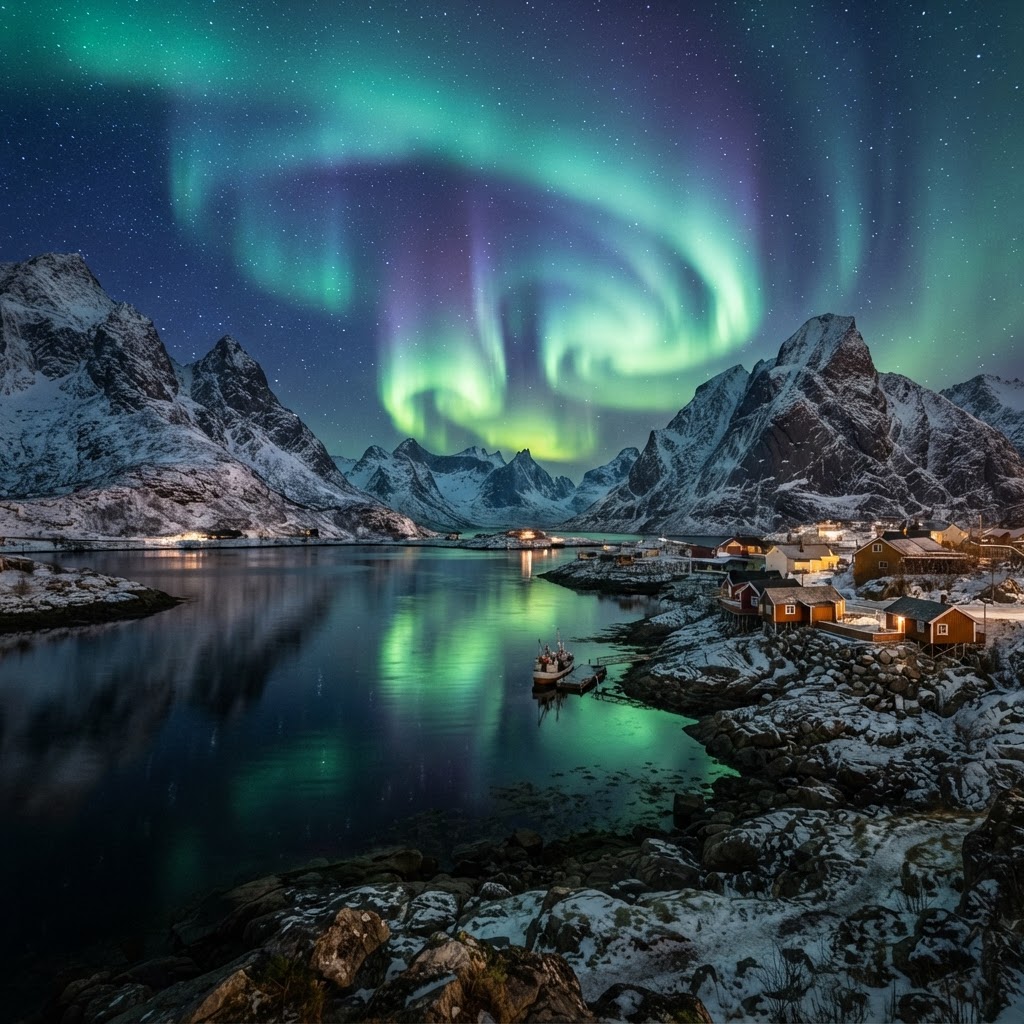
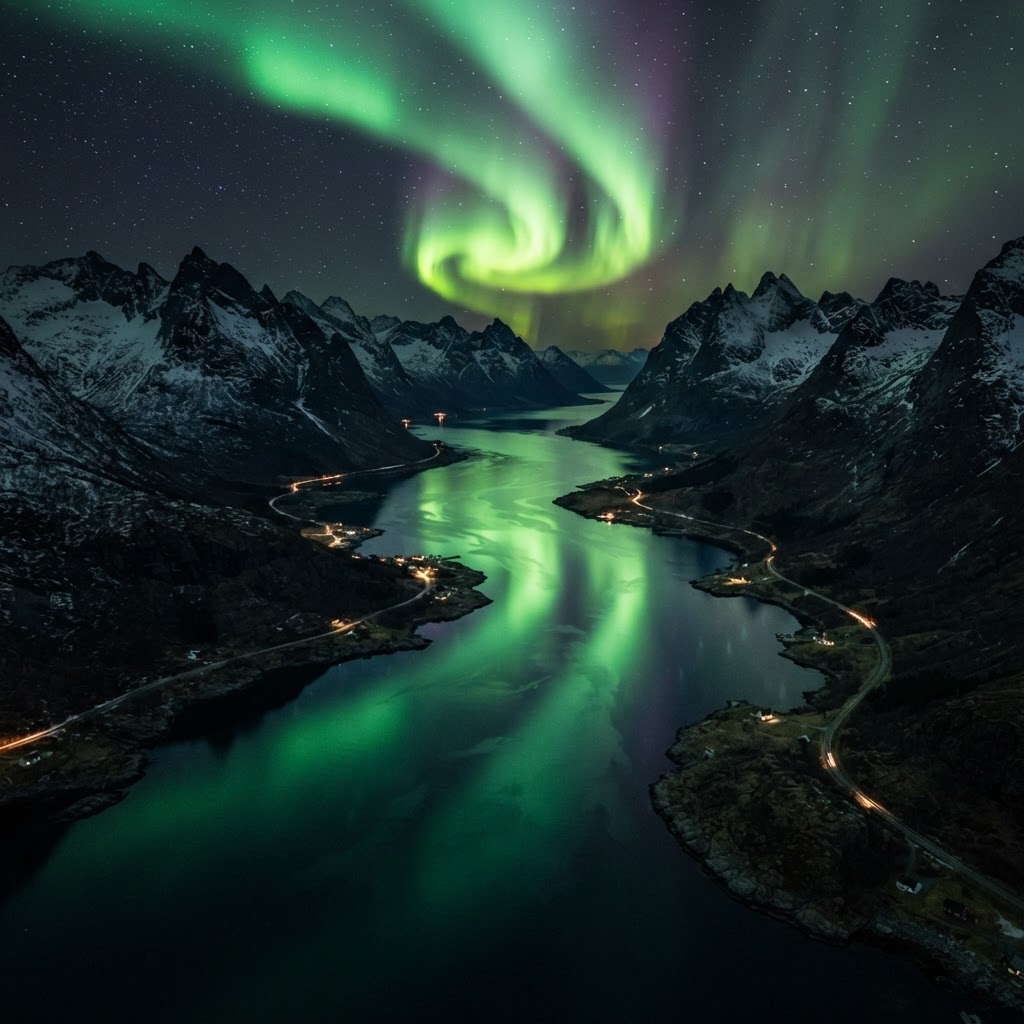
The dance of the Aurora Borealis is a spectacle that tops many bucket lists, but seeing the Northern Lights over the fjords elevates the experience to something truly transcendent. As vibrant ribbons of emerald, violet, and crimson unfurl across the night sky, their reflections mirror perfectly in the still, dark waters of the deep Norwegian inlets. This intersection of dramatic geological formations and celestial wonder creates a landscape that feels pulled from a Norse myth.
For those drawn to the Arctic silence, this guide explores how to chase this elusive phenomenon. From understanding the science of solar activity to selecting the perfect fjordside vantage point, you will learn everything necessary to capture the memory of a lifetime.
The Magic of the Fjord Landscape
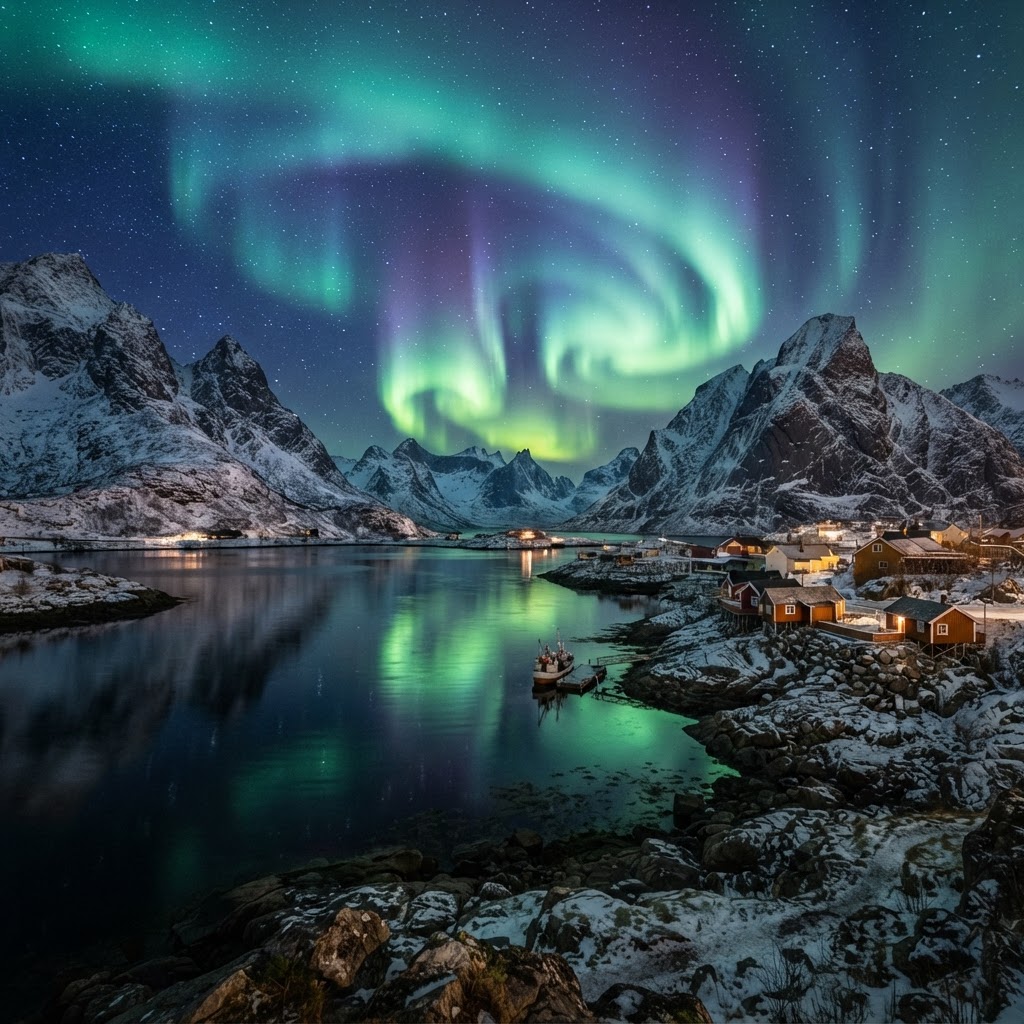
Fjords are deep, narrow, and elongated sea or glacial inlets with steep cliffs created by glacial erosion. When you stand at the edge of a fjord in winter, you are surrounded by towering mountains that act as natural frames for the sky. These vertical landscapes provide a sense of scale that makes the Aurora appear even more imposing and majestic.
Furthermore, the coastal climate influenced by the Gulf Stream often makes the weather slightly more temperamental, which can actually be an advantage for photographers. Rapidly changing cloud cover can clear as quickly as it forms, occasionally unveiling a star-filled sky right when you least expect it. The juxtaposition of jagged, snow-dusted peaks against a swirling curtain of light remains the ultimate reward for any Arctic traveler.
Best Time to Witness the Aurora
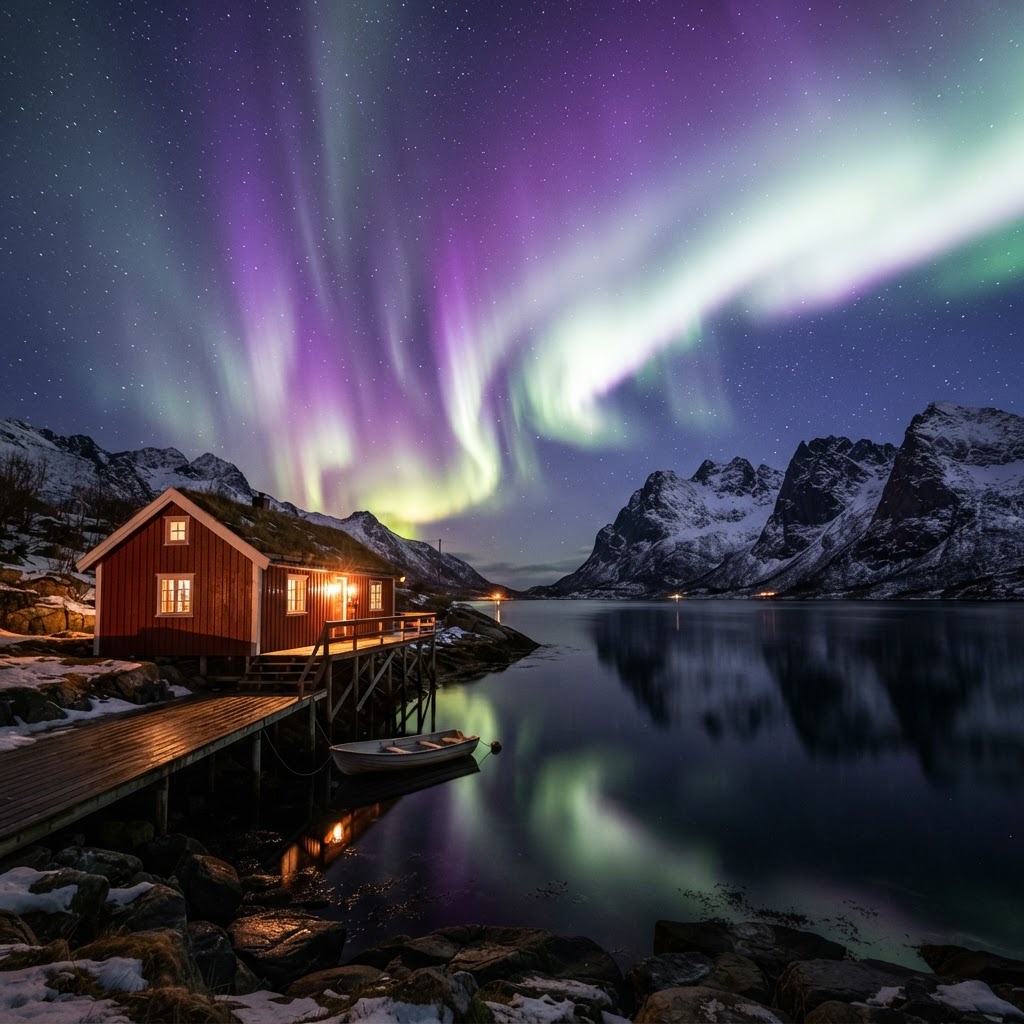
Timing is everything when you are chasing the Northern Lights over the fjords. While the Aurora Borealis is active year-round, it requires total darkness to be visible to the human eye. In the northern reaches of Norway, the “Polar Night” provides long hours of darkness between late September and late March.
Seasonal Considerations
- September and October: Less extreme cold, often clear skies, and the added bonus of autumn colors on the lower slopes.
- November to January: Maximum darkness, providing the greatest window of time to spot the lights.
- February and March: Often considered the “sweet spot” due to increased solar activity and more stable weather patterns.
Beyond the month, you must monitor solar activity. The Kp-index is the global geomagnetic activity index that indicates the likelihood of Aurora activity. While a higher Kp-index suggests brighter, more southern-reaching lights, a Kp of 2 or 3 is often sufficient to produce a breathtaking show if you are located in the auroral zone.
Top Fjord Destinations for Aurora Hunting
Choosing the right location is vital for a successful trip. While the entire Norwegian coast offers potential, certain regions provide better infrastructure and darker skies.
Tromsø and the Surrounding Fjords
Tromsø is widely regarded as the capital of the Arctic. Located in the middle of the auroral oval, it provides easy access to numerous surrounding fjords, including Ersfjordbotn and Kaldfjord. These locations are famous for their accessible mountain viewpoints and relatively low light pollution.
The Lofoten Islands
The dramatic, jagged peaks of the Lofoten Islands rise directly from the sea, creating some of the most iconic silhouettes in the world. When the Northern Lights dance over the Reine or Hamnøy fjords, the resulting photos are nothing short of legendary. The islands offer a variety of traditional fisherman cabins, or ‘rorbuer’, which provide a warm sanctuary after a long night of waiting in the cold.
Essential Photography Tips
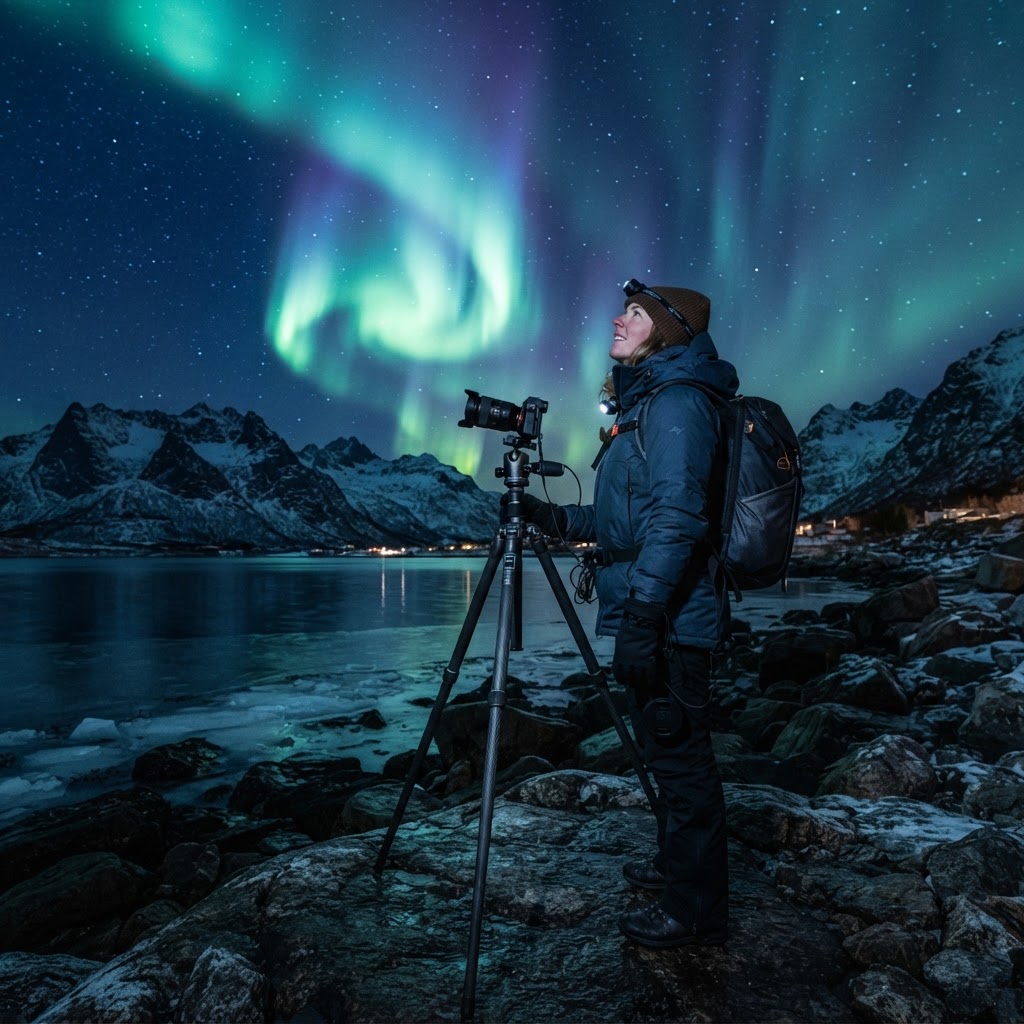
Capturing the Northern Lights over the fjords requires more than just a good eye; it requires the right technical approach. Because you are shooting in low-light conditions, your camera gear needs to be prepared for both the darkness and the biting cold.
Technical Gear Checklist
- Full-frame camera: The larger sensor performs significantly better with high ISO noise management.
- Wide-angle lens: A focal length between 14mm and 24mm with an aperture of f/2.8 or lower is ideal.
- Sturdy tripod: The winds near the fjords can be fierce; a heavy, stable tripod is non-negotiable for long exposures.
- Extra batteries: Cold temperatures drain lithium batteries incredibly fast; keep spares in an inner jacket pocket near your body heat.
When setting up your shot, use a long exposure ranging from 5 to 20 seconds depending on the intensity of the lights. If the Aurora is moving quickly, stick to shorter exposures to avoid turning the crisp ribbons into a blurry green smudge. Always shoot in RAW format to allow for greater recovery of highlights and shadows during post-processing.
Staying Warm and Safe
Arctic exploration requires a serious approach to safety and layering. The weather near the fjords can shift from calm and clear to a blinding snowstorm in minutes. Never underestimate the chill factor, especially when you are standing still for hours while operating a camera.
The Layering Strategy
- Base Layer: Merino wool or high-quality synthetic thermal underwear.
- Mid Layer: A thick wool sweater or a fleece jacket to trap body heat.
- Outer Layer: A windproof and waterproof parka that can withstand heavy snow and Arctic gusts.
- Extremities: Do not forget high-quality wool socks, insulated boots, and gloves that allow you to adjust camera dials without exposing your skin to the air.
Always inform someone of your planned route if you are venturing out independently. The fjords can be maze-like, and cell reception may be spotty in the deeper valleys. Joining a guided aurora tour is often the best way for beginners to ensure safety while benefiting from the expert local knowledge of where the current cloud cover is breaking.
Understanding the Science
The Northern Lights, or Aurora Borealis, are caused by solar wind interacting with the Earth’s magnetosphere. As charged particles from the sun strike atoms in our upper atmosphere, they emit light at different wavelengths. Oxygen atoms typically produce the iconic green and occasionally red colors, while nitrogen produces blue or violet hues.
Because the magnetic field of the Earth funnels these particles toward the poles, the fjords of Northern Norway are ideally situated for high-frequency displays. The auroral oval is a ring-shaped zone centered on the magnetic pole. By staying within this zone, your chances of seeing the lights increase exponentially compared to lower latitudes. It is a collision of cosmic forces, and watching it from the quiet, frozen edge of a fjord provides a profound sense of perspective on our place in the universe.
Conclusion
Witnessing the Northern Lights over the fjords is a transformative experience that combines the raw power of geology with the ethereal beauty of the cosmos. Whether you are a professional photographer chasing the perfect composition or a traveler looking for the awe of the Arctic, preparation and patience are your best tools. From the peaks of Lofoten to the accessible shores near Tromsø, the Arctic landscape offers endless opportunities to see the sky ignite.
Ready to book your Arctic adventure? Start by monitoring the solar forecasts and securing your travel plans for the upcoming winter season. The dance of the lights awaits you in the North. Do not let another winter pass without witnessing this natural wonder for yourself.
Leave a Reply