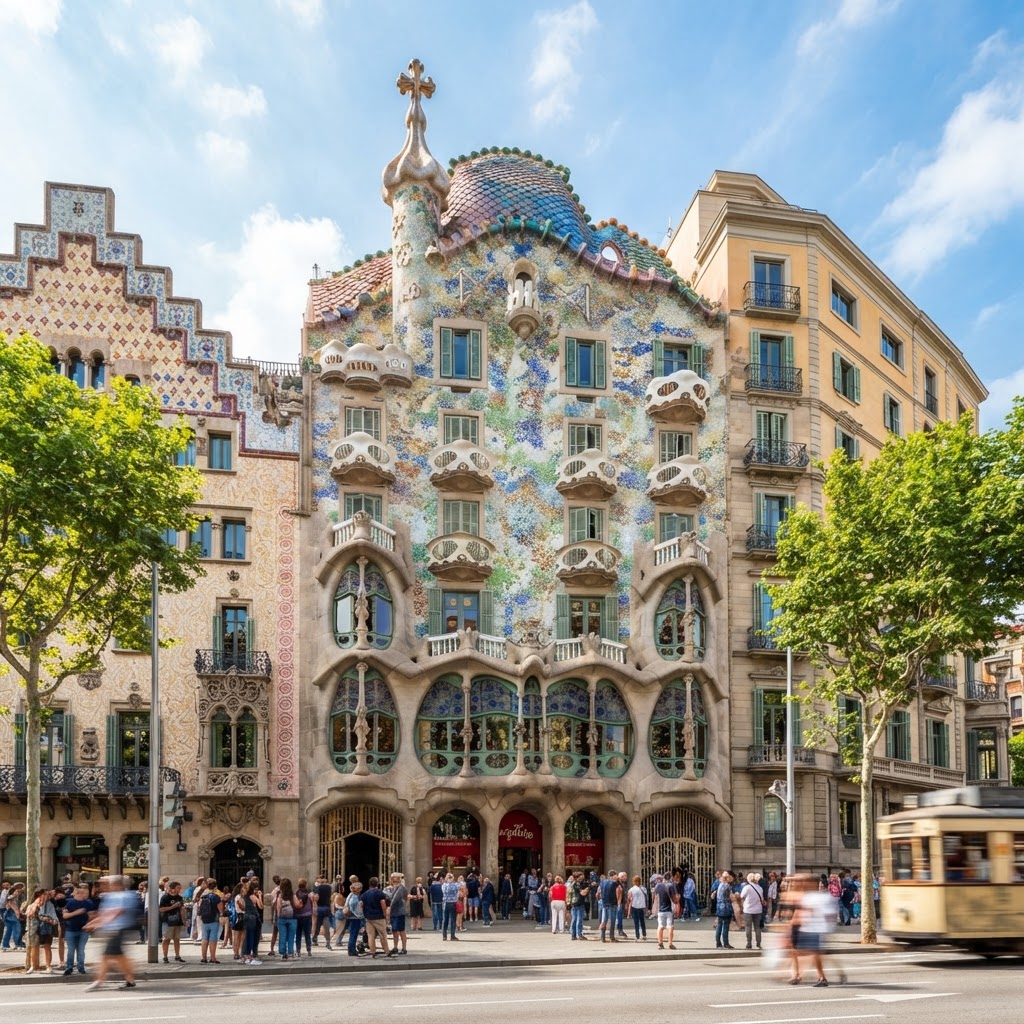
Casa Batlló, located on Barcelona’s Passeig de Gràcia, is a UNESCO World Heritage site and masterpiece of Catalan Modernism designed by Antoni Gaudí between 1904 and 1906. Often called the “House of Bones” for its skeletal façade, it serves as an immersive architectural landmark representing Gaudí’s transition to nature-inspired, fluid organic design.
The History Behind the House of Bones
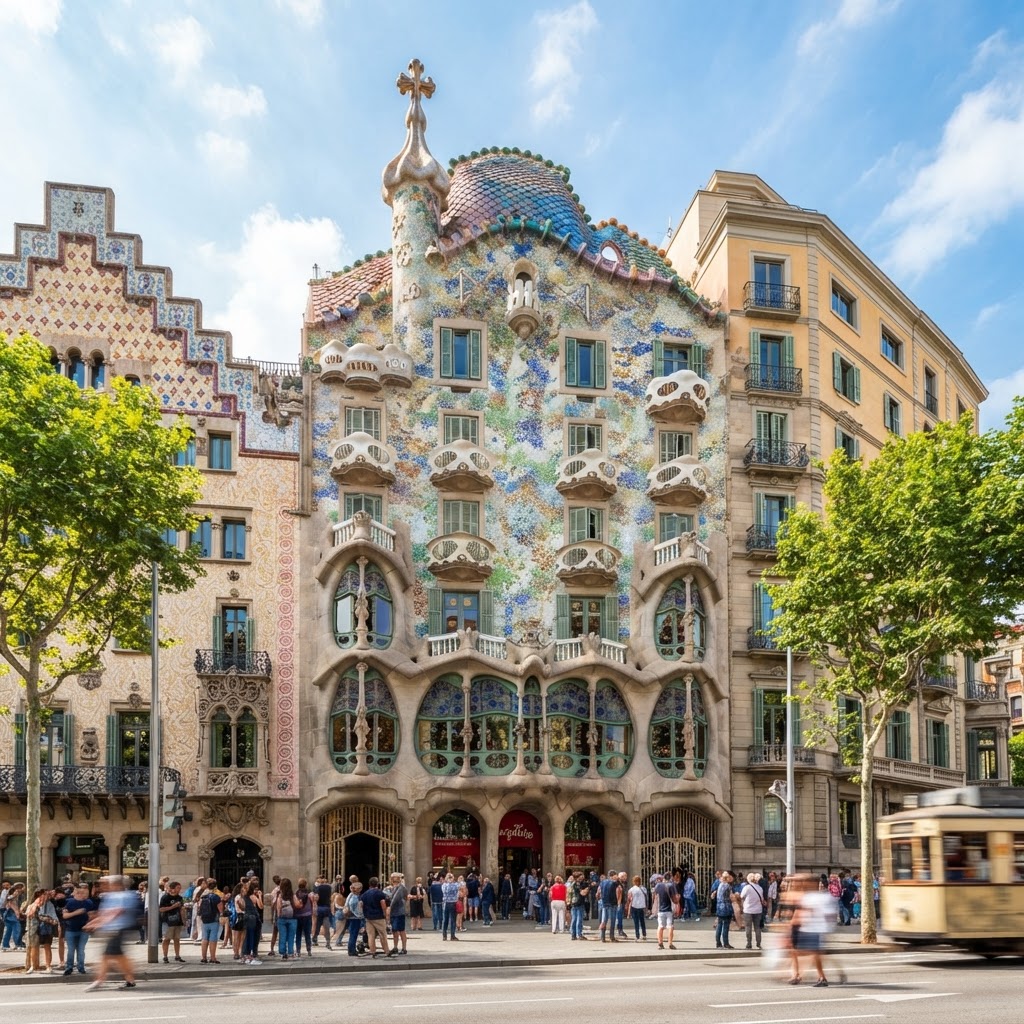
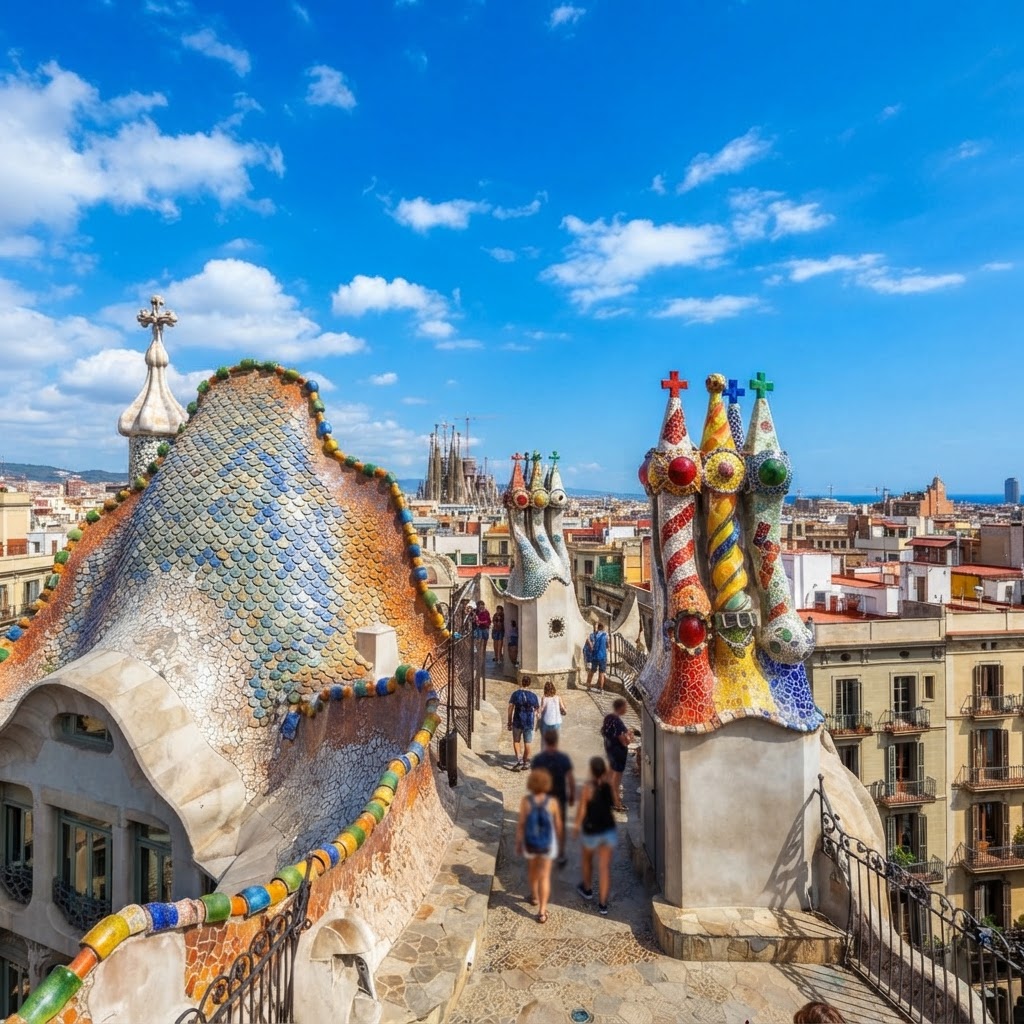
In 1903, industrialist Josep Batlló i Casanovas acquired a nondescript apartment block at 43 Passeig de Gràcia with the original intent of demolition, but he instead commissioned Antoni Gaudí for a complete architectural reinvention. Over a two-year renovation period ending in 1906, Gaudí stripped away traditional constraints to create a building that functioned as an extension of the natural world. Central to this renovation was the expansion of the light well, which Gaudí lined with over 15,000 blue-tinted ceramic tiles that graduate in color from dark at the top to light at the bottom to ensure uniform illumination. The resulting façade, covered in colorful trencadís mosaics and masks, is widely interpreted as a narrative of Saint George and the Dragon. The roof, curved like the spine of a reptilian beast, is topped with a four-armed cross symbolizing the hilt of a sword, solidifying the structure’s place as the pinnacle of Catalan Modernism.
Architectural Features and Design Philosophy
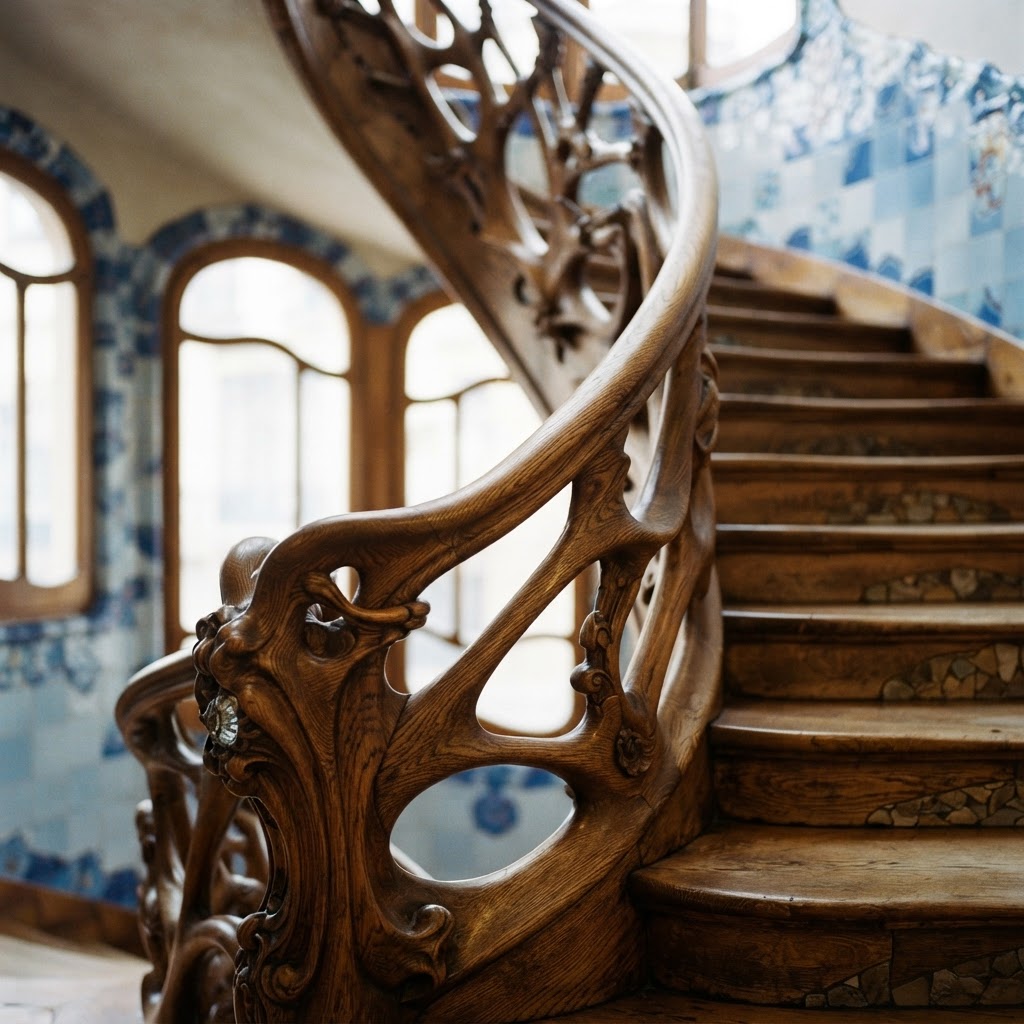
Casa Batlló represents the height of Gaudí’s mature style, where geometry gives way to the sinuous, flowing forms of nature. Every element within the home was crafted to prioritize ergonomics and aesthetics, rejecting the rigid square angles common in 20th-century urban planning. The Noble Floor, previously the Batlló family residence, serves as a masterclass in interior design where Gaudí customized everything from the window latches to the oak-carved doors to fit the human hand. The construction integrates diverse materials—glass, iron, stone, and wood—into a cohesive, fluid space that mimics the undulations of the Mediterranean Sea. Even the functional chimneys were transformed into artistic sculptures, proving that Gaudí viewed utility as a blank canvas for artistic expression. His philosophy of ‘total art’ ensured that the building’s structural integrity and decorative flair were inseparable, resulting in a landmark that has remained influential for over a century.
Comparison: Gaudí’s Major Works in Barcelona
| Landmark | Primary Style | Key Feature |
|---|---|---|
| Casa Batlló | Organic/Marine | Ceramic Mosaic Facade |
| Casa Milà | Stone/Structural | Rooftop Chimney Park |
| Sagrada Família | Gothic/Modern | Monumental Spires |
Immersive Technology and The Cube
Modern management at Casa Batlló has bridged the gap between historical architecture and the digital age by integrating the 10D Experience. The centerpiece of this innovation is “The Cube,” a pioneering six-sided LED room that utilizes AI-driven surround sound and visual projections to simulate Gaudí’s creative process. By stepping into this installation, visitors are no longer passive observers; they enter a multi-sensory environment that decodes the architect’s natural inspirations. This technology provides a significant information gain for tourists, explaining how the abstract shapes of the house were derived from sea creatures and avian anatomy. The 10D Experience acts as a crucial educational layer, transforming a standard walk-through tour into a high-tech exploration of 20th-century genius through a 21st-century lens.
Practical Tips for Your Visit
| Timing | Strategy | Benefit |
|---|---|---|
| Early Morning | 9:00 AM Entry | Fewer crowds, better photos |
| Late Afternoon | Sunset Visit | Dramatic lighting on facade |
- Advance Booking: Always purchase tickets online via the official website to skip ticket office lines which can exceed 60 minutes.
- Ticket Tiers: Opt for ‘Gold’ or ‘Silver’ status to gain priority access to private areas, such as the historic coal bunkers and the family’s original residence rooms.
- Footwear: Wear flat, comfortable shoes; the spiral staircases and uneven organic surfaces require significant walking.
- Seasonal Events: Check the website specifically for terrace concert schedules, which often occur during summer evenings.
FAQ
How much does it cost to enter Casa Batlló?
Standard adult tickets typically start at approximately €35, though prices vary by the chosen experience level (Blue, Silver, or Gold). It is highly recommended to purchase these tickets online to guarantee your entry time.
What is the best time of day to visit Casa Batlló?
Visiting immediately at 9:00 AM or within the last two hours before closing time is best for avoiding peak tourist density. Morning light is particularly excellent for capturing the shimmering facade colors along the Passeig de Gràcia.
Is Casa Batlló accessible for people with mobility issues?
Yes, Casa Batlló has been significantly renovated to include elevators that provide access to most of the building. However, some specific architectural areas with narrow passages may be difficult to navigate, so contact the information desk in advance.
How long should I spend at Casa Batlló?
Most visitors spend between 90 minutes and 2 hours to fully appreciate the interior, the 10D Experience, and the rooftop terrace. If you are interested in the detailed audio-guided tour, budget at least two full hours.
What does the roof of Casa Batlló represent?
The roof is famous for its arched, dragon-like back covered in colorful scales. It is widely understood to represent the legend of Saint George—the patron saint of Catalonia—slaying the dragon, with the four-armed cross acting as his sword.
Leave a Reply