
Lofoten Islands: The Ultimate Arctic Perfection Guide
The Lofoten Islands are a remote archipelago in Norway located within the Arctic Circle, famous for jagged granite peaks, traditional red rorbu cabins, and world-class hiking. Visitors experience the Midnight Sun from late May to mid-July and the Northern Lights from September to early April, making it a year-round destination for nature photography and adventure travel.
Why Choose the Lofoten Islands for Your Arctic Circle Trip
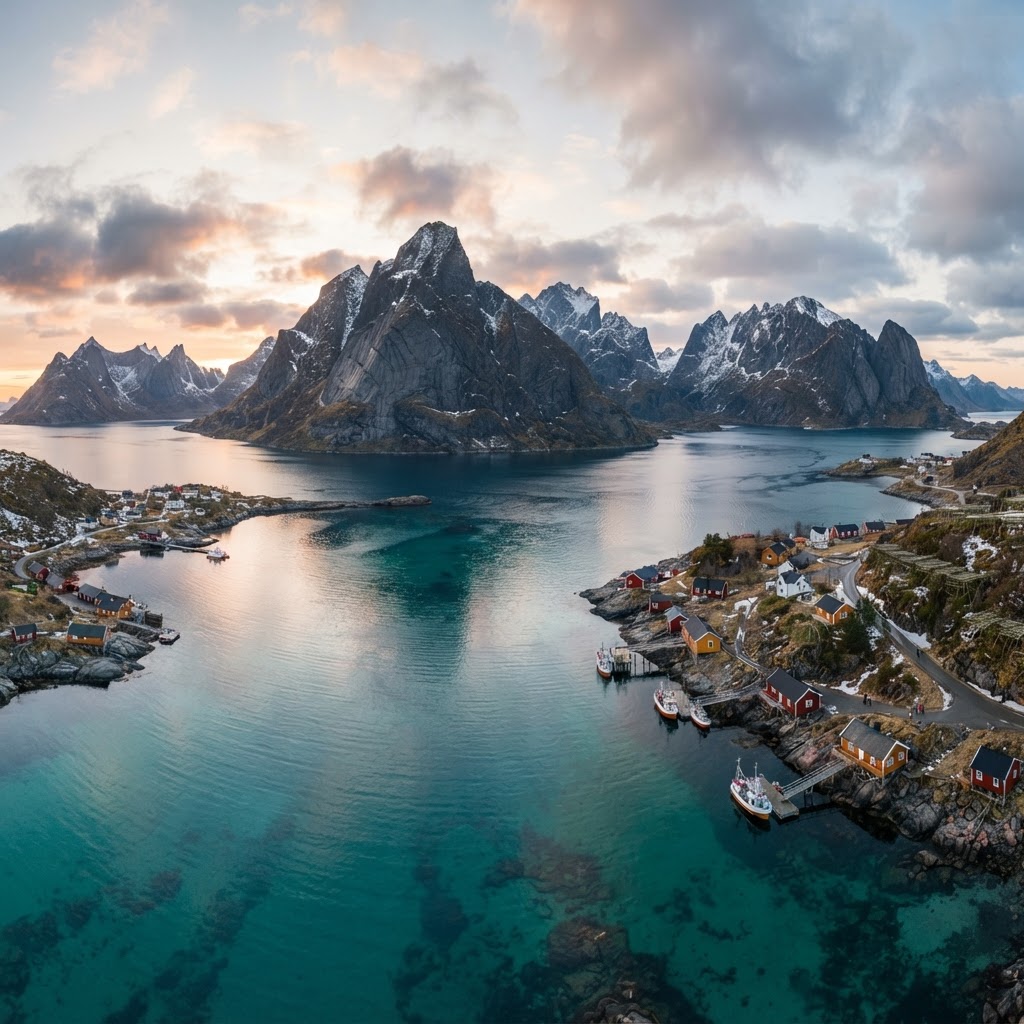
Lofoten offers a rare synergy of rugged, untamed wilderness and cozy, centuries-old fishing culture that remains largely preserved despite growing tourism. The archipelago is connected by the 170-kilometer E10 highway, which serves as a spectacular road-trip spine linking the main islands of Austvågøy, Gimsøy, Vestvågøy, Flakstadøy, and Moskenesøy. Unlike mainland Norway, Lofoten’s proximity to the Gulf Stream keeps temperatures surprisingly mild for its latitude; winter averages hover around -1°C to 4°C, though wind chill can be intense. The cultural hallmark is the “rorbu,” a fisherman’s cabin built on stilts, offering travelers an immersive way to stay directly over the water. Beyond the scenery, the islands are a global hub for stockfish production, with drying racks visible in almost every village from February to June. Whether you visit to witness the dramatic 24-hour daylight of summer or the celestial dance of the Aurora Borealis in winter, the islands provide a profound sense of isolation and tranquility. Silence is a distinct feature here; outside of major hubs like Svolvær, the acoustic backdrop is dominated solely by the sea and nesting seabirds. This unique landscape requires significant planning, but the payoff is an Arctic experience defined by its authenticity and raw visual impact.
Essential Planning for Your Norway Road Trip
Navigating the archipelago is best done by car, as it allows for the flexibility to stop at the dozens of pull-offs along the E10, which is officially designated as a Norwegian National Scenic Route. While public buses cover the main route, they operate on limited schedules, making a rental car essential for reaching trailheads or specific sunset photography spots. If traveling between October and April, ensure your rental is equipped with studded winter tires, as icy conditions are frequent. Regarding packing, the “three-layer rule” is mandatory: a moisture-wicking base layer, an insulating wool or fleece mid-layer, and a high-quality hardshell jacket capable of withstanding 50km/h winds. Costs can be high; expect to pay $100-$150 USD per day for a standard rental car and roughly $30-$50 for a casual lunch. Booking accommodation at least 4-6 months in advance is critical, especially for summer travel, as local inventory is extremely limited.
| Feature | Rorbuer (Traditional) | Standard Hotel |
|---|---|---|
| Authenticity | High (historic charm) | Low (modern/generic) |
| Location | Waterfront/on stilts | Central village/town |
| Price | $200-$400+ per night | $150-$300 per night |
| Amenities | Basic (kitchenette) | Full (gym, buffet, room service) |
Choosing Your Base: Rorbuer vs. Hotels
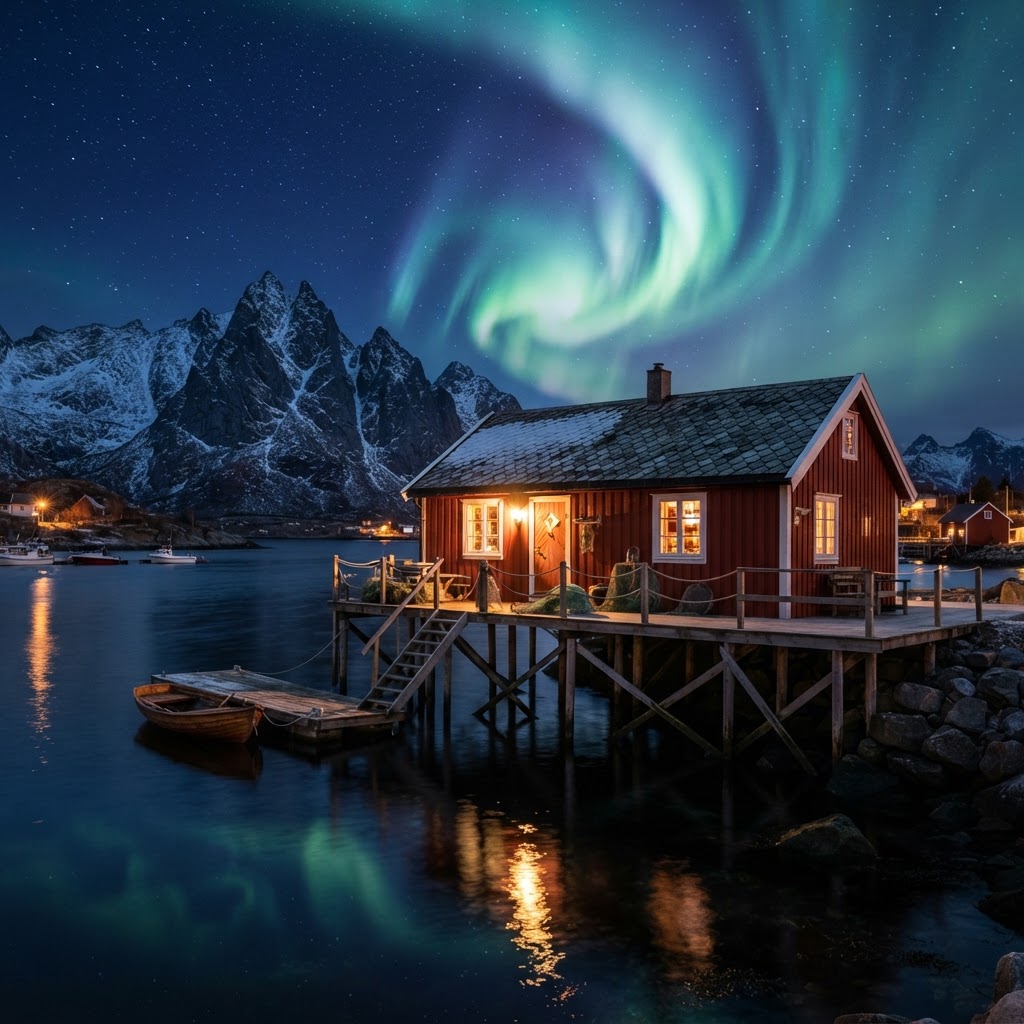
For an authentic stay, book a rorbu in villages like Reine or Hamnøy. These converted cabins offer a unique immersion into the local lifestyle. Modern amenities are common, but the historical architecture remains intact, providing the perfect cozy retreat after a day of exploring the wild elements.
Hiking and Adventure in Arctic Landscapes
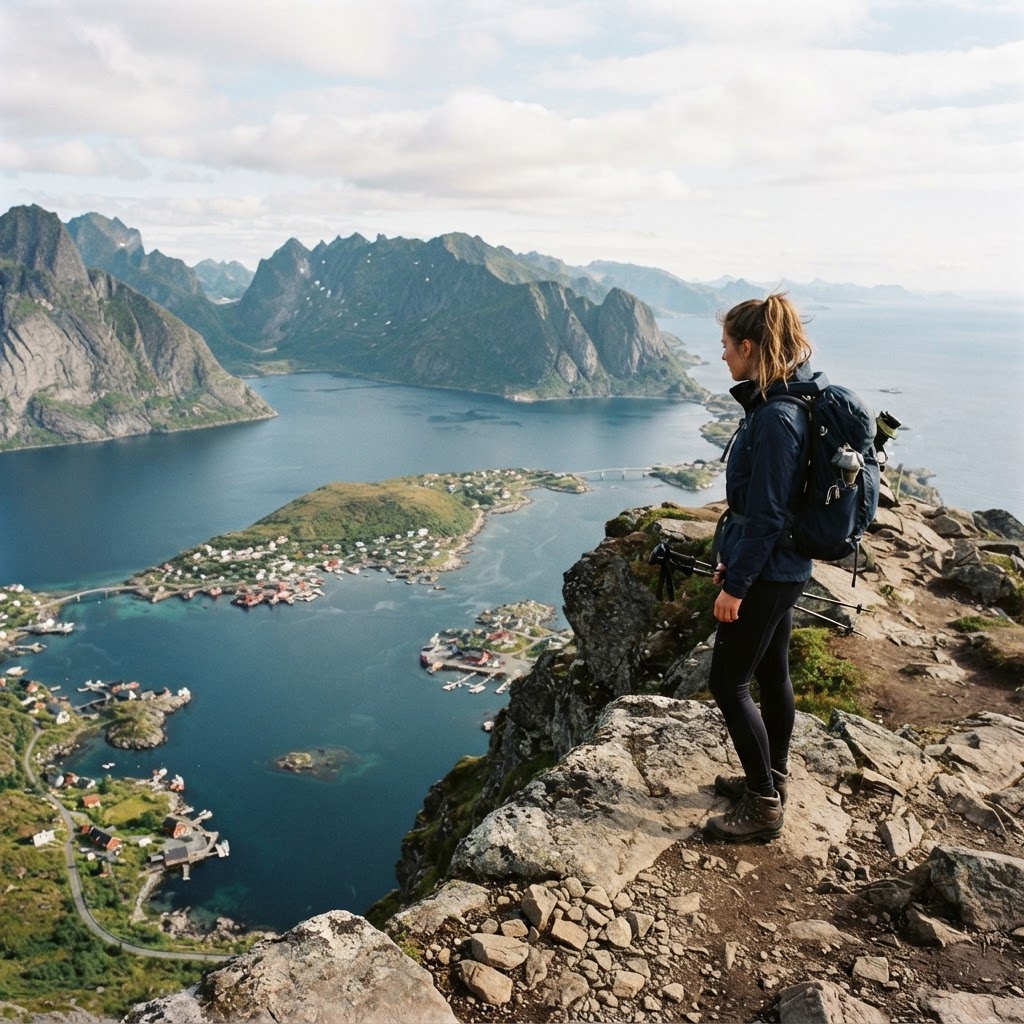
The Reinebringen hike remains the most famous trail in the region, offering a panoramic view that defines the aesthetic of the Lofoten Islands. However, there are numerous other trails for various skill levels:
- Ryten: Perfect for catching the midnight sun over Kvalvika Beach.
- Festvågtind: Offers stunning views over the town of Henningsvær.
- Mannen: A steep but rewarding climb overlooking Haukland Beach.
- Offersøykammen: A great alternative if you want to avoid the crowds of Reinebringen.
Always check local weather forecasts and avalanche reports, as safety is paramount in these northern latitudes. Most trails are rocky and can become slippery even in summer; hiking poles are highly recommended to save your knees on steep descents. The hike to Reinebringen features roughly 1,566 stone steps built by Sherpas, providing a safe but grueling ascent that takes about 1-2 hours one way. For those seeking less elevation, the coastal walks around Uttakleiv Beach offer flat, stunning terrain perfect for sunset photography. Always remember the “Leave No Trace” principles; the Arctic ecosystem is fragile, and the increased foot traffic in the summer months puts significant strain on the delicate tundra vegetation found on these mountain ridges.
Chasing the Northern Lights Norway Style
Seeing the Northern Lights in the Lofoten Islands is a bucket-list experience for many travelers. The best time to visit Norway for aurora hunting is from September to early April. Because the islands are surrounded by the sea, the weather can be volatile, which occasionally works to your advantage by blowing clouds away to reveal clear, dark skies. Find a spot away from the light pollution of the small villages, set up a tripod, and wait for the green dance of light to fill the Arctic sky. The reflections off the fjords create a photographic composition that is simply unmatched anywhere else on Earth. To maximize your chances, download apps like “My Aurora Forecast” which tracks solar activity in real-time. Patience is the primary requirement; solar storms can appear within minutes or stay hidden for days. When the Kp-index rises above 3, the lights become visible even with the naked eye. Pro tip: aim your camera north toward the sea, as the reflection of the aurora in the dark, still fjord water doubles the visual impact of your images. Remember that battery life depletes up to 50% faster in sub-zero temperatures, so always carry a spare battery in an inside, warm pocket.
The Charm of Traditional Lofoten Villages
Beyond the mountains, the villages of the Lofoten Islands are the heart of the region. Reine is often cited as one of the most beautiful villages in the world, with its sharp peaks reflecting perfectly in the harbor. Nusfjord, a UNESCO-listed site, offers a look at how the region has preserved its fishing heritage over centuries. Walking through these villages, you will see drying racks for stockfish, a tradition that has remained constant for hundreds of years. The locals are welcoming, and enjoying a bowl of fresh fish soup in a seaside tavern is an essential part of the experience. The architecture of these villages, with their distinct red-painted wooden houses, was originally designed to make them easily visible from the sea during dark, stormy winters. Today, these structures are protected, and you will find that many have been converted into high-end, comfortable guesthouses. When visiting, ensure you stop by a local fish market to sample “tørrfisk” (dried cod), a local delicacy that is exported worldwide and is the backbone of the local economy. Walking through the narrow streets of Henningsvær—known as the “Venice of the North”—reveals a vibrant art scene and small boutiques that offer a nice contrast to the rugged wilderness just outside the village limits.
Best Time to Visit Norway and the Islands
Determining when to go depends entirely on your goals. Summer, from June to August, provides endless daylight and ideal conditions for hiking. If you prefer the dramatic colors of autumn, September and October are fantastic. For those who want the full winter experience, including skiing and the Northern Lights, January through March offers a serene, snow-covered landscape. Keep in mind that the Lofoten Islands are gaining popularity, so booking your accommodation and rental car several months in advance is critical to ensuring a smooth trip.
| Season | Peak Activity | Weather | Daylight |
|---|---|---|---|
| Summer (Jun-Aug) | Hiking/Kayaking | Mild (10-15°C) | 24 Hours |
| Autumn (Sep-Oct) | Photography/Hiking | Chilly/Wet (5-10°C) | Decreasing |
| Winter (Jan-Mar) | Skiing/Aurora | Cold (-5 to 2°C) | Limited/Dark |
FAQ
Is Lofoten expensive to visit?
Yes, Lofoten is considered one of the more expensive destinations in Norway due to its remote location. Expect to pay significantly more for groceries, fuel, and accommodation compared to mainland Europe, with a modest budget-conscious trip requiring at least $200 per person per day.
Do I need a car in the Lofoten Islands?
Yes, a rental car is highly recommended for full access to the islands’ remote viewpoints and trailheads. While public bus transport exists, it is infrequent and does not offer the flexibility needed to chase changing weather conditions or stop at photography spots along the E10 highway.
When is the best time to see the Northern Lights?
The best time to see the Northern Lights is between late September and early April when the nights are sufficiently dark. You need a clear sky and minimal light pollution; the northern coastlines of the islands are ideal spots to wait for auroral activity.
Is the hike to Reinebringen difficult?
Reinebringen is a challenging hike due to its steep elevation gain, but it is accessible to most active hikers thanks to the stone steps. The climb takes roughly 1 to 2 hours, and you should ensure you wear sturdy footwear and bring windproof layers.
How many days should I spend in Lofoten?
Plan for a minimum of 4 to 5 days to see the major highlights without feeling rushed. If you want to explore the more remote northern islands or partake in multi-day hiking and kayaking trips, consider extending your stay to 7 or more days.
Leave a Reply